Codex Beginner's Guide: Four Product Forms Explained, Plus Comparison with Claude Code and Cursor

A comprehensive guide comparing Codex, Claude Code, and Cursor across pricing, stability, and use-case fit.
This guide breaks down OpenAI Codex's four product forms (CLI, Web, IDE plugin, and App), explaining why the App delivers the best experience. It compares Codex with Claude Code and Cursor on pricing, stability, and frontend vs backend suitability—finding Codex cheaper and more stable, Claude Code stronger for backend logic, and recommends developers master all three tools for maximum flexibility.
AI Programming Tools Enter the "Big Three" Era
As large model capabilities continue to evolve, the iteration speed of AI programming tools is visibly accelerating. From GitHub Copilot's first commercialization of the Codex model in 2021, to the emergence of new-generation models like GPT-4 and the Claude series, code generation has evolved from single-line completion to full multi-file engineering-level generation—today's AI programming tools can not only understand natural language requirements but also perform cross-file context awareness, automated test generation, and code refactoring.
Notably, GitHub Copilot's underlying model Codex is essentially a specialized version of GPT-3 fine-tuned on approximately 54 million public GitHub repositories, with training data covering 54 programming languages. This commercialization path itself is a milestone—it was the first to prove that large-scale language models can achieve commercial-grade usability on specialized tasks through domain data fine-tuning, providing an important reference for the subsequent code capabilities of Claude, Gemini, and other models.
This evolutionary trajectory is essentially a microcosm of AI's transformation from a "tool" to a "collaborator" role: early code completion relied on statistical probability to predict the next token, while modern Agent-level tools introduce task planning, environment awareness, and multi-step execution capabilities. This evolution means a fundamental leap at the architectural level from "reactive" to "planning-based"—early completion tools used autoregressive generation architecture, directly predicting the next token given the preceding context in a unidirectional, stateless process; modern Agents introduce the ReAct (Reasoning + Acting) framework, where the model alternates between "reasoning steps" (analyzing the current state, planning the next action) and "execution steps" (calling tools, modifying files, running tests), feeding execution results back into the reasoning loop to form a closed loop of "observe-think-act." This enables AI to handle complex engineering tasks requiring multi-step decision-making, such as automatically locating bug root causes, cross-file refactoring, and dependency conflict resolution. For developers, choosing a suitable programming assistant has long since shifted from "nice to have" to "essential skill."
Among the many tools available, OpenAI's Codex has returned to the center of developers' attention thanks to recent product updates. Codex was originally launched in 2021 as a code-specialized fine-tuned version of GPT-3 and served as the underlying model for GitHub Copilot—at that time, it relied on statistical pattern matching from massive open-source code to generate code snippets. After years of integration, the new Codex App has been rebuilt on OpenAI's o-series reasoning models, achieving a paradigm leap from "statistical pattern matching" to "multi-step reasoning and planning."
The o-series models introduce a "Chain-of-Thought Reasoning" mechanism—this technique was formally proposed by the Google Research team in their 2022 paper Chain-of-Thought Prompting Elicits Reasoning in Large Language Models. Its cognitive science foundation comes from Nobel laureate Daniel Kahneman's "dual system thinking" theory: the fast, intuitive "System 1" corresponds to traditional models' direct output, while the slow, analytical "System 2" corresponds to the step-by-step reasoning process simulated by CoT. In engineering implementation, CoT has the model generate a series of intermediate reasoning steps before outputting the final answer, similar to a human's "scratch paper" process when solving problems. In programming tasks, this means the model first analyzes requirement boundaries, identifies dependencies, plans implementation paths, and then generates code step by step, rather than directly outputting results "in one shot." The o-series models further internalize this mechanism as a training objective rather than merely an inference-time prompting technique, enabling deep internal logical reasoning before generating code. This makes it far superior to earlier versions in complex algorithm implementation, cross-file dependency analysis, and long-cycle task planning. Its positioning has therefore been fully upgraded from a "code completion plugin" to an "autonomous programming agent" capable of executing multi-step task planning and code debugging.
This article is based on hands-on Codex tutorials and focuses on one core question: What exactly makes Codex strong? Compared to Claude Code and Cursor, is it worth adopting? We'll break it down from three dimensions—product form, pricing, and user experience—to help you make a rational choice among the "Big Three."
Codex's Four Forms: Why the App Is Recommended
Many veteran users still associate Codex with the "plugin" stage—in the past, most people integrated Codex through various development tools. But with the official release of the Codex App, it now has four complete forms:
- CLI (Terminal): Command-line invocation, suitable for developers who prefer terminal operations
- Web Interface: No installation needed, ready to use immediately
- IDE Plugin: Integrated into mainstream development tools like VS Code
- App Client: The focus of this update, and the most feature-complete form
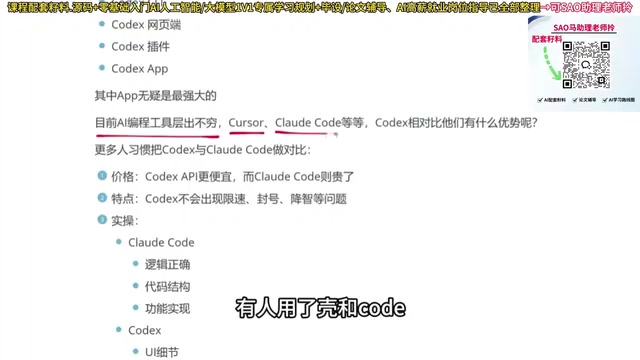
Among these four forms, the App undoubtedly offers the strongest experience. Compared to the plugin-centric usage of the past, the standalone App provides more complete functionality and a smoother interaction experience. Of course, the App isn't meant to replace IDE plugins—rather, they work together. The App leads conversations and task planning, while traditional tools like VS Code handle fine-grained code editing, delivering the best results when combined.
It's worth noting that this "Agent + IDE" collaborative model is becoming the industry standard: AI handles high-level intent understanding and task decomposition (the "brain" layer), while traditional editors handle precise syntax awareness, breakpoint debugging, and version management (the "hands" layer), with clear division of labor and mutual complementarity. The underlying support for this layered design comes from two important open protocols: Language Server Protocol (LSP) was released by Microsoft in 2016 alongside VS Code, decoupling language intelligence (code completion, go-to-definition, error diagnostics) from editor implementations, allowing any editor to reuse all language services by implementing a single unified JSON-RPC communication interface; Debug Adapter Protocol (DAP) similarly unifies communication between debuggers and editors. The existence of these two protocols means AI programming tools don't need to develop separate adaptation layers for each IDE, enabling rapid implementation of consistent cross-editor experiences. From a software architecture perspective, this layered design is highly consistent with the classic "control plane/data plane" separation concept—AI takes on decision-making and scheduling functions, IDE handles execution and state management, and the two layers are decoupled through standardized interfaces, allowing each layer to evolve independently. This architecture also means that the competitive dimensions of AI programming tools are expanding from "code generation quality" to "task understanding depth" and "workflow integration capability."
Extended Background: MCP Protocol and Further Standardization of Tool Ecosystems Notably, the Model Context Protocol (MCP) introduced by Anthropic in 2024 is becoming another important industry standardization effort following LSP/DAP. MCP uses a USB-C-like approach to define a unified JSON-RPC specification for bidirectional communication between AI models and external tools (code repositories, databases, browsers, local file systems, etc.). Its core innovation lies in decoupling tool calling from "model-private APIs" into an "open protocol"—developers only need to implement an MCP server once for their tool, and it can be called by any AI client supporting MCP (such as Claude Desktop, Cursor, etc.), without developing separate integration layers for each AI platform. This is highly consistent with the historical logic of LSP decoupling language services from editors. From an architectural evolution perspective, LSP/DAP solved the standardization problem of integration between "AI and editors," while MCP further solves the standardization problem of integration between "AI and arbitrary external tools." Together, they form the "protocol infrastructure layer" of the AI programming tool ecosystem. As mainstream IDEs and AI tools continue to improve MCP support, tool interoperability is expected to improve dramatically, further accelerating the adoption of multi-tool collaborative workflows.
Codex vs Claude Code: Price and Stability Comparison
In practical tool selection, the most common comparison developers make is between Codex and Claude Code. Here are comparison conclusions from two intuitive dimensions.
Price: Codex Has the Advantage
Looking at pricing alone, Codex App is cheaper, while Claude Code is relatively more expensive. For developers who need to use AI programming tools frequently over the long term, price is a long-term cost that cannot be ignored. Many developers initially chose Cursor but felt "a pang of regret with every payment"—this is directly related to Cursor's business model: Cursor Pro costs approximately $20/month and can call multiple top-tier models like GPT-4o and Claude 3.5, with relatively high usage costs behind its high capabilities. It's worth mentioning that Cursor employs a "model routing" architecture—dynamically dispatching models of different capability levels based on task complexity. Lightweight tasks (such as single-line completion, variable renaming) call lower-cost smaller models, while complex tasks (such as cross-file refactoring, architecture design) are routed to more powerful flagship models. While this design improves overall cost-effectiveness, it also introduces billing opacity—users cannot predict which model a single interaction will trigger, making it difficult to accurately estimate monthly costs. This is an important reason why some developers later switched to other tools.

Stability: Codex Is Less Hassle
Claude Code frequently experiences rate limiting and account bans during use. This stems from Anthropic's strict API usage limitation strategy—Claude Code is based on the Claude 3.5/3.7 series models, whose ultra-long context window (200K tokens) provides extremely strong codebase comprehension, enabling it to "understand" all the code of a medium-sized project in one pass. However, this capability comes at a cost: a single request of 200K tokens consumes GPU compute equivalent to dozens of ordinary conversation requests, so Anthropic has set rate limiting and quota management policies that are far stricter than the industry average.
Here it's necessary to understand the compute economics behind rate limiting: The self-attention mechanism in Transformer architecture has a computational complexity that scales quadratically (O(n²)) with sequence length. The physical implication is: when sequence length grows from 1K tokens to 200K tokens (a 200x increase), attention computation theoretically increases by 200² = 40,000 times. In real-world deployment, algorithmic optimizations like FlashAttention have dramatically improved this through tiled computation and IO-aware memory scheduling—FlashAttention was proposed by Stanford HAI Lab in 2022, with its core innovation being to complete local computation of attention matrix blocks in GPU on-chip SRAM, avoiding repeatedly writing and reading the full O(n²)-sized attention matrix to and from the slower HBM (High Bandwidth Memory), reducing memory access from O(n²) to O(n) while maintaining mathematical equivalence.
Extended Background: Continuous Evolution from FlashAttention to FlashAttention-3 FlashAttention is not a one-time technical breakthrough but has undergone continuous engineering iteration. FlashAttention-2, released in 2023, built upon v1 by redesigning parallelization strategies (upgrading the parallelism granularity of the sequence dimension from row-level to block-level) and reducing the proportion of non-matrix-multiply (non-matmul) operations, achieving up to 2x throughput improvement on A100 GPUs compared to v1, increasing model FLOPS utilization from v1's 35% to approximately 72%. FlashAttention-3 in 2024, optimized for the H100 GPU architecture, further leverages H100's Tensor Core asynchronous execution capabilities and FP8 low-precision support, achieving another 1.5-2x throughput improvement. The significance of this continuous evolution is that the practicality of ultra-long context depends not only on model architecture-level innovations (such as Sliding Window Attention, ALiBi positional encoding, etc.) but equally on engineering optimization at the underlying kernel library level. Claude 3's ability to advance 200K token context from "lab concept" to "production-ready feature" owes much to the FlashAttention series' continuous optimization at the CUDA kernel level. For developers, understanding this layer helps more accurately assess the context extension roadmaps of different models and the engineering maturity behind their implementations.
This has made engineering-viable inference speed possible for the first time at the 200K token level, serving as the critical underlying support for the Claude 3 series' commercial deployment of ultra-long context capability. Even so, memory usage and inference latency still far exceed ordinary request levels by orders of magnitude—this is why high-frequency users frequently encounter rate limiting. It's essentially a compute economics constraint from ultra-long context, not Anthropic's subjective choice. In comparison, Codex has not exhibited such issues in equivalent usage scenarios. As for the frequently discussed "quality degradation" issue, some users report that Codex also experiences it, but not everyone notices it significantly—self-verification during actual use is recommended.
Frontend vs Backend: The "Personality" Differences Between the Two Tools
Beyond price and stability, there's another very practical insight worth noting—the two tools have distinctly different "personalities." This difference is not coincidental but has deep technical roots.
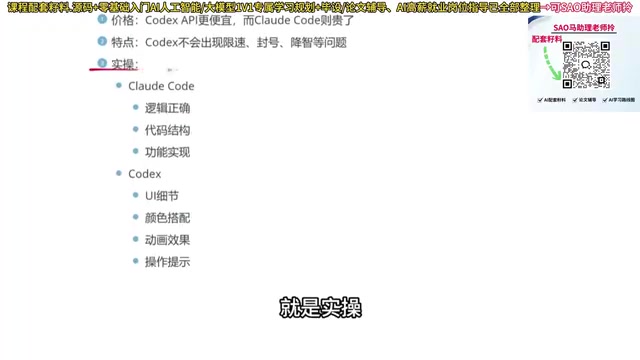
Claude Code leans more toward logical correctness, code structure, and functional implementation. Backend developers generally prefer Claude Code because of its more solid performance in logical reasoning and engineering implementation. This is closely related to Anthropic's training methodology—Claude uses the "Constitutional AI" framework during its RLHF (Reinforcement Learning from Human Feedback) phase. This alignment method, proposed by Anthropic in 2022, replaces large amounts of human annotation data with a predefined set of "principles" (the "constitution"). Training proceeds in two stages: during the supervised learning stage, the model critiques and revises its own initial output according to constitutional principles, generating improved self-correction samples for fine-tuning; during the reinforcement learning stage, another AI model's preference judgments replace human annotations to train a reward model, which is then optimized through the PPO algorithm. The key innovation of this mechanism is replacing "rule memorization" with "principle-based reasoning"—the model learns how to derive correct behavior from first principles. In code generation scenarios, this manifests as proactive identification of logical contradictions: when generated code contains logical inconsistencies, the model actively flags and corrects them rather than continuing to generate along the user's incorrect assumptions. This makes it more stable in backend tasks requiring rigorous reasoning (such as business logic processing, boundary condition design, system architecture planning, and concurrency safety analysis), capable of identifying and refusing to generate logically contradictory code.
Codex focuses more on UI details, color coordination, animation effects, and interaction experience. This makes developers working on Apps or frontend development more inclined to choose Codex. This characteristic is also traceable: frontend code (HTML/CSS/JavaScript/React, etc.) has an extremely rich sample volume in open-source ecosystems like GitHub—JavaScript has long held the top position in GitHub's language usage rankings. More crucially, frontend visual effects have naturally quantifiable evaluation standards—CSS pixel-perfect reproduction can be measured through SSIM (Structural Similarity Index) between screenshots and design mockups, JavaScript animations can be objectively measured through frame rate (FPS) and stuttering rate, and interaction responsiveness can be quantified through Web Core Vitals metrics like LCP (Largest Contentful Paint) and FID (First Input Delay). These clear reward signals provide more stable optimization targets for the model during the reinforcement learning phase—compared to backend logic correctness, which often requires complex test suites to verify, frontend visual quality can be quantified more directly, allowing the model to accumulate stronger pattern-matching advantages in the visual performance dimension.
Extended Background: How Reward Signal Quality Shapes Model "Personality" Behind the frontend/backend differences described above, there's a more universal reinforcement learning principle worth understanding deeply: the quantifiability of reward signals (Reward Signal Quality) directly determines the convergence quality and ultimate capability boundary of RL training. In the design of systems like AlphaGo/AlphaCode, board games and competitive programming problems (like LeetCode) become ideal RL training scenarios due to their clear win/loss or pass/fail determinations—rewards are sparse but definitive, avoiding "Reward Hacking." The quantifiability of frontend visual tasks makes them approach board games on this dimension, while the verification complexity of backend logic tasks is closer to open-ended Q&A. This also explains why OpenAI's o-series models show much greater improvement on math and code competition tasks (with clear answer determination) than on creative writing tasks—the latter lack clear objective reward signals, limiting RL's marginal gains. Understanding this underlying logic helps developers more accurately predict the capability ceilings of different AI tools on specific task types, rather than making tool selection decisions based solely on subjective experience.
It should be emphasized that this judgment comes from actual experience using both tools, and is not an absolute conclusion. No tool is absolutely superior—what matters is matching your development scenario.
Core Recommendation: Master All Three

Perhaps the most valuable insight isn't "I recommend Codex," but rather this reminder: You should ideally be proficient with all three of the Big Three—Cursor, Claude Code, and Codex—rather than mastering only one.
This recommendation is supported by industry trends: enterprise AI tool selection is shifting from "single platform dependency" to a "Multi-Model Orchestration" strategy. The core of this engineering architecture is dynamically calling different AI models based on task characteristics within the same workflow—using lightweight models for simple code completion tasks and heavy reasoning models for architecture design problems; or switching between different models at different development stages such as prototyping, integration testing, and pre-launch review.
At the engineering implementation level, a relatively mature technology stack has emerged: at the framework layer, LangChain's Router Chain supports static routing based on keywords or semantic similarity, and LlamaIndex's SubQuestionQueryEngine can decompose complex questions and distribute them to different specialized models; at the infrastructure layer, LiteLLM provides a unified OpenAI-compatible API proxy, making switching the underlying model require only a single parameter change; at the observability layer, tools like LangSmith and Langfuse provide cross-model trace tracking and cost analysis capabilities. For individual developers, a practical starting point is to define task-level model routing rules through .cursorrules files in Cursor, achieving preliminary multi-model collaborative workflows with low migration costs. In terms of routing strategies, the main forms include: complexity-based static routing (pre-assigning models for different task types), real-time assessment-based dynamic routing (deciding at runtime through meta-models or rule engines), and cost-quality trade-off-based hybrid scheduling. The Function Calling and Tool Use capabilities successively opened by major vendors further enable different models to collaboratively call external tools within the same task flow, significantly lowering the implementation threshold for multi-model orchestration.
Extended Background: AI Programming Tool Benchmarks and Capability Boundary Quantification In the practice of using multiple tools, one of the core challenges developers face is how to objectively evaluate the true capability boundaries of different tools on specific tasks, rather than relying on subjective impressions. Academia and industry have developed several mainstream evaluation benchmarks: HumanEval (proposed by OpenAI, 164 Python programming problems, measuring functional correctness of generated code with the pass@k metric) and MBPP (proposed by Google, 500 entry-level Python programming problems) are foundational test sets for code generation capability; SWE-Bench is closer to real engineering scenarios—it constructs test sets from real GitHub Issues, requiring models to locate and fix bugs within complete codebase context, with current best models improving from less than 5% resolution rate early on to over 40%, but still significantly far from a "fully autonomous software engineer." LiveCodeBench avoids Data Contamination by continuously collecting new competition problems, providing more trustworthy dynamic evaluation. For developers, when referencing these benchmarks, note that the task distribution of evaluation sets (algorithm problems vs engineering tasks, single-file vs multi-file) may significantly differ from your actual usage scenarios. Therefore, the best practice is to build small internal benchmarks on your typical tasks, combined with public evaluation data, to make more precise tool selection decisions.
This shift is driven by multiple forces: rate limiting and pricing policy differences among major model providers create availability risks with single dependency; different task types (frontend rendering, backend logic, database optimization, security auditing) correspond to different models' capability sweet spots; additionally, diversifying vendor dependency has become an important compliance governance consideration for large enterprises. Accordingly, leading engineering teams have generally established internal scheduling rules mapping "task types → model routing," elevating multi-tool usage from personal habit to team engineering standards.
The reasons are practical:
- Different companies may provide you with different account resources;
- Different teams may require different AI tools;
- Different project types (frontend/backend) align with different tools' "personalities."
From initially using Cursor, to Claude Code integrated with domestic models, to now primarily using the Codex App—behind each switch is a comprehensive trade-off of cost, experience, and context.
Conclusion: Context Determines Choice
For newcomers without development experience, starting with Codex is recommended—its advantages in UI presentation and interaction experience help newcomers get positive feedback faster and establish a complete cognitive loop of "requirement → code → visible result." For developers with some foundation, the approach of "multi-tool combination" is recommended: use Codex to optimize frontend experience, Claude Code to handle complex backend logic, and Cursor to fill specific scenario needs.
Tools emerge endlessly, but true competitive advantage never lies in "which one you use," but in "whether you can choose the right one for the scenario." Mastering multi-tool switching capability, along with a deep understanding of each tool's technical characteristics and applicable boundaries, is becoming an important soft skill for the new generation of developers to enhance their market competitiveness—this logic is identical to learning multiple programming languages: it's not about showing off, but about choosing the most appropriate tool for the right scenario. In this era of rapidly iterating AI capabilities and continuously reshaping tool landscapes, the ability to transcend path dependency on a single tool and build systematic understanding of underlying technical principles is where truly sustainable technical competitiveness lies.
Related articles

Denmark's Oral Defense Requirement to Combat AI Cheating: Lessons for Educational Assessment Reform
Denmark requires students to orally defend written assignments to address academic integrity crises from ChatGPT and AI tools. This article analyzes the reform's logic, AI detection limitations, and global implications.

AI Agents from Writing Code to Deployment: Real-World Challenges and Solutions for Workflow Implementation
AI coding assistants excel at code generation, but a huge gap remains between writing code and deployment. This article analyzes the core challenges AI Agents face in deployment and explores practical solutions like GitOps and sandboxed execution.

Building an AI Agent Memory Layer with Go's Standard Library: A Zero-Dependency Minimalist Approach
A deep dive into building an AI agent memory layer using only Go's standard library, covering vector similarity, memory storage/retrieval, and concurrency safety in a zero-dependency approach.