Codex End-to-End in Practice: Sandbox, Multi-Project Management, and Editing Code via Page Annotations

A systematic overview of Codex agent tool configuration, sandbox mechanism, and multi-project management essentials.
Based on hands-on teaching experience, this article systematically introduces AI coding agent tools such as Codex and Claude Code. It first distinguishes agent tools from pure large models—the former can operate the file system and execute commands, enabling beginners to complete programming tasks. It then compares Codex and Claude Code, noting Codex's advantages in Chinese understanding, requirements analysis, and full-stack capabilities. The article breaks down the account login, installation, and GPT integration process for configuring Codex from scratch, and explains in depth how the sandbox mechanism ensures safety for parallel multi-project work and how page annotation-based code editing connects visual feedback with code modification. Finally, it advises mastering one type of tool early rather than overthinking selection.
In an era of rapid iteration in AI coding tools, Codex and Claude Code, as first-tier agent tools, are changing how developers interact with code. Based on hands-on teaching experience, this article systematically walks through Codex's sandbox mechanism, multi-project management, and the complete workflow of editing code via page annotations, helping beginners overcome configuration hurdles and truly put AI coding tools to work.
The Essential Difference Between Agent Tools and Pure Large Models
Many people still understand AI coding tools as "chatbots," but tools like Codex are fundamentally different from pure large models. A large model is like a brain that can only think, while agent tools such as Codex and Claude Code add hands, feet, and tools on top of that brain—they can directly operate the file system, execute commands, and modify code.
This leap in capability means that even if you don't know how to write Java, don't know how to type Path, and don't understand LLM-related code at all, it doesn't affect your ability to use Codex to complete real programming tasks. Whether you're a professional developer or a complete beginner, these tools have become essential industry skills.
According to a hands-on share from a Bilibili creator, Codex performs notably well in Chinese comprehension, thanks to the GPT model configured underneath. After comparing Codex, Claude Code, and Cursor, the creator believes Codex has clear advantages in requirements analysis, full-stack front-end and back-end handling, and the pace of MCP ecosystem development, backed by OpenAI's continued investment.
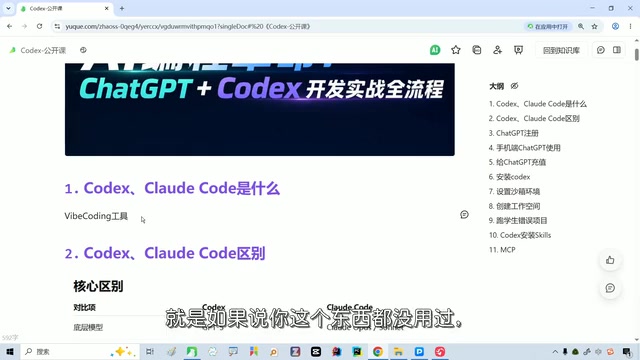
Agent refers to a system capable of perceiving its environment, making autonomous decisions, and taking actions to achieve goals. In AI coding scenarios, agent tools typically use a large language model as the "brain" and are equipped with modules such as Tool Use, Memory, and Planning. Tool Use lets the model perform operations like reading and writing files, running terminal commands, and calling APIs; the memory module helps the agent maintain context coherence across long conversations; planning capability enables it to break complex tasks into multi-step execution. Compared with pure conversational models, the agent's core leap lies in moving from "generating text" to "changing the environment"—it can not only tell you how to change code but also change it for you directly. This also explains why beginners can complete programming tasks with Codex: the user describes the goal, and the agent breaks it down and executes the operations.
Why Codex Becomes the Tool of Choice
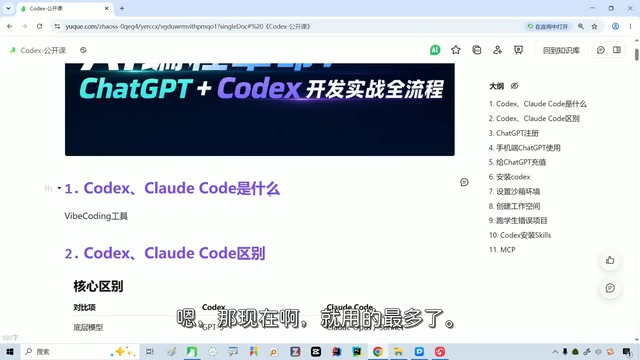
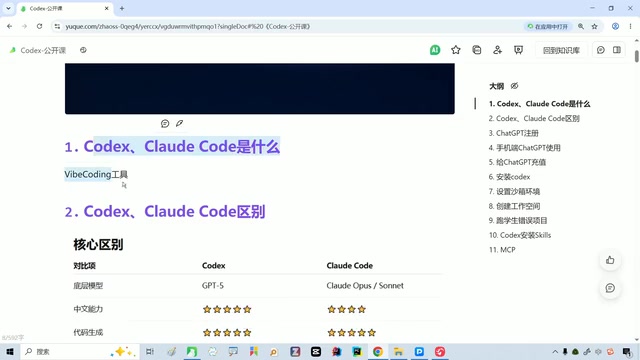
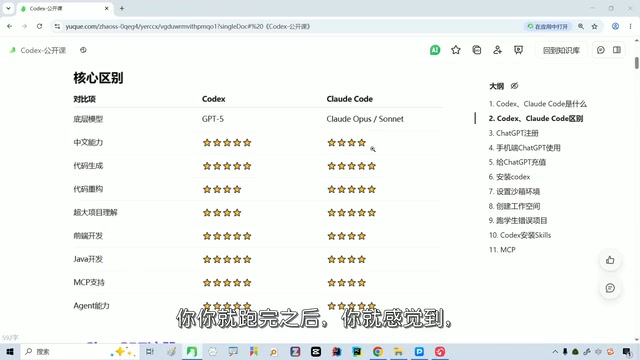
When choosing AI coding tools, users often face a trade-off between Codex and Claude Code. From practical experience, Codex's advantages show in several dimensions: more precise Chinese semantic understanding, requirements breakdown that better fits development logic, and more complete full-stack capability coverage. The creator specifically mentioned that Codex's app experience is an important reason for its high daily usage frequency.
Although Claude Code is also first-tier, the corresponding Claude model has higher usage costs, and some users choose to configure models like DeepThink to reduce expenses, though the results still lag behind the original overseas models. This also explains why many users prefer Codex paired with GPT models—finding a better balance between cost and performance.
Objectively speaking, there is indeed a certain gap between domestic and overseas models, but this gap is narrowing quickly. Tool choice will ultimately return to the cost-performance logic: whichever is better to use and cheaper is where users will go.
The Core Hurdles of Configuring Codex from Scratch
Many users want to use Codex but keep putting it off, with blockers mainly concentrated in account login, download and installation, and GPT configuration. In fact, these steps are not complicated in themselves, but because information is scattered and some channels deliberately create information gaps to profit, beginners are easily deterred.
The key to the configuration process is to clarify the order: first complete account registration and login, then install the local environment, and finally connect the GPT model. Each step has official documentation to follow, so there's no need to rely on paid third-party guidance. For beginners, walking through the complete process once means there will basically be no obstacles in post-class hands-on practice.
Sandbox Mechanism and Multi-Project Management
Codex's sandbox mechanism is an important safeguard for its safe operation. In a sandbox environment, the AI's modifications to code are restricted to a specific scope, avoiding accidental operations that affect other parts of the system. This design is especially critical for scenarios with multiple projects running in parallel—each project can run in an independent environment without interfering with others.
For multi-project management, Codex supports switching between different project directories, and the AI can understand the project structure based on the current context and make targeted code changes. In practice, users only need to clearly specify the project path and modification requirements, and Codex can complete the operations within the corresponding sandbox, greatly reducing the risk of accidental cross-project changes.
Editing code via page annotations is another practical feature of Codex. Users can directly annotate the locations on the page that need changes, and the AI locates the code accordingly and executes the changes. This approach directly connects visual feedback with code modification, reducing the back-and-forth cost of the traditional development cycle of "describing requirements—finding code—modifying and verifying."
Sandbox is an isolated runtime environment that prevents program behavior from affecting the host system by restricting process access to the file system, network, and system resources. In AI coding tools, the sandbox mechanism is especially important: because agents automatically execute commands and modify files, a misoperation or model hallucination could cause code loss or system damage. The sandbox limits the AI's scope of operations to the specified project directory, ensuring both safety and non-interference during multi-project parallel work. Common sandbox implementations include container isolation, privilege dropping, and file system virtualization. For users, understanding the boundaries of the sandbox helps configure project paths and permissions reasonably, avoiding an impact on user experience from permissions being too broad or too narrow.
A Long-Term Perspective on Tool Selection
From the industry trend, homogenized competition among AI coding tools will become increasingly intense. The current differences between Codex and Claude Code may narrow in the future as model capabilities converge. For users, what matters is to master the usage of one type of tool as early as possible and establish a workflow for collaborating with AI, rather than overthinking tool selection.
The creator candidly acknowledged in the share that their judgment is based on limited experience, that overseas models are temporarily ahead, but that domestic products are catching up quickly. This candor also reminds us: tools are means, and the ability to solve problems is the core. Getting proficient with Codex is more valuable than repeatedly comparing parameters.
One-line Summary
A systematic overview of Codex agent tool configuration, sandbox mechanism, and practical multi-project management essentials.
Paragraph Summary
Based on hands-on teaching experience, this article systematically introduces how to use AI coding agent tools such as Codex and Claude Code. It first distinguishes agent tools from pure large models—the former can operate the file system and execute commands, enabling beginners to complete programming tasks. It then compares Codex and Claude Code, noting Codex's advantages in Chinese understanding, requirements analysis, and full-stack capabilities. The article breaks down the account login, installation, and GPT integration process for configuring Codex from scratch, and explains in depth how the sandbox mechanism ensures safety for parallel multi-project work and how page annotation-based code editing connects visual feedback with code modification. Finally, from a long-term perspective, it advises users to master one type of tool early rather than overthinking selection.
Related articles
 Tech Frontiers
MuJoCo: An Analysis of DeepMind's Open-Source General-Purpose Physics Simulator
An in-depth analysis of Google DeepMind's open-source physics simulator MuJoCo: high-performance C++ kernel, MJCF modeling format, contact solving principles, MJX GPU acceleration, and robot reinforcement learning use cases.
 Tech Frontiers
Claude API Quick Start: The Official Quickstarts Project Collection
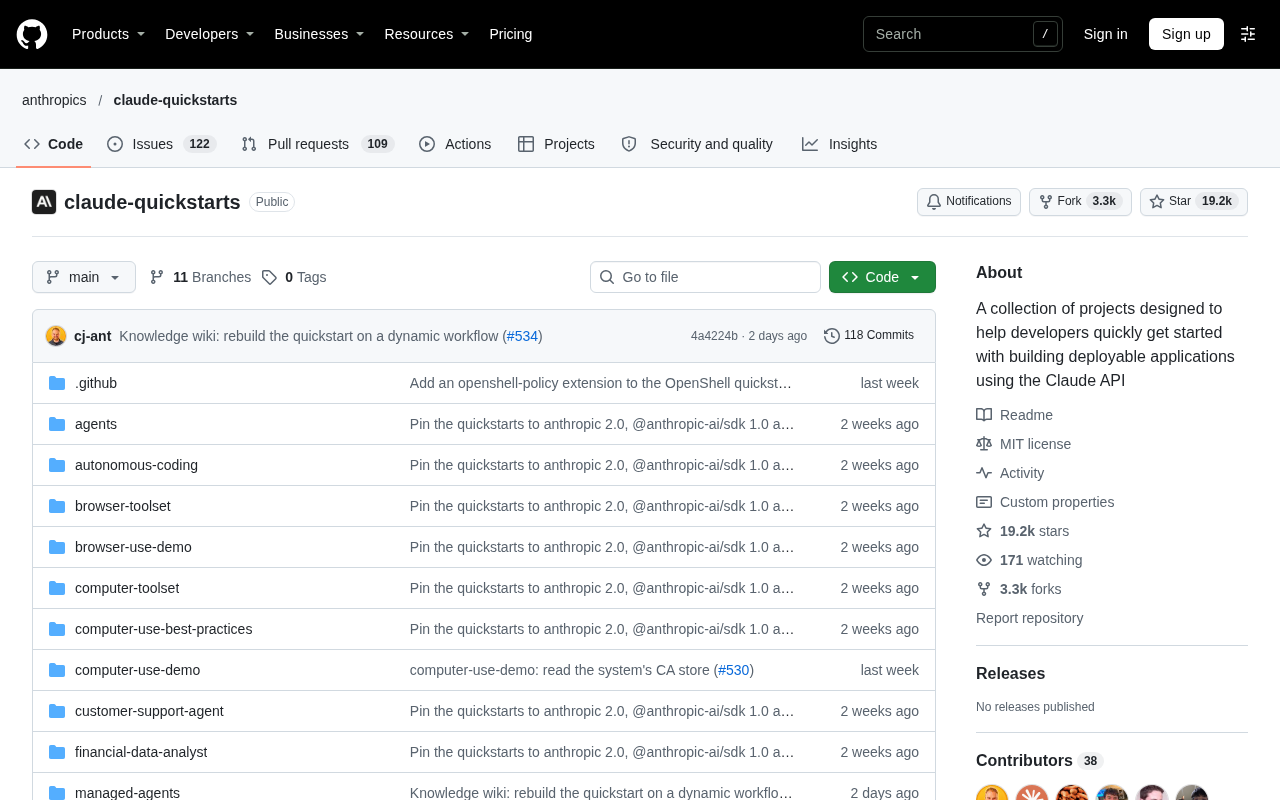
Anthropic's official claude-quickstarts project collection helps developers quickly build deployable apps with the Claude API. Nearly 20k stars, Python-based, great for beginners and prototyping.
 Tech Frontiers
AI Agents Connecting Directly to APIs: Which Calls Can Be Safely Allowed?
AI agents can call any API, but the real challenge is deciding which calls can be safely allowed. This article analyzes allowance decisions from three dimensions—intent matching, least privilege, and controllable impact—and argues that the control layer should sit outside the agent, combined with audit traceability to build a trustworthy API call governance mechanism.