Codex Integrated Code Review: A New Workflow for AI-Powered Pre-Merge Review

OpenAI Codex launches a unified code review interface, aggregating PRs, cloud pre-review, and customizable instructions to eliminate review bottlenecks.
OpenAI Codex's new code review feature addresses the code review bottleneck in development workflows. It provides an inbox-like interface that aggregates GitHub Pull Requests from multiple repositories, reducing tool switching. Cloud review automatically completes an initial assessment before opening the page, with comments displayed alongside code changes. Each PR has a private chat window that can draw on team review guidelines, design documents, and other knowledge assets. Review instructions are highly customizable, from brief summaries to risk analysis and even comic book style explanations. Reviewers and authors share the same workspace, and comments can be checked against diffs before acting directly within Codex. GitHub support is now generally available, with GitLab in preview.
Code review is becoming the biggest bottleneck in the development workflow. Code is everywhere—written fast, modified fast—yet the review process often lags behind. OpenAI Codex's newly launched code review feature attempts to consolidate this process into a unified interface, from discovering pending PRs to driving reviews to completion, all without switching tools.
One Inbox to Manage Pull Requests Across All Repositories
Codex provides an inbox-like interface that aggregates GitHub Pull Requests scattered across various repositories into one place. You can see review tasks assigned to you, changes you've initiated, and items that need priority attention.
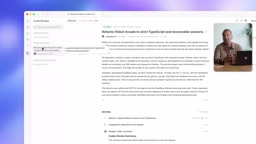
In practice, you can pin a pending PR to the sidebar for easy repeated access. This aggregated design solves a real pain point: developers jump back and forth between multiple repositories and tools every day, and just finding "what to review" consumes a significant amount of attention.
Pull Request (PR) is a core collaboration mechanism on code hosting platforms like GitHub. When a developer finishes modifications on a branch, they can initiate a PR to request merging the code into the target branch. A PR is not just a carrier of code changes—it's also a place for team discussion, review, and iteration. Each PR contains commit history, file diffs, comment threads, and review status (such as pending, approved, or changes requested). In large teams, developers often participate in multiple repositories simultaneously, with a huge and scattered number of PRs, making "finding what to review" a cognitive burden. Codex's inbox design targets this pain point by aggregating cross-repository PRs into a unified view and supporting pinning important PRs, reducing the overhead of switching between multiple tabs and notifications.
Cloud Code Review: First Round Completed Before You Even Open the Page
When the connector has the correct repository permissions, Codex's cloud review can automatically run an initial assessment. The comments it leaves on GitHub are synced and displayed in the Codex interface, so you can read feedback while viewing code changes without switching between two tools.

Each Pull Request comes with a private chat window. You can directly ask "summarize this change" or "explain the risks of this project," and the team's review guidelines, design documents, and various skills and connectors can all be brought into this context. This means review no longer depends on the reviewer's individual memory and experience—it can draw on the team's accumulated knowledge assets.
Cloud Code Review refers to executing code review tasks on remote servers rather than on the developer's local machine. The core advantage of this model is that reviews can be automatically triggered by cloud services immediately after a PR is created, without waiting for a reviewer to open a local IDE or browser. Cloud environments typically have independent computing resources, can process review requests from multiple repositories in parallel, and can run time-consuming operations like static analysis and dependency checks. For teams, cloud review also means review rules and context can be managed centrally rather than scattered across each developer's local configuration. Codex's cloud review leverages this architecture to complete an initial assessment and leave comments before the developer even opens the page.
Customizable Review Instructions: From Risk Analysis to Comic Book Style
Codex lets you customize review instructions to your preferences. Want a brief summary? Sure. Want risk analysis? Sure. You can even request explanations in a "comic book style"—no problem.

Behind this flexibility is a trend worth noting: AI-assisted code review is no longer a one-size-fits-all automated check, but a collaboration tool that can be tuned to team culture and individual habits. For reviewers, if cloud review has already run a round, you can still initiate a private review locally as an independent second-pass perspective.
Review Instructions are prompts or rule sets that guide AI code review behavior. Unlike the fixed rules of traditional static analysis tools, customizable review instructions allow teams to adjust the focus and output style of reviews according to their own needs. For example, you can require the AI to prioritize security vulnerabilities, performance regressions, or API compatibility, and you can also specify output formats as brief summaries, detailed risk analyses, or even explanations using metaphors or comic book style. This flexibility makes AI review no longer a one-size-fits-all automated check, but a collaboration tool that can integrate into team culture and workflows. Through custom instructions, teams can inject internal code standards, design documents, and best practices into the review process, making AI output more aligned with actual engineering context.
Completing Comments and Review Actions Within Codex
Reviewers can ask questions in Codex, draft comments in the team's style, and check comments against the actual code diff. Once confirmed, comments and review actions can be completed directly within Codex.
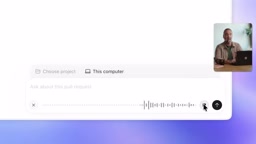
When switching to the author role, you can return to your own changes and address feedback item by item, again returning to the same place. This "reviewer and author sharing the same workspace" design reduces the chaos of traditional workflows where "review comments are scattered across GitHub notification emails."
A Practical Solution to the Code Review Bottleneck
The core logic of Codex's update is clear: the bottleneck in code review isn't the review itself, but the context switching and tool fragmentation surrounding it. Bringing the three steps of discovery, understanding changes, and driving review into a single interface is the answer it attempts to provide.
GitHub code review functionality is now generally available, and GitLab support is in preview. For teams drowning in PRs daily, this may be a workflow change worth trying.
Note: This analysis is based on the official Codex code review demo video on YouTube.
One-line Summary
OpenAI Codex launches a unified code review interface that aggregates PRs, cloud pre-review, and customizable instructions, aiming to eliminate review bottlenecks.
Paragraph Summary
OpenAI Codex's latest code review feature aims to solve the bottleneck of code review in the development workflow. It provides an inbox-like interface that aggregates GitHub Pull Requests from multiple repositories into one place, reducing tool switching. Cloud review can automatically complete an initial assessment before you open the page, with comments displayed alongside code changes. Each PR comes with a private chat window that can draw on team review guidelines, design documents, and other knowledge assets. Review instructions are highly customizable, from brief summaries to risk analysis and even comic book style explanations. Reviewers and authors share the same workspace, and comments can be checked against diffs before acting directly within Codex. GitHub support is now generally available, with GitLab in preview.
Related articles

Python 3.15 New Feature: Is the sentinel Type Better Than None?
Python 3.15 adds the sentinel type, using named unique sentinel objects to replace None and bare object(), resolving confusion among missing values, explicit emptiness, and invalid input while avoiding type hint failures.

Deep Learning's Three Architectures and the Universal Approximation Theorem: A Complete Guide to MLPs, CNNs, and Transformers
Explaining the inductive bias differences among MLP, CNN, and Transformer, the existence meaning of the Universal Approximation Theorem (UAT), and the role of Taylor expansion in approximation analysis, while clearing up common misconceptions.

GitLab Emergency Patch Release: Analysis of Critical Security Fixes
GitLab releases critical patch 19.5.1, sparking 355 points of discussion on Hacker News. This article analyzes the background, upgrade steps for self-hosted instances, and verification points to help DevOps teams respond quickly to security updates.