Codex Merges into ChatGPT: GPT-5.6's Three Tiers Explained — Sol, Terra, and Luna

Codex joins ChatGPT, and GPT-5.6 launches in three tiers: Sol, Terra, and Luna.
OpenAI has merged the Codex client into ChatGPT and introduced a new Work Mode for deep, agent-powered tasks. Simultaneously, GPT-5.6 launches as three tiers — Sol (flagship), Terra (balanced), and Luna (lightweight) — giving users a clear cost-vs-capability trade-off. Luna costs just one-fifth of Sol, while Sol matches GPT-5.5 pricing with improved coding performance.
Why Did the Codex Client Become ChatGPT?
Developers who've used Codex have probably noticed a significant change recently: after a client update, Codex has been folded into ChatGPT, which now includes a new "Work Mode." Meanwhile, OpenAI has quietly launched GPT-5.6, splitting it into three distinct versions: Sol, Terra, and Luna.
Some context helps here: OpenAI Codex was originally released in 2021 as a language model fine-tuned specifically for code generation, and it served as the underlying engine for GitHub Copilot. Built on the GPT-3 architecture and trained on billions of lines of public code, Codex could understand natural language descriptions and generate corresponding code. Merging the Codex client into the ChatGPT ecosystem marks OpenAI's move to consolidate "code intelligence" from a standalone product line into a unified platform — transforming the coding assistant from a simple code completion tool into an "Agent" capable of understanding entire codebases and executing multi-step development tasks.
At its core, this update is about consolidating entry points. After the update, the desktop app lets you freely switch between "Work Mode" and "Codex Mode" from the upper-left corner, with a separate chat entry point alongside. The three modes now have cleaner responsibilities:
- Chat Mode: Lightweight interactions like quick Q&A, research lookups, and ad-hoc copyediting.
- Work Mode: Deep daily work such as industry research, generating documents and presentations — with support for reading local files, calling desktop apps, and controlling a browser.
- Codex Mode: Focused on software development — reading repos, editing code, and handling professional programming tasks.
The capabilities described in "Work Mode" — reading local files, invoking desktop applications, controlling a browser — are fundamentally the "AI Agent" paradigm, where a large language model is combined with external tools. The key difference between an Agent and a standard chat model is that an Agent doesn't just generate text; it can execute actions, observe feedback, and adjust its subsequent behavior accordingly, forming a closed loop of "perception → decision → execution." The enabling technologies include Function Calling, Tool Use, and multi-step planning. Integrating these capabilities into "Work Mode" is a significant strategic step for OpenAI in transitioning ChatGPT from a passive chat interface into a proactive "digital worker."
Put simply, the biggest value of this update is that the entry points are unified, but the task boundaries are actually clearer than before.
GPT-5.6's Three Versions: What Separates Sol, Terra, and Luna?
The GPT-5.6 split into Sol, Terra, and Luna is essentially a three-tier system for "capability, speed, and cost," letting users choose based on how demanding a given task is.
Splitting a flagship model into multiple tiers is the mainstream commercial strategy among AI vendors today. Anthropic's Claude series has three tiers — Haiku, Sonnet, and Opus; Google's Gemini series similarly offers Flash, Pro, and Ultra. The technical logic behind this tiering is "model distillation" and "inference optimization" — lighter versions typically reduce compute consumption through knowledge distillation (transferring a large model's capabilities to a smaller one) or by reducing inference steps. For users, the core value of tiered models is "pay for what you need": instead of paying a premium for the flagship model on every task, you can dynamically select based on task complexity, getting more value per use without increasing overall spend.
Sol: Flagship — Highest Capability Ceiling
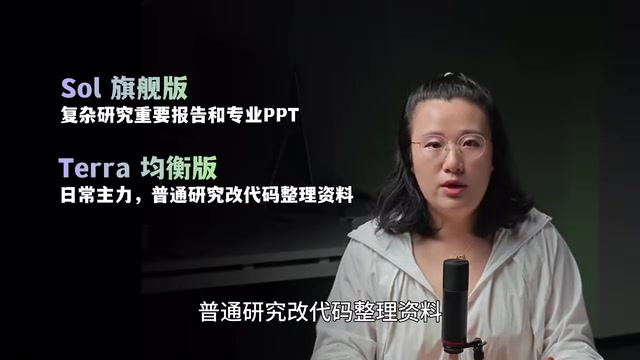
Sol has the highest capability ceiling of the three, making it ideal for complex research, long development workflows, important reports, and professional presentations where quality demands are extremely high. The more critical the task, the more you should reach for Sol.
Terra: Balanced — The Go-To for Everyday Work
Terra strikes the balance between capability and cost, suited for everyday tasks like routine research, code edits, and organizing information. For most users, Terra is more than enough to handle the vast majority of needs.
Luna: Fastest Speed, Lowest Cost
Luna prioritizes speed and low resource consumption, making it ideal for lightweight, high-frequency tasks like summarization, rewriting, classification, and batch processing. The lighter the task, the more Luna makes sense.
This "Sol → Terra → Luna" gradient gives users the power to make their own trade-offs between quality and cost, rather than defaulting to the most expensive model for everything.
GPT-5.6 Cost Comparison: A Look at Value Across All Three Tiers
Cost is what everyone wants to know. Before diving into the numbers, it's worth understanding the concept of Tokens: a Token is the basic unit of measurement for text processed by large language models. In English, roughly every 4 characters make up 1 Token; in Chinese, the character density is higher, so 1 Chinese character typically corresponds to 1–2 Tokens. Model billing is split into "input Tokens" (the prompts and context you send) and "output Tokens" (the model's generated response), with output Tokens generally priced higher because generation is more compute-intensive than reading. Credits are OpenAI's internal billing currency for subscribers, abstracting complex Token pricing into more intuitive numbers.
Converted to official Credits, the cost differences between the three tiers are clear:
| Version | Input (per 1M Tokens) | Output (per 1M Tokens) |
|---|---|---|
| GPT-5.5 | 125 Credits | 750 Credits |
| Sol | 125 Credits | 750 Credits |
| Terra | 62.5 Credits | 375 Credits |
| Luna | 25 Credits | 150 Credits |
Sol is priced the same as the previous GPT-5.5, Terra is half the price of Sol, and Luna is just one-fifth.
Converted to approximate message counts within a Plus account's 5-hour window:
- GPT-5.5: 15–80 messages
- Sol: 15–90 messages
- Terra: 20–110 messages
- Luna: 50–280 messages

Note that these figures aren't fixed. Actual consumption is influenced by context length, inference intensity, number of tool calls, and cache hit rates — treat them as rough estimates. Understanding this mechanism helps users proactively manage costs: shortening context, reducing unnecessary tool calls, and making good use of caching are all effective ways to reduce Token consumption.
Coding Performance: GPT-5.6 Sol vs. Claude
Coding is the headline improvement in this update. According to Artificial Analysis's coding agent index, GPT-5.6 Sol with Max Mode enabled scores 80 points — 2.8 points higher than Claude Fiber 5 — while consuming less than half the output Tokens and completing tasks in less than half the time.
Compared to GPT-5.5, GPT-5.6 consumes roughly one-third the Tokens per PR (Pull Request — the standard software development workflow for merging new features or fixes into the main codebase), with median completion time nearly halved. It's not just better — it's faster and cheaper.

It's important to interpret this data critically: Artificial Analysis's coding agent index is typically based on standardized task sets like SWE-bench — tests that ask models to independently locate and fix bugs in real GitHub repositories, using pass rate as the core metric. It's worth noting that benchmarks carry "distribution bias": the task types, difficulty distribution, and repo sizes in a test set may not represent the diversity of real-world development scenarios. Additionally, "Max Mode" typically means the model is allowed more reasoning steps and tool calls, which significantly boosts scores but also dramatically increases Token consumption. Benchmarks represent "ideal conditions" — actual development involves far greater complexity and uncertainty. When referencing such data, pay attention to test conditions, cost, and latency rather than just a single score.
How to Choose? A Selection Guide for Sol / Terra / Luna
Faced with three modes and three model versions, the selection logic is actually straightforward:
- Quick Q&A, research lookups, ad-hoc copyediting → Chat Mode
- Daily work, analysis from scratch → Work Mode (Terra)
- Important reports, complex research, professional presentations, long development workflows → Work Mode or Codex Mode (Sol)
- High-volume summarization, rewriting, classification, and other lightweight repetitive tasks → Luna

The core principle is always: the more critical the task, the more you should lean toward Sol; the lighter the task, the more you should lean toward Luna.
Summary
Three things from this update worth remembering:
- Unified entry point: Codex is merged into ChatGPT, with the desktop app allowing free switching between Chat, Work, and Codex modes.
- Clearer boundaries: Work Mode handles research and document generation; Codex Mode focuses on software development.
- Tiered options: GPT-5.6's Sol, Terra, and Luna tiers put the quality/speed/cost trade-off back in the user's hands.
For everyday users, the most noteworthy addition is the new "Work Mode" — it consolidates Agent capabilities like research, document generation, local file reading, and desktop app integration into one place, moving ChatGPT further along its journey from "chat tool" to "work platform." This shift aligns closely with the industry trend of products like Copilot and Cursor deeply embedding AI into workflows, and signals that competition among AI assistants is shifting from "who answers more accurately" to "who can do more for you." If you're curious, the update is live — it's worth trying hands-on.
Related articles
ChatGPT Space Launches: Team Collaboration and New Pages Features Explained
ChatGPT Space is OpenAI's new team collaboration feature with Pages, real-time collaboration, and Slack/Google Drive sync. We break down its privacy design, multi-platform integration, and the full workflow from conversation to document.

Migrating Apache Spark UDFs to GPU Acceleration with AI Agents
NVIDIA developer blog explains how AI Agents rewrite Apache Spark UDFs for GPU acceleration, covering migration criteria, agent rewriting and verification workflows, plus pitfalls like result consistency and CPU-GPU transfer overhead.
Zed Editor v0.40.4-rc2 Released: Usage Credits Now Available Without Upgrading
Zed editor releases v0.40.4-rc2, allowing users to use usage credits for AI features without upgrading to a paid plan, lowering the trial barrier.