Codex Mobile Experience: A Complete Workflow for Remotely Controlling AI Programming from Your Phone

OpenAI Codex adds mobile support for remotely controlling AI coding agents from your phone
OpenAI Codex has added mobile functionality allowing developers to remotely control coding agents on MacBook or Mac Mini via the ChatGPT mobile app. This enables starting tasks, iterating on code, and pulling context across platforms while away from the desk. It represents a new development paradigm where humans serve as supervisors and decision-makers for AI programming agents, achieving task continuity through seamless multi-device handoff and completely untethering development productivity from the desktop.
Core Concept: Development Productivity Is No Longer Tied to Your Desktop
OpenAI's Codex has launched mobile support, allowing developers to directly control remote development environments through the ChatGPT mobile app. This means you can continue pushing projects forward while you're out, answer Codex's questions, iterate on code—while your laptop stays safely at home.
This isn't simply "viewing code on your phone"—it's genuine remote AI programming collaboration: Codex executes tasks on your MacBook or Mac Mini, and you maintain connection and control via your phone.
It's worth noting that the Codex referenced here is not the earlier code completion model, but rather a Coding Agent system built on large models like GPT-4o. It can autonomously execute multi-step tasks in real operating system environments, including reading and writing files, running terminal commands, calling external APIs, and more. The core difference from traditional IDE plugins (like GitHub Copilot) is this: Copilot is a "suggester," while Codex Agent is an "executor"—it actively breaks down tasks, formulates plans, and completes them step by step, potentially asking users questions along the way to resolve ambiguities. The remote control implementation relies on persistent task threads and secure device connection protocols, allowing the mobile client to serve as a lightweight "console" while actual computational workloads still run on the local machine.
Scenario One: Picking Up Programming Work from Your Phone Where Your Laptop Left Off
Suppose you need to make a quick copy update for a release video and send the new file to your team. You're not near your laptop, but the project is already open in a Codex thread on your MacBook.
Via your phone, you can go right back to the same thread and work in the same MacBook environment—all those project files are still there. The specific workflow:
- Instruct Codex to update the video copy based on the latest feedback from a Slack channel
- Regenerate the Remotion screen recording and render the MP4
- Upload the updated file to Slack via the Computer Use feature

About Remotion: This is a React-based programmatic video creation framework that allows developers to produce videos the same way they build web applications—every frame is the render output of a React component. The fundamental difference from traditional video tools like After Effects is that video content is entirely code-driven, meaning it can be directly modified by an AI agent. When Codex needs to "update video copy and re-render the MP4," it's actually modifying text variables in TypeScript/JavaScript source files, then calling Remotion's CLI commands to trigger the rendering pipeline, ultimately outputting a standard MP4 file. This "code as video" paradigm makes AI-automated video production possible without the AI needing to understand complex video editing software interfaces.
About Computer Use: This is a class of AI capability first introduced by Anthropic in 2024 and subsequently adopted by OpenAI and others. It allows models to operate graphical interface applications just like a human—"seeing the screen, moving the mouse, clicking buttons, typing text." The underlying principle: the AI captures the current screen state via screenshots, uses visual understanding to identify the position and meaning of UI elements, then generates mouse coordinate and keyboard input instructions to complete operations. This means the AI can operate any software that lacks an API—including the Slack desktop client, browsers, local applications, etc. In Codex's workflow, Computer Use handles the "last mile" tasks: once code-level work is complete, it's responsible for uploading files to Slack, opening preview links in the browser, and other operations requiring GUI interaction.
The key point: because you're controlling Codex on your MacBook via your phone, you have access to all plugins, including Computer Use and Chrome browser extensions. This isn't a feature-stripped mobile version—it's the complete Codex experience.
Scenario Two: Pointing to an Always-On Machine to Completely Free Your Laptop
The second scenario is even more interesting. When you have a more complex task to kick off, you don't have to sit at your desk all afternoon. You can go for a walk, start the task from your phone, and check progress whenever you like.

If your laptop is already put away or inconvenient to access, you can point Codex to an always-on machine—like a Mac Mini.
Technical Background on "Always-On Machines": This concept originates from server operations, referring to computing devices that remain powered on, connected to the network, and ready to respond to requests at any time. In personal development scenarios, the Mac Mini has become a popular choice for building a personal "home development server" due to its low power consumption (typically 6-20W), silent design, and full macOS environment. Compared to cloud development environments (like GitHub Codespaces or Gitpod), the advantages of a local always-on machine include: access to the local file system, ability to run apps requiring a GUI (like Figma desktop, Slack client), no per-hour billing for compute resources, and lower network latency. By incorporating these machines into its device management system, Codex Mobile essentially upgrades a personal developer's workstation into a "private AI execution node"—maintaining data locality while gaining the always-reachable nature of cloud services.
The task demonstrated:
- Reference the Slack release thread, codebase, Figma designs, and release brief from Google Drive
- Create a Codex Mobile documentation page
- Run locally, open a PR, and send a preview link

Codex can pull context across multiple platforms—Slack, code repositories, Figma, Google Drive—then synthesize this information to complete the documentation. The entire process executes on the Mac Mini while you supervise and iterate via your phone.

Seamless Multi-Device Handoff: Task Continuity Is the Core
The essence of this workflow lies in task continuity. Whether Codex is running on your laptop, Mac Mini, or development server, your phone maintains the connection. When you return to your laptop, you can add the Mac Mini as a connection in Codex and continue working in the same task thread.
This solves a problem that has long plagued developers: leaving the computer meant all in-progress tasks had to pause. Now you can:
- While commuting: kick off a time-consuming build or deployment task
- At a coffee shop: answer Codex's clarification questions
- While on a walk: check task progress and provide next-step instructions
- Back at your desk: seamlessly resume all work
Deeper Impact on Development Workflows
The significance of Codex Mobile goes far beyond "being able to use Codex on your phone." It represents a new development paradigm: humans as supervisors and decision-makers for AI programming agents, rather than executors.
This paradigm is known in academia as a Human-in-the-Loop (HITL) system—retaining human judgment at critical nodes within AI automation workflows. In software engineering,
Related articles
 Product Reviews
The Programmer's Desk Setup Guide: Building a Workspace That Feels Like Home
Discover how programmers build productive, comfortable workspaces. From multi-monitor setups to ergonomic design, explore the desk philosophy that drives focus and flow.
 Product Reviews
Qoder vs Cursor Real-World Comparison: Which $20/Month AI IDE Is Better?
Hands-on comparison of Qoder vs Cursor AI IDEs: Agent autonomy, human interaction count, and architecture decisions. Qoder needed only 2 interactions vs Cursor's 8.
 Product Reviews
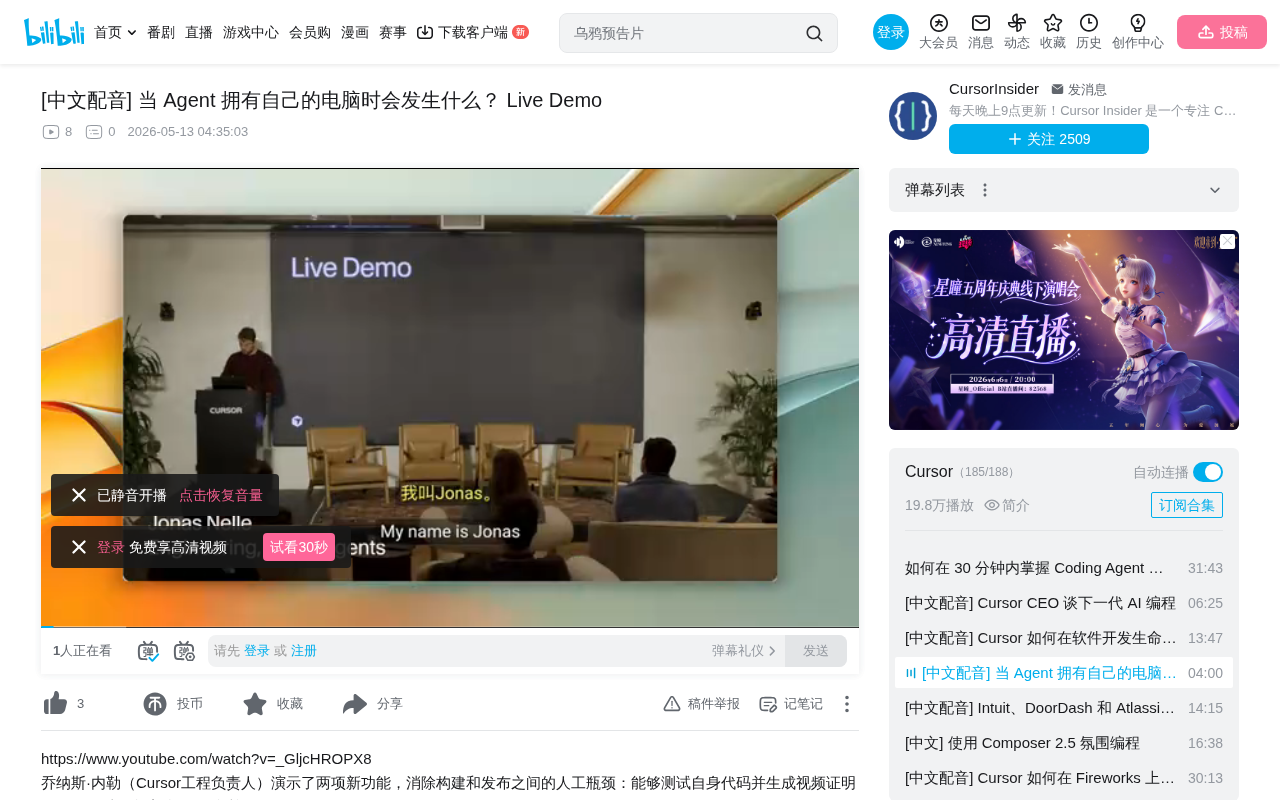
Cursor Cloud Agent Demo: Eliminating Bottlenecks Across the Entire Software Development Lifecycle
Deep analysis of Cursor's Cloud Agent demo showing how cloud VMs, automated test artifacts, and a full-chain control plane systematically eliminate human bottlenecks across the software development lifecycle.