Codex Overtakes Claude Code: A Hands-On Comparison and Selection Guide for AI Coding Tools

Codex overtakes Claude Code in hands-on tests, with UI polish and layout as the key differentiator.
In a surprising reversal from two months ago, Codex has overtaken Claude Code in hands-on AI coding tool tests, particularly excelling in page aesthetics and layout quality. The review also finds that tool pricing largely matches capability, while free options like DeepSeek impress for simple tasks. Developers are advised to stay flexible and regularly evaluate tools rather than committing to a single option.
Just two months ago, Claude Code was the undisputed leader in AI-powered programming, leaving Codex far behind. Yet in a mere two months, the tables have turned — Codex has surpassed Claude Code in multiple hands-on tests. What exactly happened in this AI coding tool ranking race?
Claude Code is an AI programming assistant from Anthropic, built on the Claude series of large language models and renowned for its powerful code comprehension and ultra-long context handling capabilities. Codex, on the other hand, is OpenAI's coding tool — a code-specialized version of the GPT model series that has seen significant capability improvements through multiple iterations. The core difference lies in their underlying model architectures and training data emphasis: the Claude series excels at long-context understanding and instruction following, while OpenAI's models have deep strengths in code completion and multi-language support. It's precisely this divergence in technical approaches that gives each tool distinct advantages in different dimensions.
Codex vs Claude Code Hands-On: Visual Polish and Layout Become the Deciding Factor
In this comprehensive test, the reviewer conducted a side-by-side comparison of multiple AI coding tools across several dimensions, including code generation, page layout, and UI aesthetics.
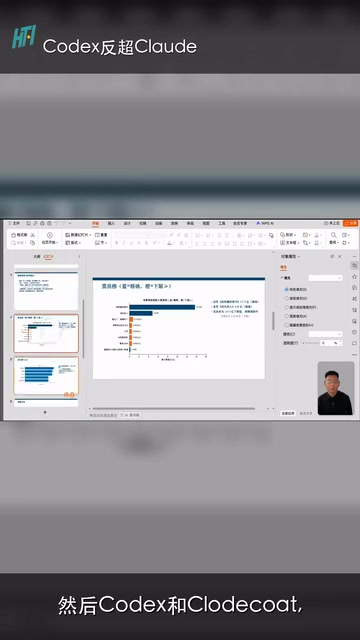
The results showed that Codex and Claude Code are close in overall capability, but Codex holds a slight edge in the details. Specifically, pages generated by Codex performed better in visual aesthetics and layout consistency, with a more cohesive overall visual effect.
Claude Code's performance this time was somewhat disappointing — generated pages exhibited issues like overly small fonts, misaligned elements, and unattractive table headers, resulting in a rather stiff overall appearance.
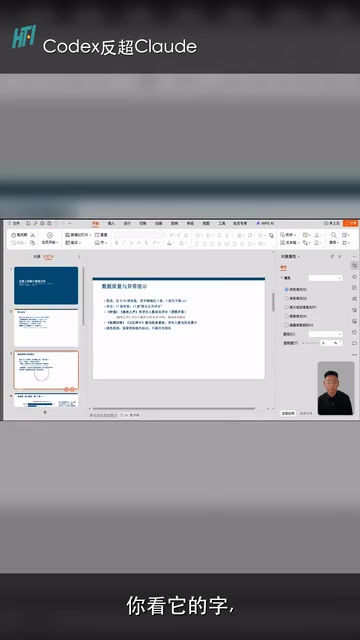
These seemingly minor UI issues directly impact user experience in real-world development. The quality of frontend code generated by AI coding tools goes beyond functional correctness — it also encompasses the rationality of CSS layouts, the completeness of responsive design, and the visual harmony of font sizes and spacing. These capabilities reflect how well the model has internalized design specifications (such as Material Design and Apple HIG) and mastered best practices for modern frontend frameworks (like Tailwind CSS, Flexbox, and Grid layouts). An AI tool that can generate visually appealing pages indicates that it was exposed to a large volume of high-quality frontend project code during training. For frontend development scenarios, layout and aesthetics are precisely the key metrics for measuring an AI coding tool's practical value.
Analyzing the Price-to-Capability Match of AI Coding Tools
After a comprehensive evaluation across all test categories, the reviewer reached an interesting conclusion: the pricing of current major models largely matches their capabilities.

Current AI coding tool pricing is typically based on token consumption (input and output text volume), API call counts, or subscription plans. For example, Claude Code charges per token through the Anthropic API, while Codex is integrated into OpenAI's ChatGPT Plus or API services. The price-capability alignment fundamentally reflects the economic relationship between large model training costs (compute, data, talent) and service pricing — stronger models require larger compute clusters and more refined RLHF (Reinforcement Learning from Human Feedback) tuning, and these costs ultimately pass through to end-user pricing.
This means the AI coding tool market is maturing — you roughly get the level of service you pay for. There's no tool offering a crushingly superior experience at rock-bottom prices, nor is there an expensive tool that dramatically underdelivers.
That said, Codex appears to offer slightly better value for money within this price-capability framework, as its overall performance edges ahead within the same price tier — something that surprised even the tester.
How Do Domestic AI Models and Free Options Perform?
Beyond the head-to-head between Codex and Claude Code, this test also covered multiple domestic (Chinese) models and free tools.

Performance among domestic models showed mixed results with no significant gaps. Notable mentions include:
- Grok (JRM): Slightly better within the domestic lineup, with relatively strong overall performance
- DeepSeek: As a free model, its performance was quite impressive and exceeded expectations
DeepSeek is an open-source large language model series from the company DeepSeek, with versions like DeepSeek-Coder and DeepSeek-V2 performing exceptionally well on code generation tasks. As a representative of domestic models, DeepSeek employs a MoE (Mixture of Experts) architecture that dramatically reduces inference costs while maintaining high performance — this is the technical foundation enabling its free service. The core idea behind this architecture is that the model contains multiple "expert" sub-networks, and only a subset is activated during each inference pass, significantly reducing computational overhead without sacrificing total parameter count.
DeepSeek's performance deserves special attention. The reviewer specifically noted that for simple local development tasks, the free models integrated in OpenCode can handle the job perfectly well, meeting everyday development needs. OpenCode is an open-source AI coding terminal tool that supports multiple model backends, allowing developers to switch between different model providers as needed for a flexible balance between cost and effectiveness. This is highly practical advice for individual developers on a budget.
The Industry Trends Behind This Two-Month Reversal
Looking back at the landscape two months ago, Claude Code had a substantial lead over Codex, yet now Codex has pulled ahead. This rapid shift in rankings reflects several important industry trends:
- Iteration speed determines competitiveness: AI coding tools update at an extremely high frequency — two months is enough to reshape the competitive landscape
- Detail optimization becomes the key differentiator: When core capabilities converge, details like layout and aesthetics become the deciding factors
- Free models are catching up fast: The rise of free options like DeepSeek is compressing the advantage space of paid tools
The technical drivers behind this two-month reversal span multiple layers: advances in model distillation enable smaller models to approach the capabilities of larger ones; continuous expansion of synthetic data and code-specific datasets improves code generation quality; and breakthroughs in post-training techniques — such as DPO (Direct Preference Optimization) and Constitutional AI — help models better align with users' programming intent. Additionally, engineering optimizations at the tool level (such as smarter context management, code indexing, and project-aware capabilities) are also evolving rapidly, and these non-model improvements have a significant impact on the end-user experience.
For developers, this means you shouldn't lock yourself into any single tool. Instead, stay attuned to market changes and choose flexibly based on actual needs. Use free tools for simple tasks and pick the best-performing paid option for complex projects — that's the most pragmatic strategy.
Conclusion: How to Choose Your AI Coding Tool
The biggest takeaway from this test is: the competitive landscape of AI coding tools is far from settled. Codex's comeback proves that challengers absolutely have the opportunity to overtake incumbents, and Claude Code may well reclaim the lead with its next update. For users, maintaining an open mindset and regularly evaluating tool performance is far wiser than "betting" on any single product.
From a practical standpoint, developers should build their own evaluation framework: for your most common development scenarios (such as frontend page generation, backend logic writing, code refactoring, etc.), periodically test different tools with the same prompts to form your own firsthand judgment. After all, there's often a significant gap between general benchmark results and your actual use cases.
Related articles

The Truth Behind Codex 'Build a Website in 5 Minutes': AI Isn't Creating Sites—It's Helping You Copy Them
Exposing the truth behind viral Codex 5-minute website videos: creators aren't building original sites with AI—they're copying shared prompts or scraping others' work. Learn AI coding tools' real limits.

Getting Started with AI Agent Development: A Complete Guide from Concept to Practice
A comprehensive guide to AI Agent architecture and development, covering automated marketing, intelligent customer service, and investment analysis scenarios with single and multi-agent collaboration.

The Truth Behind Codex 'Build a Website in 5 Minutes': AI Isn't Creating Sites — It's Helping You Copy Them
Exposing the truth behind viral Codex 5-minute website videos: creators aren't building original sites with AI — they're copying shared prompts or scraping others' work.