Codex vs Claude Code: A Real-World Comparison for Code Development and Academic Writing

Codex wins on quota for coding projects; Claude Code excels at understanding intent for academic writing.
A hands-on comparison of OpenAI Codex and Claude Code across three dimensions: usage quotas, coding ability, and intent understanding. Codex offers far more generous quotas, making it ideal for iterative code development. While both tools are equally capable at writing code, Claude Code better understands user intent, making it the stronger choice for academic paper writing.
Codex vs Claude Code: A Real-World Comparison for Code Development and Academic Writing
Which is better, Codex or Claude Code? This question keeps coming up more and more. As two of the hottest AI coding tools available today—one from OpenAI, the other from Anthropic—how do they actually differ when it comes to code development and academic writing? I've been using both intensively for a while now, and here are my honest thoughts.
When two AI coding tools go head-to-head, the real casualties turn out to be your wallet and your patience.
The Usage Quota Gap Is Absurd: Codex Is an All-You-Can-Eat Buffet, Claude Code Is a Michelin Restaurant
Let's start with the most obvious difference—usage quotas.
Codex's quota can only be described as "generous." I used it intensively for two days straight—writing code, revising code, running tests—and never once hit the limit. The experience is like walking into a seafood buffet where you can eat until you physically can't move.
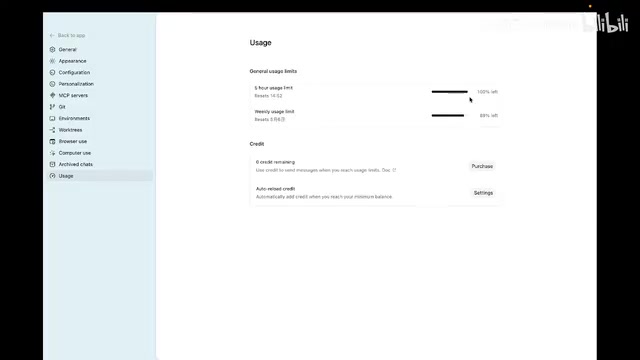
Claude Code, on the other hand, burns through its quota at an anxiety-inducing pace. Using it feels like watching your phone battery drop to 20%—your brain shifts into "conserve energy" mode. This actually makes sense given their technical architectures: Codex runs in a cloud sandbox with more optimized token management, while Claude Code, as a command-line tool, needs to pass large amounts of codebase context with each interaction, naturally burning through tokens much faster.
So on the quota dimension alone, Codex wins hands down.
Coding Ability: Evenly Matched, But Stamina Decides the Winner
When it comes to core code implementation capability, the two are actually neck and neck. I had them both write the same functional modules, and both delivered solid results—implementing the required logic correctly and handling edge cases appropriately.
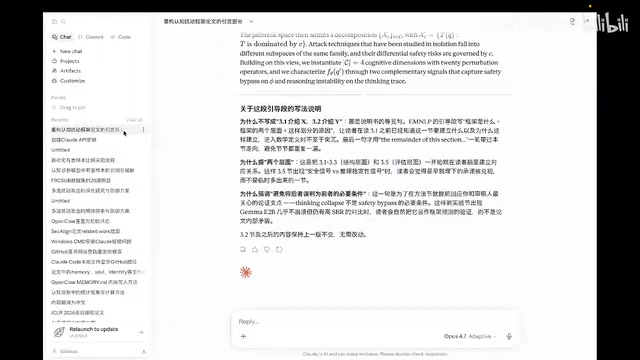
But here's the thing—saying their coding ability is similar is like saying "two chefs make equally good fried rice." The key difference is that one chef gives you unlimited eggs, while the other makes three plates and tells you "sold out for today."
In real project development, especially for complex projects requiring repeated iteration, every round of revisions consumes quota. Codex is like that intern who never gets tired—you ask it to revise ten times, it revises ten times. Claude Code is more like a highly capable senior consultant who only works four hours a day—the quality of each individual output is fine, but you have to be strategic about when you use it.
The conclusion is simple: if your project requires continuous iteration and refinement, Codex's quota advantage translates directly into a real productivity advantage.
Academic Writing and Intent Understanding: Claude Code's Home Turf
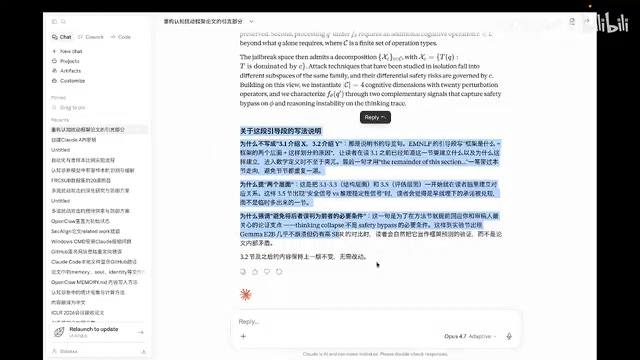
Now let's talk about the academic writing scenario, where the situation is reversed.
Writing code is straightforward engineering work—get the logic right and you're done. Writing papers is a more nuanced craft that requires understanding what you actually want to express. On this dimension, Claude Code is clearly superior.
Specifically, Claude Code is better at "getting your point." When you give it a vague direction—say, "I want to argue for this method's superiority in such-and-such scenario"—the content it generates is much closer to what you had in mind. This "intent alignment" ability is crucial in academic writing—after all, nobody wants to spend hours correcting an AI's misinterpretation of their arguments.
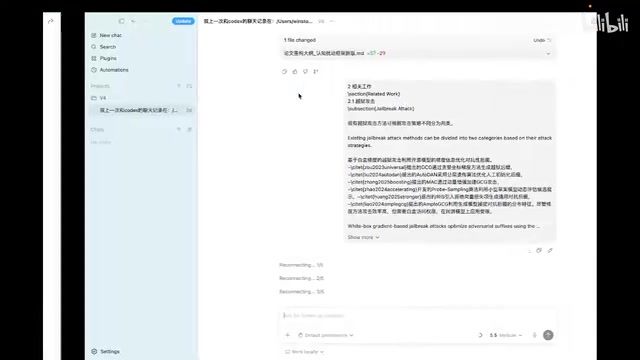
That said, there's one thing that's both lovable and frustrating. Current AI tools—whether Codex or Claude Code—share a common flaw: they're too eager to please. They agree with everything you say, lacking independent judgment and their own opinions.
Honestly, I kind of miss Claude Code's earlier "rebellious" personality. Earlier versions would straight-up tell you "your approach has problems" and even push back on your ideas with alternative suggestions. That kind of "honest friend" interaction is actually incredibly valuable in academic writing—you don't need a yes-man who agrees with everything; you need a partner who can help you spot logical gaps.
Now? If you told it the Earth is flat, it could write you a paper arguing exactly that. This is what the AI community calls the "sycophancy problem"—models tend to agree with users rather than offer objective judgments, all in the name of user satisfaction. Anthropic actually sparked community discussion about this issue in early 2025 and made some improvements, but the overall trend has been toward increasingly "obedient" behavior.
Final Recommendations: Codex for Code, Claude Code for Papers
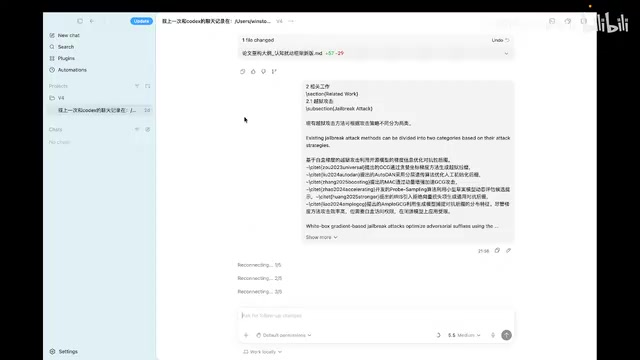
Looking at both tools' performance holistically, the conclusion is pretty clear:
| Dimension | Codex | Claude Code |
|---|---|---|
| Usage Quota | Very generous, hard to exhaust even with heavy use | Burns fast, requires conservation |
| Coding Ability | Solid, evenly matched | Solid, evenly matched |
| Sustained Iteration | Clear advantage (supported by quota) | Limited by quota |
| Academic Writing | Average | Better, understands your intent more accurately |
| Intent Understanding | Adequate | More precise, smaller gap from expectations |
For writing code, choose Codex. Not because it writes better code, but because it lets you keep writing without interruption—complex projects with repeated iterations won't be bottlenecked by quota limits.
For writing papers, choose Claude Code. Its understanding of user intent is more on-point, and the gap between generated content and your expectations is smaller, saving you significant back-and-forth revision time.
The ideal scenario is obviously using both—provided your wallet and patience are both thick enough.
One final honest thought: we complain that AI is too agreeable and lacks independent thinking, yet we furiously hit "regenerate" whenever it doesn't do what we want. At the end of the day, what we might really want isn't a perfect tool, but "another version of ourselves" that happens to think exactly like we do. The fact that "which AI to use" has become a question worth serious comparison—that alone tells us we're already living in a science fiction novel.
Related articles
 Product Reviews
The Programmer's Desk Setup Guide: Building a Workspace That Feels Like Home
Discover how programmers build productive, comfortable workspaces. From multi-monitor setups to ergonomic design, explore the desk philosophy that drives focus and flow.
 Product Reviews
Qoder vs Cursor Real-World Comparison: Which $20/Month AI IDE Is Better?
Hands-on comparison of Qoder vs Cursor AI IDEs: Agent autonomy, human interaction count, and architecture decisions. Qoder needed only 2 interactions vs Cursor's 8.
 Product Reviews
Cursor Cloud Agent Demo: Eliminating Bottlenecks Across the Entire Software Development Lifecycle
Deep analysis of Cursor's Cloud Agent demo showing how cloud VMs, automated test artifacts, and a full-chain control plane systematically eliminate human bottlenecks across the software development lifecycle.