Comet Browser Users Call for Claude Sonnet 5 Upgrade: A Deep Dive Into the AI Browser Dilemma

Comet users demand Claude Sonnet 5 upgrade, exposing the core challenges facing AI-native browsers.
A Reddit user's request to upgrade Perplexity's Comet browser to Claude Sonnet 5 reveals deeper issues in the AI-native browser space: lagging model iteration, stalled updates, poor stability, and a lack of multi-model options. This article explores the core tensions between model iteration, model choice, and stability in AI browsers.
The State of AI Browsers Behind a User's Request
Recently, a Reddit user posted asking when Perplexity's Comet browser would upgrade to Claude Sonnet 5. This seemingly simple question actually reflects the multiple challenges facing the AI-native browser space today: lagging model iteration, slow update cadence, subpar stability, and a lack of multi-model options.
AI-Native Browsers are a new category that has emerged since 2024. Beyond Perplexity's Comet, representative products include Dia from The Browser Company and Arc with integrated AI from Opera. The fundamental difference between this category and traditional browsers is that AI is no longer just a plugin or sidebar tool—it's deeply integrated into the browsing core, capable of proactively sensing user intent and executing actions on the user's behalf. Perplexity chose to enter the browser space starting from search, and the logic makes sense: search is a high-frequency starting point for browsing behavior, and having massive query data enables training models that better understand "browsing intent." However, as an OS-level entry point, browsers demand far higher stability than typical AI applications—which is precisely the engineering challenge facing first-generation AI browsers.
As the capabilities of large language models rapidly evolve, a browser's "Agent" capability—enabling AI to autonomously operate web pages and execute browsing tasks—is becoming the core of next-generation browser competition. The choice of model and the speed of iteration directly determine the intelligence ceiling of such products.
Lagging Model Versions: Comet's Core Pain Point
According to the user's feedback, Comet's Browser Use feature currently still runs on Claude 4.6, with Max subscription tier users able to access Opus 4.8 at most—a clear generation gap compared to Claude Sonnet 5.
Why Does the Model Version Matter So Much?
Browser Use is a technical paradigm that lets AI models directly control the browser interface. Essentially, it combines large language models with browser automation frameworks (such as Playwright and Puppeteer), enabling AI to click buttons, fill out forms, scroll pages, and extract information just like a human. The core challenge of this technology lies in the "perceive-decide-execute" loop: the model must understand the visual and DOM structure of the current page, plan the operational steps, and execute precisely. Unlike traditional RPA (Robotic Process Automation), AI-driven browser operations require no pre-written fixed scripts and can flexibly adapt to dynamically changing web content—which is exactly why they place extremely high demands on the model's reasoning ability.
For AI browsers, a model's reasoning ability and tool use capability directly determine whether it can accurately understand web page structures and complete complex multi-step tasks. Newer models typically bring:
- Stronger visual understanding: more accurate identification of web page elements
- More stable long-task execution: significantly fewer mid-task interruptions
- Lower "hallucination" rates: effectively avoiding erroneous operations
When competitors successively adopt the latest models, a version lag directly translates into a noticeable gap in user experience.
Multi-Model Options: The Flexibility Users Want
Beyond upgrading the existing model, the user also wants Comet to introduce GPT-series model options such as "Luna" and "Terra," reasoning that these models are "performing better and better in browser operations."
This request reflects a clear market trend: users are no longer satisfied with being locked into a single model, and instead want to freely switch to the most suitable model based on task type.
The Practical Value of a Multi-Model Strategy
Different models excel at different tasks:
- Some models are stronger at code comprehension and structured data processing
- Others perform better at natural language interaction and creative tasks
- In scenarios like browser operation that require combining vision and reasoning, model differences are especially pronounced
Offering multiple model options essentially hands the "choice" back to users, allowing power users to optimize their experience for specific scenarios.
Stalled Updates and Stability Issues
There's another noteworthy signal in the user feedback: Comet "hasn't had any updates in a long time." The user acknowledged it's a "decent browser," but bluntly pointed out several pressing issues:
Major Stability Issues
- Random context compression: unexpected compression during task execution, potentially causing the AI to "forget" earlier steps
- Tasks stopping mid-way: the Browser Use feature interrupts without reason, breaking task continuity
- Multi-tab glitches: random anomalies when too many tabs are open
Random Context Compression is a common pain point for current long-task AI agents. Large language models have a fixed context window limit. When the historical records, page screenshots, and operation logs accumulated during a browser task exceed this limit, the system automatically compresses or truncates earlier information. This causes the AI to "forget" the initial task goal or intermediate steps, creating operational discontinuity. Solutions typically include: hierarchical memory architectures (summarizing and storing key steps), external memory databases, and Agent frameworks designed specifically for long tasks. This is also why model versions with larger context windows offer significant value to AI browser products—they not only improve single-pass comprehension but also extend the reliable execution length of continuous tasks.
For users who rely on AI browsers to handle real-world workflows, a lack of stability severely undermines the product's value—an AI assistant that "randomly stops" struggles to handle mission-critical tasks.
Industry Challenges for AI Browsers, Seen Through One Case
While this post is the voice of a single user, the issues it reflects are quite representative.
Iteration Speed Is Competitiveness
In an era of rapid AI advancement, model update speed has become a core competitive advantage. User expectations are continually raised by the release cadence of cutting-edge models, and any lag gets amplified. For Perplexity, whose core selling point is AI, staying in sync with the latest models is critical.
Balancing Stability and Innovation
New features certainly grab attention, but foundational stability is what fundamentally retains users. While pursuing intelligence, AI browsers must solve underlying reliability issues like "random compression" and "task interruption"—no matter how powerful the model, it struggles to deliver value inside an unstable container.
Managing User Experience Through Subscription Tiers
Binding different model versions to subscription tiers is the mainstream path to commercializing AI products today. OpenAI (ChatGPT Plus/Pro) and Anthropic (Claude Pro/Max) both adopt similar strategies. The core logic is: high-performance models have significantly higher inference costs, so tiered pricing covers compute costs while the "capability gap" creates incentives to pay for upgrades. A tiered strategy where Max users get Opus 4.8 while regular tiers stay on older versions helps with monetization, but requires careful balance. If base-tier users are stuck using noticeably outdated models for the long term, accumulated frustration could backfire on brand reputation—users may abandon the product due to poor experience rather than upgrade, resulting in churn rather than conversion.
Conclusion: User Feedback Is the Product Roadmap
This request from Reddit is essentially a real user's "improvement checklist": upgrade the model, introduce multiple model options, fix stability, and speed up the iteration cadence.
For any AI browser vendor, this kind of plain feedback often carries more reference value than market research. In the still-early AI browser space, whoever can respond to user needs faster and find the balance between intelligence and stability is more likely to gain the upper hand in future competition.
Note: This article is compiled based on feedback from a single Reddit user. The model version numbers mentioned (such as Claude Sonnet 5, Opus 4.8, GPT Luna/Terra, etc.) are the user's own statements in the original post. Please refer to official releases for accurate product information.
Related articles
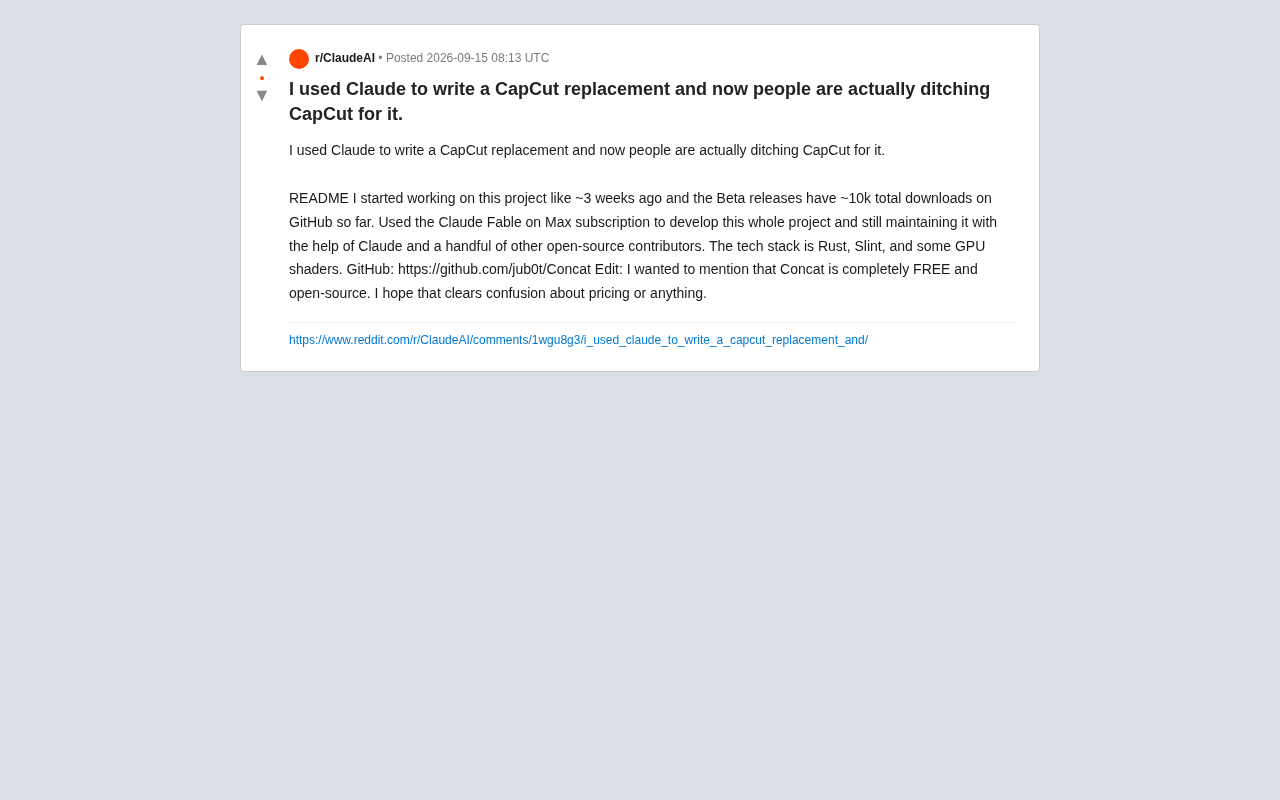
Building Open-Source Video Editor Concat with Claude: A Free Alternative to CapCut
A developer used Claude to build Concat, an open-source CapCut alternative, in just three weeks. With nearly 10K downloads, it's a striking example of AI-assisted solo development.
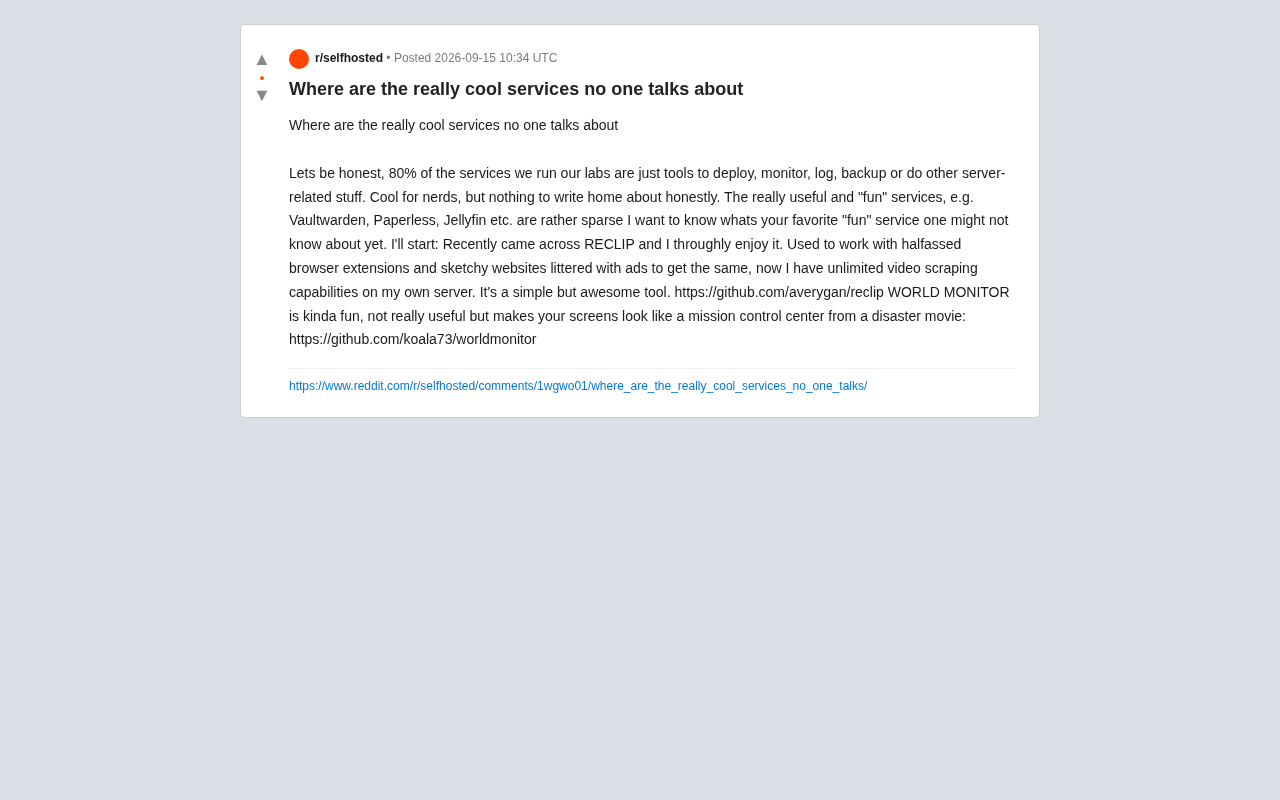
The Overlooked Gems of Self-Hosting: Fun and Useful Services Nobody Talks About
From a Reddit thread, we explore overlooked self-hosted services — including video scraper RECLIP and data viz project WORLD MONITOR — and why fun services are so rare.
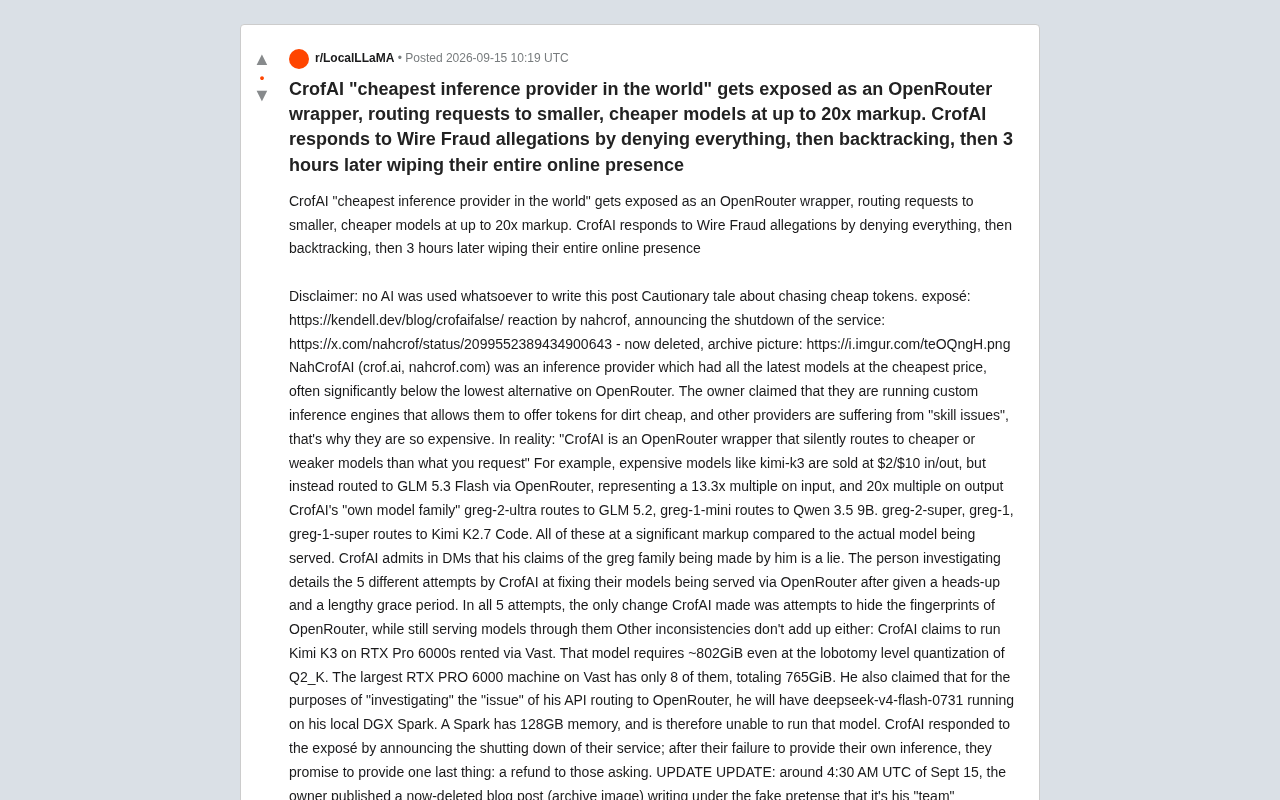
CrofAI Fraud Exposed: 'World's Cheapest AI Inference' Turns Out to Be an OpenRouter Wrapper Scam
CrofAI claimed to offer the world's cheapest AI inference, but was exposed as an OpenRouter wrapper silently rerouting requests to cheap models at up to 20x markups.