ComfyUI + Seedance Local AI Comic Deployment: A Critical Guide to What You're Actually Getting

Xianxia drama wrapper, paid course inside — local AI deployment has real value, but the one-click hype doesn't hold up.
A wave of Bilibili tutorials pitching "ComfyUI + local LLM one-click video generation" are essentially paid course recruitment videos dressed up as AI comic demos. The curriculum covers local agent setup, ComfyUI workflow automation, and private knowledge base integration — technically sound directions. The real value of local deployment lies in avoiding API costs and content restrictions, but VRAM requirements, open-source model quality gaps, and tuning complexity mean the "zero-skill one-click output" pitch is significantly overstated. Those interested should start from official docs and first principles rather than relying on pre-packaged bundles.
It Starts with a Cultivation Drama Clip
A wave of tutorial videos has recently flooded Bilibili, all pitching "ComfyUI + Seedance open-source local deployment" as their headline feature — promising no API required, no content restrictions, and one-click video generation for beginners. These videos typically open with an auto-generated clip from a xianxia (Chinese cultivation fantasy) short drama — scenes involving a senior sister, a fictional sect, heavenly rewards, and so on. The drama itself isn't the point; it's a showcase of AI-powered bulk generation of illustrated comics and short videos.

What the demo does reveal is that the current AI comic production pipeline can already chain together text scripts, storyboard images, and voiceovers into a single automated workflow. That's the real product these videos are selling — not the web-novel plot, but the intelligent agent automation workflow underneath it.
What the Video Is Actually Selling
Strip away the xianxia drama wrapper, and the content is essentially a recruitment pitch for a paid course: "Building MiniMax Local Agents and AI Automation Systems." The creator claims to have spent a month combing through Bilibili tutorials — from viral hits with millions of views down to niche guides with just a few hundred — and concluded that existing resources are "generally unsystematic and easy for beginners to stumble through." Hence, the course.
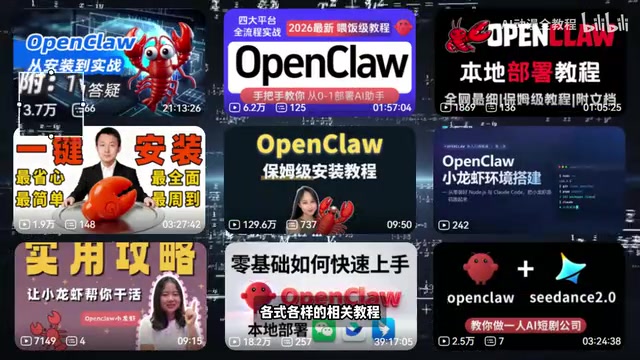
The curriculum is structured across three tiers:
- Foundational: Core concepts behind local agents, use cases for mainstream local LLMs, prompt engineering basics, and human-AI interaction fundamentals.
- Intermediate: Custom parameter configuration, Skill module development, automated task workflow design, and private knowledge base integration.
- Advanced: Batch document parsing, knowledge base Q&A bots, long-context task automation, community message smart replies, and connecting ComfyUI for agent-driven scheduling, bulk AI image generation, and short video production.
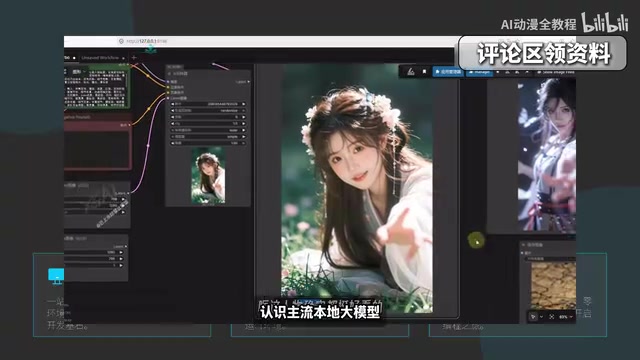
The syllabus does cover several common stages of deploying local AI applications in practice. But it's worth being clear-eyed: the business model here is "comment '666' to get the materials" plus a "like-follow-favorite" engagement funnel. The actual instructional content is never meaningfully delivered within the video itself.
MiniMax is a Chinese AI company whose products include conversational models, speech synthesis, and video generation. The video title places "MiniMax local agent" alongside "open-source local deployment" — a conflation that deserves scrutiny. MiniMax's core model services are typically delivered via cloud-based APIs. "Local agent" here refers more accurately to an agent scheduling framework (Agent Framework) running locally that calls MiniMax or other models' APIs to complete tasks — not a full download of MiniMax model weights for on-device inference. This distinction matters for understanding what the course actually delivers. The "local" in its description likely refers to the agent's logic and orchestration layer running on your machine, not fully offline model computation. The hardware requirements are much lower that way — but it also means you're still dependent on external APIs, with their associated costs and content policies.
The Real Value and Limits of Local Deployment
The three selling points the video leads with — no API fees, no content restrictions, runs locally — do reflect genuine needs for a subset of creators. Running image generation locally via ComfyUI, paired with a locally-hosted LLM-driven agent, can in theory free you from cloud API costs and content policy constraints, keeping the entire production pipeline under your own control.
For creators focused on bulk AI short video production and monetization through volume, local deployment genuinely does reduce marginal costs. ComfyUI, as a node-based workflow tool, is also well-suited for chaining generation, editing, and scheduling into an automated pipeline.
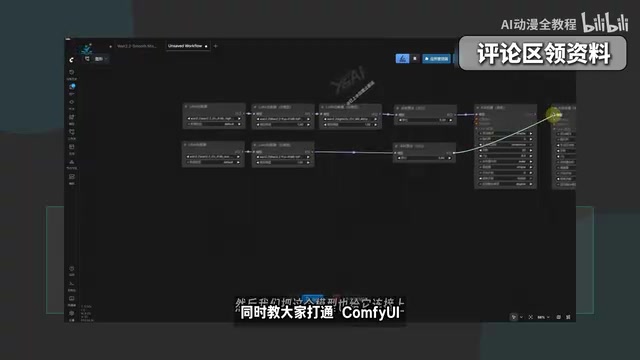
The limitations, however, are just as real. Local deployment has meaningful hardware requirements, particularly around VRAM. Local open-source models typically fall short of closed commercial models on image quality and consistency. And "one-click video generation" as a marketing phrase tends to paper over the substantial work involved in tuning parameters, debugging errors, and post-processing. Whether a complete beginner can actually run the full pipeline end-to-end depends heavily on their technical aptitude and debugging patience — it's nowhere near as effortless as the video title implies.
ComfyUI is a Stable Diffusion frontend built around a node graph paradigm. Users connect functional nodes — samplers, model loaders, image post-processors, and more — by dragging and wiring them together to build reusable generation workflows, rather than working through a command line or fixed UI. This design makes it naturally suited for automated batch tasks: a single workflow can be triggered by a script to run an unattended loop of "input prompt → generate image → post-process → export." The local LLMs typically paired with it are open-source models (such as Llama or Qwen series) hosted via tools like Ollama or LM Studio, handling text-side tasks like script writing, caption generation, and intelligent scheduling. The two are connected via APIs or custom nodes, forming the backbone of what these videos call an "intelligent agent automation workflow." On the hardware side, running mainstream image generation models like SDXL requires at least 8GB of VRAM; running larger local LLMs may additionally demand significant system RAM or require quantization — a hard threshold that "one-click beginner deployment" pitches routinely gloss over.
How to Approach This Type of Tutorial
If you're genuinely interested in AI comic production or local agent automation, these videos can serve as an entry point for understanding the technical landscape — they do at least sketch out the broad shape of the "local LLM + ComfyUI + automation workflow" stack.
But watch out for two things. First, the gap between the marketing language and actual difficulty: "no censorship" and "one-click output" are click-bait labels, not technical guarantees. Second, the "comment for free resources" hook almost always leads into a paid course funnel — the actual quality of the free materials is something you'll have to evaluate yourself.
A more reliable approach is to go directly to the official documentation and community tutorials for ComfyUI, open-source LLMs, and the relevant agent frameworks — building from first principles rather than relying on someone's pre-packaged "hand-holding" deployment bundle. The reason: the moment something breaks or the workflow gets updated, people who only know how to run a pre-built package have nowhere to turn. Ironically, this is exactly what the video creator identifies as the goal of the intermediate curriculum: moving from "only knowing how to run pre-built packages" to "being able to modify, build, and customize." That's a fair goal. But reaching it requires understanding the underlying logic — not being lured in by a cultivation drama clip.
Related articles

Chain of Thought Isn't Just for AI: How Humans Can Use CoT to Improve Thinking Quality
Chain of Thought isn't just a prompt trick for large models. Starting from a Hacker News discussion, this article analyzes why CoT works for human thinking too, breaks down actionable ways to transfer it, and highlights the key differences between human CoT and machine CoT.
Cloudflare Teams Up with OpenAI: Closi…
Cloudflare Teams Up with OpenAI: Closing the Loop from Vulnerability Discovery to Defense with AI
Cloudflare uses OpenAI Daybreak to investigate security vulnerabilities and generate reviewable remediation plans, while developers use Codex to boost coding efficiency and quality.

Orca Multi-Agent Orchestration in Practice: A Guide to Parallel Collaboration with Claude and Codex
Orca is Stable AI's free open-source agent workbench supporting 34 agents like Claude Code and Codex in parallel. Learn its Git worktree isolation, multi-model orchestration, and mobile management.