Complete AI Agent Development Tutorial: From Concepts to Hands-On Implementation
A structured AI Agent development guide covering cognition, frameworks, and enterprise-level projects.
This comprehensive AI Agent tutorial addresses the common gap in existing resources by following a three-phase learning path: Cognition (understanding ReAct, planning, memory mechanisms), Advanced (mastering LangChain, AutoGen, Function Calling, RAG), and Hands-On Practice (building intelligent customer service, data analysis agents, and multi-Agent collaboration systems). It emphasizes building foundational understanding before diving into code.
Why Most Agent Tutorials Don't Work
As large model capabilities continue to evolve, AI Agents have gradually moved from buzzword status to real-world production deployment.
Technical Background of Large Models and AI Agents
Large Language Models (LLMs) refer to deep learning models with parameters ranging from billions to hundreds of billions, such as OpenAI's GPT series, Google's Gemini, and Meta's Llama. These models acquire powerful language understanding and generation capabilities through pre-training on massive text datasets. However, traditional LLMs primarily operate in a "prompt-response" interaction mode, essentially functioning as passive Q&A systems.
AI Agents represent an evolved form of LLM capabilities. They can not only understand and generate text but also autonomously plan tasks, invoke external tools (such as search engines, databases, and API endpoints), execute multi-step operations, and dynamically adjust strategies based on execution results. From a technical architecture perspective, Agent = LLM + Planning + Memory + Tool Use, which upgrades AI from a "conversational assistant" to a "task executor." Current mainstream Agent implementation frameworks include LangChain, AutoGen, Semantic Kernel, and others, providing developers with standardized toolchains for building intelligent agent applications.
However, for beginners looking to get started with Agent development, existing tutorials share a common pain point: they either pile on buzzwords like "autonomous planning" and "tool invocation," stacking concepts without any hands-on practice, or they dump massive blocks of code, leaving learners calling APIs blindly before they even understand what problem an Agent is supposed to solve.
The creator of this systematic AI Agent tutorial reviewed virtually all Agent-related content on Bilibili and YouTube before production — from technical blogs to GitHub open-source projects — and concluded that over 90% of tutorials suffer from being either "heavy on concepts, light on practice" or "heavy on code, light on understanding." Based on this observation, the author spent a full four months breaking down the core Agent knowledge into three progressive chapters: Cognition, Advanced, and Hands-On Practice.
This teaching philosophy of "build understanding first, then get hands-on" addresses the most common pitfall for beginners: getting lost in API calls and framework configuration details before understanding how an agent "thinks," ultimately knowing how to use tools without understanding the underlying principles.
Cognition Chapter: Building a Foundational Understanding of Agents
The first chapter focuses on the most easily overlooked yet most important part — cognition. Many people can't distinguish between "chatting with an LLM" and an "Agent." Simply put, regular LLM conversations are passive responses, while Agents possess the ability to proactively plan, invoke tools, and execute tasks — they can actually "get work done."
ReAct Framework and Core Mechanisms
The course uses relatable analogies to explain several core concepts:
- ReAct Framework: Enables Agents to loop between "Reasoning" and "Acting," thinking and executing simultaneously
- Planning: Breaking down complex tasks into executable sub-steps
- Reasoning: Making judgments and decisions based on current information
- Memory: Allowing Agents to retain context and historical information
Theoretical Foundation of the ReAct Framework
The ReAct (Reasoning and Acting) framework is an Agent design paradigm proposed by researchers from Google and Princeton University in 2022. Its core idea is to interleave reasoning and acting. While traditional Chain-of-Thought methods focus solely on the reasoning process, ReAct enables Agents to continuously adjust strategies during execution through a "Think-Act-Observe" loop.
Specifically, the ReAct workflow is: 1) Thought: The Agent analyzes the current state and decides what to do next; 2) Action: Invokes tools or executes operations; 3) Observation: Obtains execution results; 4) Returns to Thought for re-evaluation. This cyclical mechanism gives Agents a human-like ability to "think while doing," enabling them to handle complex tasks requiring multi-step reasoning and external information retrieval. The ReAct framework has become the de facto standard for current Agent development and is deeply integrated into mainstream frameworks like LangChain and LlamaIndex.
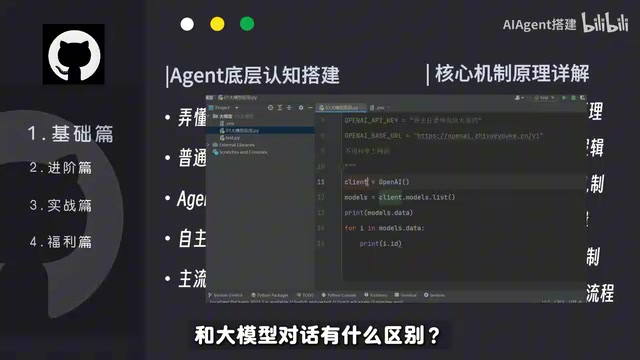
These mechanisms are precisely what differentiate Agents from regular conversational models. Understanding them is essential to grasp why Agents can autonomously complete multi-step complex tasks. The cognition chapter concludes by guiding learners through running their first Agent Demo, experiencing firsthand the complete workflow of an agent "getting work done," giving abstract theory a concrete anchor.
Advanced Chapter: Mainstream Frameworks and Engineering Practice
With foundational understanding in place, the second chapter enters the realm of real engineering practice. This section covers the most mainstream tech stacks and engineering challenges in current Agent development.
Framework Practice and Tool Invocation
The advanced chapter focuses on hands-on application of two major frameworks:
- LangChain: Currently the most popular LLM application development framework, offering rich components including chain calls, memory management, and more
- AutoGen: Microsoft's multi-Agent collaboration framework, excelling at building conversations and cooperation between agents
LangChain Framework Ecosystem
LangChain is currently the most mature LLM application development framework, created by Harrison Chase in October 2022, surpassing 80,000 GitHub stars in just over a year. It provides a modular component system including: Models (model interface layer supporting OpenAI, Anthropic, open-source models, etc.), Prompts (prompt template management), Chains (chaining multiple operations together), Agents (agent implementation), Memory (memory management supporting conversation history, vector storage, etc.), and Callbacks (callback mechanisms for logging and monitoring).
LangChain's core advantage lies in its abstraction layer design — developers don't need to worry about underlying API differences and can quickly switch between different model providers. Additionally, LangChain offers extensive tool integrations such as search engines (Google, Bing), databases (SQL, vector databases), document loaders, and code executors. In 2024, LangChain released LangGraph for building stateful multi-Agent systems and LangSmith for production monitoring and debugging, forming a complete enterprise-grade development toolchain.
Beyond these, the chapter also covers Function Calling — the core technology enabling Agents to invoke external tools — as well as the RAG (Retrieval-Augmented Generation) + Agent hybrid architecture. This is currently the most practical technology combination in enterprise applications, enabling Agents to provide accurate answers based on private knowledge bases.
Function Calling Technical Mechanism
Function Calling is a key feature introduced by OpenAI in June 2023 for GPT-3.5 and GPT-4, enabling LLMs to invoke external functions and APIs in a structured manner. The mechanism works as follows: developers define available functions using JSON Schema in the request (including function names, parameter types, descriptions, etc.), the model returns the function name and parameter values to call based on user intent, the developer executes the function and returns results to the model, and the model generates a final response based on execution results.
Compared to traditional text parsing approaches, Function Calling provides reliable structured output, eliminating the need for complex regular expressions or prompt engineering. This technology is the foundational layer enabling Agents to "invoke tools," allowing them to access databases, call weather APIs, execute code, manipulate file systems, and more. Currently, Function Calling has become a standard feature across mainstream models — Anthropic's Claude, Google's Gemini, open-source Llama 3, and others all support similar mechanisms (some refer to it as Tool Use).
RAG and Agent Fusion Architecture
RAG (Retrieval-Augmented Generation) is a technique proposed by Meta AI in 2020 that combines external knowledge base retrieval with LLM generation, addressing model knowledge freshness and hallucination issues. A typical RAG pipeline includes: document chunking, vectorization (using Embedding models), storage in vector databases (such as Pinecone, Weaviate, Milvus), similarity search, and injecting retrieved results as context into the Prompt.
The RAG + Agent hybrid architecture is the current best practice for enterprise applications: the Agent handles task planning and tool invocation, while RAG serves as one of its tools providing knowledge retrieval capabilities. This architecture is particularly suitable for scenarios requiring Q&A and decision-making based on private documents (such as internal company policies, product manuals). Technical challenges include: retrieval accuracy optimization (adjusting chunk size, overlap strategy, re-ranking algorithms), context window management (balancing retrieval quantity with token limits), and hybrid retrieval (combining keyword and semantic search). Mainstream solutions like LlamaIndex specialize in RAG capabilities and integrate seamlessly with LangChain's Agent modules.
Evaluation, Debugging, and Safety Boundaries
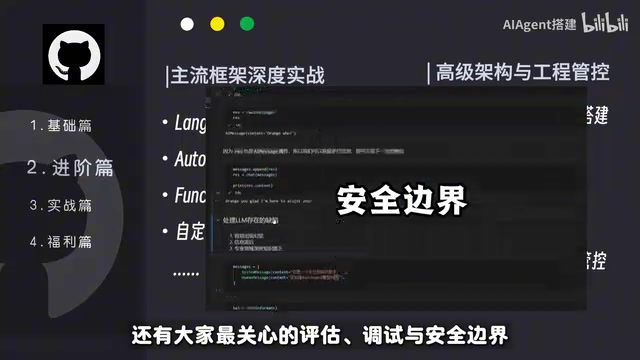
Notably, the advanced chapter doesn't shy away from the trickiest aspects of Agent development — evaluation, debugging, and safety boundaries. This is precisely the content many tutorials deliberately skip. Agent outputs are inherently non-deterministic, and how to evaluate performance, debug abnormal behavior, and set up safety guardrails to prevent agents from "going out of bounds" are practical problems that must be solved in production environments. Every lesson comes with runnable code and materials, lowering the barrier to following along.
Hands-On Chapter: Enterprise-Level Project Implementation
The third chapter integrates knowledge from the first two chapters and applies it to real enterprise-level scenarios. This is also the ultimate test of learning outcomes — whether you can independently design and develop intelligent agent applications that solve real business problems.
Three Typical Enterprise Scenarios
The course features three representative hands-on projects:
- Intelligent Customer Service Agent System: From intent recognition to automatic ticket routing, simulating the complete business workflow of enterprise customer service
- Automated Data Analysis Agent: Automatically generates reports and charts after uploading Excel files, showcasing the power of Agents in office automation
- Multi-Agent Collaboration Pipeline: Multiple agents work together like a team with division of labor, collaborating to complete complex tasks
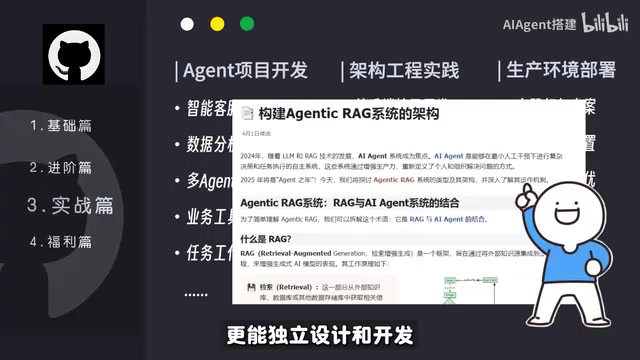
These three projects progress from single Agent to multi-Agent, from simple tasks to complex collaboration, forming a complete capability advancement path. Multi-Agent collaboration especially represents the cutting edge of Agent technology — through role specialization and coordination, multiple agents can handle complex workflows that a single Agent would struggle with.
Multi-Agent Collaboration Systems
Multi-Agent Systems (MAS) represent a frontier direction in the AI Agent field. The core concept is having multiple Agents with different specialized capabilities work together collaboratively, similar to division of labor in human teams. Typical architectural patterns include: 1) Hierarchical: A Manager Agent handles task assignment and result integration while Worker Agents execute specific tasks; 2) Peer-to-peer: Multiple Agents collaborate as equals through consensus protocols; 3) Competitive: Multiple Agents solve the same problem simultaneously, with the best solution selected.
Microsoft's AutoGen is the representative framework for multi-Agent development, implementing flexible collaboration mechanisms through defining Agent roles, conversation patterns, and termination conditions. In practical applications, multi-Agent systems can build code generation teams of "researcher + programmer + reviewer," or data analysis pipelines of "data analyst + visualization expert + report writer." Technical challenges include: inter-Agent communication protocol design, conflict resolution mechanisms, task dependency management, and cost control (multi-Agent systems significantly increase API call volume). Current research hotspots include Agent communication language standardization and large-scale Agent society simulation.
Learning Path and Practical Recommendations
Looking at the overall structure, the value of this tutorial lies in building a clear learning path: Cognition (understand principles) → Advanced (master engineering) → Hands-On (achieve deployment). This design avoids two common extremes for beginners — either remaining stuck at the conceptual level unable to get hands-on, or drowning in code details without knowing why.
For readers looking to get started with Agent development, here's the recommended learning path:
- Start with cognition: Don't rush to write code. First understand the fundamental difference between Agents and regular conversations, and master core mechanisms like ReAct, planning, and memory
- Then practice frameworks: LangChain and AutoGen are the current mainstream choices; Function Calling and RAG are essential skills
- Prioritize engineering practices: Evaluation, debugging, and safety boundaries are the critical thresholds between a demo and production
- Build projects hands-on: Intelligent customer service, data analysis, and multi-Agent collaboration are three excellent practical exercise directions
As Agent technology continues to mature, mastering the complete development capability from principles to deployment will become a core competitive advantage for AI practitioners. Compared to fragmented, piecemeal learning, a systematic and structured tutorial helps learners build transferable knowledge frameworks more quickly.
Key Takeaways
Related articles
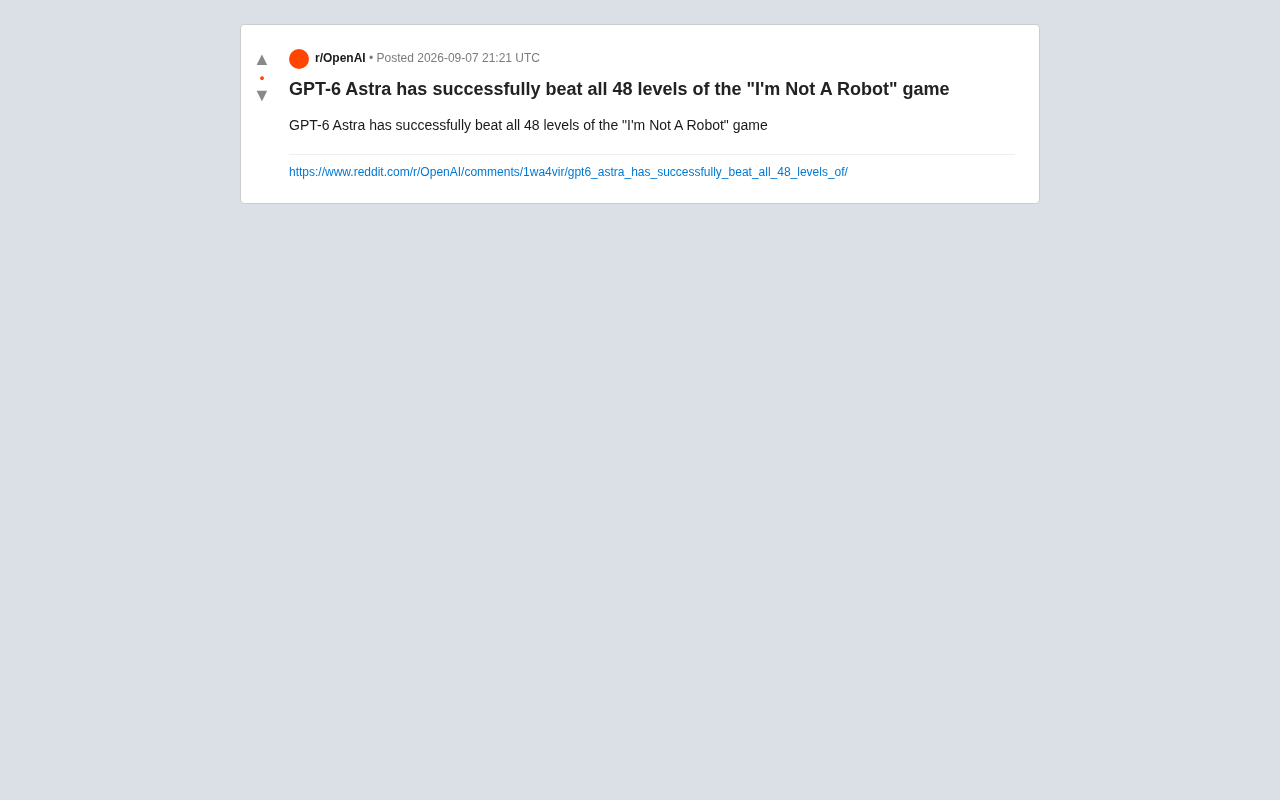
GPT-6 Astra Completes All 48 Levels of 'I'm Not A Robot' Game
GPT-6 Astra successfully completes all 48 levels of the 'I'm Not A Robot' game, demonstrating remarkable visual understanding, logical reasoning, and task adaptation. This article analyzes the technical capabilities behind this breakthrough and its implications for CAPTCHA verification and AI safety.
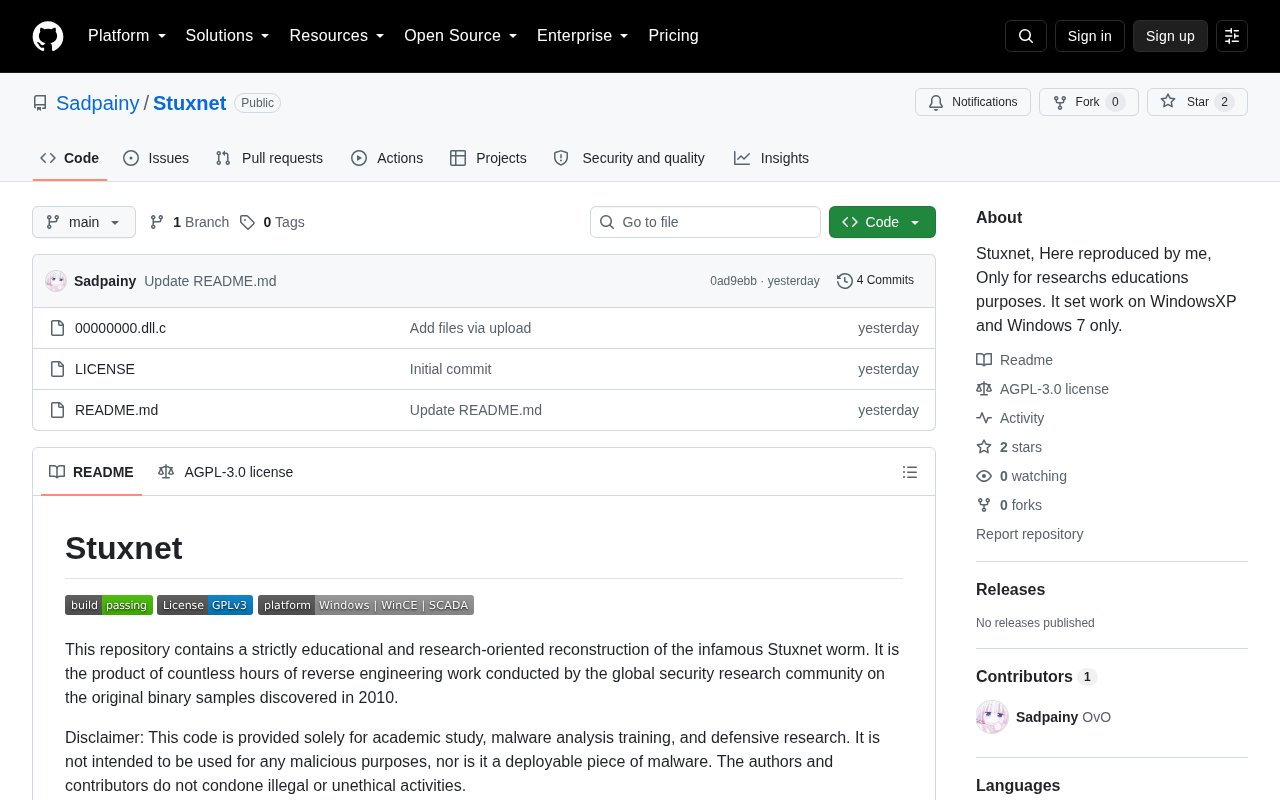
Stuxnet Source Code Reconstruction: Dissecting the Attack Chain of History's Most Complex Cyber Weapon
In-depth analysis of the Stuxnet source code reconstruction open-source project, examining how this cyber weapon targeting Iranian nuclear facilities exploited four zero-day vulnerabilities, stole digital certificates, covertly manipulated PLC centrifuges, and exploring industrial security lessons and ethical controversies of open-source reconstruction.
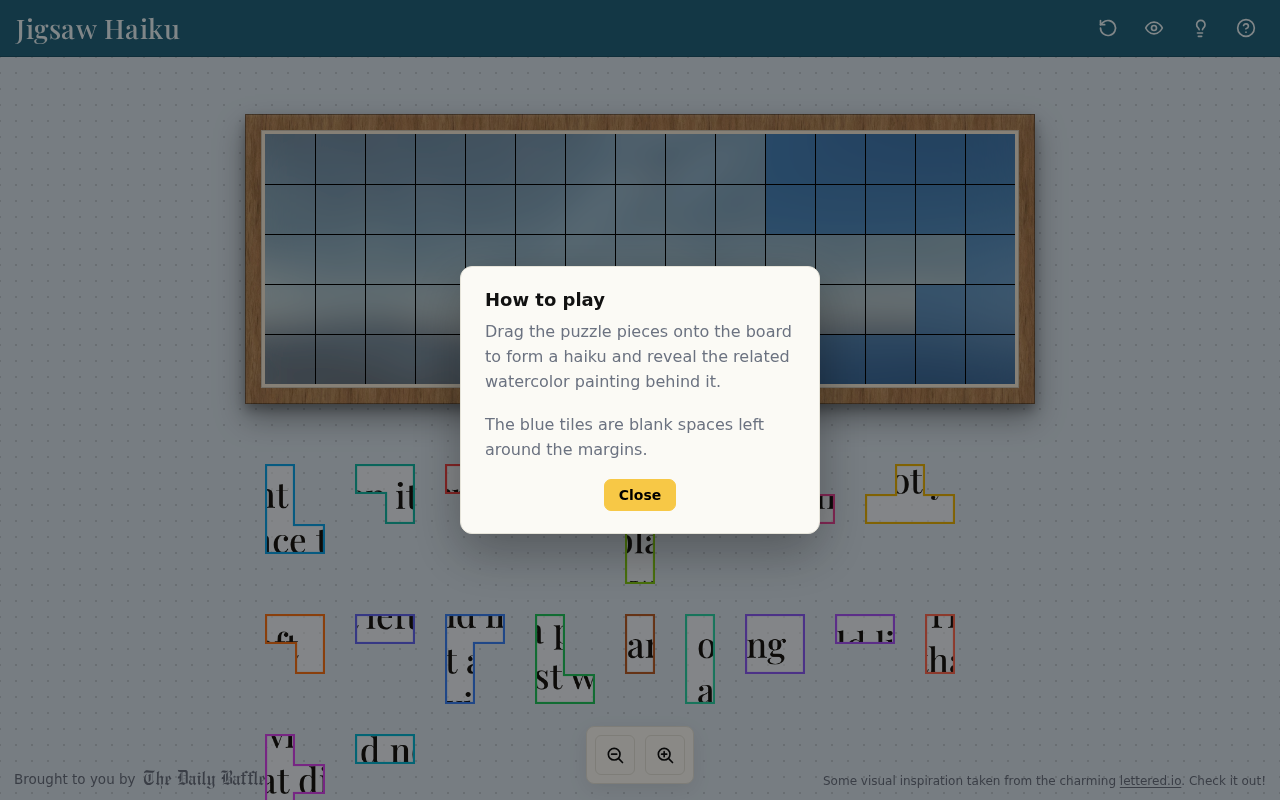
Minimalist Aesthetic Puzzle Game Development: Insights from Independent Creation
An in-depth analysis of an independent developer's aesthetic puzzle project shared on Hacker News, exploring minimalist design philosophy, Show HN community culture, and aesthetics-first product thinking in independent development.