Complete Guide to the Claude Code Red Book: ByteDance's AI Programming Playbook

ByteDance's Claude Code Red Book is a systematic AI programming guide from beginner to advanced levels.
The Claude Code Red Book, published by ByteDance's technical team, systematically covers the complete knowledge system of Claude Code from basic operations to advanced techniques. Core content includes Prompt Engineering, context management, multi-turn conversation strategies, debugging and refactoring, and project-level collaboration—each with actionable hands-on examples. Drawing from large-scale engineering practice, it provides developers at all levels with a structured learning path.
What Is the Claude Code Red Book?
Recently, a usage guide known as the "Claude Code Red Book" has been widely circulating in tech communities. Published by ByteDance's technical team, this document systematically organizes the complete knowledge system of Claude Code—from basic operations to advanced techniques. Many developers have called it "the most comprehensive Claude Code manual available."
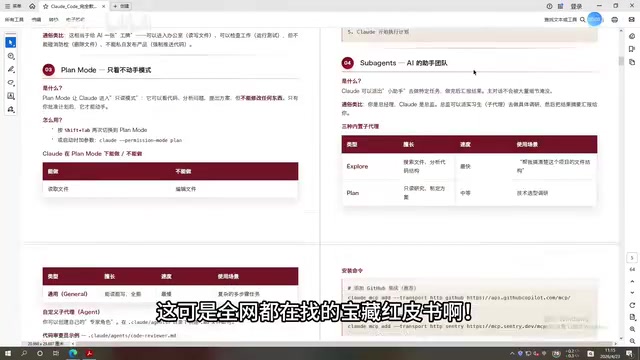
Claude Code is an AI programming tool from Anthropic that understands code context, generates high-quality code snippets, and assists with debugging and refactoring. Notably, Anthropic was founded in 2021 by former core members of OpenAI and focuses on AI safety research. The Claude model series is renowned for its powerful long-context understanding capabilities (supporting 100K+ tokens) and code reasoning abilities, giving Claude Code a natural advantage when handling large codebases. Compared to competitors like GitHub Copilot and Cursor, Claude Code excels at understanding complex business logic and cross-file code dependencies. For many developers, it has become an indispensable productivity tool in their daily workflow. However, the reality is that most people still use Claude Code only for simple Q&A, far from unlocking its true potential.
What Core Topics Does the Red Book Cover?
Getting Started from Zero
For programming beginners, the barrier to entry for Claude Code is actually quite low. The Red Book starts with the most basic environment configuration and command-line operations, guiding users step by step through their first interaction. Whether you use Python, JavaScript, or other mainstream languages, the document provides corresponding introductory examples for reference.
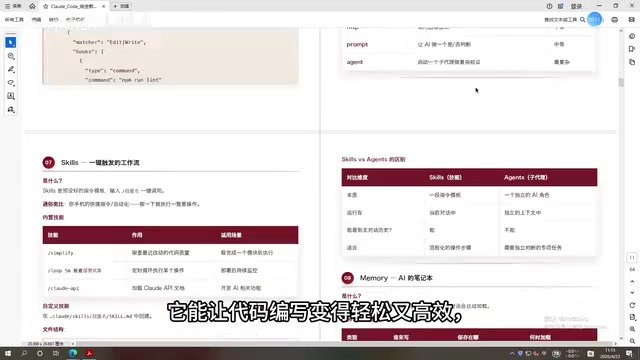
This "beginner-friendly" approach allows users with limited programming experience to quickly understand Claude Code's working logic—it's not just a code generator, but more like a programming partner that understands your intent.
Advanced Techniques and Expert-Level Usage
The real core value of the Red Book lies in its advanced sections. The document explains in detail how to guide Claude Code toward higher-quality code output through precise Prompt design. Prompt Engineering refers to the technical methodology of optimizing large language model outputs through carefully designed input instructions—research shows that structured Prompts (containing role definitions, task descriptions, constraints, and output formats) can improve code generation quality by over 40% compared to casual inputs. The main areas covered include:
- Context Management: How to effectively provide project background information to Claude Code so that generated code maintains consistency with the existing codebase's style. Context management is a core challenge in large-scale engineering practice—large codebases typically have specific architectural patterns, naming conventions, and design principles. Effective strategies include providing project architecture document summaries, pasting relevant module code as style references, and explicitly stating the design patterns used (such as dependency injection, observer pattern, etc.). Companies like ByteDance typically also establish team-level Prompt template libraries to standardize this process.
- Multi-turn Conversation Strategies: Iteratively refining code logic through progressive dialogue rather than expecting a perfect result from a single interaction. This essentially applies agile development's iterative philosophy to AI interaction—the first round establishes the code skeleton, subsequent rounds progressively add business logic, error handling, and edge cases. Each stage allows you to verify whether the direction is correct, significantly reducing late-stage rework costs.
- Debugging and Refactoring: Practical methods for using Claude Code to quickly locate bugs and optimize code structure.
- Project-level Collaboration: How to use Claude Code module by module in large projects to ensure overall code consistency.

Why Should Developers Pay Attention to This Guide?
Practice-Oriented — Every Technique Is Immediately Actionable
There are plenty of tutorials about AI programming tools out there, but most stay at the feature introduction level. The biggest differentiator of this Red Book is that every technique comes with reproducible, hands-on examples. You don't need to repeatedly figure out "how exactly should I use this feature"—just follow the steps in the document and you'll see results.

A Systematic Learning Path
Compared to randomly searching for various Claude Code tips online, the Red Book provides a complete learning path. From foundational concepts to advanced applications, knowledge points build upon each other to form a cohesive whole. This systematic approach to learning is far more efficient than fragmented information gathering. Cognitive science research shows that structured knowledge systems help learners build more robust mental models, enabling them to more quickly leverage existing knowledge for analogical reasoning when facing new problems.
Experience Distilled from Frontline Engineering Practice
This document comes from ByteDance's technical team, and many of the techniques and best practices originate from real engineering scenarios. As a tech company with thousands of engineers maintaining ultra-large-scale codebases like Douyin and TikTok, ByteDance's engineering practices are highly representative—the challenges they face regarding code consistency, multi-team collaboration, and technical debt management are common pain points shared by most medium-to-large development teams. The recommendations in this document aren't theoretical; they are battle-tested experiences validated against massive codebases, ensuring both credibility and practicality.
How to Maximize the Value of This Guide?
Here's the recommended approach for using the Claude Code Red Book:
- Read through it once to build an overall understanding of Claude Code's capability boundaries.
- Connect it to your actual projects and start hands-on practice with the most relevant chapters.
- Focus on the Prompt Engineering section—this is the key determinant of Claude Code's output quality. Core techniques include: providing sufficient context information, explicitly specifying programming language and framework versions, describing expected input/output behavior, and giving counter-examples to avoid common error patterns.
- Continuously iterate your usage strategy—Claude Code itself is constantly being updated, and your approach needs to evolve accordingly.
In today's rapidly iterating landscape of AI programming tools, mastering a systematic methodology holds more long-term value than chasing any specific feature. The Claude Code Red Book provides exactly such a battle-tested methodology, worthy of careful study by every developer looking to boost their programming efficiency.
Key Takeaways
- The "Claude Code Red Book" is a systematic usage guide covering the complete knowledge system from beginner to advanced levels.
- The document emphasizes a practice-oriented approach, with every technique accompanied by immediately actionable, hands-on examples.
- Advanced content covers core skills including context management, multi-turn conversation strategies, debugging and refactoring, and project-level collaboration.
- The guide draws from ByteDance's frontline engineering practice, offering highly practical reference value.
- A systematic learning path is far more efficient than fragmented searching, suitable for developers at all levels to learn according to their needs.
Related articles
 Product Reviews
The Programmer's Desk Setup Guide: Building a Workspace That Feels Like Home
Discover how programmers build productive, comfortable workspaces. From multi-monitor setups to ergonomic design, explore the desk philosophy that drives focus and flow.
 Product Reviews
Qoder vs Cursor Real-World Comparison: Which $20/Month AI IDE Is Better?
Hands-on comparison of Qoder vs Cursor AI IDEs: Agent autonomy, human interaction count, and architecture decisions. Qoder needed only 2 interactions vs Cursor's 8.
 Product Reviews
Cursor Cloud Agent Demo: Eliminating Bottlenecks Across the Entire Software Development Lifecycle
Deep analysis of Cursor's Cloud Agent demo showing how cloud VMs, automated test artifacts, and a full-chain control plane systematically eliminate human bottlenecks across the software development lifecycle.