Computer Science vs. AI & Robotics: How Should You Choose?

How to choose between Computer Science and AI & Robotics: a rational analysis of majors and career paths.
Torn between Computer Science and AI & Robotics? This article analyzes both majors across three dimensions—their essential nature, employment prospects, and risk hedging—arguing that stability comes from your capability moat, not a major label, and that CS is often the safer default for the undecided.
A High School Student Facing a Major Decision
Recently, I came across a question on Reddit from a high school senior (outside the US) that is quite representative. He faces a choice between two majors: the traditional Computer Science (CS), or the more cutting-edge AI Engineering and Robotics (potentially leading to careers in MLOps or as a robotics engineer). His requirements are clear—job stability, good salary, room for growth, relatively low stress, and reliable income.
This question seems simple, but it actually touches on a core anxiety that countless young people have about technical education and career planning: In today's world where the AI wave sweeps over everything, should you bet on a "general foundation" or a "vertical hotspot"? This article offers a rational analysis from three dimensions: the nature of the majors, employment prospects, and risk hedging.
The Essential Difference Between the Two Majors
Computer Science: The Broad-Based "Foundation"
Computer Science is a mature, well-established discipline covering core topics such as data structures, algorithms, operating systems, computer networks, databases, and programming language theory. The formation of this body of knowledge can be traced back to the foundational work of pioneers like Turing and von Neumann in the mid-20th century, and modern CS education typically follows the curriculum standards jointly established by the ACM (Association for Computing Machinery) and IEEE. Notably, the core knowledge of CS has extremely strong temporal stability—the time complexity analysis of quicksort held true in the 1960s and still holds true in 2024. This "slow-changing" characteristic gives a CS degree a natural resistance to depreciation in an industry where technology iterates rapidly.
The greatest advantage of CS lies in its universality—it is not tied to any specific industry trend, but instead cultivates the fundamental problem-solving mindset. Whether you go into backend development, frontend engineering, cloud computing, data science, or pivot to AI and robotics in the future, a solid CS foundation is a prerequisite. You could say CS is the "foundation," upon which nearly all higher-level technical directions are built. This also means CS graduates have the broadest range of career choices and the lowest cost of switching tracks.
AI Engineering and Robotics: The Vertical "Skyscraper"
The AI Engineering and Robotics major is more focused, typically layering specialized content such as machine learning, deep learning, control theory, sensor fusion, robot kinematics, and embedded systems on top of a CS foundation. Graduates mainly target positions like MLOps, machine learning engineer, and robotics engineer.
Understanding the specific nature of these roles helps in making a clearer judgment. MLOps (Machine Learning Operations) is an emerging role that has extended from the DevOps concept in recent years. Its core responsibility is to smoothly deploy machine learning models from the lab environment into production systems, while continuously monitoring model performance and handling issues like data drift. It requires practitioners to master ML principles, cloud infrastructure (such as AWS SageMaker, GCP Vertex AI), and CI/CD pipelines all at once. Robotics engineers, on the other hand, typically rely heavily on the ROS (Robot Operating System) ecosystem, requiring skills in control theory, sensor fusion (such as Kalman filtering), and real-time embedded programming. Market demand is growing rapidly with the rise of Embodied AI, but the barrier to entry is correspondingly higher.
Its advantage is that its starting point is closer to hot industries—if the AI and robotics industries continue to grow, those with matching majors will have a first-mover advantage. But risks exist as well: first, an overly focused curriculum may sacrifice foundational breadth; second, the industry itself is highly volatile, and technology hotspots can shift at any time.
Employment Prospects and Risk Hedging
"Stability" Never Comes From the Name of a Major
Many students repeatedly emphasize "safety," "stability," and "low stress." But the reality is: the tech industry itself has no absolute stability. True stability comes from the capability moat you build, not from a major label.
The term "capability moat" is borrowed from the "economic moat" concept in investing. When applied to career development, it refers to a set of comprehensive abilities that are hard to imitate in the short term or replace with tools. For technical talent, this typically comprises three layers: the first layer is tool skills that can be quickly learned (such as using a specific framework's API); the second layer is systematic thinking that takes years to accumulate (such as distributed systems design); and the third layer is domain knowledge and judgment that is extremely difficult to transfer. As AI tools become increasingly prevalent, the scarcity of first-layer skills is rapidly declining, and the core of the moat is increasingly concentrated in the latter two layers—which is precisely what a solid CS education is best at cultivating.
CS graduates can equally enter the AI field—in fact, a large number of top AI engineers have pure CS backgrounds as undergraduates and broke into AI through graduate studies or self-learning on the job. Conversely, students in AI and robotics majors with a weak foundation may actually be at a disadvantage when competing for algorithm positions.
Using CS as the "Default Option" to Hedge Against Uncertainty
From a risk management perspective, if you are not yet certain about your specific direction, CS is usually the safer choice, for the following reasons:
- Highly reversible: After studying CS, you can pivot into AI and robotics at any time through electives, minors, graduate school, or self-study; the reverse is relatively difficult.
- High risk resistance: Even if the AI boom cools down, a CS background can still support a large number of positions in software engineering, systems development, data analysis, and more.
- Broadly recognized: Employers worldwide have a highly consistent understanding of a CS degree, whereas emerging majors like "AI Engineering and Robotics" vary in quality across institutions—related programs at top engineering schools have years of accumulation and first-class labs, while many similarly named majors at ordinary schools are essentially just repackaged existing CS curricula, lacking physical robot platforms and industry-academia-research resources. You need to scrutinize carefully when applying.
When Is AI & Robotics the Better Choice?
The AI Engineering and Robotics major is worth prioritizing when the following conditions are met:
- You already have a clear passion for directions like robotics, autonomous driving, or embodied AI, and are willing to specialize in it for the long term. Embodied AI is one of the most closely watched frontier directions right now. Humanoid robot companies represented by Tesla's Optimus and Figure AI are rapidly advancing commercialization, but the technology maturation cycle still holds significant uncertainty, which requires practitioners to have genuine passion and endurance.
- The major at your institution has strong faculty, labs, and industry resources, rather than being a newly created major just to ride the hype. Evaluation criteria include: the publication records of full-time faculty, whether physical robot platforms are available, and the actual employment destinations of graduates.
- You can accept the high-intensity pace of a field where technology iterates fast and continuous learning is required.
Practical Advice for Choosing a Major
Look at the Curriculum First, Then the Major Name
The major name is marketing; the curriculum is the substance. It is advisable to compare the specific course offerings of the two majors: Does the AI robotics major include enough mathematics (linear algebra, probability and statistics, optimization theory) and core CS courses? If it's just "CS + a few trendy electives," you might as well study CS directly and freely choose your direction later.
Keep Realistic Expectations About "Low Stress"
It needs to be said frankly: whether CS or AI robotics, technical positions generally require continuous learning and a certain level of work intensity. The combination of "low stress + high pay + high stability" is extremely difficult to achieve simultaneously in any industry. A more realistic strategy is to trade solid skills for bargaining power, thereby gaining the freedom to choose among positions with different work paces.
The Leaning Conclusion
For students who haven't yet figured out their direction and are pursuing stability, prioritizing Computer Science is the more rational decision. It gives you the greatest optionality and the lowest cost of pivoting—you can gradually explore AI and robotics through projects, internships, and electives during your university years, and specialize once you truly determine your interests. At that point, your choice will be based on real experience rather than the imagination of a high school student.
This path is supported by numerous public examples. Industry leaders such as Yann LeCun (Meta's Chief AI Scientist) and Andrej Karpathy (former Tesla AI Director) all have deep CS and mathematics foundations, rather than having studied an "AI major" as undergraduates. According to employment data from platforms like LinkedIn and Levels.fyi, among engineers who land AI positions at top tech companies, the proportion with an undergraduate background in CS (or foundational disciplines like mathematics and physics) still dominates—companies prefer to recruit those with solid fundamentals and provide targeted AI training on the job. If you choose CS as an undergraduate, you can absolutely specialize in AI or robotics at the graduate level; this path is a mature, widely validated channel across the globe.
Conclusion
Choosing a major is certainly important, but it determines your starting point, not your endpoint. What the tech industry values most is always your problem-solving ability, your habit of continuous learning, and the work you build with your own hands. Rather than agonizing between two major names, put your energy into building a solid foundation, accumulating projects, and staying curious—that is the true "safe asset" that will never depreciate in any era.
Key Takeaways
Related articles
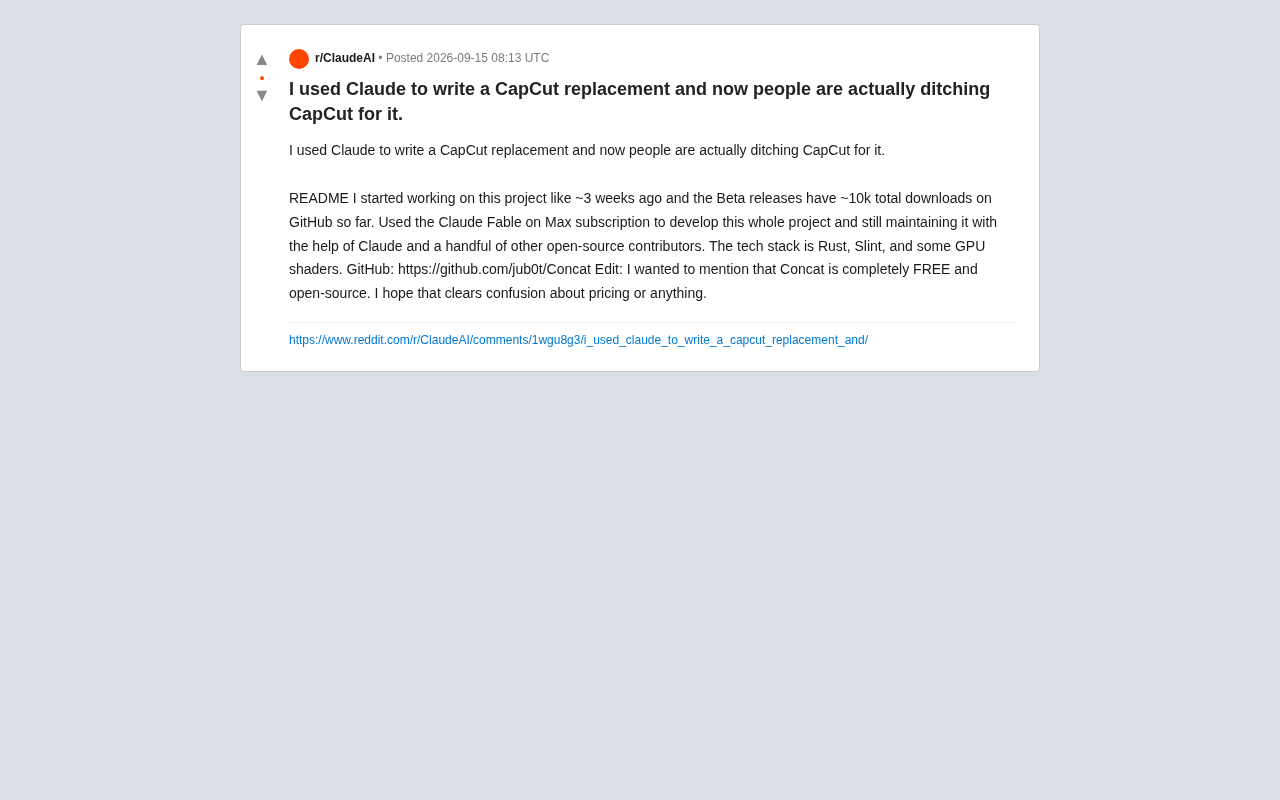
Building Open-Source Video Editor Concat with Claude: A Free Alternative to CapCut
A developer used Claude to build Concat, an open-source CapCut alternative, in just three weeks. With nearly 10K downloads, it's a striking example of AI-assisted solo development.
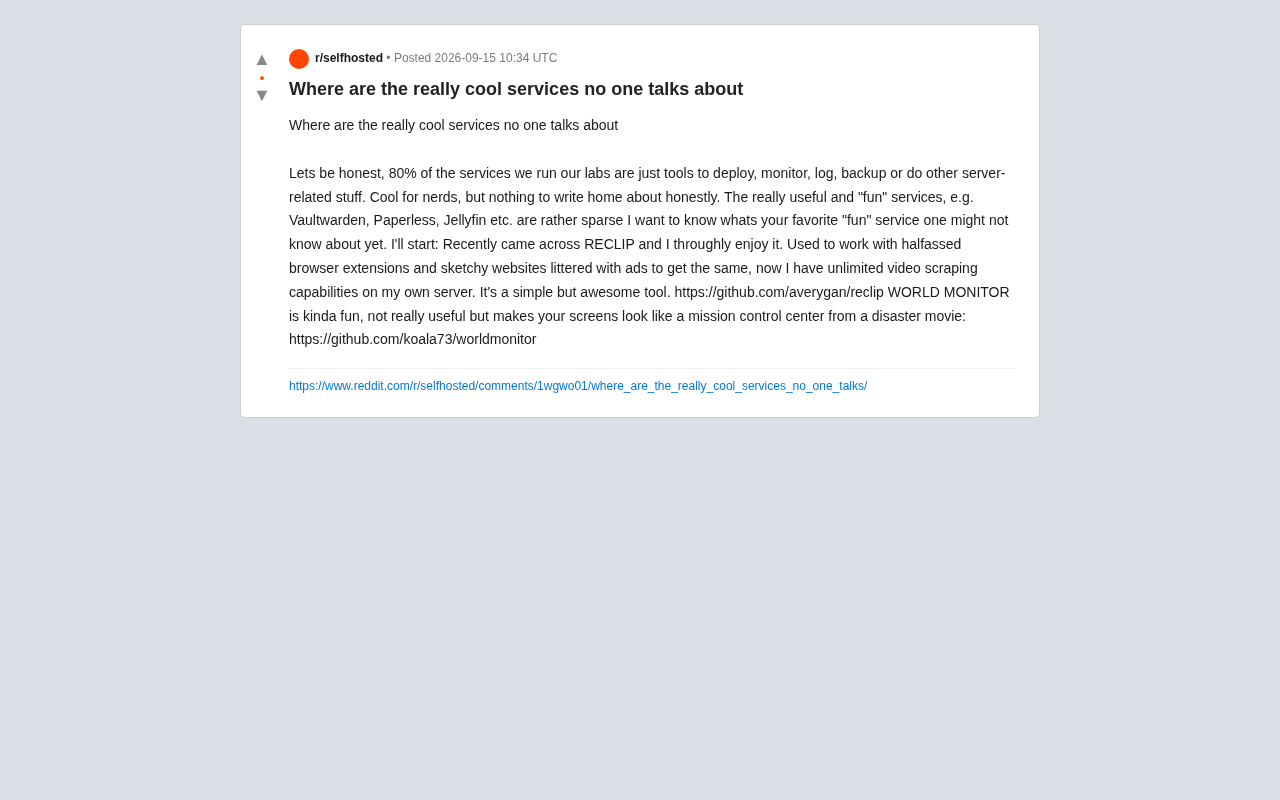
The Overlooked Gems of Self-Hosting: Fun and Useful Services Nobody Talks About
From a Reddit thread, we explore overlooked self-hosted services — including video scraper RECLIP and data viz project WORLD MONITOR — and why fun services are so rare.
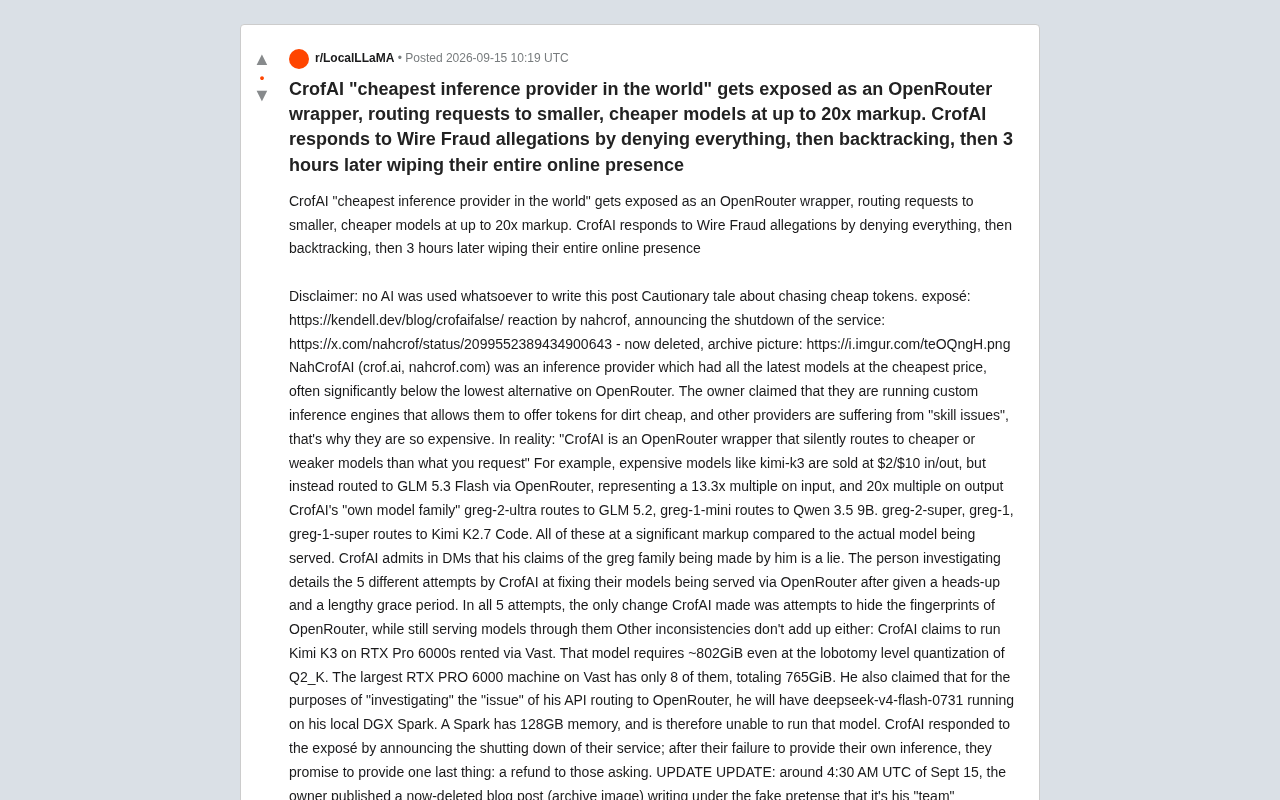
CrofAI Fraud Exposed: 'World's Cheapest AI Inference' Turns Out to Be an OpenRouter Wrapper Scam
CrofAI claimed to offer the world's cheapest AI inference, but was exposed as an OpenRouter wrapper silently rerouting requests to cheap models at up to 20x markups.