Context Engineering Explained: A Complete Guide to Building AI Agents from Concept to Practice

A comprehensive guide to context engineering for building production-ready AI Agents.
This guide explains context engineering—the practice of dynamically providing LLMs with the right information at the right time to power AI Agents. It covers how context engineering evolved from prompt engineering, the six core components of AI Agents (model, tools, knowledge & memory, audio, guardrails, orchestration), a practical AI research system example, and four key strategies: Write, Select, Compress, and Isolate context.
From Prompt Engineering to Context Engineering: The Evolution of a Concept
Recently, a new concept has been repeatedly discussed on X and Reddit — Context Engineering. Some call it "the new prompt engineering," and that's not wrong, but it doesn't mean prompt engineering is obsolete.
In simple terms, context engineering refers to designing and building a dynamic system that provides the right information, in the right format, at the right time to a large language model so it can complete a task. In other words, it's about properly filling the LLM's input area — the context window.
About the Context Window: The context window is a core concept in large language model architecture, referring to the maximum number of tokens a model can process in a single inference. Early GPT-3 had a context window of only 4,096 tokens (roughly 3,000 English words), which severely limited the model's ability to process long documents. With optimizations to the Transformer architecture and improvements in attention mechanisms, modern LLMs have significantly expanded their context windows: Claude 3.5 reaches 200,000 tokens, and Google's Gemini 1.5 Pro supports up to 1 million tokens of input. This technical breakthrough enables models to process entire books, complete codebases, or hours of meeting transcripts in a single pass, providing the physical foundation for context engineering. However, larger context windows also bring new challenges: how to effectively organize and utilize this space while avoiding information redundancy and attention dilution is precisely the core problem that context engineering aims to solve.
There's a key boundary of applicability here: context engineering only applies to building LLM applications, especially AI Agents. If you're just chatting with ChatGPT about which running shoes to buy, going back and forth about cushioning types and price ranges, that's still prompt engineering territory, and it works just fine.
But when you're building a real AI application, things are different. Take an e-commerce customer service agent as an example — it needs to handle billing issues, refund disputes, login problems, search terms, and even escalate to a human agent when necessary. You can't just iterate on a conversation until it gets the answer right; instead, you need to give it a comprehensive set of instructions covering all scenarios and actions in one go. This makes prompts increasingly large and complex, eventually looking like structured code with XML tags and Markdown formatting.
As Andrej Karpathy put it: the LLM is the CPU, and the context window is the memory. Context engineering is essentially the evolution of prompt engineering, specifically referring to the process of designing complex prompts for building AI applications.
The Six Core Components of AI Agents
Regardless of how many types of AI agents exist — customer service agents, sales assistant agents, coding agents — they're all built from six core components. A vivid "hamburger" analogy illustrates this: a hamburger needs a bun, a patty, vegetables, and sauce to be a hamburger. The internals can vary, but none of these elements can be missing.
The Technical Evolution of AI Agents: The concept of AI agents originated from Multi-Agent System research in the 1990s, but it wasn't until large language models emerged that true engineering implementation became possible. Traditional software follows deterministic if-else logic, while AI Agents possess three core characteristics: Perception — acquiring environmental information through APIs and sensors; Reasoning — using LLMs for decision-making and planning; and Action — affecting external systems through tool calls. The open-sourcing of AutoGPT in 2022 ignited the Agent hype, but early Agents suffered from severe "hallucination drift" — gradually drifting away from objectives across multiple reasoning steps. To address this, the industry gradually developed standardized paradigms like ReAct (Reasoning-Action loops) and Plan-and-Execute (separating planning from execution). OpenAI's introduction of Function Calling in 2023, which enables models to output tool call parameters in a structured way, became a watershed moment for modern Agent architecture. Today, from Devin the coding assistant to customer service bots, Agents have moved from the lab to production environments.

The six components are:
1. Model
An AI agent needs to be equipped with an AI model — this could be OpenAI's GPT, Anthropic's Claude, Google's Gemini, or an open-source model. Pick whichever fits best.
2. Tools
Tools enable agents to interact with external systems. For example, a personal assistant agent needs a tool to access Google Calendar in order to schedule appointments for you.
3. Knowledge & Memory
Most agents need to store and retrieve information. A therapy agent, for instance, needs memory capabilities to remember previous conversations; a legal agent needs a knowledge base of specific cases for retrieval and processing.
Deep Dive into RAG Technology: Retrieval-Augmented Generation (RAG) is a key technology for addressing the limitations of LLMs in terms of knowledge recency and specialized domain coverage. Its workflow consists of three stages: First, the indexing stage, where documents are split into chunks (typically 512-1024 tokens), converted into high-dimensional vectors through embedding models (such as OpenAI's text-embedding-3 or the open-source BGE), and stored in vector databases (Pinecone, Weaviate, Chroma, etc.). Second, the retrieval stage, where user queries are similarly vectorized, and the most relevant top-k document fragments are found in vector space using algorithms like cosine similarity. Finally, the generation stage, where the retrieved context is concatenated with the user's question and fed into the LLM to generate an answer. Advanced RAG also incorporates hybrid retrieval (vector + keyword), reranking, and query rewriting to improve accuracy. It's worth noting that RAG is not a silver bullet: it depends on document quality, and the retrieval process adds 30-50% latency, requiring trade-offs in scenarios that demand real-time responses.
4. Audio & Voice
Equipping agents with audio and voice capabilities makes interactions more natural and user-friendly.
5. Guardrails
Safety mechanisms that ensure compliant behavior. You definitely don't want your customer service AI swearing at users.
6. Orchestration
The system for deploying, monitoring, and optimizing agents. You can't just ship an agent and walk away — you need to keep an eye on what it's doing.
The core responsibility of a context engineer is like writing an "assembly manual for a hamburger" for an alien: you need to craft prompts that detail how these components work together — how tools are used, how memory is accessed, and how the knowledge base and voice capabilities are invoked. The resulting prompt is the complete operating manual for the AI agent.
Context Engineering in Practice: An AI Research System Example
Here's a complete prompt example for an AI research system designed to automatically track all AI trends. This system prompt consists of six clearly structured sections:
- Role: "You are an AI research assistant focused on identifying and summarizing the latest trends in AI, responsible for breaking down user queries into actionable sub-tasks and returning the most relevant insights based on engagement and authority."
- Task: Step-by-step instructions — extract up to 10 diverse, high-priority sub-tasks, rank by engagement and authority, generate JSON output, calculate start and end dates in UTC ISO format, and finally summarize into a ~300-word trend overview.
The Engineering Evolution of Prompt Engineering: Prompt engineering underwent a transformation from "art" to "engineering" during 2023-2024. The early "prompt incantations" based on human trial-and-error have been replaced by systematic methodologies: Chain-of-Thought (CoT) guides the reasoning process through "let's think step by step," improving accuracy by 30-50% on math and logic tasks; Few-Shot Learning provides 2-5 examples to help the model understand task patterns; Role Prompting assigns specific identities to activate domain knowledge. In production environments, prompt version management has become essential — tools like LangSmith and PromptLayer provide prompt versioning, A/B testing, and performance monitoring; structured output uses XML tags and JSON Schema to constrain model output format, improving parsing reliability. Notably, different models have vastly different sensitivities to prompts: Claude prefers detailed instructions and XML structures, GPT-4 is better at understanding concise instructions, and open-source models typically require more explicit formatting constraints. This variability demands that engineers develop cross-model prompt adaptation capabilities.

You might not have noticed, but this heavily uses XML tags (such as <user_query>...</user_query>) to structure information, making it clearer for the AI to process. The output section strictly specifies JSON format, where each sub-task must include an ID, query, source type (news/X/Reddit/LinkedIn/academic, etc.), time period, domain focus, priority (1 to 10), and start/end dates.
There are also constraints (keep it concise, ignore redundant background, don't add personal opinions) and capabilities and reminders (explicitly stating available tools and knowledge bases, with specific reminders to prevent drift).
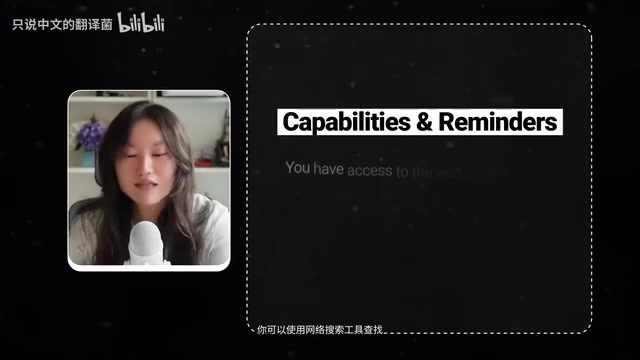
This is actually considered a "very simple" prompt. In practice, it's typically split into a multi-agent system: one agent handles searching different sources while another aggregates the content. This example was implemented using N8n, ultimately automating the collection of information from newsletters, Reddit, and other sources, then sending a summary via WhatsApp.
Collaboration Patterns in Multi-Agent Systems: Multi-Agent Systems solve the capability boundaries and complexity bottlenecks of single Agents through task decomposition and specialization. The industry has developed three mainstream collaboration patterns: Pipeline mode — Agents execute serially in a fixed order, such as "information collection → analysis → summarization → delivery," suitable for well-defined workflows; Router mode — a master Agent dispatches tasks to specialized sub-Agents based on task type, similar to a function dispatcher; Debate mode — multiple Agents propose different solutions to the same problem and challenge each other, with an arbiter synthesizing the final result, commonly used for decisions requiring multi-perspective validation. Cognition's Devin coding assistant is a classic example of a multi-agent system: a planning Agent decomposes tasks, a coding Agent writes code, a testing Agent validates results, and a debugging Agent fixes bugs — each playing its specialized role. However, multi-agent systems also introduce new challenges: designing inter-agent communication protocols, ensuring state synchronization consistency, and managing exponentially growing LLM call costs all require careful consideration during architecture design.
The Four Core Strategies of Context Engineering
If you want to dive deeper into context engineering practice, the following two resources and four strategies are worth your attention.
Cognition's blog post proposes two fundamental principles for multi-agent frameworks: first, share context between agents, and second, actions imply decisions — whenever a decision point arises, extra care is needed in both architecture and context engineering.
LinkedIn's framework summarizes four common strategies for context engineering:
Strategy 1: Write Context
Have the LLM write down information about the task for storage and later use. This is equivalent to creating "working notes" for the AI, ensuring critical information isn't lost during long conversations.
Strategy 2: Select Context
Extract information from external sources to help the agent execute tasks. Through technologies like RAG (Retrieval-Augmented Generation), the AI can access the most recent and relevant external data.
Strategy 3: Compress Context
When large amounts of information need to be provided, use technical methods to compress it more compactly. This is particularly important when processing long documents or extensive conversation histories, making effective use of the limited context window.
Strategy 4: Isolate Context
Split context across different environments and locations. In multi-agent systems, each agent receives only information relevant to its task, preventing irrelevant context from interfering with decision-making.
Conclusion: Context Engineering Is a Core Competency for AI Application Development
Context engineering didn't appear out of nowhere — it's the natural evolution of prompt engineering in the age of AI applications. When we move from "chatting with a chatbot" to "building agents that can autonomously complete tasks," simple prompts are far from enough — we need to systematically design how information is organized, retrieved, compressed, and isolated.
For developers looking to build production-grade AI applications, mastering the design principles of context engineering and multi-agent systems has become an indispensable core competency. Understanding how these six components work together and skillfully applying the four context strategies will help you build more reliable and intelligent AI Agent systems.
Related articles
AI Agent Cost Optimization in Practice: Engineering Wisdom That Saved $1 Million in One Hour
Databricks eliminated $1M/year in wasted AI Agent spend in just one hour. Learn the root causes of Agent cost overruns and key strategies like model tiering, context pruning, and caching.
How the FDA Is Building an AI-Ready Data Foundation on Databricks
Explore how the FDA leverages Databricks for Government to build a unified Lakehouse architecture and AI-ready data foundation while meeting federal security and compliance standards.
The Power of Security Collaboration: Why Vulnerability Discovery Cannot Do Without Human Intelligence
Explore how security collaboration outperforms tool dependency, the value of vulnerability stories, cross-team knowledge sharing practices, and building stronger defenses by investing in people and collaboration.