Context Lens: Precisely Measure How Many Tokens Your Codebase Consumes in AI Agents

Context Lens turns AI agent context costs from guesswork into reproducible, verifiable measurements.
Context Lens is a tool focused on making AI coding assistant "context costs" measurable. Operating on version-locked, scrubbed repository snapshots, it uses the SIGMAP metric and real o200k tokenizer validation to show raw versus mapped token counts with proper denominators. It drills down to the module level to reveal which code consumes the most context, how mapping strategies affect budget, and what agents load during cold start. A verified disk lets you cross-check AI answers against the real repo, while a built-in MCP playground supports controlled tool-call experimentation. Secrets are stripped on input and outputs are leak-scanned, minimizing data risk when integrating AI toolchains.
When "Context Cost" Goes from Guesswork to Measurement
When using AI coding assistants, developers often rely on gut instinct to estimate how many tokens a codebase will "consume," depending on various wrapper tools that spit out numbers that are difficult to verify. The core value of Context Lens is turning this from guesswork into measurable fact — it puts the real SIGMAP directly in front of the repository, keeping the repo in its original state, version-locked, and unmodified, running commands only against scrubbed snapshots, with every command exposed as a form.
This design solves a long-standing pain point: when teams debate whether a module is "too heavy" or whether an agent is burning through too much of its context budget, there's no trusted, reproducible baseline to reference. Context Lens makes the measurement process transparent, grounding discussions in evidence rather than impressions.
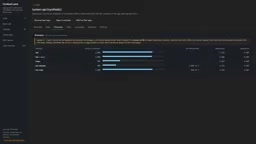
SIGMAP (Static Index of Ground-truth Mapped And Pruned context) is a standardized metric for measuring the actual token footprint of a code repository before it's fed into an AI model. Unlike simply counting characters in source files, SIGMAP processes repository content through mapping and pruning before calculating token counts, reflecting the actual volume of context that an AI agent truly "sees." Because different tools apply different mapping rules and filtering strategies, the same repository can produce wildly different token counts across tools — which is precisely why SIGMAP needs a standardized definition.
Keeping Token Numbers Honest
One of the tool's most commendable qualities is keeping numbers honest. It shows the raw versus mapped token counts for each repository and validates them against a real o200k tokenizer run. More importantly, it keeps the denominator next to every number — meaning token counts are no longer isolated, easily misread absolute values, but relative metrics with proper context and reference points.
In real AI agent workflows, token budgets directly affect both cost and performance. An overestimated or underestimated context cost can lead developers to make misguided optimization decisions. Context Lens uses the "raw vs. mapped" comparison and real tokenizer validation to ensure every number it presents can withstand scrutiny.
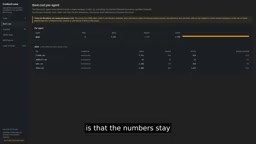
The o200k tokenizer referenced here is OpenAI's o200k_base tokenizer, originally released alongside the GPT-4o model family and now the vocabulary standard used by mainstream frontier models including GPT-4o, o1, and o3. Compared to the earlier cl100k_base, o200k_base expands the vocabulary to approximately 200,000 tokens, offering better encoding efficiency for common code symbols and multi-byte characters — the same code snippet often consumes slightly fewer tokens under the new vocabulary. As a result, the choice of tokenizer has a significant impact on the accuracy of the final numbers. Context Lens explicitly uses o200k_base as its reference, directly aligning results with real API billing and context limit constraints.
Drilling Down to Modules and Mapping Strategies
A total token count alone isn't enough. Context Lens goes a level deeper to reveal which modules are truly "soaking up" context, how different mapping strategies shift budget allocation, and what each agent's boot files are actually requesting before any real work begins.
This granular analysis is extremely useful for optimization. Developers can use it to determine: whether rarely-used modules are consuming a disproportionate share of context; whether switching to a different mapping strategy can compress the budget without losing information; and whether agents are loading redundant content during cold start. Making these hidden costs visible is the prerequisite for fine-grained tuning.
Verification Mechanism and MCP Playground
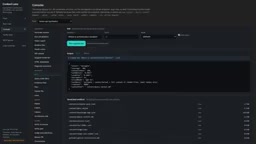
Context Lens also provides a "verified disk" for checking an AI's answers or execution plans against the actual repository contents. This adds a layer of defense against AI hallucinations — when an agent claims a piece of code or a certain structure exists, you can verify it directly against the real repository.
Beyond that, it includes a built-in playground for a real SIGMAP MCP server, offering a full tool listing and schema-driven invocation. Developers can experiment with MCP capabilities in a controlled environment without worrying about affecting production systems.
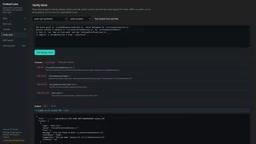
MCP (Model Context Protocol) is an open protocol introduced by Anthropic in late 2024, designed to define a unified interface for interactions between AI models and external tools or data sources. An MCP Server describes each tool's inputs and outputs using standardized JSON Schema, allowing models to dynamically discover and invoke these tools without requiring custom integration logic for every data source. Context Lens's built-in MCP playground lets developers send requests directly to a real SIGMAP MCP Server, observe the tool list, parameter structures, and return values, and validate agent tool-calling behavior in a sandbox environment — helping diagnose context anomalies caused by schema mismatches or misconfigured permissions.
Security and Privacy: Scrubbed Snapshots and Leak Scanning
All operations run against scrubbed head snapshots — secrets are stripped on the way in, and outputs are scanned again for leaks on the way out. This two-way security safeguard means you can measure context costs without accidentally exposing keys or sensitive data embedded in the repository.
For enterprise and team users, this is especially critical. Many AI tools introduce data security risks by requiring access to a complete codebase. Context Lens is designed from the ground up to operate exclusively on scrubbed snapshots, reducing the risk of integrating AI toolchains.
Conclusion: From Debate to Measurement
The overall philosophy of Context Lens can be summed up in one sentence: rather than debating how much context exists, measure it, prune it, and trust the evidence. It transforms AI agent context costs from vague intuition into reproducible, verifiable, and comparable data — without compromising on security.
For development teams that increasingly depend on AI coding assistants, tools like this represent a direction worth paying attention to — not one that asks you to blindly trust AI, but one that provides enough transparency and evidence to rationally evaluate and optimize the cost of AI-driven work.
Related articles

Workbuddy for Absolute Beginners: How a Desktop AI Agent Fits Into Real Workflows
A beginner's guide to the Workbuddy desktop AI agent: installation, claiming credits, file management, and building automated workflows—compared with CodeX for fit and cost, helping professionals shift from AI question-askers to AI managers.

OpenAI's New Agent Stack: Computer Use, Decisions API, and Ultra-Fast Workflows
OpenAI Dev Day unveiled a new agent stack: Computer Use outperforms humans, Decisions API delivers ultra-low-latency classification via Luna, Agents API opens the same Computer Use capabilities, and GPT-6.1 Sol costs only one-seventh of Astra. Core updates, benchmark data, and developer insights.

Liang Wenfeng Open-Sources DeepInfo Inference Framework, Takes On U.S. Ban
DeepSeek open-sources its DeepInfo inference framework after its models, featuring GPU/CPU cross-pipelining, small-model prediction with large-model verification, and full Huawei Ascend and NVIDIA chip support—facing the U.S. federal ban head-on. This article analyzes its significance for AI deployment and open-source strategy.