Core Interpretation of Camus's Philosophy of the Absurd: The Myth of Sisyphus and Revolt Against Meaninglessness

Exploring Camus's absurdist philosophy and why Sisyphus's revolt remains relevant in the tech age.
This article examines Albert Camus's philosophy of the absurd—the fundamental conflict between humanity's desire for meaning and the universe's indifference. Through the myth of Sisyphus, Camus argues for revolt over despair: living lucidly and passionately without false comfort. The piece explores why this resonates deeply with tech professionals facing burnout, AI displacement anxiety, and the search for purpose in an increasingly automated world.
Introduction: A Philosophical Question That Transcends Eras
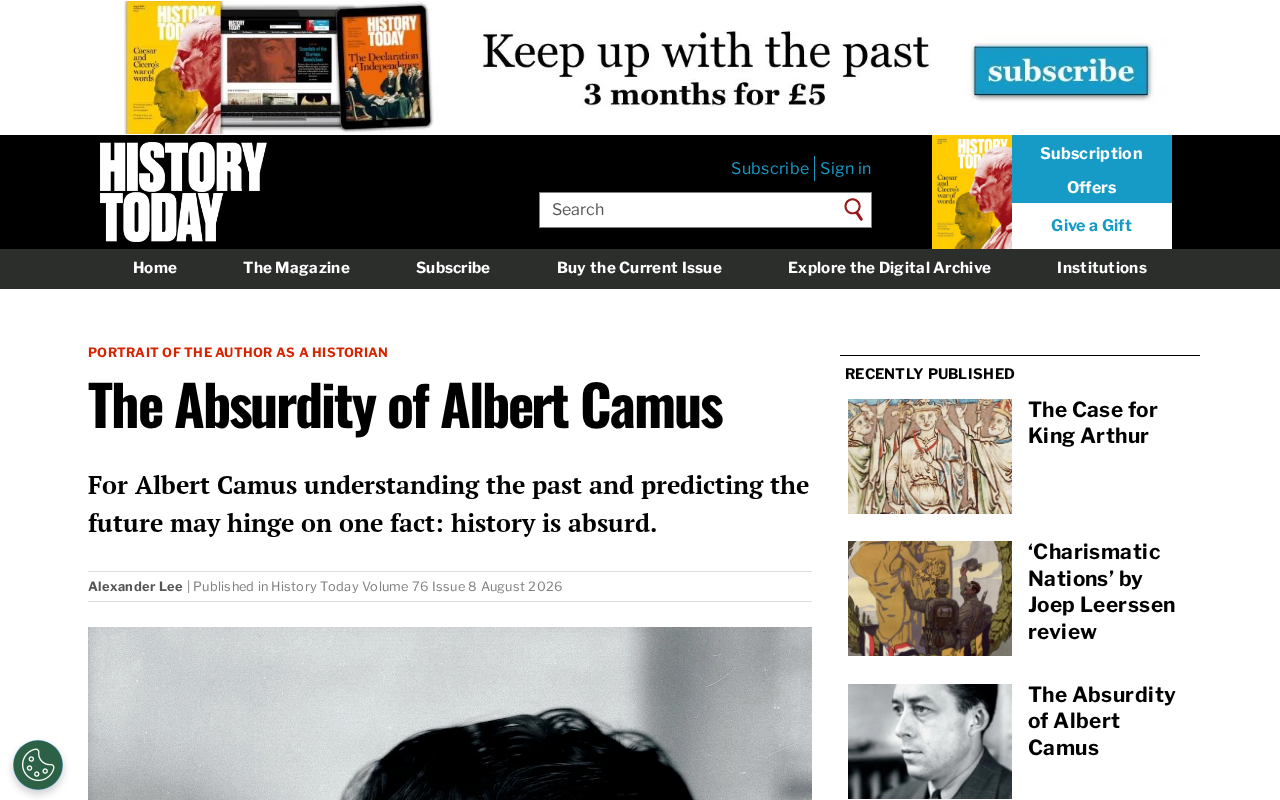
Recently, an article discussing Albert Camus's philosophy of the absurd appeared on the Hacker News technology community's discussion list. On a platform dominated by code, algorithms, and startups, the fact that an article exploring existentialist philosophy can attract attention is itself quite telling—perhaps reflecting the deeper contemplation that tech professionals engage in about meaning and existence when facing a highly rationalized, mechanized work world.
Hacker News (HN) is a technology community founded by Y Combinator, known for discussions about programming, startups, and tech news. However, in recent years, posts about philosophy, mental health, and existential meaning have frequently made it to the front page. This phenomenon is closely tied to the increasingly severe burnout problem in Silicon Valley culture. Multiple surveys show that tech industry professionals face higher-than-average rates of anxiety and depression, especially after waves of mass layoffs and discussions about AI replacing human jobs. The question of "work meaning" has become more urgent than ever for tech workers.
As one of the most influential thinkers of the 20th century, Camus's "Philosophy of the Absurd" continues to be discussed and debated. Notably, Camus himself always refused to be labeled an "existentialist." Although he and Jean-Paul Sartre belonged to the same post-war French intellectual circle, the two publicly broke apart in 1952 over political and philosophical disagreements. Sartre's existentialism emphasizes "existence precedes essence," arguing that people define themselves through free choice; Camus was more concerned with the tension between humans and the world, with his philosophical starting point being "the absurd" rather than "freedom." Camus's thought is closer to a Mediterranean sensibility, blending a love of natural beauty with a clear-eyed awareness of human suffering. This article will outline the core meaning of Camus's absurdist thought and explore why it remains powerfully relevant today.
What Camus Means by "The Absurd"
What Camus calls "the absurd" is not the everyday sense of "ridiculous" or "unreasonable," but a precise philosophical concept. It refers to the fundamental conflict between humanity's deep longing for meaning, order, and certainty, and a silent, indifferent, meaningless universe.
In other words, the absurd does not exist entirely within humans, nor entirely within the world, but is born from the "encounter" between the two. Humans are naturally driven to understand the world and seek ultimate answers, yet the universe itself refuses to provide any response. This gap is the essence of the absurd.
In The Myth of Sisyphus, Camus summarized this predicament with a famous line: There is but one truly serious philosophical problem, and that is suicide. Judging whether life is or is not worth living amounts to answering the fundamental question of philosophy.
The Myth of Sisyphus was written in 1942, when France was under Nazi German occupation. Camus was only 29 at the time and had already experienced a childhood of poverty, the torment of tuberculosis, and war's destruction of civilization. This philosophical essay, together with the novel L'Étranger (The Stranger) published the same year, forms the core of Camus's "Absurdist Trilogy" (the third being the play Caligula). To ask "whether one should go on living" during the dark years of occupied France carried immense real-world weight—it was not merely abstract philosophical speculation, but a response to the actual predicament of countless people during wartime.
Sisyphus: Symbol of the Absurd Hero
The Metaphor Behind the Myth
Camus drew upon the Greek myth of Sisyphus. Sisyphus, having angered the gods, was condemned to roll a boulder up a mountain for eternity, only for it to roll back down each time it neared the summit. He must repeat this inevitably futile labor endlessly.
This image is a brilliant metaphor for the modern human condition. We repeat our work, commute, and daily routines day after day—just as many tech professionals lament on Hacker News, facing endless requirement iterations, bug fixes, and deadlines, are they not also pushing their own "boulder"?
Revolt, Freedom, and Passion
Yet Camus's conclusion is not pessimistic. He does not let Sisyphus fall into despair, but instead offers a stunning declaration: One must imagine Sisyphus happy.
Camus believed that when confronted with the absurd, humans have three possible responses:
- Suicide — physically eliminating the problem, which Camus explicitly rejects;
- Philosophical suicide — escaping the absurd through religious or metaphysical illusions, which Camus also rejects;
- Revolt — clearly recognizing the absurd yet still choosing to live and continue acting.
The concept of "philosophical suicide" deserves further clarification. It does not refer to physical death, but to intellectually "killing" one's clear awareness of the absurd by leaping into some belief system to dissolve the feeling of absurdity. Camus viewed Kierkegaard's "leap of faith" as a典型 example of philosophical suicide—avoiding the absurd through unconditional embrace of God. Similarly, he criticized philosophers like Jaspers and Husserl for suddenly jumping toward transcendent solutions at critical junctures in their reasoning. In Camus's view, all such approaches are evasions of the absurd, substituting intellectual comfort zones for genuine courage.
Camus advocates the third path. When Sisyphus clearly recognizes the absurdity of his fate and still chooses to push that boulder, he triumphs over his destiny. Revolt, freedom, and passion constitute the three defining qualities of the absurd person.
Why the Philosophy of the Absurd Still Matters Today
Meaning Anxiety in the Age of Technology
It is no accident that Camus's thought resonates within the tech community. In a world shaped by automation, AI, and extreme division of labor, more and more people are questioning: What meaning does the work I do actually have? When machines can accomplish an ever-growing range of tasks, where does the value of human existence lie?
Since 2023, large language models (LLMs) represented by ChatGPT have triggered a comprehensive rethinking of human uniqueness. When AI can write code, write articles, and perform logical reasoning, many knowledge workers feel for the first time the absurd predicament Camus described: the abilities and achievements upon which we build our sense of meaning seem to be dissolving before a "silent" technological system. However, from Camus's perspective, this is precisely an opportunity for liberation—when external achievements and social evaluations become unreliable, people actually have the chance to return to a more authentic state of existence, finding inner fulfillment in pure action and engagement.
Camus's answer is: meaning does not come from the external world's bestowal, but from our active choice and commitment. Even if the universe offers no answers, we can still create our own meaning through revolt and action. This attitude holds unique therapeutic value for those working in the rapidly changing, deeply uncertain tech industry.
Rejecting False Comfort
The value of Camus's philosophy lies in its honesty. It offers no cheap consolation, promises no salvation in the afterlife, and does not encourage people to numb themselves with illusions. Instead, it demands that people face the absurd squarely and live with clear-eyed awareness.
In an era saturated with various forms of "success theology" and "meaning-peddling," Camus reminds us: true freedom comes from no longer depending on any external authority to define the value of our lives.
Living with Lucid Love: Camus's Affirmation of Life
What Camus's philosophy of the absurd ultimately leads to is not nihilism, but a profound affirmation of life. Acknowledging that the world has no preset meaning does not mean giving up; on the contrary, it means we must embrace each present moment with even greater passion.
As Camus wrote: "The struggle itself toward the heights is enough to fill a man's heart." When we stop asking the forever-unanswerable "why" and instead throw ourselves wholly into "how to live," we find our answer to the absurd.
For every modern person seeking balance between code and life, Camus's thought may serve as a wake-up call: There is no need to flee the absurd—instead, live within it with the posture of revolt and the passion of life.
Key Takeaways
Related articles
Local AI Agent Deployment Too Slow? A Lightweight Optimization Practical Guide
Local AI Agent deployment slow and timing out? This guide covers Agent framework overhead, hardware bottlenecks, and practical optimizations including context trimming, quantization, and Telegram Bot integration.

Choosing a Laptop for AI Studies: MacBook vs NVIDIA Laptop — An In-Depth Comparison Guide
In-depth analysis for AI students choosing laptops: MacBook Air M5 with remote GPU vs NVIDIA laptop, comparing CUDA support, portability, battery life, and value.

Self-Hosted LLM Tech Stack: A Complete Guide to Managing Your Local AI Cluster from the Terminal
A deep dive into self-hosting LLM tech stacks: inference engines, model management, vector databases, and how to manage your local AI cluster from the terminal.