Cosyra: Control Your AI Coding Agent Remotely via a Cloud Terminal on Your Phone

Cosyra turns your phone into a remote control for a cloud Ubuntu terminal, letting developers steer AI agents anytime.
Cosyra is a mobile programming tool for iPhone and Android whose core capability is launching and steering AI agents running in a cloud Ubuntu terminal—no self-hosted VPS required. Its "steer, not code" positioning aligns with the agent workflow evolution where AI handles execution and humans handle orchestration and review. The cloud terminal approach absorbs operational complexity into the product but raises trade-offs around the trust boundary for code and API keys, session persistence, and unclear pricing. With 75 upvotes, 5 comments, and a #19 daily ranking on Product Hunt, it's in an early exposure phase with limited community validation, best suited for developers already using AI coding agents who need to check on tasks away from their desks.
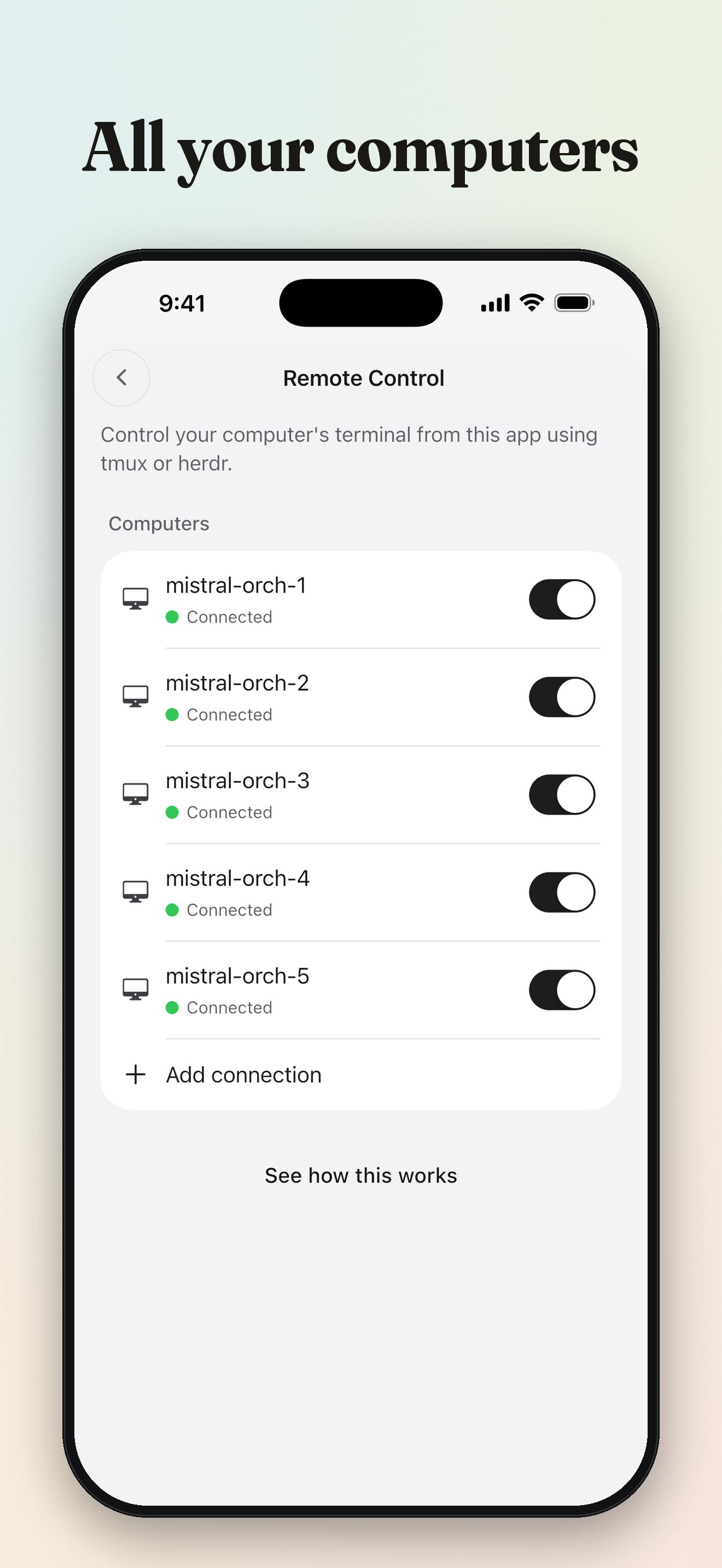
Writing code and running agents on your phone sounds like some kind of geeky compromise—small screen, slow input, incomplete toolchain. But Cosyra, newly launched on Product Hunt, offers a different approach: rather than turning your phone into an IDE, it turns it into a remote control for a cloud-based Ubuntu terminal, letting developers launch and direct AI agents running on their own machines anytime, anywhere.
What Problem Does It Actually Solve
Cosyra's positioning is very clear: a mobile programming tool for iPhone and Android, with the core capability of running any agent from your phone, built on a cloud Ubuntu terminal so users don't need to maintain their own VPS.
This design addresses a real pain point. Current mainstream AI coding agents—whether in CLI or IDE plugin form—are almost all tied to desktop environments, meaning developers leaving their computers means agents stop running. And the barrier to setting up your own remote dev environment isn't low—buying a VPS, configuring SSH, maintaining security patches—the cost-benefit ratio is poor for someone who just wants to "check on agent progress during the commute." Cosyra packages the "cloud terminal" infrastructure layer into a product, so users only need an app.
According to the Product Hunt page, Cosyra received 75 upvotes and 5 comments, ranking #19 for the day, categorized under Android, SaaS, and Developer Tools, and launched by developer Adam Roman. This data volume indicates it's still in an early exposure phase and hasn't yet built up community discussion momentum.
The Divergence from the "Mobile IDE" Route
Many mobile programming products on the market try to bring the editor, file tree, and terminal entirely to the phone, resulting in overly high interaction density and limited practical usability. Cosyra has chosen a more restrained path—it doesn't promise you'll finish writing a feature on your phone, but rather lets you initiate tasks, observe status, and make key decisions.
This positioning of "steer" rather than "code" aligns with the evolution direction of agent workflows. When AI handles most of the execution, the human role in the process increasingly shifts toward orchestration and review, and this role has far lower requirements for screen size and input efficiency than traditional coding. The phone happens to be well-suited for this role: receive a notification, open the app, glance at agent output, give an instruction, close the phone.
Worth noting is the phrase "any agent." If Cosyra truly doesn't restrict to a specific agent framework, then its value upgrades from "yet another AI coding tool" to "a mobile access layer for the agent runtime," a positioning with much greater imaginative space. However, the original material doesn't specify which agents are supported or how integration works—this capability boundary remains to be verified.
"Steer" vs. "Code" in Agent Workflows
In the context of AI programming, steer refers to directional intervention by humans in the agent's execution process—checking current progress, correcting erroneous assumptions, approving or rejecting an operation, adjusting task priorities. The fundamental difference from code is: coding requires humans to continuously produce fine-grained code characters, while steer only requires high-level decisions at key junctures. As agent capabilities improve, the frequency of human intervention drops from "line-by-line input" to "review on demand," and the required interaction bandwidth decreases dramatically. This is precisely the theoretical basis for mobile entry: phones aren't suited for prolonged high-density input, but are entirely capable of notification delivery, status browsing, and short instruction issuance.
Trade-offs of the Cloud Terminal Approach
Cosyra explicitly emphasizes "no need to manage your own VPS," meaning it absorbs the complexity of server operations into the product. This is clearly a burden lifted for individual developers, but it also raises two issues that need weighing.
The first is the trust boundary for code and credentials. Agents run in a cloud Ubuntu terminal, meaning code, environment variables, and API keys all pass through third-party infrastructure. For personal side projects this is fine, but for scenarios involving commercial codebases, careful evaluation is needed.
The second is persistence and cost model. The original information doesn't disclose the terminal session lifecycle, storage policy, or pricing structure. These details directly determine whether it's suited for "temporary checking" or "long-term hosting," and are also key to judging whether its SaaS model is sustainable.
Cloud Ubuntu Terminal vs. VPS
In traditional self-hosted setups, developers need to purchase a VPS (Virtual Private Server) themselves, configure SSH keys, firewalls, system updates, and security patches, then install the agent runtime environment on the server. What Cosyra calls a "cloud Ubuntu terminal" essentially productizes this process: the underlying layer is still a Linux environment hosted on containers or virtual machines, but users don't need to touch OS-level operations—opening the app gives you a ready terminal session. The core difference between the two isn't in the tech stack but in the boundary of responsibility—under the VPS model, users bear full responsibility for the environment and data; under the managed terminal model, the product provider handles infrastructure operations, and users must accept that code and credentials flow through a third party. Understanding this is essential to accurately assessing the trust boundary and persistence issues mentioned below.
Who Should Try It Now
Based on available information, Cosyra's early adopter profile is fairly clear: developers already using AI coding agents who are frequently in a "away from desk but need to monitor progress" state. Typical scenarios include status checks during long-running tasks, quick response after CI failures, and lightweight instruction issuance during commutes or outings.
For developers who rely entirely on desktop IDEs for coding, it doesn't currently constitute a replacement. For users who want to set up their own remote agent environment but don't want to fuss with a VPS, Cosyra offers an out-of-the-box intermediate option—at the cost of handing over some control to a third party.
The early data of 75 upvotes and 5 comments means community validation is still insufficient, and public feedback on actual experience, stability, and agent compatibility is lacking. For infrastructure-type tools like this, it's advisable to first test with non-core projects, confirm that session stability and data flows meet expectations, and then consider incorporating it into your daily workflow.
The mobile agent control direction itself is worth watching: as agents become a permanent part of the development process, the "monitoring and orchestration interface" around them will likely become its own product category rather than continuing to be attached to desktop IDEs. Cosyra is an early attempt in this direction.
Related articles

AI Coding Enters the Team Collaboration Era: Interpreting Three Major Moves from Meta, GitHub, and Mistral
Meta acquires Conductor, GitHub Copilot Fusion becomes available, Mistral opens Large 4 weights—three moves show AI coding shifting from code generation to organizing development workflows. This article explains task orchestration, model collaboration, and cost control for developers.

Building a RAG Assistant with Dify: A Practical Guide to Knowledge Bases, Workflows, and Agent Nodes
How should knowledge bases, workflows, and Agent nodes connect in a Dify RAG assistant? We break down the division of labor and wiring logic for a shippable app.
 Tech Frontiers
The AI Industry Doesn't Lack Marketing—It Lacks Good Products
AI faces market selloffs and public skepticism—is marketing really the problem? This analysis of market signals and product experience argues the core困境 is incomplete products and a gap between promises and experience; the only way to change perceptions is to ship better products.