Cristiano Ronaldo Bids Farewell to Portugal National Team: A 23-Year Legend Comes to an End, the No. 7 Shirt Lives On

Ronaldo bids farewell to his 23-year Portugal national team career in a handwritten letter, stressing that football is ultimately about people.
Through an open letter titled 'OBRIGADO, PORTUGAL,' Cristiano Ronaldo announces the end of his 23-year Portugal national team career. He reflects on his journey from a Madeira boy to the No. 7 shirt, emphasizing that football is about people, not just matches. He thanks immigrants, fans, teammates, staff, and family, acknowledges victories and painful defeats, and says he never gave up. The letter's core message: goals fade, trophies stay in museums, records are broken, but the place one holds in people's hearts is timeless. The national anthem's collective emotion becomes the emotional anchor, and he concludes that the greatest victory is being worthy of representing Portugal.
A 23-year national team journey comes to a close in a handwritten letter. Through an open letter titled OBRIGADO, PORTUGAL, Cristiano Ronaldo has officially announced the end of his Portugal national team career. The letter contains no tactical analysis and no statistics, yet it strikes the heart more directly than any match ever could.

From a Madeira Boy to the National Team's No. 7
In the letter, Ronaldo recalls that this journey began in August 2003. At the time, he was still a boy chasing a football through the streets of Madeira, never imagining he would wear that No. 7 shirt—and wear it for 23 years.
"I never felt this shirt belonged only to me. But for 23 years, I had the honor and the responsibility to wear it, to defend it, and to carry it to stadiums around the world."
He admits that handing over this shirt was not an easy decision—some decisions cannot be made with the head alone, but must come from the heart. This way of expressing himself shows that his feelings for the national team long ago transcended professional calculation.
Madeira is a Portuguese island in the Atlantic Ocean and Ronaldo's birthplace. He was born on February 5, 1985, in Funchal, the capital of the Madeira archipelago, into a modest family; his father was the kit man at a local club. In the Portuguese context, Madeira is often seen as a peripheral region far from the mainland and relatively underdeveloped economically, so the phrase "Madeira boy" refers not only to his geographic origin but also carries a narrative tension of moving from the margins to the center of the world. Ronaldo left Madeira early on to join the Sporting CP youth academy, an experience that has since been recounted repeatedly as the starting point of his career. Understanding this background helps one appreciate why he emphasizes in the letter that he "never imagined he would wear that No. 7 shirt."
Football Is About People and Emotions Beyond the Match
Ronaldo stresses one point repeatedly in the letter: football is far more than a match—football is people.
He mentions the immigrants who, for 90 minutes, feel that Portugal is closer to them, and the millions of people he has never met who have been part of his life. These details lift this farewell letter out of the template of an athlete's retirement statement; it reads more like an ordinary person's confession to his homeland.
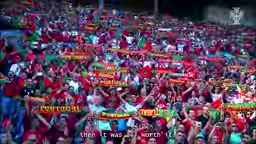
The letter also acknowledges imperfection: there were perfect afternoons and evenings, unforgettable victories, and defeats that still hurt when he thinks of them. He admits he has failed, suffered, and had moments when he could not give the Portuguese people what they longed for. But he says he never gave up, and never stopped being proud to represent Portugal.
Goals Will Fade, but Memories Won't
One passage in the letter deserves to be singled out: goals will pass, trophies will remain in museums, records will eventually be broken, but there are some things time can never erase—the place a person holds in people's hearts.
"If I ever made you happy, if one of my goals made you hug someone, made you proud of this country and made you forget your troubles for a while, then it was all worth it."
This understanding of "legacy" is no longer an athletic self-assessment but a reflection on collective memory. For a player whose career has brought countless honors, anchoring his ultimate value in "the place he holds in people's hearts" is itself a thought-provoking shift.
Legacy in sports writing and public cultural discussion usually refers to the lasting impact an athlete leaves behind after leaving the field, including records and trophies as well as the shaping of fans' emotions, collective memory, and social culture. In recent years, sports sociology has increasingly expanded legacy from purely athletic achievement to dimensions such as identity, community cohesion, and intergenerational transmission. By anchoring value in "the place a person holds in people's hearts," Ronaldo is in effect shifting from an "achievement-based legacy" to an "emotional legacy." This shift is not common in the farewell narratives of top athletes, because it downplays quantifiable honors and instead emphasizes interpersonal influence that is difficult to quantify.
To Teammates, Behind-the-Scenes Staff, and Family
In the letter, Ronaldo thanks his teammates, coaches, management, doctors, physiotherapists, kit men, and staff one by one. He notes in particular that many of them never appear in photographs, but without them, none of those photographs would exist.
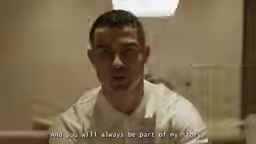
To his family, he expresses gratitude for sharing this dream and for understanding his absences and sacrifices. He says he has been able to go this far because they have always held hands.
As captain, his wording is also notably restrained: "I had the honor of being your captain. But no captain walks alone."
Those Few Minutes When the National Anthem Plays
The most vivid passage in the letter describes the moment the national anthem plays: looking around, seeing teammates, the stands, children, mothers, fathers, and grandparents, seeing Portuguese people who traveled from afar just to stand there.
In those few minutes, there is no club, no colors, no class, no profession, no opinions. There is only one passion—Portugal.
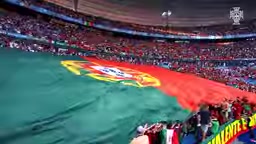
He says this feeling will stay with him for the rest of his life. This is also the emotional landing point of the entire letter: what he leaves behind is his national team career on the pitch, but he has never left his identity as "one of you."
The national anthem as a pre-match ritual serves in modern football to reinforce national identity and collective emotion. Before international matches, the anthem is played, players line up, and fans stand—a brief moment often described by athletes as a peak experience where pressure and belonging intertwine. Sociological research points out that the anthem ritual, through bodily co-presence, vocal synchronization, and symbolic signs, temporarily binds dispersed individuals into an "imagined community." Ronaldo's description of looking around at teammates, the stands, family, and compatriots who came from afar is a typical presentation of this ritual emotion. His statement that there is "no club, no colors, no class" also echoes the way the anthem moment briefly smooths over everyday identity differences.
Why This Letter Is Worth Reading
In terms of content, this is not a standard retirement statement. It does not list the number of titles or emphasize personal records; instead, it focuses on people, emotions, and collective memory. For a player known for his competitiveness and self-demand, this way of saying goodbye is itself a narrative contrast.
At the end of the letter, he writes: I have spent my whole life trying to be the best player in the world, and only now do I understand that the greatest victory is to be worthy of representing the best country in the world.
The No. 7 shirt remains; the pride of wearing it will always be his. Portugal will always be in his heart.
The value of this letter lies not in providing news information but in showing how a top athlete understands the relationship between himself and a country. For readers interested in sports narratives, personal expression, and public emotion, this letter offers plenty of room for discussion.
One-line Summary
Ronaldo bids farewell to his 23-year Portugal national team career in a handwritten letter, stressing that football is ultimately about people.
Paragraph Summary
Through an open letter titled OBRIGADO, PORTUGAL, Cristiano Ronaldo announces the end of his 23-year Portugal national team career. In the letter, he looks back on his journey from a Madeira boy to the No. 7 shirt, emphasizing that football is far more than a match—it is about people. He thanks immigrants, fans, teammates, behind-the-scenes staff, and family. He admits there were victories and painful defeats, but he never gave up. The core message is that goals will pass, trophies will remain in museums, records will eventually be broken, but the place a person holds in people's hearts can never be erased by time. The collective emotion of the national anthem becomes the emotional landing point, and he ultimately says his greatest victory is being worthy of representing Portugal.
Related articles

Anthropic Fable 5.2 Hands-On: 3A Games and Excel Clones from One Prompt
Anthropic Fable 5.2 hands-on: three-line prompts generate a playable Gears of War clone, a full Excel clone, and a DaVinci Resolve clone. Benchmarks, Ultra Code mode, token costs, and pricing analyzed — is it worth replacing Opus 5.5?

RL Racing Agent Stuck Against the Wall? Try These Recovery Strategies
RL racing agent stuck against walls? We analyze recovery data, observation limits, and action space, comparing DAgger, behavior cloning, and SAC with diagnostic experiments.

Giving AI Agents Long-Term Memory: A New Approach to Supply Chain Disruption Decisions
A developer uses Hindsight to build persistent memory for a supply chain AI agent, enabling retrieval of past disruptions and decision outcomes. The article analyzes its architecture, memory retention and recall design, and engineering challenges such as what to remember and how to evaluate memory effectiveness.