Curates: An All-in-One Portfolio Management Platform for Creators

Curates combines client review and portfolio display in a single link to cut repetitive work for creators.
Curates is the #10 all-in-one creator platform on Product Hunt, letting work be kept, shared, and showcased in one place. Client review is consolidated into a single link for in-page comments, approvals, and downloads, while portfolios support two-step photo additions with no export or re-upload. It targets independent creators and small studios with frequent client communication; its limits lie in client cooperation and workflow depth.
When Creative Management Becomes an Assembly Line
Creators' time is constantly fragmented: work is scattered across hard drives, cloud storage, and social platforms, client feedback bounces back and forth through email and chat tools, and updating a portfolio means repeatedly exporting, uploading, and re-formatting. Curates, ranked #10 on Product Hunt, attempts to stitch this fractured chain back together—positioning itself as an "all-in-one platform for creators," with the core proposition of letting work be "kept, shared, and showcased" in the same place.
One Link Replaces a Round of Email Back-and-Forth
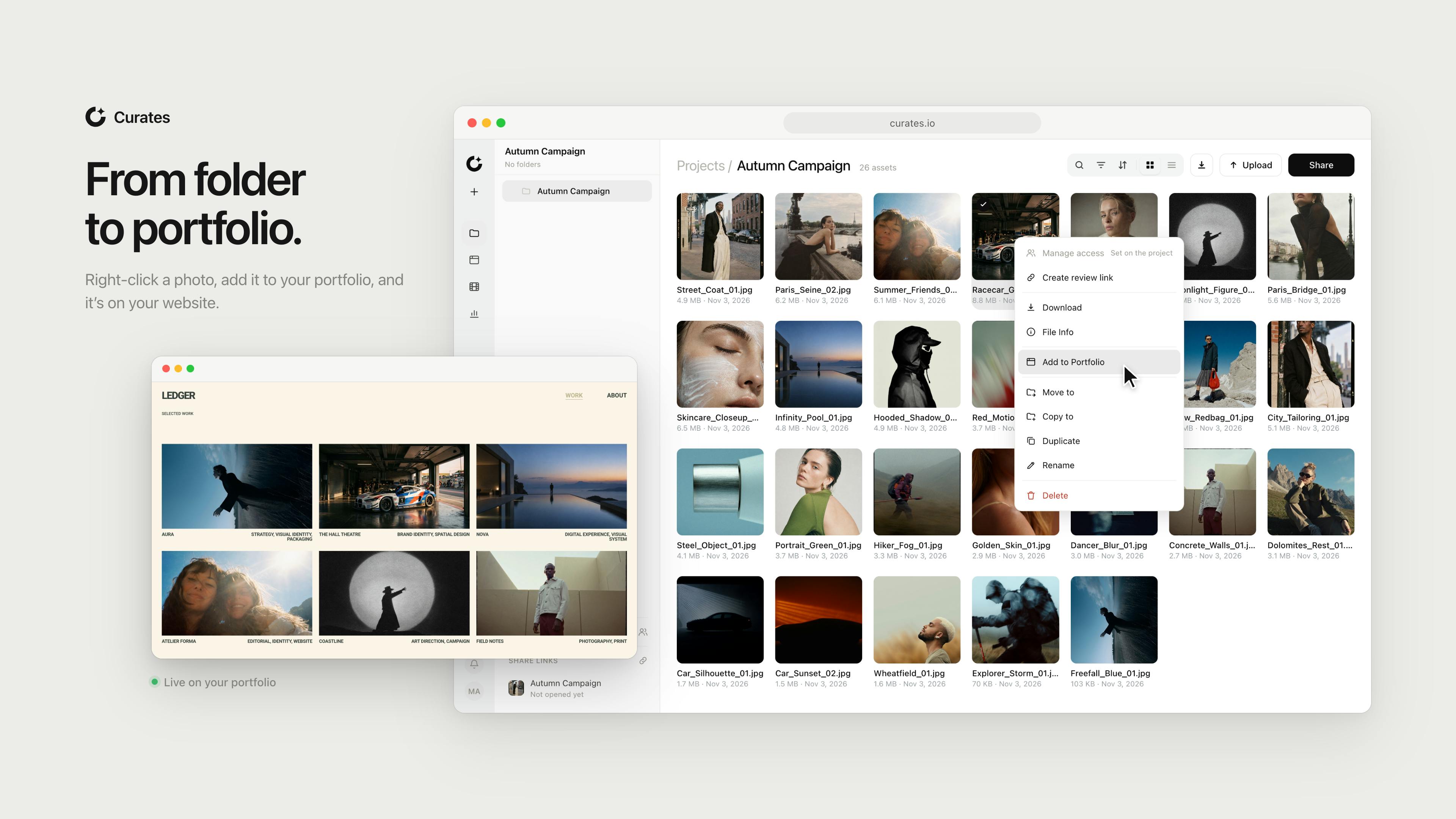
Curates' most direct feature is client review. Creators can send a review link, and clients can leave comments, give approval, or download files directly on the page—no need to scatter feedback across multiple channels. For fields like photography and design that require repeated confirmation, consolidating "comment—approve—deliver" into a single entry point reduces communication friction rather than the creative work itself.
The product received 77 upvotes and 7 comments on Product Hunt, categorized under Productivity, Marketing, and Photography—a set of categories that neatly outlines its target users: independent creators and small teams who need to manage their work while also doing light marketing to clients.
Portfolio is an online collection of pages where creators showcase representative work to potential clients or employers, typically including project thumbnails, case descriptions, and contact information. For photographers and designers, a portfolio is both marketing material and proof of capability, and its update frequency often exceeds that of a personal resume. In traditional practice, portfolios and client review files belong to different systems, causing the same asset to be exported and uploaded multiple times; Curates' reuse logic targets exactly this gap, treating the portfolio as a downstream display layer of the asset library rather than an independently maintained site.
Two-Step Portfolio Publishing
A portfolio website is a creator's storefront, but the maintenance cost is often disproportionately high. Curates claims it can add any photo to a portfolio website in "two steps" and create a private showcase page for each project. The key is its emphasis on "no export, no re-upload": the same asset is reused between the review workflow and public display, rather than being copied each time the context changes.
The trade-off in this approach is clear. It doesn't aim to be the most feature-complete site builder; instead, it treats the portfolio as a downstream output of the creative process—assets are managed and reviewed in the library, then referenced directly in the display layer. For creators already worn down by the "export—upload—export again" cycle, what's saved is precisely this repetitive labor.
Where the Boundaries of an All-in-One Platform Lie
"All-in-one" is the most common promise of this type of product—and also the most easily questioned. Curates' currently demonstrated capabilities center on two ends: review collaboration and portfolio display. Details in between—asset management, version control, client permissions—are hard to assess in depth from public information.
Another dimension worth watching is the client-side experience. Whether comments and approvals on review links are lightweight enough determines whether non-professional users are willing to cooperate—no matter how good the internal workflow is, if clients still insist on replying by email, the loop breaks.
Digital Asset Management (DAM) refers to the systematic practice of centrally storing, tagging with metadata, retrieving, and version-tracking digital assets such as images, videos, and design source files. Lightweight creator platforms typically only offer upload and display, while professional DAM records revision history, usage rights, and associated projects for each asset. Curates' claimed "no export, no re-upload" relies on the reuse capability of the underlying asset library, but public information has yet to clarify whether it offers version control, tiered client permissions, or bulk metadata management—exactly the key indicators for judging how deep "all-in-one" can go.
Who It's For, Who It's Not For
Judging from its positioning, Curates is better suited to independent photographers, designers, and small studios with a manageable volume of work and frequent client communication. It solves process fragmentation, not the capability of creative tools themselves.
If the need is deep project management, complex approval flows, or large-scale team collaboration, this type of lightweight platform may quickly hit its ceiling. Conversely, if the core pain point is "work scattered everywhere, portfolio updates starting from scratch every time," Curates' reuse logic hits the mark.
Product Hunt's 77 upvotes show it has caught the attention of some creators, but the real test for an all-in-one platform is whether it can get creators to move their entire workflow in—not just treat it as yet another upload tool.
Approval Workflow refers to the established steps and chain of responsible parties that content goes through from submission and multiple rounds of revision to final approval, commonly found in advertising agencies, publishing houses, and large design teams. It differs fundamentally from the "single-link comment—approval" that Curates offers: the former requires role permissions, stage gates, and audit records, while the latter is closer to lightweight confirmation. Understanding this difference helps gauge product boundaries—when client communication involves multi-party sign-off or compliance requirements, a lightweight review link may not be enough to replace a formal approval system and may need to be used alongside project management tools.
One-line Summary
Curates integrates client review and portfolio display into a single link, reducing repetitive work for creators.
Paragraph Summary
Curates is the #10 ranked all-in-one creator platform on Product Hunt, with the core proposition of letting work be "kept, shared, and showcased" in one place. It consolidates client review into a single link where clients can comment, approve, or download files on the page, reducing communication friction across email and chat tools; the portfolio website supports adding photos in "two steps," emphasizing asset reuse with no export and no re-upload. The product received 77 upvotes and 7 comments, categorized under Productivity, Marketing, and Photography, targeting independent creators and small studios with manageable work volume and frequent client communication. The article notes that its boundaries lie in client-side cooperation and workflow depth, and that capabilities such as asset management and version control remain hard to assess.
Related articles
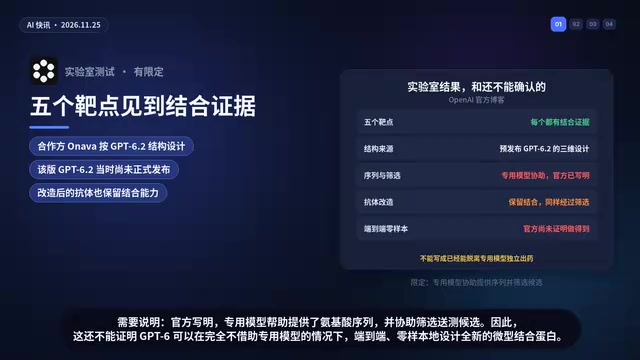
GPT-6 Designs Proteins, Claude Creations Become Apps with One Click, DeepMind Releases New Benchmark
OpenAI says GPT-6 can design protein 3D structures, Anthropic lets Claude creations install as desktop apps, DeepMind's HIP benchmark tests stability on simple questions, Google Workspace opens agent MCP interfaces.
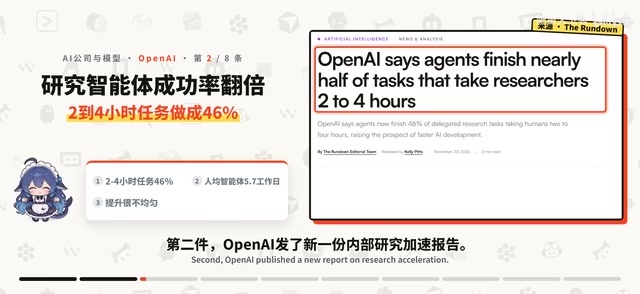
OpenAI Weekly Roundup: GPT-6.2 Rolls Out to ChatGPT, GPT-6 Designs Proteins
OpenAI's week: GPT-6.2 rolls out to ChatGPT, GPT-6 claims independent protein design, agent research share surges, perplexity proposed as a shared metric, and internal safety concerns surface.

Is the Crypto Industry About to "Turn Blue"? The Truth Behind Tech and Politics' Shifting Allegiances
Vergecast discusses whether the crypto industry will shift from the right to the Democrats, revealing the pragmatic nature of tech's politics and the costs of a crypto pivot.