Cursor Acquisition Rumors: Why Developers Are Anxious About the Future of AI Tools

Rumored Cursor acquisition sparks developer debate about AI tool independence and control.
A Reddit post about Cursor's rumored $60B acquisition by SpaceX has ignited widespread developer anxiety about the future of AI coding tools. The discussion reveals deeper concerns about tool sovereignty, model lock-in risks, and the historical pattern of products declining post-acquisition. While the rumor remains unconfirmed, it highlights how developers increasingly recognize their dependency on AI tools controlled by a handful of companies.
A Single Acquisition Rumor Sparks Community-Wide Anxiety
Recently, a post from a developer on Reddit sparked widespread discussion. The user expressed their concerns bluntly: "Cursor is probably the best AI coding tool I've ever used, but after hearing about the SpaceX acquisition for $60 billion, I'm honestly a bit worried."
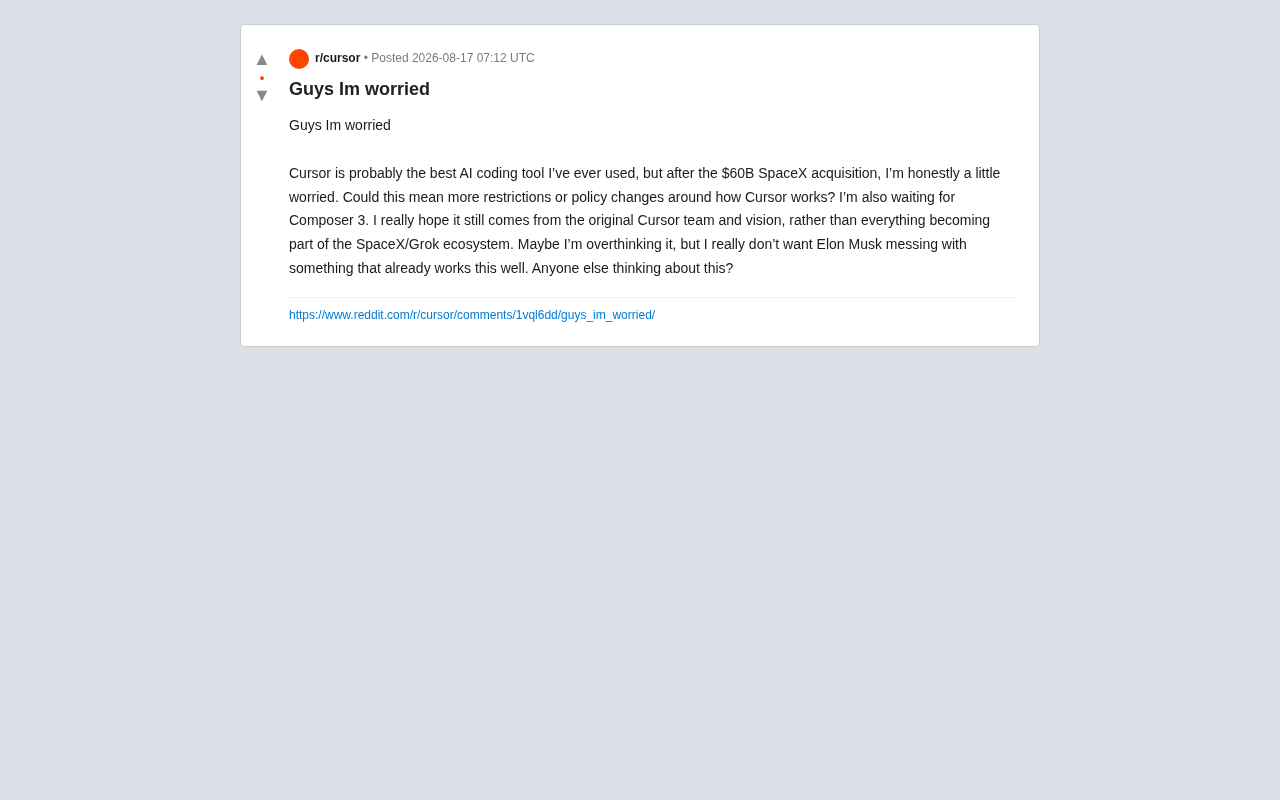
This post resonated widely because it touched on a universal anxiety among AI tool users today: When a tool you deeply depend on—one that works brilliantly—gets absorbed by a tech giant, will it still be the same?
It's worth noting that the claim about SpaceX acquiring Cursor for $60 billion remains in the realm of community rumors, with no official confirmation. But even so, the discussion itself reflects deep-seated concerns within the developer community about the direction of the AI coding tool ecosystem. To understand what these worries specifically point to, we need to untangle the complex relationships between Elon Musk's companies: SpaceX is Musk's aerospace transportation company, while xAI is his artificial intelligence company founded in 2023, with the large language model Grok as its core product. The community's central concern is that if an acquisition were to happen, Cursor might be forced to shift from its current open strategy of supporting multiple frontier models (such as Claude, GPT-4o, etc.) to exclusively or preferentially using the Grok model. While xAI's Grok is developing rapidly, it hasn't yet been widely recognized by the developer community as the top choice for code generation capabilities—making this potential model lock-in a significant source of anxiety.
Why Developers Care So Much About Cursor
An AI Code Editor That Truly Changed Workflows
Cursor is an AI-native code editor built as a deep modification of VS Code. Thanks to its excellent context understanding, code completion, and intelligent refactoring capabilities, it has rapidly built a large base of loyal users over the past year. For many developers, it's no longer a nice-to-have auxiliary tool—it's core productivity software deeply embedded in their daily workflows.
Notably, Cursor isn't simply VS Code with plugins installed. It's a deep fork and rework of VS Code's open-source core (Code - OSS). VS Code itself is developed by Microsoft, built on the Electron framework, with a massive extension ecosystem. Cursor redesigned the editor's interaction layer on top of this foundation, deeply integrating AI capabilities into the core processes of code editing, navigation, and refactoring—rather than treating them as external plugins. This architectural choice enables Cursor to achieve more granular AI awareness across dimensions like cursor position, selected code, and file context, delivering a tighter integration experience than plugin-based approaches.
Because of this deep dependency, users are particularly sensitive to any potential changes. The original poster mentioned they were "waiting for Composer 3" and hoped this new version would "still come from the original Cursor team and vision" rather than becoming part of the SpaceX/Grok ecosystem. Composer is one of Cursor's core features—it allows users to describe requirements in natural language, and the AI automatically performs coordinated code generation and modifications across multiple files. This capability goes beyond traditional single-line or single-file code completion, entering the realm of "Agentic Coding"—where AI is no longer a passive completion tool but an intelligent agent that can actively understand project structure, plan modification steps, and execute cross-file changes. Composer 3 is highly anticipated by the community, expected to bring significant improvements in multi-step reasoning, self-healing errors, and context window management. The original poster's anticipation for it is essentially a cherishing of the product's original mission and independence.
The Core Anxiety: Transfer of Control
The key concerns for developers include:
- Strategy and policy changes: After being acquired by a large company, will there be more usage restrictions, paywalls, or data policy adjustments?
- Technical direction shifts: Will the product be forced to integrate into the acquirer's ecosystem (like Grok), deviating from its original technical roadmap?
- Team and vision dilution: Will the original team still be able to lead product direction, or will they be co-opted by the parent company's commercial objectives?
One quote from the original poster is particularly representative: "Maybe I'm overthinking it, but I really don't want Elon Musk messing with something that's already working this well."
This Anxiety Is Not an Isolated Case
The "Post-Acquisition Decay" Curse in Tech History
Developers' concerns have ample historical precedent. In the tech industry, cases of excellent independent products losing their way after acquisition by giants are all too common—some lose their soul due to over-commercialization, some lose agility from being integrated into massive ecosystems, and in others, core teams gradually depart after the acquisition, causing products to stagnate.
Examples abound: after Facebook acquired WhatsApp in 2014, co-founder Jan Koum eventually left due to conflicts over data privacy principles; after Google acquired Waze in 2013, while the app maintained independent operation, its pace of product innovation noticeably slowed; after Microsoft acquired Skype for $8.5 billion in 2011, the product went through multiple strategic direction changes before ultimately being replaced by Teams. However, there are positive cases too—after Microsoft acquired GitHub for $7.5 billion in 2018, it not only maintained GitHub's independence but increased investment, launching innovative features like Copilot, and GitHub's user base and community activity actually grew significantly. These vastly different outcomes demonstrate that post-acquisition fate largely depends on the acquirer's governance philosophy and respect for the product team.
For AI coding tools—products that are highly dependent on continuous iteration and team creativity—this risk is particularly pronounced. A tool's value lies not only in its current features but in whether the team can maintain sharp product judgment and rapid responsiveness.
The Awakening of "Tool Sovereignty" Consciousness in the AI Era
At a deeper level, this discussion reflects a new consciousness emerging among developers in the AI era—tool sovereignty anxiety. As more and more core productivity tools depend on cloud-based AI capabilities controlled by a handful of giants, individual developers' sense of control over their tools is steadily declining.
The essence of this anxiety is a supply chain risk problem. The capabilities of modern AI coding tools depend on three core layers: the underlying large language models (such as Claude, GPT series), inference computing infrastructure (typically cloud GPU clusters), and the upper-layer product experience design. Developers as end users have almost no direct control over any of these three layers. Pricing adjustments by model providers, API policy changes, or even geopolitical factors could change a tool's availability and cost overnight. This is also why open-source models (like Llama, DeepSeekAd, Qwen, etc.) and local deployment solutions are gaining increasing attention—they provide developers with a fallback to maintain productivity in extreme scenarios.
Whose model powers an AI coding tool, whose computing resources it runs on, whose commercial intentions drive it—these previously "invisible" factors now directly affect developers' daily experience and long-term planning. Users are beginning to realize that choosing an AI tool is essentially placing a bet on the company and ecosystem behind it.
A Rational Perspective: The Other Side of the Worry
Acquisition Doesn't Necessarily Mean Product Decline
It's worth emphasizing that acquisition itself doesn't inevitably mean a product goes downhill. Sufficient funding and resource support could actually accelerate product iteration, improve stability, and expand capability boundaries. If the acquirer respects the original team's independence and grants them sufficient autonomy, the product could very well enter an even better phase of development.
The key lies in post-acquisition governance structure: whether the original team retains decision-making authority, whether the product vision is carried forward, and whether user interests are taken into account. These are the true variables that determine a tool's fate.
Practical Advice for Developers
Facing this type of uncertainty, developers can adopt some pragmatic strategies:
- Stay informed but don't follow blindly: Distinguish between official announcements and community rumors; avoid excessive anxiety over unconfirmed information.
- Reduce single points of dependency: Familiarize yourself with alternative tools and maintain flexibility in your tech stack. The AI coding tool space is intensely competitive right now: GitHub Copilot holds the largest market share backed by Microsoft and OpenAI resources; Windsurf (formerly Codeium) also takes the standalone editor approach with a differentiated freemium model; Continue takes the open-source route, allowing developers to choose their own backend models; and there are also offerings from major companies like Amazon Q Developer and Google Gemini Code Assist. This diversity of choices is itself the best hedge against single-point risk.
- Focus on actual experience changes: Judge whether to continue using a tool based on its actual performance rather than corporate ownership.
It's worth mentioning that valuations in this space are inflating rapidly—Cursor's parent company Anysphere saw its valuation surge from hundreds of millions to nearly tens of billions of dollars between 2024-2025, reflecting the capital market's fervent expectations for AI coding tools. If the rumored $60 billion acquisition price were real, it would be the largest deal in this space to date, and its strategic implications and impact on the industry landscape deserve ongoing attention.
Conclusion
This Reddit user's "worry" appears to be about an unconfirmed acquisition, but it actually reflects a widespread and genuine sentiment among developers in the AI tool era. The more we depend on a particular tool, the more we fear losing it—or fear it becoming something we no longer recognize.
In today's landscape of rapidly evolving AI tools and frequent industry consolidation, this anxiety may become the new normal. But as the original poster themselves reflected—"Maybe I'm overthinking it." Staying attentive, staying rational, and keeping alternatives ready is probably the best posture for dealing with uncertainty. As for where Cursor is actually heading, we'll still need to wait for an official response.
Related articles
LangGraph Crash Course: Building Enterprise-Grade AI Agents and Workflows from Scratch
LangGraph crash course: learn its independence from LangChain, MIT license, FastAPI high-concurrency deployment, human approval, and memory storage for enterprise AI agents.

Building an AI Customer Service Agent from Scratch: A 92% Intent Recognition Case Study
A Bilibili case study: building an AI customer service agent from scratch with BERT intent recognition, dialogue state tracking, hybrid vector retrieval, and a weighted handoff model—raising intent accuracy from 65% to 92%, 78% conversation completion, handling 100K conversations daily.
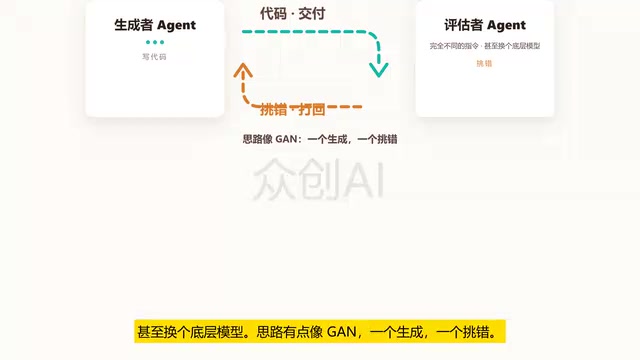
Loop Engineering: An Engineering Paradigm for AI That Writes Code and Merges PRs Autonomously
Loop Engineering is transforming AI development pipelines: Stripe's Minions system merges over 1,300 machine-generated PRs weekly. This article breaks down Loop Engineering's five core actions, six components, five failure modes, and three safety disciplines, explaining why independent evaluators, state files, and budget caps matter more than full automation.