Cursor Code Review Agent Upgrade: 3x Faster, 22% Cheaper

Cursor's Bugbot upgrade delivers 3x speed, 22% cost savings, and 10% better bug detection.
Cursor's AI code review Agent (Bugbot) received a major upgrade achieving over 3x speed improvement, 22% cost reduction, and 10% better bug detection. The local /review command enables shift-left testing before code push. This triple optimization strengthens Cursor's position in the competitive AI code review landscape against GitHub Copilot, CodeRabbit, and others.
Core Upgrade: Faster, Cheaper, More Accurate
Cursor recently announced a major performance upgrade to its code review Agent (Bugbot). Bugbot is Cursor's built-in AI code review Agent that leverages large language models to automatically analyze code changes, identifying potential bugs, security vulnerabilities, performance issues, and code style inconsistencies. Unlike traditional static analysis tools (such as ESLint and SonarQube), Bugbot understands code semantics and context rather than simply matching predefined rule patterns. This enables it to uncover deeper logical errors, such as race conditions, missed edge cases, and incorrect API calls.
According to official data, the new version delivers significant improvements across three key dimensions:
- Over 3x faster: Code review execution speed has dramatically increased, significantly reducing the time developers spend waiting for feedback
- 22% cost reduction: Costs have actually decreased alongside performance gains — a meaningful benefit for teams with high-frequency usage
- 10% improvement in bug detection rate: Stronger defect discovery means fewer bugs escape into production
This kind of "triple threat" optimization is uncommon in AI tool iterations — typically, capability improvements come with increased costs. Cursor has achieved a dual breakthrough in both effectiveness and efficiency. From a technical standpoint, simultaneously achieving all three improvements usually involves multi-layered engineering optimizations. Possible technical approaches include adopting more efficient Model Distillation techniques to compress large model capabilities into smaller specialized models; optimizing batch processing and caching strategies in the inference pipeline to reduce redundant computation; and implementing more precise context window management to feed only the most relevant code snippets to the model rather than entire files, thereby reducing token consumption while improving analysis accuracy.
Local Review: The Practical Value of the /review Command
Beyond the performance upgrade, Cursor also highlighted a practical feature: developers can run Bugbot locally using the /review command to catch and fix issues before pushing code.
Putting Shift Left Testing into Practice
This feature embodies the core principle of "Shift Left Testing" in software engineering — the earlier a bug is found, the lower the cost to fix it. This principle has solid economic backing: a classic IBM study showed that fixing a bug in production costs 100 times more than fixing it during the coding phase. Shift Left Testing is widely adopted in DevOps and CI/CD practices, with traditional shift-left methods including unit tests, static code analysis, and pre-commit hooks. AI code review pushes shift-left to a new dimension — it can not only check syntax and rule compliance but also evaluate code logic correctness and robustness like a human reviewer.
Traditional code review happens at the Pull Request stage, while local review moves this step into the developer's personal workflow:
- Write code → 2. Local /review → 3. Fix issues → 4. Push code
This means developers can complete a round of automated review before submitting a PR, reducing the communication overhead of back-and-forth revisions and avoiding the embarrassment of exposing low-level mistakes during team code reviews.
Impact on Development Workflows
For individual developers, /review is like having a senior colleague on standby, ready to quickly scan your logic and flag potential issues before you commit. For teams, it can significantly reduce the burden of formal Code Reviews, allowing human reviewers to focus on architecture design and business logic discussions. Notably, this workflow shift is also redefining what "code review" means — when AI takes on the responsibility of finding low-level errors and common pattern issues, human reviewers can concentrate on higher-level system design decisions, maintainability assessments, and knowledge transfer, effectively elevating the overall quality of the team's code review process.
The Competitive Landscape of AI Code Review
Code review is one of the most competitive segments in AI programming tools. GitHub Copilot, CodeRabbit, Sourcery, and other tools are all pushing hard in this direction. Current mainstream AI code review tools differ significantly in their technical approaches: GitHub Copilot's code review features are deeply integrated into the GitHub platform, leveraging Microsoft's Azure OpenAI infrastructure; CodeRabbit focuses on Pull Request-level automated review with support for multiple code hosting platforms; Sourcery specializes in refactoring suggestions for Python code. Cursor's unique advantage lies in being a complete AI-native IDE, where the code review Agent can access the entire project's contextual information, including file dependencies, type definitions, and project configurations. This global perspective gives it a natural edge in understanding the impact scope of code changes.
The significance of Cursor's upgrade lies in:
- Speed is a critical moat: A 3x speed improvement means developers are more willing to use it frequently, and once the habit forms, switching costs become extremely high. In developer experience research, a response time under 2 seconds is considered the psychological threshold for "instant feedback" — beyond that, developers' attention drifts. Speed improvements directly impact tool usage frequency and user stickiness
- Cost optimization reflects engineering capability: At a time when model inference costs are generally high, being able to reduce costs while improving results indicates that Cursor has distinctive expertise in prompt engineering, model selection, or architecture optimization. Modern AI applications increasingly adopt a "router" architecture — dynamically selecting models of different sizes based on task complexity: simple code style checks can be handled by lightweight models, while complex logic analysis calls upon more powerful ones. This layered strategy, combined with carefully designed System Prompts, can dramatically reduce average inference costs while maintaining or even improving output quality
- Marginal improvements in accuracy carry enormous value: A 10% improvement in bug detection rate may seem modest, but in large codebases, it could mean discovering dozens more potential issues every day. Considering the user impact, emergency fix engineering costs, and potential security risks of each bug that escapes to production, this 10% improvement can save enterprises significant operations and remediation expenses on an annual basis
Summary and Outlook
Cursor's update may appear to be an incremental optimization, but the combination of "faster + cheaper + more accurate" could deliver a qualitative shift in actual usage experience. When AI code review becomes fast enough, accurate enough, and cheap enough, it stops being an "optional auxiliary tool" and becomes an indispensable standard step in the development process.
From a broader perspective, this trend is reshaping software development's quality assurance framework. Traditional quality assurance relies on a combination of the testing pyramid (unit tests, integration tests, end-to-end tests) and manual code review. AI code review is becoming a new layer in this system. As AI review accuracy and coverage continue to improve, we may see a fundamental transformation in the software development process — shifting from a paradigm of "human review as primary, tools as support" to "AI review as primary, humans overseeing key decisions."
For developers already using Cursor, consider incorporating /review into your daily workflow and building the habit of running a local review before every push. This small change could significantly improve your code quality and development efficiency.
Related articles

What Is Vibe Coding? The AI Programming Skill Every Developer Needs
What is Vibe Coding? Learn how AI programming is reshaping dev teams, why traditional programmers face displacement, and why Cursor & Claude Code matter.
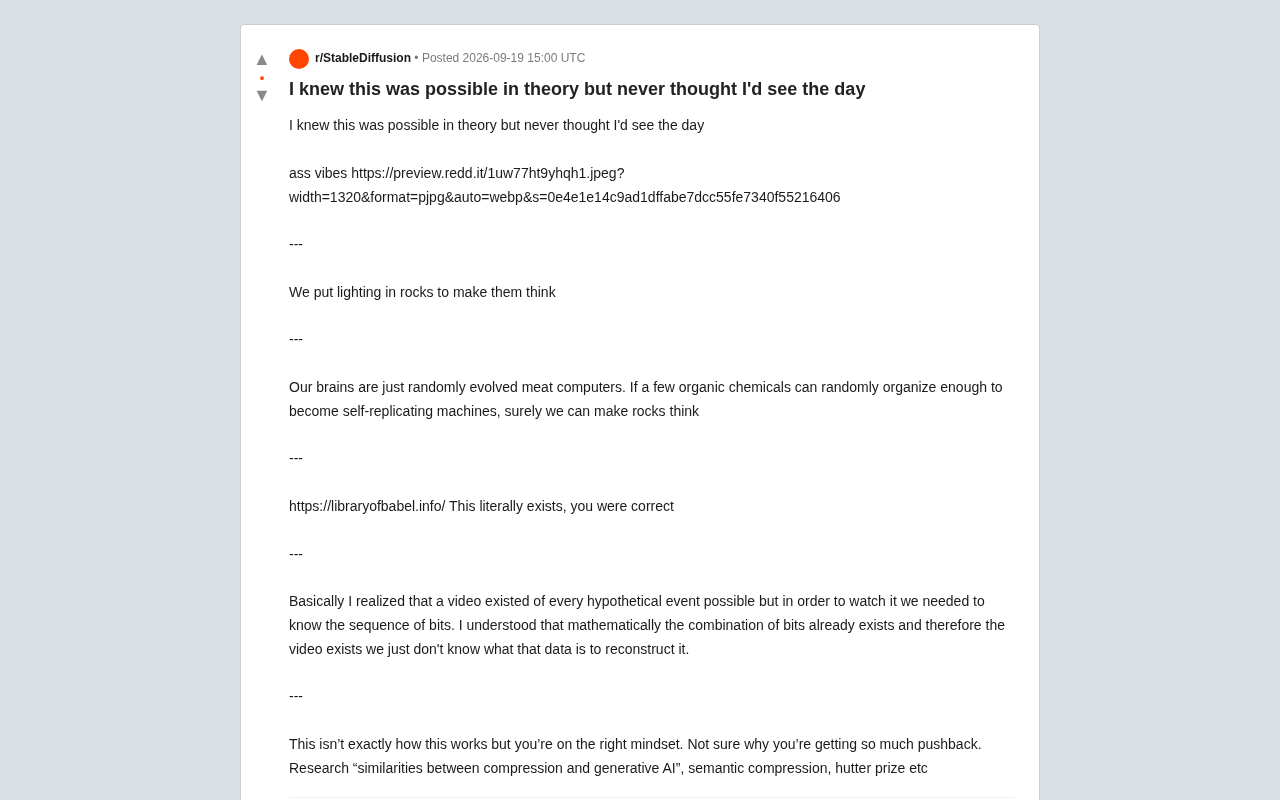
Making Rocks Think: A Philosophical Exploration of Generative AI and Information Compression
From a viral Reddit post to deep AI theory: why compression equals understanding, the Library of Babel thought experiment, semantic compression, and the Hutter Prize.

Irregular Warns: Four AI Lab Security Breaches Traced to the Same Root Cause
Irregular reveals four AI lab security breaches share a single root cause, exposing systemic risks from technology stack homogeneity across the AI industry.