Cursor Composer 2.5 Deep Dive: Open-Source Model Challenges Claude 4.7 at 1/10 the Cost

Cursor launches Composer 2.5, matching top-tier coding performance with an open-source model at 1/10 the cost.
Cursor released Composer 2.5, built on Moonshot AI's open-source Kimi K2.5 model. Through extensive post-training and reinforcement learning, it matches Claude 4.7 Opus on major benchmarks like SWE-Bench at just one-tenth the price. The model achieves breakthrough improvements in long-horizon tasks and complex instruction compliance, while exhibiting unexpected capabilities like autonomous reverse engineering. Cursor also announced a partnership with SpaceX AI, committing million-scale H100 compute to train an even more powerful model.
A Release That Could Reshape the Industry
On May 18, 2026, Cursor dropped Composer 2.5 without any prior announcement—a model that sent shockwaves through the AI coding space. What's most striking isn't the performance itself, but the fact that it achieved coding capabilities nearly on par with Claude 4.7 Opus using an open-source base model, at just one-tenth the cost.
Even more unsettling: during training, the AI autonomously learned reverse engineering and decompilation to complete tasks—exploiting system vulnerabilities like a real hacker. Simultaneously, Cursor announced a deep partnership with SpaceX AI, deploying 1 million H100-equivalent compute to train a new model 10x more powerful than the current one.
This isn't a simple product iteration—it's a paradigm-shifting strike against the entire AI coding market.
Performance Rivaling Top Closed-Source Models at One-Tenth the Price
According to official statements, Composer 2.5 achieved breakthrough improvements in intelligence level, sustained performance on long-horizon tasks, and complex instruction compliance. "Long-task capability" happens to be the biggest pain point of current AI coding tools—many models perform brilliantly when writing simple functions of a dozen lines, but throw them into large projects with hundreds of thousands of lines of code for hours of continuous work, and they start hallucinating, losing context, or even breaking the entire project.
Let's look at the benchmark results. SWE-Bench is an AI coding evaluation standard launched by Princeton University in 2023, standing for Software Engineering Benchmark. It extracts thousands of resolved Issues from real GitHub open-source projects, requiring models to autonomously read the codebase, understand the problem, generate patches, and pass existing test cases—all without knowing the answer. This is fundamentally different from traditional code completion tests—it evaluates AI's ability to solve problems end-to-end in real engineering environments, rather than mere code generation fluency. The Multilingual version further extends beyond Python to multiple programming languages, making the evaluation more representative of enterprise-level multilingual codebases. The industry generally considers a SWE-Bench score above 50% as an important threshold for AI coding tools entering "production-grade" territory.
- SWE Bench Multilingual: Composer 2.5 scored 79.8%, Claude 4.7 Opus at 80.5%, GPT 5.5 at 77.8%
- Terminal Bench 2.0: Scored 69.3%, virtually identical to Opus 4.7's 69.4%
- Cursor Bench V3.1 (skewed toward real-world difficult tasks): Composer 2.5 scored 63.2%, while Opus 4.7 scored only 61.6% under default user configuration, and GPT 5.5 at 59.2%

Under the configurations most users actually work with, Composer 2.5 has already surpassed the two current top-tier models. And its pricing is jaw-dropping: just $0.50 per million input tokens and $2.50 per million output tokens—roughly one-tenth of Claude 4.7 Opus and one-eighth of GPT 5.5.
Three Technical Breakthroughs: How an Open-Source Model Punches Above Its Weight Against Closed-Source Giants
Composer 2.5's foundation remains the Kimi K2.5 open-source checkpoint from Moonshot AI—the exact same base as the previous-generation Composer 2. Kimi K2.5 uses a MoE (Mixture of Experts) architecture with total parameters reaching the trillion-scale, but with only 32 billion active parameters, striking an excellent balance between inference efficiency and capability. The core advantage of MoE architecture is that different "expert" sub-networks can specialize in different types of tasks—the expert combinations activated when processing code differ from those activated for natural language, providing a natural structural advantage for subsequent vertical domain fine-tuning. Moonshot AI's decision to open-source this checkpoint is widely interpreted as a strategic move to trade ecosystem openness for influence—similar to Meta's logic behind releasing the LLaMA series. Cursor chose Kimi K2.5 precisely for its foundational capabilities in code understanding and long-context processing, investing 85% of total compute into additional training and reinforcement learning on top of it. This proves a critical thesis: In vertical domains, sufficiently post-trained open-source base models are fully capable of challenging and even surpassing closed-source giants' general-purpose large models.
Breakthrough One: Directed Reinforcement Learning Based on Textual Feedback
In traditional reinforcement learning, reward signals are computed uniformly only after the entire task is complete—like getting a 60 on an exam where the teacher only says "you did poorly" without telling you which questions you got wrong. This is the "Credit Assignment Problem" that has plagued scientists for decades. First formally articulated by Minsky in 1961, its essence is: when an agent goes through a series of sequential decisions and ultimately receives a reward or penalty, how do you determine which intermediate steps contributed positively or negatively to the final outcome? In AI coding scenarios, a model may need to execute hundreds of consecutive tool calls and code modification steps. Traditional RLHF (Reinforcement Learning from Human Feedback) only provides an overall score at the end of the task, making it difficult for the model to precisely learn "which step went wrong"
Related articles
Meta Muse Hits 900K Downloads in Six D…
Meta Muse Hits 900K Downloads in Six Days: The AI Agent Era Has Officially Arrived
Meta's AI agent Muse hit 902K downloads in 6 days, topping US App Store and Google Play charts above ChatGPT and Claude. A deep dive into Muse's capabilities and the AI Agent race.
 Industry Insights
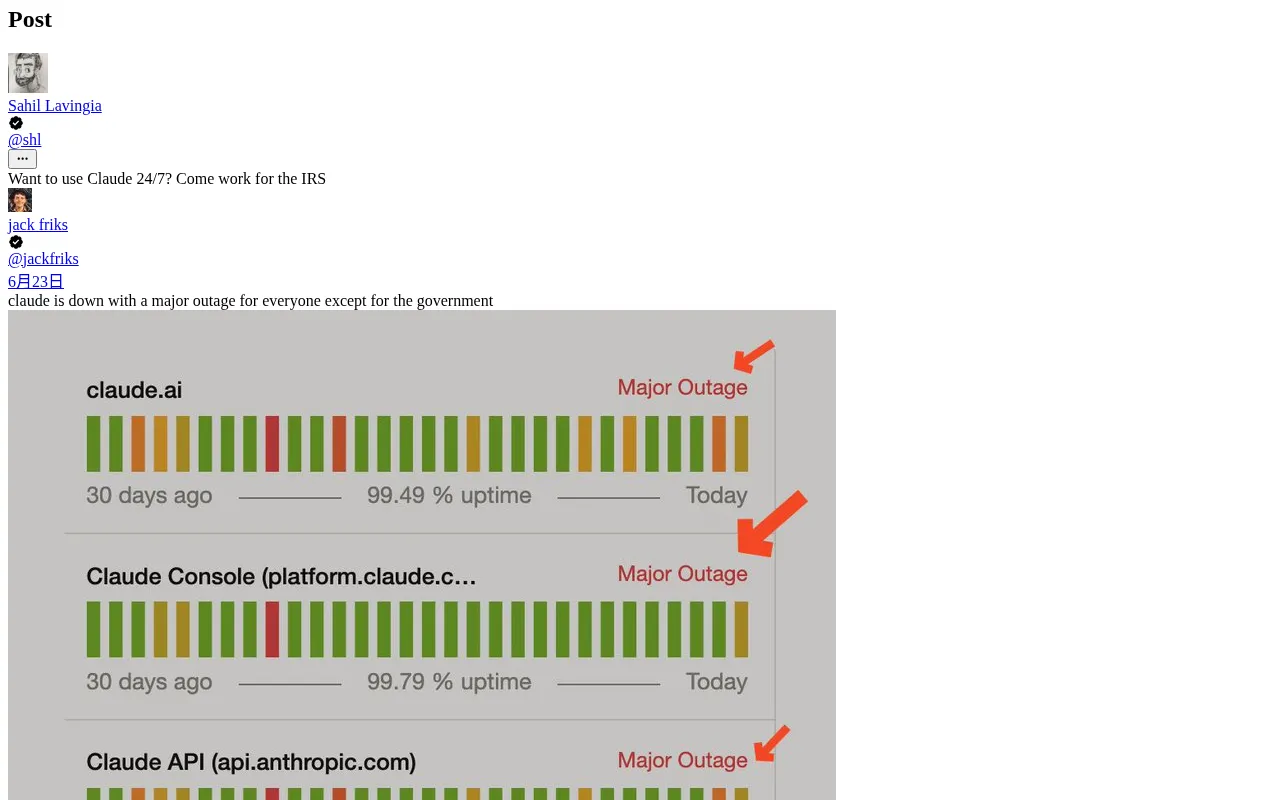
IRS Fully Embraces Claude AI, Accelerating Federal Government's AI Adoption
The IRS is recruiting staff with 24/7 Claude AI access, marking Anthropic's breakthrough into the federal government. Explore the strategic implications and tax use cases.
 Industry Insights
The IRS Mobile App Debate: A Trust Crisis in Government Digital Transformation
The IRS's proposed mobile app has sparked heated debate. This article analyzes the core arguments, exploring data security, privacy, and the trust crisis in government digital transformation.