Cursor Pro Discount Tools Explained: The Hidden Risks Behind Pay-As-You-Go Pricing

Breaking down how Cursor Pro discount tools use account pools and why they carry serious risks.
Third-party tools promising Cursor Pro at 25% off use bulk-purchased account pools and "smart rotation" to dynamically share accounts across users — a sophisticated variant of shared accounts that likely violates Cursor's Terms of Service. Beyond compliance issues, users face risks including account bans with no official recourse, potential leakage of proprietary code and API keys through unverified scheduling systems, and the possibility of "permanent" credits disappearing overnight if the platform shuts down. The article urges developers to weigh data security and service stability as seriously as price.
Recently, a wave of third-party tools has been promoted across video platforms, advertising "Cursor Pro at 25% off" and "Get 1,000 credits for 100 yuan." These tools distinguish themselves from traditional cracked plugins and shared accounts by claiming to use "official, legitimate accounts" with "credits that never expire." This article breaks down how these tools actually work and highlights the technical and compliance risks users should be aware of.
What These Tools Claim to Offer
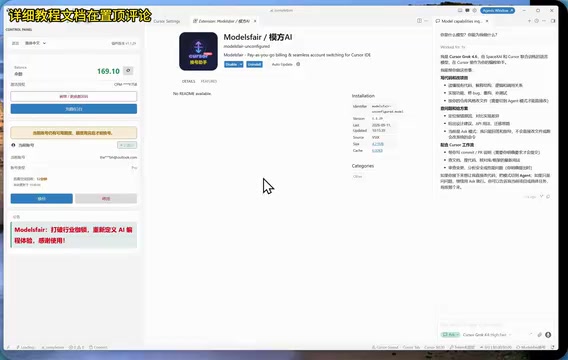
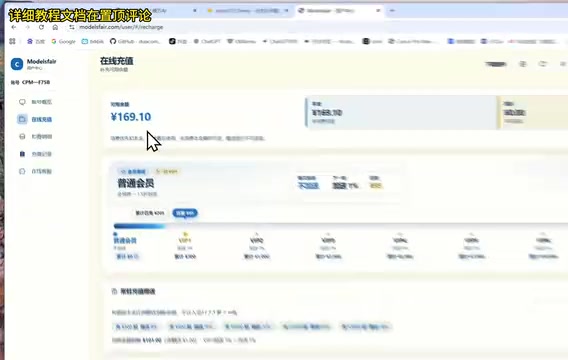
Based on their promotional materials, these third-party tools pitch several key differentiators. First is a shift in billing model: instead of the traditional monthly cards, quarterly cards, or short-term trial accounts, they offer "pay-per-use with credits that never expire." They claim that 100 RMB gets you 1,000 RMB worth of official credits — roughly equivalent to 137 USD at the time of writing.
Second, they emphasize a so-called transparent ledger system that records every transaction, including account balance, the model selected per conversation, official pricing rules, token output count, and timestamp — allowing users to independently verify their usage.
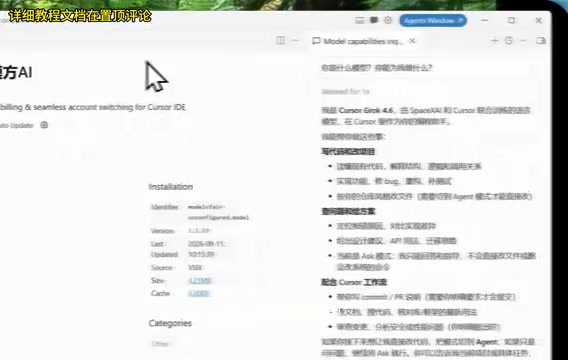
Third, they claim no client modification. Promoters say their plugin only provides two functions — "smart account rotation" and "billing record tracking" — without touching Cursor's native code. This means users can update to the latest official version at any time and access all models including Sonnet and Opus, with no model downgrading or feature restrictions.
What "Account Pool Rotation" Actually Means
The most technically significant detail in these promotions is the "smart credit consumption system" combined with "automatic account release." According to their description, the platform maintains a large pool of accounts acquired in bulk at reduced cost. When the system detects that an account has been idle for an extended period, it automatically releases it; when the user resumes, a fresh Pro account is instantly assigned and billing begins. If the current account runs out of credits, the system automatically switches to a new one.

What this mechanism actually amounts to is multiple users sharing a pool of accounts, with technology enabling dynamic allocation between users. This sits in logical tension with the claim that "each user gets their own dedicated, legitimate account" — if the account were truly dedicated, there would be no need for "automatic release and reassignment." If accounts rotate between users, this is closer to a sophisticated variant of shared account services, just with more refined scheduling on the backend.
Account pool technology is not new in the SaaS gray market. Its basic architecture typically consists of three layers: a library of accounts registered or purchased in bulk; a middleware service responsible for scheduling and allocation; and a client-side plugin facing end users. The middleware tracks each account's status (active, idle, remaining credits, risk flags, etc.) and routes user requests to the optimal account based on preset rules. This architecture has long been applied to proxy IP services, streaming account sharing, and similar areas. The core business logic is to profit from the spread by "slicing" a single account's usage rights and reselling them to multiple users.
For AI coding tools like Cursor, account pool scheduling faces an additional challenge: Cursor's platform monitors request origins, device fingerprints (Machine ID), usage frequency, and other signals for risk control. Part of the purpose of "smart account rotation" is precisely to evade these detection mechanisms by spreading requests across multiple accounts — which contradicts the promotional claim of "no cracking, no tampering."
Cost Comparison and the Sales Pitch
Promoters proactively address a common objection: if you can buy a Cursor Pro account on the market for 50–60 RMB, why choose their platform?
Their reasoning includes: individually purchased accounts have fixed expiration dates, so unused credits are wasted; users must manually log in and frequently switch accounts; and there are risks of account bans and machine ID locks. Their platform, they claim, offers credits that "never expire" — charge 100 RMB, use 30, and the remaining 70 RMB can sit untouched for a year or two. Combined with seamless account pool switching, there's allegedly zero waste.
From a business logic standpoint, this pitch centers on "getting a premium experience for less money" while earning a "reasonable margin." But it's important to recognize that bulk-purchasing accounts and rotating them across multiple users may already violate Cursor's official Terms of Service. The low prices these services offer are built precisely on circumventing official subscription pricing.
Risks Users Need to Take Seriously
Despite the promotional emphasis on being "compliant," "transparent," and "non-cracking," using these tools carries multiple real-world risks that deserve honest consideration.
Account security and ban risk: Account pool rotation means your code and request content are processed through accounts assigned by a third party. If Cursor's risk control system detects abnormal multi-account sharing behavior, those accounts can be banned at any time. Whether your remaining credits can be refunded or recovered depends entirely on the third-party platform's goodwill — there is no official recourse whatsoever.
Code and data leakage risk: AI coding tools upload your code context. When using a third-party account scheduling system of unknown provenance, there is no way to verify whether your code is being logged, analyzed, or leaked. For developers working on proprietary or sensitive projects, this risk cannot be overlooked.
Service continuity risk: Gray-market services like these depend entirely on the platform's ability to continuously supply accounts. If Cursor tightens its risk controls or the platform disappears, those "permanently valid" credits could vanish overnight. Official subscriptions are more expensive, but they offer stable and predictable service guarantees.
The risk of code context leakage deserves particular attention in AI coding tool scenarios. When Cursor and similar AI IDEs are in use, they send the current file, related code snippets, and even an index of the entire codebase as context to the model to improve completion and conversation accuracy. This means requests routed through a third-party account scheduling system may carry payloads containing complete business logic, API keys, database connection strings, and algorithm implementations. Unlike shared Wi-Fi or proxy services, AI coding tool requests are extremely information-dense — a single call can expose a large volume of sensitive data. Enterprise developers evaluating tools like these should subject them to the same level of security review applied to third-party SDKs and cloud services.
Thinking Clearly About "Discount" Temptations
For heavy users of AI coding tools, cost is a genuine practical concern. But when evaluating cost-reduction options, data security, service stability, and compliance deserve equal weight alongside price.
Official Cursor offers a free tier and standard subscription plans. Individual developers and teams should also look into official channels such as education discounts and team pricing. The "full-power experience" bought at a discount comes with hidden costs — account bans, data leakage, and service interruptions — that can far exceed whatever subscription fees were saved.
Approach promotional content like this with caution. Fully understand how these services actually work before making a decision, and avoid taking on unnecessary long-term risks in pursuit of short-term savings.
Related articles

Chain of Thought Isn't Just for AI: How Humans Can Use CoT to Improve Thinking Quality
Chain of Thought isn't just a prompt trick for large models. Starting from a Hacker News discussion, this article analyzes why CoT works for human thinking too, breaks down actionable ways to transfer it, and highlights the key differences between human CoT and machine CoT.
Cloudflare Teams Up with OpenAI: Closi…
Cloudflare Teams Up with OpenAI: Closing the Loop from Vulnerability Discovery to Defense with AI
Cloudflare uses OpenAI Daybreak to investigate security vulnerabilities and generate reviewable remediation plans, while developers use Codex to boost coding efficiency and quality.

Orca Multi-Agent Orchestration in Practice: A Guide to Parallel Collaboration with Claude and Codex
Orca is Stable AI's free open-source agent workbench supporting 34 agents like Claude Code and Codex in parallel. Learn its Git worktree isolation, multi-model orchestration, and mobile management.