Data Centers on the Rampage: The Collision Between AI's Future and Communities' Future

The Verge's nationwide tour reveals how data centers are reshaping American local politics and community futures through pressure on land, water, and electricity.
Over four months, The Verge traveled across the United States to investigate the impact of data center construction on local communities. The report notes that giant data centers bring triple pressure on land, water, and electricity; the controversy breaks traditional left-right political lines and sparks fierce cross-camp debates. Community members are deeply divided over "what the future of these communities should look like," reflecting the multi-party contest among residents, businesses, government, and environmental organizations amid AI infrastructure expansion. The Verge collected stories from three different communities, offering a first-hand view of diverse responses ranging from enthusiastic embrace to strong resistance, reminding us that the AI technology revolution is not happening in a vacuum but is deeply embedded in local society.
Data centers are becoming one of the most controversial topics in the United States today. According to a video report published by The Verge on YouTube, over the past four months the outlet traveled across the country to take an in-depth look at how communities large and small are responding to the wave of AI infrastructure construction. From land and water to electricity, the rise of large-scale data centers is reshaping local political dynamics and sparking fierce debates about the future of communities.

Data Centers: The Triple Pressure of Land, Water, and Electricity
The Verge's report notes that these giant data centers are springing up across the country, bringing with them enormous demand for land, water, and electricity. The video emphasizes that this demand is "scrambling the political lines between left and right"—groups that once held clear-cut positions on issues like environmental protection and economic development are now splitting and realigning around data center projects.

This resource pressure is not an abstract concept. Data centers require large amounts of cooling water, and their electricity consumption is also substantial, often posing challenges to local power grids. Communities face not only environmental considerations but also a complex trade-off involving economic factors such as housing prices, employment, and tax revenue.
Data centers' cooling water consumption is staggering because servers running continuously generate large amounts of heat, and traditional air cooling is limited in efficiency; many large facilities use evaporative cooling technology, which removes heat through water evaporation. A typical large data center can consume millions of gallons of water per day, equivalent to the daily water use of tens of thousands of people. On the electricity side, the International Energy Agency estimates that global data centers consumed about 460 TWh in 2022, accounting for 1.5% to 2% of total global electricity consumption, and this share is expected to rise as demand for AI training and inference surges. AI-specific servers (such as GPU-equipped racks) have far higher power density than traditional servers, with a single rack's power consumption reaching tens of kilowatts, placing higher demands on local grid capacity and stability. These resource needs directly compete with residents' daily lives, agricultural irrigation, and industrial electricity use—the material basis of community controversy.
The Reconstruction of the Political Spectrum: Controversy from Left to Right
The report specifically notes that the data center issue is "sparking increasingly fierce debates," and these debates do not follow traditional party lines. Some environmentally oriented groups may oppose data centers' resource consumption, while groups that support economic development may welcome the investment and jobs they bring. This cross-cutting controversy makes local politics more complicated.

The video even includes an emotional outburst: "For hell's sakes, grow up!"—reflecting the frustration permeating the debate. This suggests that community members have deep disagreements over how to define "the future of these communities."
The phenomenon of data center controversies breaking traditional party lines has a similar logic to the common "NIMBY" (Not In My Backyard) versus "YIMBY" (Yes In My Backyard) battles in American local politics, but it is more complex. Traditionally, environmental groups tend to oppose high-energy projects, while business groups and conservatives tend to support economic development projects. But the tax revenue data centers bring is highly attractive to local governments, potentially funding improvements to public services such as schools and roads; at the same time, data centers usually create only a small number of permanent jobs, falling short of the employment benefits communities expect. This combination of "tax revenue gains but limited jobs and heavy resource consumption" leads to cross-party ad hoc coalitions among unions, environmental organizations, local finance departments, and residents—sometimes environmentalists and conservative residents oppose projects together, and sometimes unions and local governments join forces in support.
The Verge's National Investigation: Stories from Three Communities
Over the past four months, The Verge conducted nationwide on-the-ground visits, collecting stories from three communities and publishing them on its website. The video description states, "We have all three stories collected on our site, and you can find them in the link in our bio." This indicates that the reporting covers communities of different sizes and types, presenting diverse responses.

Although the material does not detail each community's specific situation, it can be inferred that these cases span the spectrum from enthusiastic embrace to strong resistance. This on-the-ground reporting approach provides valuable first-hand perspective for understanding the social impact of AI infrastructure.
On-the-ground visits and case studies are important methods in tech journalism for understanding technology's social impact. Unlike relying on statistics and industry reports, community cases can reveal local experiences that quantitative indicators struggle to capture—such as residents' firsthand feelings about noise, landscape changes, and property values, as well as power imbalances at local hearings. The Verge's choice to compare three different communities follows the basic logic of comparative case studies: by diversifying community size, geographic location, and economic background, it presents the multifaceted nature of data center impacts and avoids overgeneralizing from a single case. This reporting approach also echoes the recent trend of tech media expanding from product reviews into the intersection of technology and society, emphasizing the "local" and "embodied" nature of technological infrastructure.
The Fight Over the Right to Define Communities' Future
Data centers are not just technical facilities; they are becoming shapers of communities' futures. A recurring keyword in the report is "what the future of these communities should look like." This points to a core question: in the AI era, who has the right to decide the direction of local community development?
The contest among local residents, businesses, government, and environmental organizations reflects the tension between technological development and social interests. Data center construction often involves massive investment and long-term planning, but community participation and transparency issues frequently spark controversy. The Verge's report, through specific cases, reveals how this tension plays out in real life.
Conclusion: Local Echoes Under the AI Boom
As AI technology advances rapidly, data centers—its physical foundation—are expanding at an unprecedented pace. The Verge's national investigation reminds us that this technological revolution is not happening in a vacuum—it is deeply embedded in local communities, triggering multiple shocks to resources, politics, and identity. Understanding these communities' reactions is crucial to building a sustainable and inclusive AI future.
(This article is based on The Verge's video content published on YouTube and related screenshots, and does not add specific data beyond the original material.)
One-line Summary
The Verge's nationwide tour reveals how data centers are reshaping American local politics and community futures through pressure on land, water, and electricity.
Paragraph Summary
Over four months, The Verge traveled across the United States to investigate the impact of data center construction on local communities. The report notes that giant data centers bring triple pressure on land, water, and electricity; the controversy breaks traditional left-right political lines and sparks fierce cross-camp debates. Community members are deeply divided over "what the future of these communities should look like," reflecting the multi-party contest among residents, businesses, government, and environmental organizations amid AI infrastructure expansion. The Verge collected stories from three different communities, offering a first-hand view of diverse responses ranging from enthusiastic embrace to strong resistance, reminding us that the AI technology revolution is not happening in a vacuum but is deeply embedded in local society.
Related articles
 Tech Frontiers
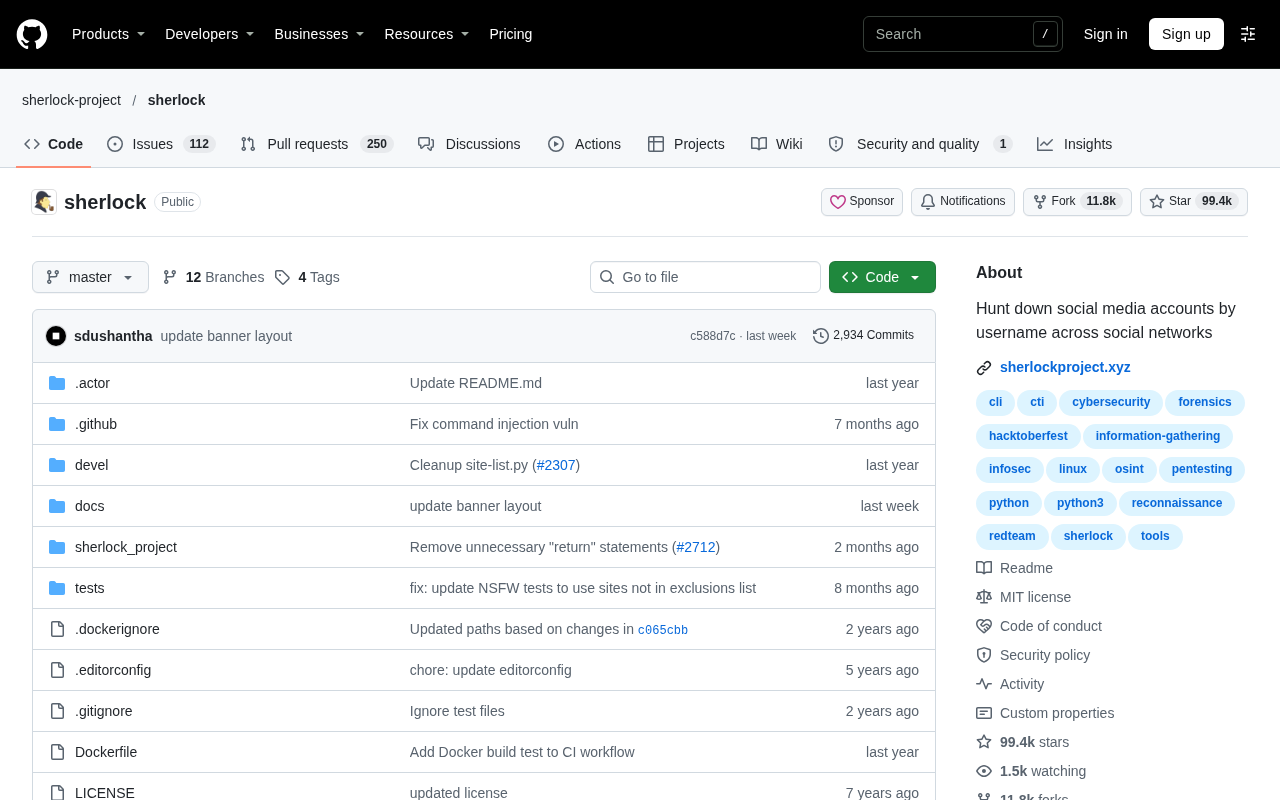
Sherlock: An Open-Source Tool for Tracking Usernames Across Social Networks
Sherlock is an open-source Python tool that tracks social accounts across networks by username. This article covers its core features, why developers love it, typical use cases, and privacy compliance considerations.
 Tech Frontiers
GitHub Daily·Nov 07: Agent-Ready and Context Compression
GitHub Trending Nov 07: meta's agent-ready design system astryx, billion-context's 5x context compression, sherlock nearing 100k stars, plus local-first localthings and bare-metal GPU orchestration nvke.
 Tech Frontiers
Buoyant Open-Sources Kinference: An Inference Control Plane for vLLM on K8s
Buoyant open-sources Kinference, an inference control plane for vLLM on Kubernetes, with declarative routing, KV-cache-aware load balancing, and per-tenant metrics—claiming 95% lower median TTFT in official benchmarks.