Databricks Genie Migrate Now Generally Available: One-Click Migration to the Lakehouse Platform
Databricks Genie Migrate Now Generally…
Databricks Genie Migrate is now GA, lowering the cost and barrier of lakehouse migration through productized capabilities.
Databricks has announced that its data migration tool Genie Migrate is now Generally Available, transforming lakehouse migration from a manual, custom consulting project into a standardized product capability. The article notes that the explosion of AI applications has sharply increased enterprise demand for a unified data foundation, and migration friction often determines whether projects can launch on schedule. Genie Migrate addresses pain points such as schema conversion, SQL dialect differences, job dependency mapping, and post-migration validation, breaking migration into repeatable steps. Lowering the migration barrier helps expand Databricks' user base. Enterprises should verify SQL dialect coverage, post-migration performance regression, and rollback/parallel-run feasibility, while recognizing that migration also involves organizational collaboration and business semantics alignment.
Enterprises are racing to build AI agents and applications, and all of it depends on a reliable data foundation. Databricks has announced that its migration tool Genie Migrate is now Generally Available, designed to help enterprises smoothly migrate existing data and workloads to the Databricks Lakehouse platform at lower cost and with less manual intervention.
Why Migration Capabilities Have Become Key to the Lakehouse Race
The explosion of AI applications has put unprecedented pressure on data infrastructure. For enterprises to build agents on Databricks, the prerequisite is integrating data scattered across traditional data warehouses, Hadoop clusters, or cloud storage. Friction in the migration process often determines whether a project can launch on schedule.
The general availability of Genie Migrate means Databricks has turned migration from "project-based consulting" into a "productized capability." For technical teams evaluating lakehouse roadmaps, this lowers the decision-making barrier to switching platforms.
Lakehouse is a data architecture that combines the open storage of a data lake with the transaction management and query performance of a data warehouse. Traditionally, enterprises often maintain both a data lake (storing raw data—low cost but lacking ACID transactions and efficient queries) and a data warehouse (fast queries and strong governance but high cost and closed formats), with data repeatedly moved between the two systems, creating fragmentation. Lakehouse architecture is typically built on open table formats (such as Delta Lake, Apache Iceberg, and Apache Hudi), providing table-level transactions, schema evolution, time travel, and other capabilities on top of object storage, enabling BI analytics, stream processing, and machine learning to be completed on the same copy of data. Databricks is a leading proponent of the lakehouse concept, with its platform built on Delta Lake as the storage foundation. Understanding this background helps grasp the value proposition of Genie Migrate: the goal of migration is not simply moving data, but refactoring legacy data warehouse and Hadoop workloads onto an open architecture that supports unified governance and AI workloads.
What Problems Genie Migrate Solves
According to Databricks' official description, Genie Migrate addresses typical pain points in the migration process: schema conversion, SQL dialect differences, job dependency mapping, and post-migration validation. These steps have historically relied heavily on manual work, which is time-consuming and error-prone.
The tooling approach breaks migration down into repeatable steps: first scan source assets, then automatically generate equivalent objects on the target side, and finally confirm consistency through validation mechanisms. This process is especially critical for enterprises with large numbers of legacy ETL jobs—rewriting them one by one by hand is nearly infeasible.
SQL dialect differences are the most hidden source of cost in data warehouse migration. Different data warehouse products (such as Teradata, Oracle, Snowflake, Hive, and SQL Server) have numerous incompatibilities in function naming, type systems, date handling, null semantics, window function syntax, and implicit type conversion rules. For example, the same string concatenation or date truncation operation may be written completely differently across dialects; some proprietary functions (such as Teradata's QUALIFY or Oracle's CONNECT BY) have no direct equivalent on the target side and need to be rewritten as equivalent logic. In addition, stored procedures, macros, custom functions, and scheduling scripts are often tied to source platform features. Migration tools need to build a dialect mapping rule base, automatically complete most syntax conversions, and flag parts that cannot be handled automatically for manual review. Dialect coverage therefore becomes one of the core metrics for evaluating the maturity of migration tools.
Practical Significance for AI Application Deployment
When enterprises build AI agents, data quality and accessibility directly determine the upper limit of effectiveness. After centralizing data in the lakehouse, teams can complete feature engineering, model training, and inference services on the same platform, avoiding the latency and permission fragmentation caused by moving data across systems.
The general availability of Genie Migrate is, to some extent, a supporting move by Databricks in the AI infrastructure competition: no matter how strong the platform capabilities are, if customer migration costs are too high, adoption will not rise. Reducing migration friction is equivalent to expanding the potential user base.
AI Agent refers to a form of large model application that can perceive its environment, call tools, and autonomously plan multi-step tasks to achieve goals, typically requiring access to internal and external enterprise data, APIs, and business systems. Unlike single-turn Q&A, an agent's effectiveness depends heavily on the completeness and consistency of the data it can retrieve and call: knowledge base retrieval, structured queries, and real-time status reads all require that the underlying data has been uniformly governed with clear permissions. If data remains scattered across multiple siloed systems, the agent will either be unable to obtain the required context or find it difficult to operate securely due to fragmented cross-system permissions. This is the fundamental reason why lakehouse consolidation has direct significance for AI deployment—a centralized data foundation not only reduces data movement latency but also provides the same permission and lineage system for feature engineering, vectorized indexing, model training, and inference services.
What Enterprises Should Focus on When Evaluating Migration Tools
For teams planning to adopt Genie Migrate, it is recommended to verify three things in particular: first, the degree of coverage for existing SQL dialects; second, whether job performance regresses after migration; and third, the feasibility of rollback and parallel running. General availability means the tool has passed production environment testing, but given each enterprise's specific workload characteristics, a small-scale pilot is still needed.
Migration is never purely a technical issue; it also involves organizational collaboration and adjustments to the permission system. Tools can automate syntax-level conversion, but alignment at the business semantics level still requires involvement from data teams.
Conclusion
The GA release of Genie Migrate pushes lakehouse migration from high-barrier custom engineering toward a standardized product. For enterprises, this is both an opportunity to lower migration costs and a window to re-examine their data architecture—against the backdrop of continuously growing demand for AI applications, the speed of data platform consolidation will directly affect the pace of product iteration.
One-line Summary
Databricks Genie Migrate is now GA, lowering the cost and barrier for enterprises to migrate to the lakehouse through productized capabilities.
Paragraph Summary
Databricks has announced that its data migration tool Genie Migrate is now Generally Available, transforming lakehouse migration from a manual, custom consulting project into a standardized product capability. The article notes that the explosion of AI applications has sharply increased enterprise demand for a unified data foundation, and migration friction often determines whether projects can launch on schedule. Genie Migrate addresses pain points such as schema conversion, SQL dialect differences, job dependency mapping, and post-migration validation, breaking migration into repeatable steps including scanning, automatically generating equivalent objects, and validating consistency. Lowering the migration barrier helps expand Databricks' user base in the AI infrastructure competition. When adopting it, enterprises should focus on verifying SQL dialect coverage, post-migration performance regression, and the feasibility of rollback and parallel running, while recognizing that migration also involves organizational collaboration and business semantics alignment.
Related articles

FBI and USDA Hit by Cyberattacks: Critical Infrastructure Security Alarms Sound Again
FBI and USDA reportedly hit by cyberattacks; the FBI was breached for the second time in recent months, this time targeting the National Crime Information Center (NCIC). This article analyzes the incident details, NCIC's strategic value, and common security challenges facing government agencies.
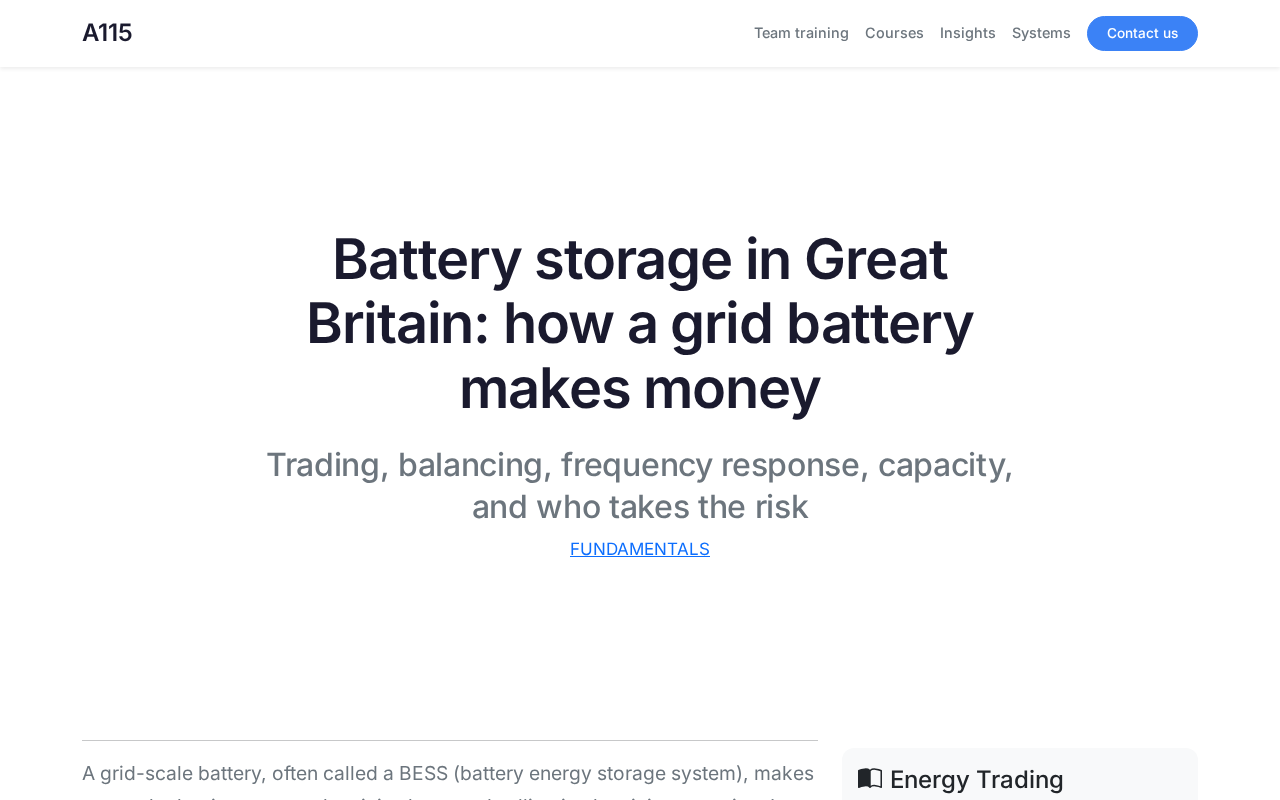
How Do UK Grid Battery Storage Systems Make Money?
How UK grid battery storage makes money: stacking frequency response, capacity market, and wholesale arbitrage revenue, plus operational trade-offs and market risks.
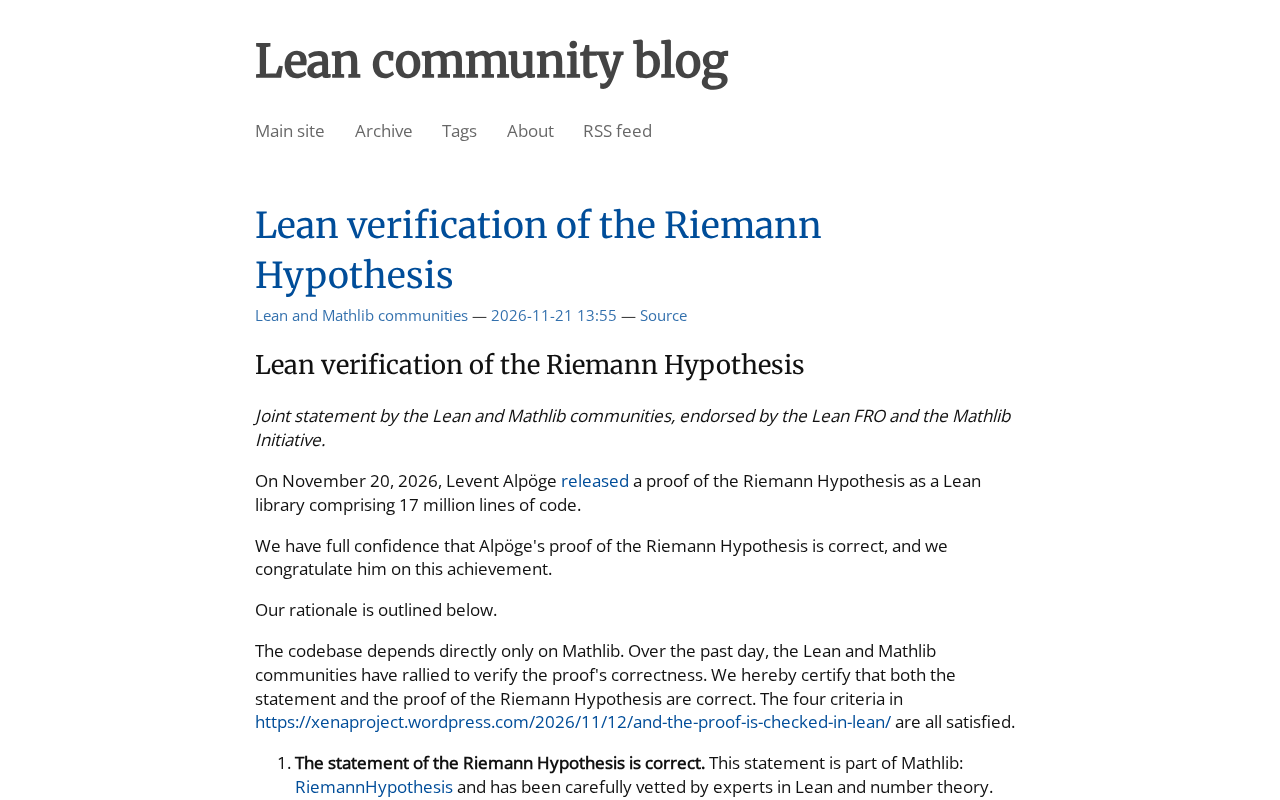
Riemann Hypothesis Formally Verified in Lean? Joint Statement Sparks Heated Debate
The Lean community blog published a joint statement on formal verification of the Riemann Hypothesis, sparking heated discussion on Hacker News with 359 points and 263 comments. This article analyzes the background of Lean and mathlib formal verification, polarized community reactions, and why one should not conclude the Riemann Hypothesis has been proven before reading the original text.