Databricks MLOps in Practice: What Actually Works with MLFlow, Agent Bricks, and Genie

A practical guide to what really works in Databricks MLOps: MLFlow, Agent Bricks, Genie, and data governance.
This article breaks down Databricks MLOps core components—MLFlow, Unity Catalog, Agent Bricks, and Genie—examining their real-world value and deployment challenges. It highlights vendor lock-in risks, evaluation difficulties for agents, and why solid data governance is the true foundation of MLOps success.
Why MLOps Deployment Is Always Harder Than Expected
In enterprise AI/ML projects, model training often accounts for only a small part of the entire lifecycle. The real challenge lies in deploying models to production in a stable, reproducible, and monitorable way—which is precisely the core problem MLOps (Machine Learning Operations) aims to solve. Recently, a data practitioner started a discussion in the Reddit community to explore the real-world experience of building AI/ML workflows on the Databricks platform, focusing on features like MLFlow, Agent Bricks, and Genie, and hoping to hear about the challenges and lessons the community encountered during actual deployment.
This topic drew widespread attention, reflecting the reality that Databricks has rapidly evolved in recent years from a data processing platform into a full-stack "Data Intelligence Platform" covering everything from data to AI. This article will examine these core features, exploring their positioning within the MLOps workflow, their actual value, and the common challenges of putting them into practice.

A Complete Breakdown of Databricks MLOps Core Components
MLFlow: The Widely Recognized Foundation for Experiment Management
Within the Databricks ecosystem, MLFlow is almost the starting point for any MLOps discussion. As an open-source tool primarily developed by Databricks and deeply integrated into the platform, its value is mainly reflected in the following areas:
- Experiment Tracking: Automatically records the parameters, metrics, code versions, and artifacts of each training run, solving the classic pain point of "what configuration did that model with good results actually use?"
- Model Registry: Provides model version management and stage transitions (Staging / Production / Archived), giving model promotion a documented basis.
- Model Serving: Deploys registered models as REST endpoints with a single click, shortening the path from training to production.
For the vast majority of teams, MLFlow is the component in the Databricks MLOps workflow that delivers results first and is most widely recognized. It standardizes experiment records that were originally scattered across Notebooks and local files, laying the foundation for reproducibility and team collaboration.
Unity Catalog: The Key Piece of Data Governance
No serious discussion of Databricks MLOps can avoid Unity Catalog. It unifies the governance and permission management of data, feature tables, models, and functions. Once the model registry is integrated with Unity Catalog, model assets can undergo lineage tracking and access control just like data tables—which is especially critical for enterprises with high compliance requirements.
Agent Bricks and Genie: New Tools for the Generative AI Era
Genie: Querying Data in Natural Language
Genie is a conversational analytics feature launched by Databricks that allows both business and technical users to ask questions in natural language. The system automatically generates SQL and returns results, significantly lowering the barrier to data exploration.
However, Genie's actual performance heavily depends on the metadata quality of the underlying data. If tables and fields lack clear annotations or have ambiguous semantics, the accuracy of generated queries drops noticeably. A lesson that recurs in community feedback is: to make good use of Genie, you must first build a solid semantic layer and metadata governance for your data—otherwise, you can easily end up with results that "look correct but are actually wrong."
Agent Bricks: End-to-End Management from Models to Agents
Agent Bricks is a Databricks feature module aimed at agent development, helping teams build, evaluate, and deploy LLM-based agent applications while incorporating agent development into a unified MLOps framework—covering version management, evaluation metrics, and production monitoring.
But operating agent-type applications is far more complex than traditional ML models, with challenges concentrated in three main areas:
- Difficult Evaluation: Agent outputs are open-ended natural language, lacking the clear accuracy metrics of traditional models, requiring purpose-built evaluation sets and judgment logic.
- Cost and Latency Control: The inference cost and response latency of large models must be finely monitored, or production environments can easily spiral out of control on cost.
- Reproducibility Challenges: The non-deterministic nature of LLMs makes "reproducing a specific performance" difficult, creating an inherent tension with the reproducibility that MLOps strives for.
The Real Challenges of Production Deployment
Novel Features with Uneven Maturity
Features like Agent Bricks and Genie are relatively new, and the best practices accumulated by the community are still taking shape. By comparison, mature components like MLFlow have a clear usage path, while new generative AI features require teams to invest more in exploration and validation.
Vendor Lock-In Risk from Deep Integration
Databricks' end-to-end integration is one of its core strengths, but it also means stronger platform dependency. Before fully embracing Agent Bricks and Genie, teams need to weigh the risk of vendor lock-in, as well as the migration cost between these proprietary features and open-source toolchains (such as LangChain or native MLFlow).
Data Governance Is the Prerequisite for Everything
Whether for traditional ML or agent applications, the effectiveness of all Databricks features rests on data quality and governance. Genie depends on metadata, model monitoring depends on feature lineage, and agent evaluation depends on high-quality datasets—this reminds teams that: the success or failure of MLOps often depends not on the tools themselves, but on whether the data foundation is solid.
Practical Recommendations for Implementation Teams
For teams currently evaluating Databricks' MLOps capabilities, consider the following priority path:
- Start with MLFlow: First use MLFlow to standardize experiment tracking and model registration—this is the first step with the highest return on investment.
- Lay a Solid Governance Foundation: Prioritize integrating Unity Catalog and improving metadata and lineage management to pave the way for advanced features later.
- Evaluate New Features Cautiously: For new features like Agent Bricks and Genie, it's advisable to first conduct PoC validation in non-critical scenarios, focusing on evaluation logic, cost control, and maintainability.
- Build a Monitoring Loop: Whether for traditional models or agents, deploy monitoring in production to continuously track performance drift and cost changes.
Conclusion
Databricks is working hard to integrate the entire workflow from data to AI agents into a single platform. Mature components like MLFlow have become the cornerstone of MLOps for many teams, while Agent Bricks and Genie represent new exploratory directions in the generative AI era. As the Reddit community discussion reveals, the value of a tool is ultimately tested by real-world practice—what truly determines the success or failure of MLOps is often not which new feature you chose, but whether the "invisible" foundational work of data governance, evaluation systems, and operational monitoring is in place.
Related articles
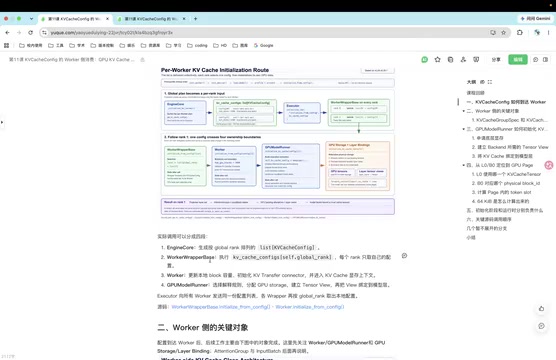
Deep Dive into vLLM Worker-Side GPU KV Cache Initialization
Deep dive into vLLM's Worker-side KV Cache GPU memory allocation, covering the full pipeline from KVCacheConfig generation to physical memory binding via ModelRunner.
Zepto Builds AI Customer Service with MLflow: An Evaluation-Driven Practice Guide
Deep dive into how Zepto built an evaluation-driven AI customer service system using MLflow and Databricks, achieving 60% faster responses and 40% less manual handling. From technical architecture to practical insights.

Iran Captures U.S. Underwater Drone in Strait of Hormuz: A Comprehensive Analysis
Iran announces capture of U.S. Navy underwater drone in Strait of Hormuz. In-depth analysis of the incident, strategic value of UUVs, U.S.-Iran geopolitical competition, and implications for global energy security and military dynamics.