Datasette 0.65.4 Security Update: Stable Branch Backport Patches Vulnerability

Datasette 0.65.4 delivers a security backport to the stable branch alongside the 1.0a39 alpha release.
Datasette has released version 0.65.4, a security-focused maintenance update shipping alongside 1.0a39. The project uses a dual-track strategy — backporting security fixes to the stable 0.65.x branch while the 1.0 alpha explores new features — ensuring users not yet ready to migrate still receive protection. Since Datasette exposes SQLite databases as queryable web services, security flaws carry direct data exposure risks, making prompt upgrades essential for publicly accessible instances.
Datasette Releases Security Update
Datasette, the open-source data exploration and publishing tool, has released version 0.65.4 — a maintenance release focused entirely on security fixes. The update ships alongside version 1.0a39, with both branches updated simultaneously, indicating that this fix covers multiple version lines currently under active maintenance.
According to release notes published by project author Simon Willison on the official Datasette blog, this is a security release. For Datasette instances running in production environments that expose data query interfaces to the public, this type of update is generally recommended to be applied as soon as possible to prevent potential vulnerabilities from being exploited.

Why the 0.65.x Branch Is Still Being Maintained
Datasette is currently in the process of transitioning to a stable 1.0 release, with the 1.0 series continuing to iterate through alpha versions (such as 1.0a39). At the same time, 0.65.x remains an actively maintained stable branch — and this 0.65.4 release is a security backport targeting that branch.
This dual-track maintenance strategy — where a newer version explores cutting-edge features while the older stable version continues to receive security patches — is common practice among mature open-source projects. The benefit is clear: users who aren't yet ready to migrate to the 1.0 alpha can still receive security coverage on the familiar 0.65 branch, without being forced to upgrade to a pre-release version where features are still in flux.
Recommendations for Users
For developers and data teams currently deploying Datasette, here are some practical steps to take when faced with this kind of security release:
- First confirm which version branch you're running, then determine whether you should upgrade to 0.65.4 or 1.0a39.
- Read the official blog's security notes to understand the scope of the vulnerability and whether it affects publicly exposed instances.
- If you're using Datasette to expose a database for public querying over the internet, treat this upgrade as a higher priority.
Datasette's core value proposition is turning any SQLite database into a browsable, queryable, API-accessible online service — which means security has a direct bearing on the exposure risk of your underlying data. Staying on top of security releases is an essential habit when using tools like this.
Summary
0.65.4 is not a major feature release, but as a security fix it reflects the Datasette project's ongoing commitment to users on the stable branch. Affected users are encouraged to review the official release notes, assess whether an upgrade is necessary, and apply the update promptly.
Related articles
AI Buzz Weekly: GPT-6.5 Leak, New Claude Model, and MiniMax's Cost-Effectiveness
This week's AI buzz roundup: suspected GPT-6.5 leak, Microsoft configs showing GPT-6.1 Tera, Anthropic's new model that can identify entire classes of bugs, disappointing early Gemini 4 Carbon results, and MiniMax M3.1 Flash beating Claude Opus 5 and GPT-5.6 Sol in benchmarks at extremely low cost.

AI Briefing: Gemini 4 Carbon Released, Ant Open-Sources Ling-3.1
AI Briefing: Google releases Gemini 4 Carbon qubit model, claiming to surpass Opus 5.5 with half-price tokens; Ant open-sources Ling-3.1-1019 for real-task Personal Agents; domestic AI drug discovery succeeds in 18 of 19 projects, hitting all 6 GPCR targets; zero-revenue company valued at $20B raises another $1B; Sichuan convenience store robot sales fail.
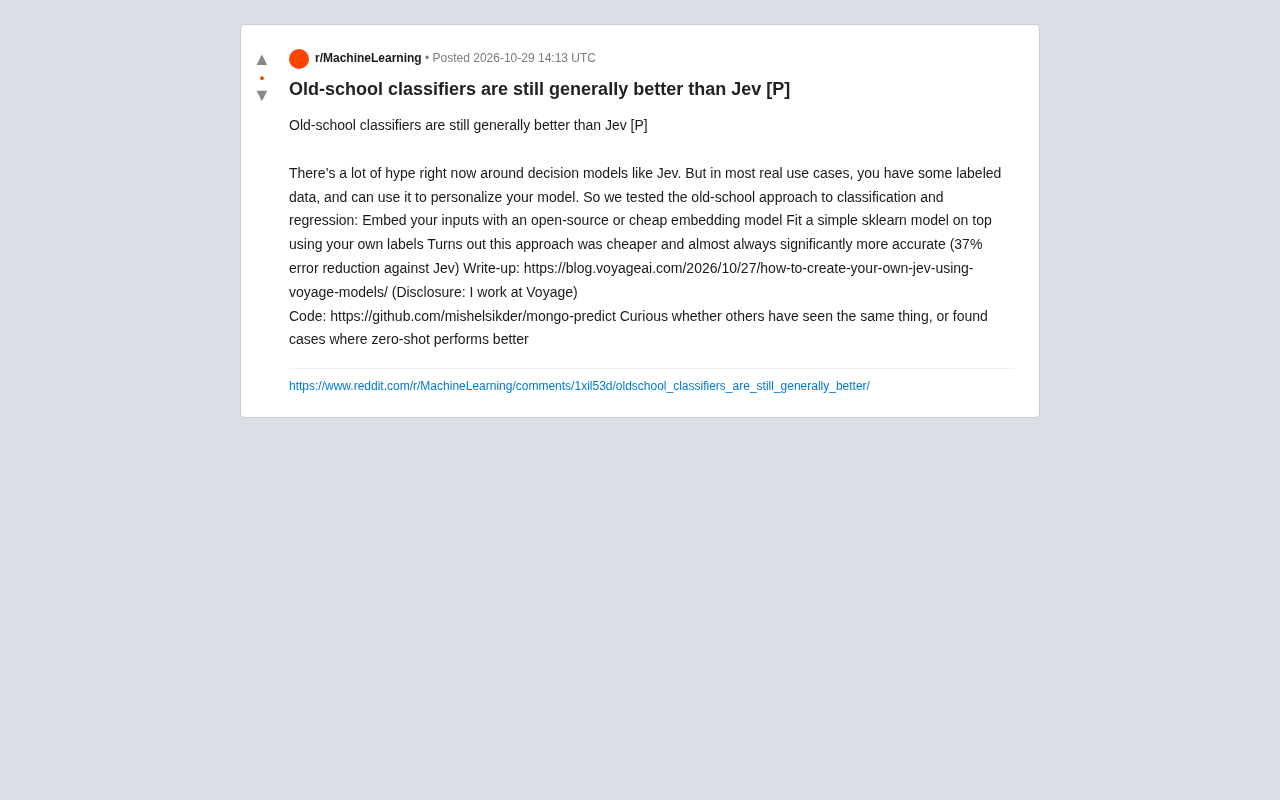
Old-School Classifiers Still Beat Jev: Embeddings + sklearn Cuts Error by 37%
Voyage AI engineers found that an old-school approach using open-source embedding models plus sklearn classifiers is cheaper and cuts error by 37% versus the popular decision model Jev. Discussing whether traditional methods are undervalued when labeled data exists, and the boundaries between zero-shot and supervised learning.