#Datasette
8 related articles
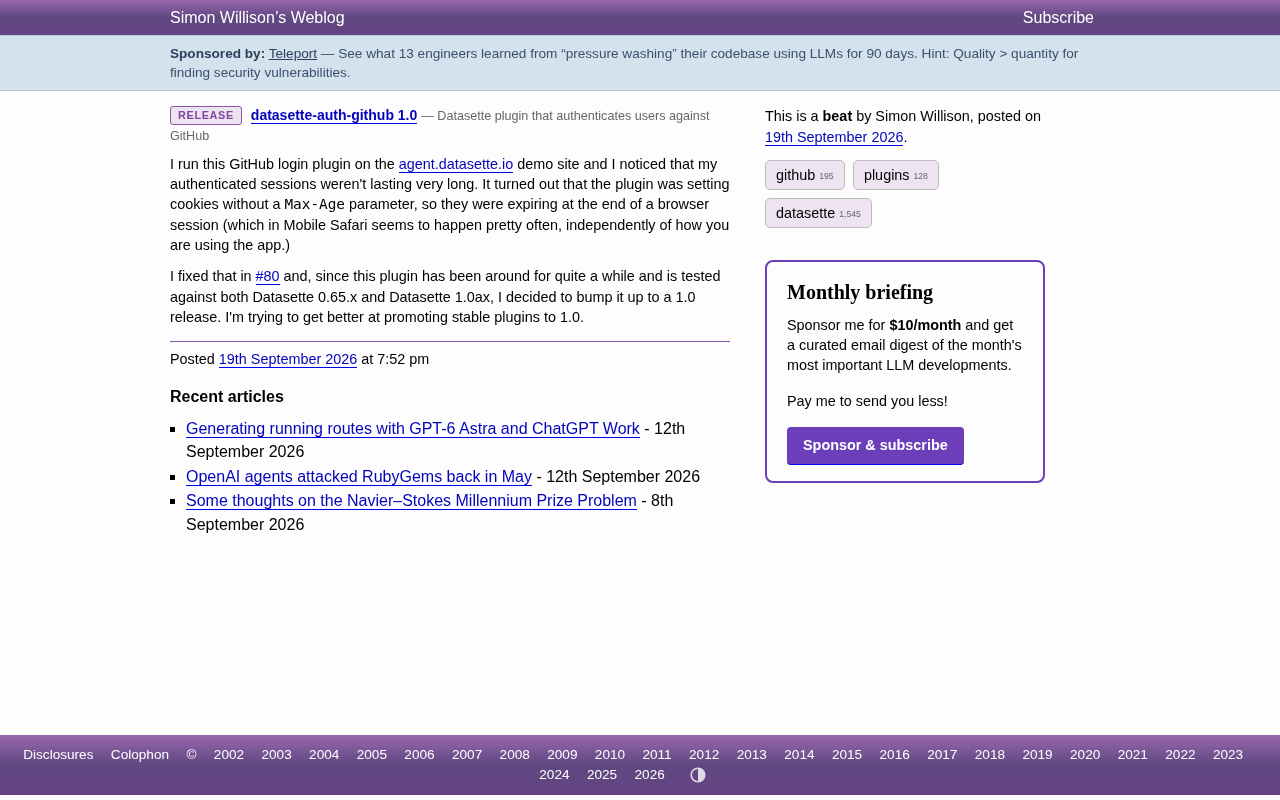
datasette-auth-github 1.0 Released: Fixing Session Expiry Issues
Simon Willison releases datasette-auth-github 1.0, fixing auth sessions expiring too early due to a missing Cookie Max-Age attribute — especially improving Mobile Safari login experience.

github-to-sqlite 2.9.1 Released: Fixes sqlite-utils 4.x Compatibility
github-to-sqlite 2.9.1 fixes compatibility with sqlite-utils 4.x. Learn what changed, why it matters for Datasette-based data pipelines, and how to upgrade.

datasette-publish-fly 1.4 Released: Enforced HTTPS and Deploy Token Improvements
datasette-publish-fly 1.4 adds default HTTPS enforcement, fixes a volume mount bug, and adds compatibility with Fly.io app-scoped deploy tokens for safer deployments.
 Product Reviews
Datasette LLM Accountant: An Open-Source Tool for LLM Usage Tracking and Cost Management
datasette-llm-accountant 0.1a4 released, fixing a response chain tracking bug. This open-source plugin helps developers monitor LLM API calls, token usage, and costs with chain tracking for Agent workflows.
 Tech Frontiers
datasette-llm 0.1a7 Released: Model Default Configuration Makes Data Enrichment More Controllable
datasette-llm 0.1a7 adds model default configuration, supporting preset temperature and other parameters for specific LLMs to standardize batch data enrichment.
 Tutorials
Simon Willison's Full Process of Fixing a Datasette Map Bug with GPT-5.5 + Codex
Datasette creator Simon Willison debugged an OpenStreetMap display issue, uncovering CAPTCHA and Referrer-Policy conflicts, then built a plugin fix using GPT-5.5 and Codex.
 Tech Frontiers
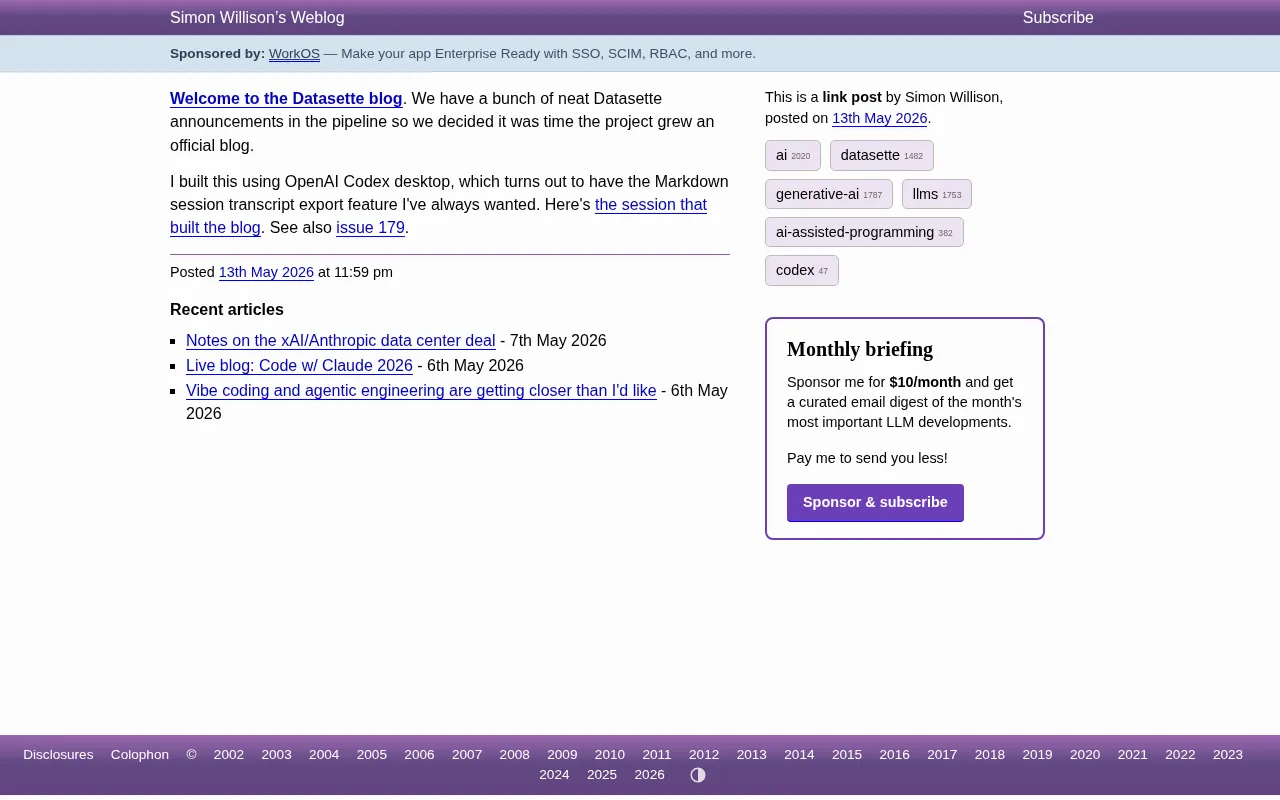
Datasette Launches Official Blog: Simon Willison Built It from Scratch with OpenAI Codex
Datasette founder Simon Willison launches official blog built with OpenAI Codex Desktop, sharing full AI session transcripts and demonstrating transparent AI-assisted development practices.
 Tech Frontiers
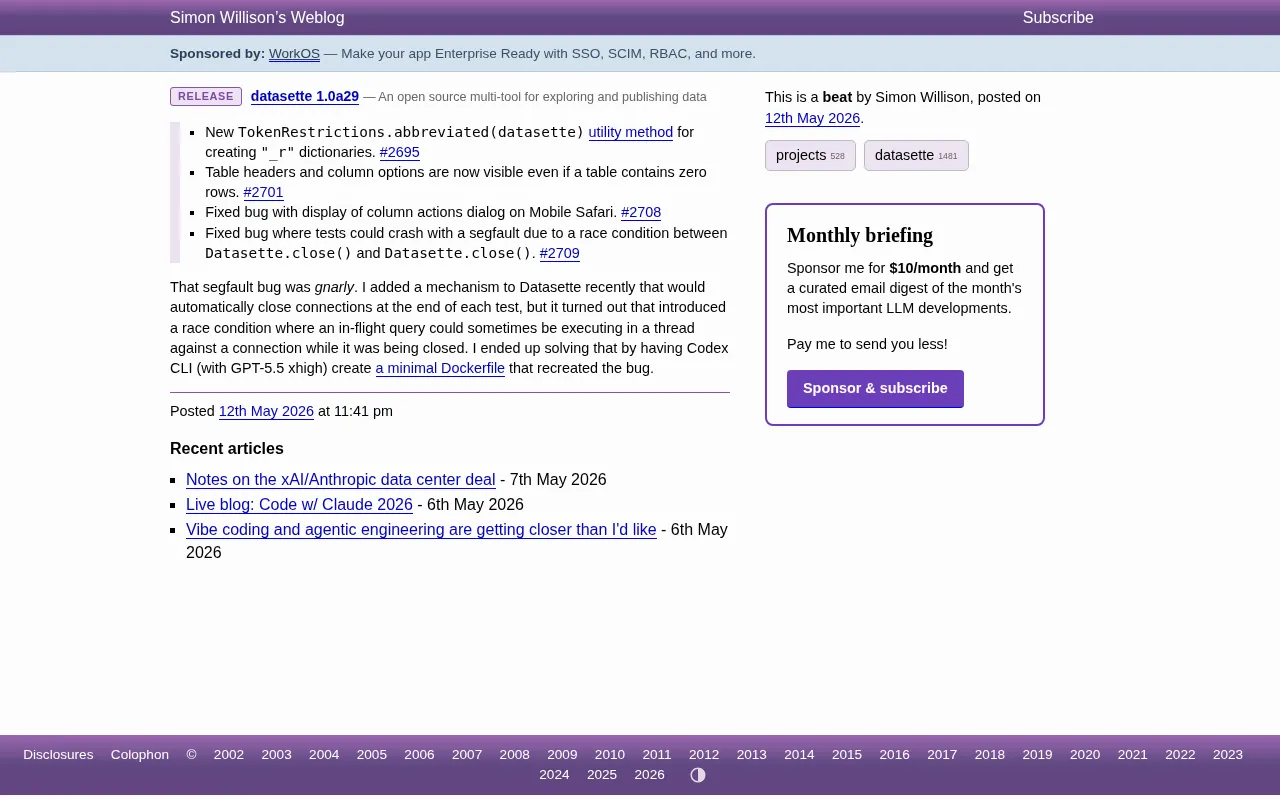
Datasette 1.0a29 Released: Fixing a Gnarly Segfault Race Condition with GPT-5.5
Datasette 1.0a29 preview released, fixing a segfault race condition introduced by test optimization. Developer Simon Willison used GPT-5.5 xhigh to help reproduce the issue, showcasing AI debugging in practice.