DB Chat: Conversing with PostgreSQL in Natural Language, with AI Auto-Generating SQL

dbchat queries databases in natural language, achieving safe data conversations with a full-stack AWS architecture and anti-hallucination guardrails.
dbchat is a conversational data query product deployed on its own domain that lets business users ask questions in everyday English, with an AI agent generating SQL in real time and returning database results without engineer intervention. Its core feature is strict anti-hallucination guardrails that refuse to answer off-topic questions rather than fabricating answers. The architecture runs entirely on AWS: RDS PostgreSQL, a custom Python MCP Server, a Next.js frontend, Terraform IaC, ECS Fargate, and CloudFront. The article notes the demo lacks key metrics such as performance, concurrency, and complex query accuracy, and the guardrail false-rejection rate is undisclosed; self-building teams should focus on SQL generation reliability under complex schemas and guardrail coverage.
From the SQL Barrier to Natural Language: What Problem Does dbchat Solve?
Most enterprise data lives in relational databases, but accessing that data requires writing SQL queries. Every time business users want to gain data insights, they have to queue up and wait for engineers to write the queries. dbchat attempts to break this bottleneck—it lets users ask questions in everyday English, and an AI agent writes SQL in real time and returns the results, with no human intervention throughout the process.
According to the video, dbchat is already deployed on its own domain, and users can start a conversation as soon as they open the web page. The core selling point is "strict guardrails": for questions unrelated to the database, the system refuses to answer outright rather than fabricating something out of thin air. This point is explicitly highlighted in the demo screenshot as "Off-topic questions are declined, never hallucinated."
This design approach responds to the most common concern when enterprises adopt AI: model hallucinations can lead to bad decisions. By limiting the scope of answers, dbchat constrains the AI's capabilities within the boundary of "safe data queries."
Technical Architecture: Full-Stack AWS-Native Deployment
dbchat's architecture does not use a local environment; every hop runs on real AWS services. The data layer uses Amazon RDS PostgreSQL to store product data; the middle layer is a custom Python MCP Server responsible for converting natural language requests into SQL queries; the frontend is built with Next.js; the infrastructure is managed as code via Terraform; containers run on ECS Fargate; and global distribution is accelerated by CloudFront, configured with a custom domain and SSL certificate.
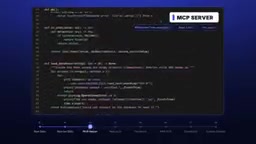
MCP (Model Context Protocol) Server plays a key role here. It enables the AI agent to access database tools and context in a standardized way, rather than hardcoding database connection logic into the prompt. The custom Python implementation means the team can precisely control the constraint rules for query generation, including table schema awareness and permission boundaries.
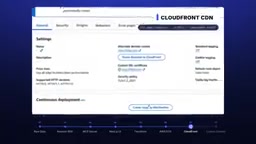
From an engineering perspective, this architecture is highly reproducible: Terraform manages infrastructure, Docker ensures environment consistency, and ECS Fargate eliminates server operations and maintenance. For teams looking to build similar "Chat with your data" products, this is a reference-worthy starting point.
MCP (Model Context Protocol) is an open protocol proposed by Anthropic at the end of 2024, aimed at establishing a standardized interaction interface between AI models and external tools and data sources. Its core idea is similar to "USB-C for the AI world": models don't need to write dedicated connection code for each data source; instead, they describe available tools (such as database queries and file reads) and their parameter schemas through a unified protocol. As the tool provider, the MCP Server exposes a structured capability list to AI clients, and the model decides which tool to call and what parameters to pass based on it. Compared with hardcoding database schemas and query logic into prompts, MCP decouples capability discovery from invocation, facilitating permission control, auditing, and reuse. The protocol is now supported by mainstream AI frameworks and development tools, making it one of the important foundations for building AI agent applications.
ECS Fargate is a serverless container compute service provided by AWS. Unlike the ECS EC2 launch type, which requires managing EC2 instances yourself, Fargate lets users simply declare the CPU and memory specifications of containers, while AWS fully manages the underlying server provisioning, patching, and scaling. This eliminates the operational burden of "managing clusters," allowing teams to focus on the application itself. The trade-off is that the unit compute cost is usually higher than self-managed EC2, and the ability to customize the underlying host is limited. For a mid-scale conversational application like dbchat with uncertain request patterns, Fargate's on-demand billing and auto-scaling characteristics fit well, which also explains why the article emphasizes its reproducible advantage of "eliminating server operations and maintenance."
Guardrails and Trust: Letting AI Answer Only What It Should
The video emphasizes the behavior "Off-topic questions are declined." In real enterprise scenarios, this is more important than mere query accuracy. If a user asks "What's the weather like today?", the system should not try to fabricate SQL to query a weather table—refusing outright is the correct behavior.

The implementation of guardrails usually involves intent classification and query scope validation: first determine whether the question falls within the scope that the database can answer, then generate SQL. dbchat presents the refusal behavior as a product feature, indicating that the team recognizes trust is the lifeline of such products. However, the video does not disclose the specific trigger rules of the guardrails or the false-rejection rate, which may affect the experience in actual use—being too strict will reject reasonable questions, while being too loose returns to the old path of hallucinations.
Intent Classification is a fundamental task in natural language processing, referring to determining the semantic category of user input, such as "data query," "chitchat," or "out-of-scope request." In Text-to-SQL scenarios, it usually serves as the first gate before query generation: only questions judged to be answerable by the database enter the SQL generation stage. Common implementations include rule-based keyword matching, fine-tuned small classification models, or directly having a large model return category labels in a structured output (such as JSON). The accuracy of intent classification directly determines how tight the guardrails are—missed judgments let irrelevant questions slip into the query flow, while false judgments reject reasonable requests. The article mentions that dbchat does not disclose its false-rejection rate, and this metric is exactly the key to evaluating the actual effectiveness of intent classification and guardrail strategies.
Implications for Developers
dbchat demonstrates a clear path: use an MCP Server to connect AI with the database, use Next.js to quickly build a conversational interface, and use Terraform and ECS to achieve reproducible deployment. This combination is suitable for rapidly validating the product hypothesis of "querying data in natural language."
However, the video is a product demo in nature and lacks key metrics such as performance data, concurrency handling capability, and accuracy for multi-table join queries. For teams considering building a similar system themselves, it is recommended to focus on evaluating the reliability of SQL generation under complex schemas and the impact of guardrail strategies on business query coverage while reproducing the architecture.
One-line Summary
dbchat queries databases in natural language, achieving safe data conversations with a full-stack AWS architecture and anti-hallucination guardrails.
Paragraph Summary
dbchat is a conversational data query product deployed on its own domain that allows business users to ask questions in everyday English, with an AI agent generating SQL in real time and returning database results without engineer intervention. Its core feature is strict anti-hallucination guardrails: it refuses outright to answer questions unrelated to the database rather than fabricating answers. The technical architecture runs entirely on AWS, including RDS PostgreSQL, a custom Python MCP Server, a Next.js frontend, Terraform infrastructure-as-code, ECS Fargate containers, and CloudFront distribution. The MCP Server standardizes the connection between AI and database tools, making it easy to control query constraints. The article notes that the demo lacks key metrics such as performance, concurrency, and complex query accuracy, and the guardrail false-rejection rate is not disclosed; teams building their own systems are advised to focus on evaluating the reliability of SQL generation under complex schemas and guardrail coverage.
Related articles
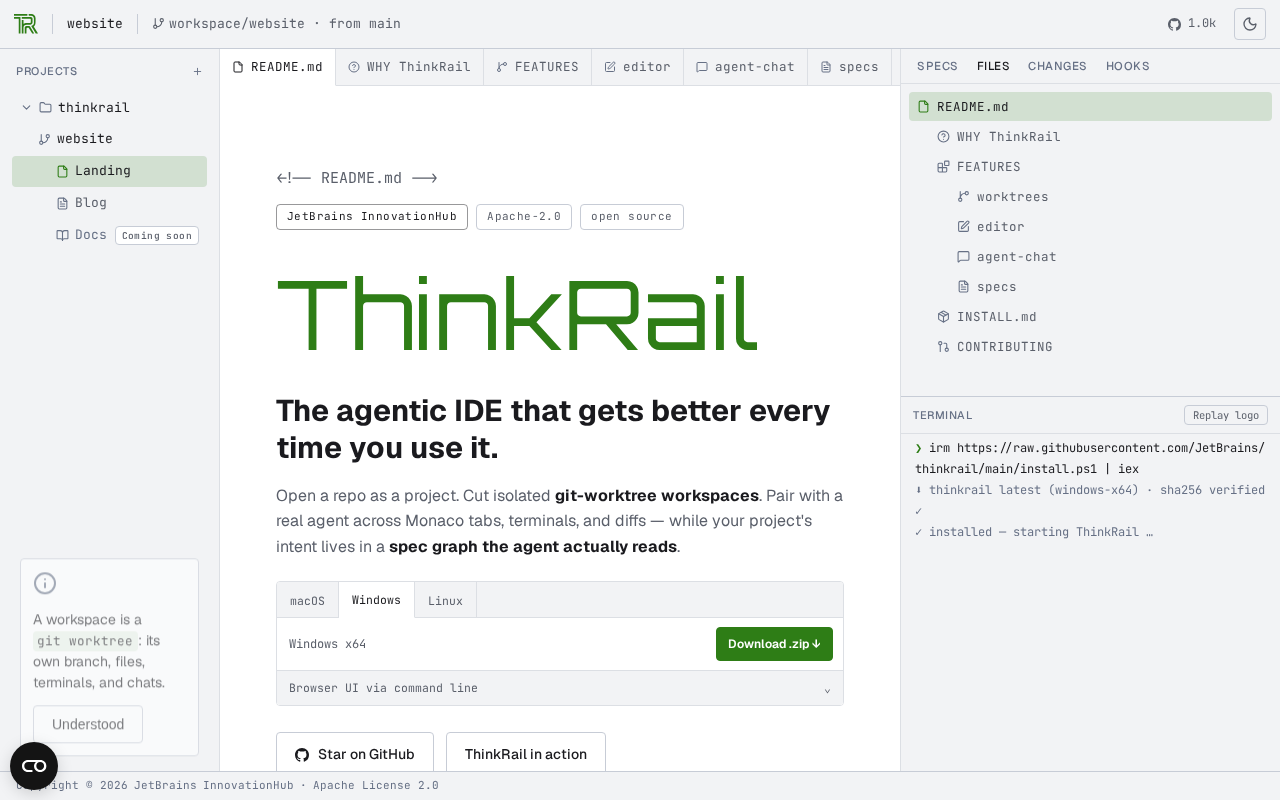
JetBrains Launches ThinkRail: A New Tool for Developer Productivity
JetBrains' new project ThinkRail surfaces on Hacker News, drawing developer community attention. Here's what we know, how the community reacted, and what it could mean for developer workflows.

Getting Started with Gemini 4 Argonne: A Hands-On Guide from Building Sites to Agents
Complete Gemini 4 Argonne tutorial: build a calorie tracker app with one prompt in Google AI Studio, review 10-page technical documents with long context, develop a browser game as a coding Agent in Anti-Gravity, plus API Key setup, pricing, and subscription requirements.

Cursor vs. Claude Code vs. Copilot: A Scenario-Based Selection Guide
Cursor, Claude Code, or GitHub Copilot? A scenario-based guide covering daily coding, large refactors and long tasks, and teams locked into existing IDEs—plus common pitfalls and combined-use advice.