De Beers Okavango Storytelling Clubs: Empowering Communities to Preserve Culture Through Photography

De Beers empowers Botswana youth to preserve local culture through photography training.
Through the Okavango Eternal Partnership, De Beers has launched Storytelling Clubs in Botswana's Okavango Delta, providing 95 young people with photography and creative expression training to document their cultural heritage. The project emphasizes a community-centered narrative approach, empowering local people to become the storytellers of their own lives, while demonstrating how resource-based companies can translate commercial value into community development impact.
Project Overview: How De Beers Uses Photography to Empower Cultural Preservation
Through its Okavango Eternal Partnership, De Beers has launched a unique community empowerment initiative — Storytelling Clubs — in Botswana's Okavango Delta region. The project closely ties the commercial value of the natural diamond industry to the cultural heritage of local communities, offering young people training in creative expression and photography skills so they can document and share their own cultural legacy through the lens.
This case study demonstrates how resource-based companies can build meaningful connections between business operations and community development through sustainability programs.
The Okavango Delta: A Wetland Rich with Cultural Memory
To understand the deeper significance of this project, it's essential to appreciate the uniqueness of its setting. The Okavango Delta is one of the world's largest inland deltas, located in northern Botswana. Spanning approximately 15,000 square kilometers, it was inscribed as a UNESCO World Heritage Site in 2014. This distinctive wetland ecosystem receives annual floodwaters from Zambia, nurturing extraordinary biodiversity and serving as a critical habitat for endangered species including African elephants, lions, and leopards. Several indigenous communities live around the delta, including the San Bushmen, who have relied on this land for generations and possess deep oral histories and traditional ecological knowledge. However, as tourism and modernization accelerate, these communities face growing pressure of cultural discontinuity — the gap between younger generations and traditional ways of life continues to widen. It is against this backdrop that visual storytelling has become increasingly valuable as a tool for cultural preservation.
Storytelling Clubs: A Photography Journey for 95 Young People
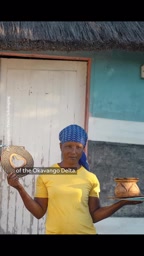
According to project organizers, the Storytelling Clubs bring together 95 young people across six groups, systematically developing their creative thinking and photography skills to enable them to tell the unique stories of the Okavango Delta.

The project's core philosophy encourages young people to explore their connection to their homeland. Organizers tell participants: "Capture what matters most to you — your families, your communities, each other."
From Photos to Cultural Symbols: The Power of Visual Storytelling
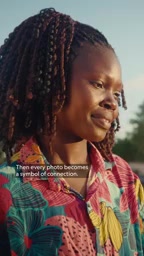
In this project, every photograph goes beyond simple visual documentation to become a symbol of connection. Young photographers transform everyday moments into works that carry cultural meaning.

A key message emphasized by the project is: "This is their heritage and culture, and it should be them showing the world why it matters." This community-centered narrative approach avoids the cultural appropriation that can come with external perspectives, empowering local people to become the storytellers of their own lives.
Visual Storytelling, Cultural Sovereignty, and the Theoretical Roots of Participatory Photography
The theoretical foundation for visual storytelling as a cultural preservation tool traces back to the Participatory Photography movement that emerged in the 1970s. The most representative methodology is Photovoice, systematized by researchers Caroline Wang and Mary Ann Burris in the 1990s. Its core premise is placing cameras in the hands of marginalized groups, enabling them to document their own lived realities and participate in policy dialogue. This methodology has profoundly influenced the design logic of numerous community development projects since.
Within a postcolonial theoretical framework, the question of "who is telling whose story" carries significant power-political implications. For too long, the visual narrative of African communities has been controlled by Western media, NGOs, or corporate communications teams, creating a one-directional "gaze" relationship. Putting cameras in the hands of community members is not just skills empowerment — it represents a reclamation of cultural sovereignty. They decide which moments are worth capturing and which stories deserve to be told, thereby reshaping how the outside world perceives their land.
Balancing Business and Social Responsibility: De Beers' ESG Practices
De Beers and Botswana: A Historical Bond Beyond Typical Corporate Relationships
The relationship between De Beers and Botswana is far more deeply intertwined than that of a typical corporation and host country. In 1969, the Botswana government and De Beers jointly established Debswana Diamond Company, with each party holding a 50% stake — a partnership model widely regarded as a rare example of equitable collaboration in the history of African resource development. Diamond revenues have long accounted for over 30% of Botswana's GDP, underpinning the country's remarkable economic transformation from one of the world's poorest nations at independence to a middle-income country. However, this heavy reliance on a single resource also raises concerns about the "resource curse" — insufficient economic diversification and uneven community development remain persistent challenges. The Okavango Eternal Partnership was born within this historical context, seeking to address external scrutiny of the diamond mining industry's social impact while exploring pathways for converting resource revenues into human capital investment.
The Natural Diamond Industry's Sustainability Journey
As one of the world's largest diamond mining and sales companies, De Beers has long faced scrutiny regarding the impact of resource extraction on local communities. The Okavango Eternal Partnership represents an effort to channel the economic benefits of the diamond industry into tangible drivers of community development.
Empowerment Over Charity: The Long-Term Value of Skills Training
The project's design philosophy merits attention: rather than simple financial donations, it creates new opportunities for young people through skills training in photography, creative expression, and storytelling. This "teach a person to fish" approach
Related articles
 Industry Insights
IRS Fully Embraces Claude AI, Accelerating Federal Government's AI Adoption
The IRS is recruiting staff with 24/7 Claude AI access, marking Anthropic's breakthrough into the federal government. Explore the strategic implications and tax use cases.
 Industry Insights
Nadella Introduces the Loopcraft Framework: Building AI Ecosystems Through Feedback Loops
Microsoft CEO Satya Nadella's Loopcraft framework explains how to build frontier AI ecosystems through nested feedback loops across technology, business, and ecosystem dimensions.
 Industry Insights
OpenAI's Internal Codex Usage Surges 56x — AI Coding Is Eating Everything
OpenAI reveals internal Codex usage data: Research up 56x, Customer Support 32x, Engineering 27x, Legal 13x since Nov 2025. AI coding tools are penetrating every department faster than expected.