Decoding LawZero's Research Agenda: How Bengio Is Building Honest and Trustworthy AI Systems

Turing Award winner Bengio's nonprofit LawZero pushes AI research from capability races toward trustworthy, honest, and safe systems.
This article unpacks Yoshua Bengio's upcoming appearance at the All In summit, where he will introduce LawZero, his newly founded AI safety nonprofit. Named after Asimov's Zeroth Law, LawZero aims to ensure AI serves humanity's collective well-being. The piece breaks down the summit's core themes — AI honesty (combating hallucination and deception), reliability (consistent and predictable behavior), and safety (preventing misuse and value misalignment) — and argues that AI safety research is shifting from abstract ethics toward concrete engineering design paradigms.
AI Safety Back in the Spotlight: From Capability Race to Trust Building
As large language models and autonomous agents continue to proliferate, ensuring that AI systems are "honest, reliable, and safe" has become an unavoidable core challenge for the entire industry. Turing Award laureate and deep learning pioneer Yoshua Bengio recently announced that he will appear at the All In summit in Canada on September 17, where he will share the evolving research agenda of LawZero, the nonprofit research organization he recently founded.
What looks like a brief conference announcement actually reflects the latest direction of AI safety research — the industry is shifting from a pure pursuit of capability gains toward a deeper focus on system trustworthiness, honesty, and safety boundaries.


What Is LawZero: Bengio's New Mission for Safe AI
Institutional Identity and the Origin of Its Name
LawZero is a nonprofit research organization that Yoshua Bengio has recently led the creation of. The name carries strong symbolic weight — echoing the "Zeroth Law" from science fiction author Isaac Asimov's Laws of Robotics (a robot may not harm humanity as a whole). This naming choice clearly signals the organization's core concern: ensuring that AI development always serves the overall well-being of humanity.
According to Bengio, LawZero is in a phase of rapid growth (en pleine croissance), actively expanding its resources, talent recruitment, and research directions. This aligns with the unprecedented attention AI safety has received in recent years — an increasing number of top researchers are redirecting their focus from pure capability research toward safety and alignment.
The Pivot from Capability-First to Safety-First
As one of the three founding figures of deep learning, Bengio was once a key driver pushing the frontiers of neural network capabilities. In recent years, however, he has repeatedly and publicly voiced concerns about the potential risks of frontier AI systems, gradually shifting his research focus toward AI safety and alignment. The founding of LawZero is the institutional embodiment of that shift.
This pivot from a "capability-first" to a "safety-first" stance carries significant weight within the AI research community. When a scientist who once helped push the technical frontier begins systematically investing in safety research, it often signals that the field has entered a critical stage that demands serious attention.
Three Core Themes: Honesty, Reliability, and Safety
The topic for discussion at the summit is explicitly defined as "designing honest, reliable, and safe AI systems" (Concevoir des systèmes d'IA honnêtes, fiables et sécuritaires). These three keywords may sound straightforward, but each corresponds to some of the most difficult technical challenges in AI research today.
AI Honesty: Tackling Hallucination and Deception
"Honesty" refers to AI systems not producing deceptive outputs — not hallucinating fabricated facts, and not withholding truthful information in order to please users or achieve some objective. The hallucination problem pervasive in today's large models, along with potential deceptive behaviors, sits at the heart of what this theme aims to address.
The central question researchers grapple with is: how do we ensure that a model's internal "beliefs" remain consistent with its external outputs? In other words, AI must not only give correct answers — it must honestly acknowledge uncertainty rather than confidently fabricating information.
AI Reliability: Pursuing Behavioral Consistency and Predictability
"Reliability" emphasizes consistency and predictability of behavior across a wide range of scenarios. A reliable AI should maintain stable and controllable performance even when faced with out-of-distribution data, adversarial inputs, or extreme edge cases — rather than failing in inexplicable ways.
For enterprise applications, reliability directly determines whether an AI system can be trusted to deploy in critical business workflows.
AI Safety: Protective Boundaries and Risk Management
"Safety" operates at a broader level, encompassing the prevention of malicious misuse, ensuring that autonomous behavior does not deviate from human intent, and establishing robust protective boundaries in high-stakes application scenarios. For increasingly capable autonomous agents, safety research is especially urgent.
These three dimensions are not independent of one another — they are mutually reinforcing: a dishonest system can hardly be called reliable, and an unreliable system will inevitably carry hidden safety risks.
Industry Significance: AI Safety Research Goes Mainstream
The Signal Sent by Top-Tier Summits
The fact that LawZero's research agenda is being discussed at a high-profile platform like the All In summit is itself a statement that AI safety has moved from the margins to the center of the industry. Events like All In typically gather investors, entrepreneurs, and policymakers; Bengio speaking there signals that safety is actively seeking broader consensus across industry and capital.
From Academic Appeals to Engineering Practice
Notably, the summit discussion is not framed around abstract ethical appeals, but focuses on "designing" (Concevoir) — that is, how to achieve honest, reliable, and safe systems at the engineering level. This marks a transition in AI safety research from philosophical debate and policy discussion toward actionable technical solutions and design paradigms.
For developers and enterprises, this trend deserves serious attention: the competition in future AI products may depend not only on raw model capability, but increasingly on trustworthiness and safety assurance.
The Defining Question of the Trustworthy AI Era
The direction championed by Bengio and LawZero represents an inevitable choice as AI development enters a new phase. As model capabilities continue to break new ground, ensuring that these powerful systems remain "honest, reliable, and safe" has become the key factor determining whether AI can earn broad social trust and adoption.
As the September 17 summit approaches, LawZero is expected to disclose more research details. Whether you are a researcher, developer, or policymaker, it is well worth following this safety research agenda being driven personally by a pioneer of AI — it may well set new technical standards and ethical benchmarks for the entire industry.
Related articles

Claude Code Adds Agent View: A Research Preview for Unified Session Management
Claude Code's new Agent View feature (research preview) consolidates all coding sessions into a unified list, advancing AI tools toward multi-agent orchestration.
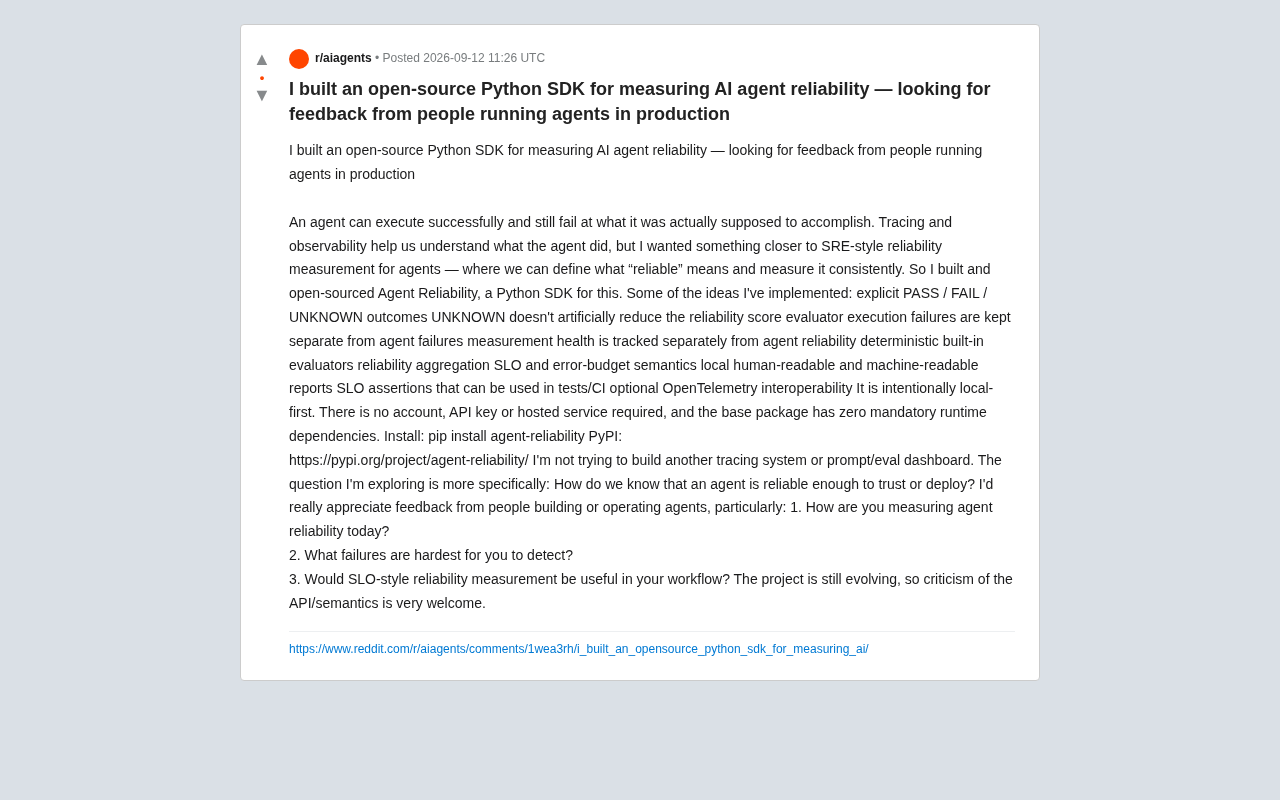
Open-Source Python SDK: Measuring AI Agent Reliability with SRE Principles
Agent Reliability is an open-source Python SDK that applies SRE's SLO and error budget concepts to AI Agent evaluation, with PASS/FAIL/UNKNOWN states, CI assertions, and zero forced dependencies.
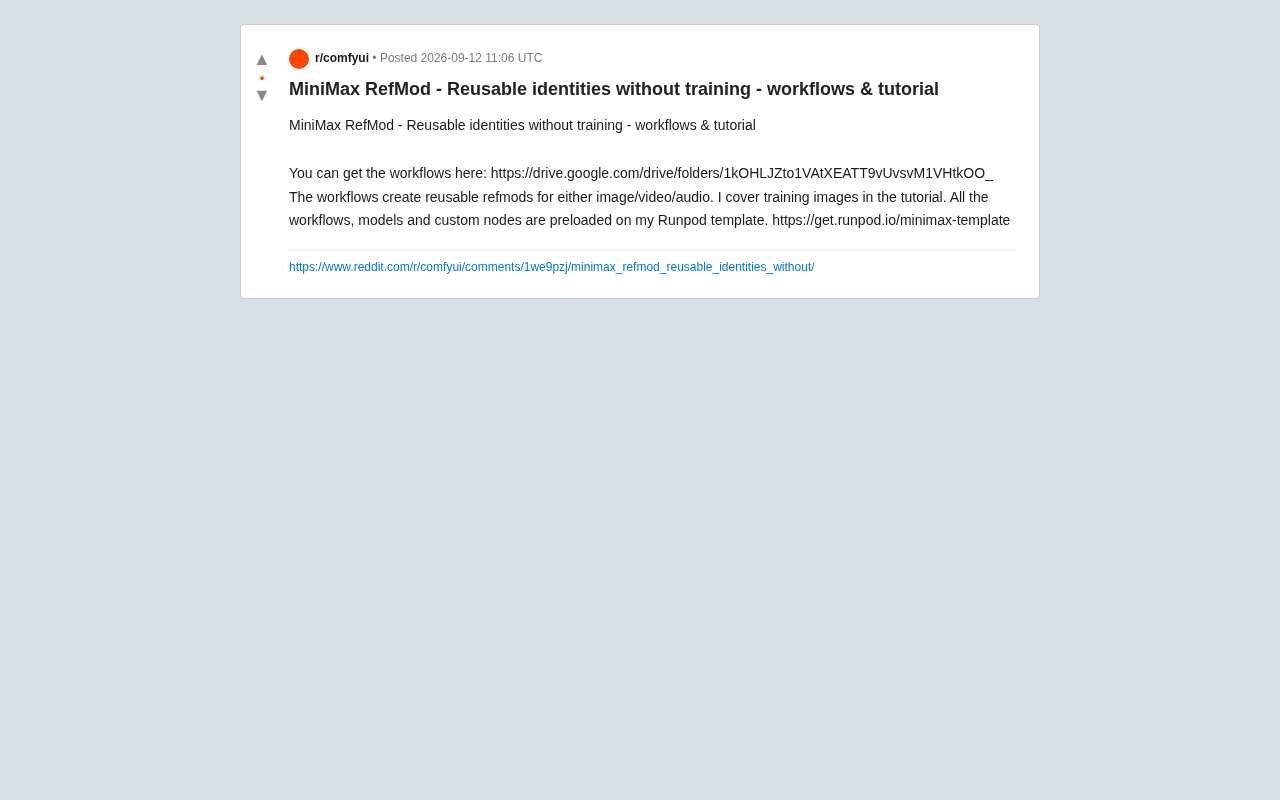
MiniMax RefMod: A Complete Guide to Training-Free Reusable Identity Workflows
MiniMax RefMod offers training-free reusable identity workflows for image, video, and audio generation. Includes Runpod template and tutorial for quick setup.