Deep Dive into Chatwoot: The Best Open-Source Alternative to Intercom

Chatwoot is a 34K-star open-source omni-channel customer service platform and self-hosted alternative to Intercom.
Chatwoot is an open-source omni-channel customer engagement platform with over 34,000 GitHub stars, offering live chat, email support, and multi-channel workspace capabilities. Built on Ruby on Rails, it provides a self-hosted alternative to expensive solutions like Intercom and Zendesk, giving enterprises full data sovereignty, significant cost savings over per-seat pricing models, and the flexibility to integrate AI capabilities freely.
In the customer support software market, Intercom, Zendesk, and Salesforce Service Cloud have long dominated, with subscription fees of hundreds of dollars per month that put many small and medium-sized businesses off. Meanwhile, the open-source project Chatwoot, which has garnered over 34,000 stars on GitHub, is reshaping this space in a fundamentally different way—using open source and self-hosting to break down the high-cost barriers of commercial customer service software.
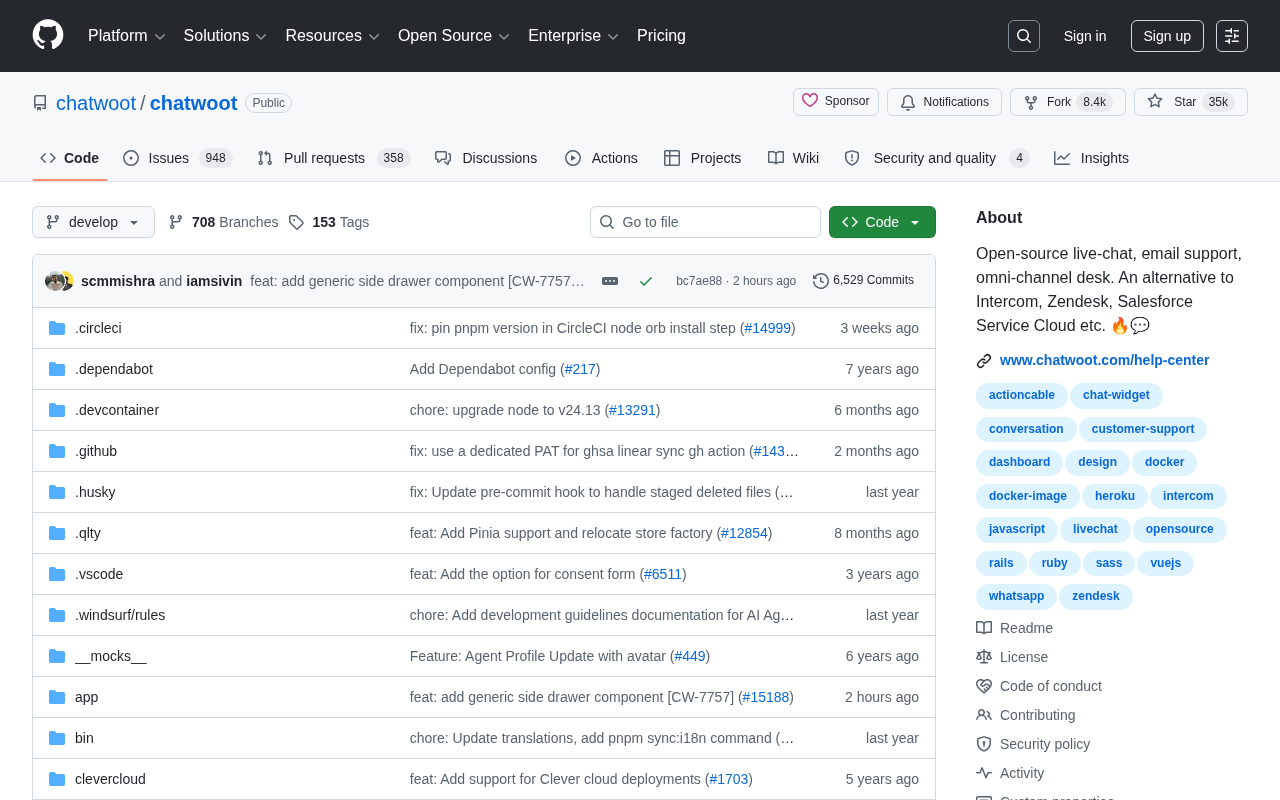
What Is Chatwoot: An Omni-Channel Open-Source Customer Service Platform
Chatwoot is an open-source omni-channel Customer Engagement Platform, with its core positioning centered on providing live chat, email support, and a multi-channel customer service workspace. Built on Ruby on Rails, the project has accumulated over 34,000 Stars and more than 8,000 Forks on GitHub, with community activity continuing to grow.
Its goal is crystal clear: to become an open-source alternative to expensive commercial solutions like Intercom, Zendesk, and Salesforce Service Cloud. For businesses that want to control their own data without bearing hefty subscription costs, Chatwoot offers a viable self-hosting path.
The Core Value of Omni-Channel Integration
Modern customer service has long moved beyond single-channel interactions. Users might initiate inquiries through website chat widgets, email, social media direct messages, or even instant messaging apps. Chatwoot's "omni-channel workspace" philosophy aims to unify these scattered conversation entry points into a single interface, so support agents don't need to constantly switch between multiple platforms.
The omni-channel concept originated in the retail industry and was later widely adopted in customer service. Unlike multi-channel, omni-channel emphasizes not just supporting multiple communication methods, but more importantly, data integration and experience consistency across channels. For example, when a customer initiates an inquiry via WeChat and later follows up via email, the support agent can see the complete conversation context without the customer needing to repeat their issue. Gartner research shows that companies providing seamless omni-channel experiences retain nearly 90% more customers than those that don't. This is the market logic behind Chatwoot's core omni-channel positioning.
This integration capability significantly boosts enterprise efficiency. When all customer conversations converge into a unified inbox, teams can better distribute tasks, track conversation history, and maintain service consistency.
Why Choose Chatwoot as Your Open-Source Customer Service Solution
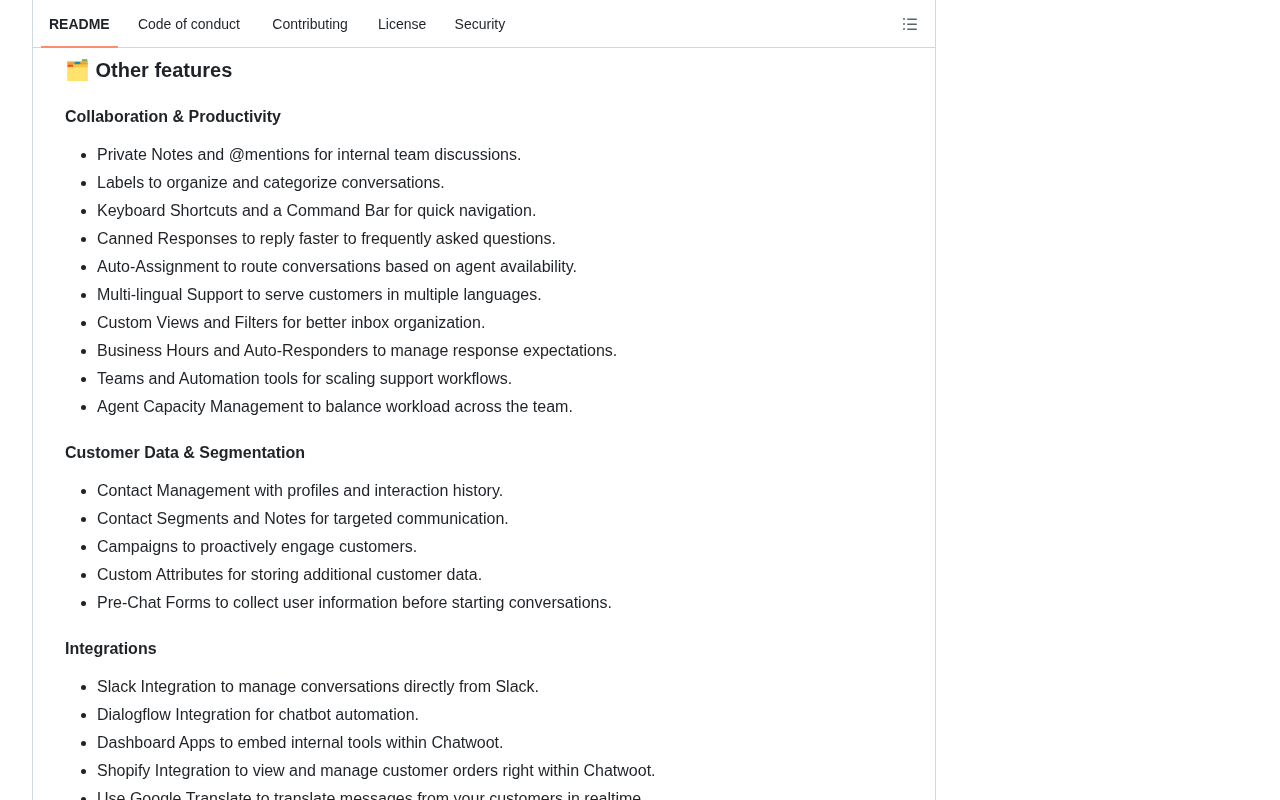
Compared to commercial closed-source products, Chatwoot's open-source nature brings several irreplaceable advantages.
Data Sovereignty and Privacy Compliance
For industries with stringent data compliance requirements—such as finance, healthcare, and government—hosting customer conversation data on third-party SaaS platforms often carries compliance risks. Chatwoot supports fully self-hosted deployment, allowing enterprises to keep all data on their own servers or private clouds, maintaining complete control over data flow.
The concept of Data Sovereignty has become increasingly important as global data protection regulations tighten. The EU's General Data Protection Regulation (GDPR) requires companies to have a clear legal basis for processing personal data and grants data subjects the right to erasure and data portability; China's Personal Information Protection Law and Data Security Law impose strict restrictions on cross-border data transfers; while the US lacks a unified federal regulation, industry-specific laws like HIPAA (healthcare) and GLBA (finance) impose equally stringent data hosting requirements. In this context, using third-party SaaS services means enterprises need to audit vendors' data processing agreements, server locations, data encryption measures, and more, whereas self-hosted solutions fundamentally simplify the compliance path.
Cost Advantage: Say Goodbye to Per-Seat Pricing
Commercial customer service software typically charges per seat, with costs growing linearly or even more steeply as team size expands. Chatwoot's community edition is free and open-source—enterprises only need to bear server and operations costs, significantly reducing expenditure over the long term, making it especially suitable for fast-growing startups.
To put concrete numbers on it, Intercom's basic plan starts at approximately $39/seat/month, with advanced plans reaching $139/seat; Zendesk's Suite Professional plan runs about $115/seat/month. For an enterprise with 50 customer service agents, software subscription costs alone could exceed $100,000 per year. This per-seat/per-agent pricing model, while providing predictable revenue growth for vendors, creates significant cost pressure for rapidly scaling businesses—and is a key driver behind market acceptance of open-source alternatives.
Deep Customization and Flexible Extensibility
Open source means enterprises can deeply customize features according to their own business logic, without being constrained by a vendor's product roadmap. Whether integrating with proprietary CRM systems, customizing automation workflows, or adding AI capabilities, Chatwoot provides sufficient flexibility.
Chatwoot Technical Architecture and Deployment Methods
Chatwoot uses Ruby on Rails as its backend framework—a mature, stable technology stack with high development efficiency that allows developers familiar with the Ruby ecosystem to quickly get started with secondary development.
Ruby on Rails (commonly known as Rails) is an open-source web application framework created by David Heinemeier Hansson in 2004, following the principles of "Convention over Configuration" and "Don't Repeat Yourself" (DRY). Rails is renowned for its exceptional development efficiency, with notable products like GitHub, Shopify, and Basecamp all built on Rails. For a rapidly iterating open-source project like Chatwoot, Rails' mature ecosystem (including its rich Gem library, ActiveRecord ORM, Action Cable for real-time communication, and other components) significantly reduces development complexity. However, Rails' performance under high-concurrency scenarios has long been a topic of community discussion, which Chatwoot addresses through architectural designs like Sidekiq asynchronous task queues and Redis caching.
The project supports containerized deployment architecturally, typically allowing rapid setup through Docker, which lowers the technical barrier to self-hosting. Docker is an OS-level virtualization technology that packages applications and their dependencies into standardized containers, achieving "build once, run anywhere." For a complex application like Chatwoot involving a Ruby runtime, PostgreSQL database, Redis cache, Sidekiq background tasks, and other components, Docker Compose can define the orchestration relationships of all services through a single configuration file, reducing deployment time from hours to minutes. This dramatically lowers the technical barrier to self-hosting, enabling teams without deep Ruby operations experience to complete deployment. Furthermore, enterprises can leverage Kubernetes for elastic scaling and high-availability deployment of Chatwoot to meet the demands of large-scale production environments.
From a community activity perspective, over 8,000 Forks indicate that a large number of developers have customized and contributed to the project—this kind of active community ecosystem is a crucial safeguard for the long-term healthy development of an open-source project.
AI Integration: Intelligent Upgrades for Open-Source Customer Service
As generative AI rapidly permeates every industry, customer service is one of the most direct scenarios for AI deployment. Open-source Chatwoot has a natural advantage in connecting to large language models—enterprises can freely integrate self-built or third-party AI chatbots to enable intelligent auto-replies, conversation summaries, sentiment analysis, and more, without relying on vendor-bundled paid AI modules.
Generative AI applications in customer service operate on several levels: the first layer is intelligent routing and automatic classification, using Natural Language Processing (NLP) to understand customer intent and assign tickets to appropriate agents; the second layer is assisted replies, generating suggested response content for agents to improve response speed; the third layer is fully automated chatbots that directly handle simple to moderately complex inquiries. Additionally, there are advanced features like conversation summarization (compressing long conversations into key points for subsequent agents) and sentiment analysis (real-time monitoring of customer emotions to trigger escalation mechanisms). The advantage of an open-source platform is that enterprises can choose to integrate OpenAI GPT, Anthropic Claude, open-source Llama models, or even fine-tuned domain-specific models, without being locked into a specific vendor's AI service.
This stands in stark contrast to closed-source commercial solutions: with Chatwoot, enterprises have complete autonomy over how AI capabilities are integrated and how data is processed, enjoying the efficiency gains of AI while avoiding the risk of data leakage.
Chatwoot Use Cases and Recommendations
Chatwoot is particularly well-suited for the following types of users:
- Privacy-conscious enterprises: Those needing complete control over customer data
- Cost-sensitive startup teams: Those wanting to build professional customer service systems at minimal cost
- Technically capable teams: Those able to handle self-hosted deployment and secondary development
- Companies needing omni-channel integration: Those with scattered customer inquiry sources requiring unified management
Of course, a self-hosted solution also means the enterprise must take responsibility for deployment, maintenance, and upgrades. For small teams lacking operations capabilities, this can be a significant hurdle. Fortunately, Chatwoot also offers an official cloud-hosted service, allowing users who don't want to manage infrastructure to get started conveniently.
Conclusion: The Future Direction of Open-Source Customer Service
Chatwoot's rise reflects the growing enterprise emphasis on data sovereignty, cost control, and technological autonomy. After the customer service SaaS market was monopolized by a handful of giants for years, a mature, active, and feature-complete open-source alternative undoubtedly injects new vitality into the entire industry. For enterprises currently evaluating customer service solutions, Chatwoot deserves serious consideration—it's not just a money-saving choice, but represents a philosophy of "owning your own tools."
Related articles

An OpenAI Researcher's Deep Dive: The Truth About 10,000 AI Agents and Recursive Self-Improvement
OpenAI researcher Noam Brown breaks down multi-agent systems, recursive self-improvement, and alignment risks — from 10,000 agents cracking Millennium Problems to the Hugging Face incident.
27B Dense Model Tops Hugging Face All-Time Likes: Frontier-Level Agentic Ability on 16GB VRAM
A 27B dense model from Hangzhou tops Hugging Face's all-time likes chart. Quantized to 16GB VRAM, a single RTX 4090 delivers frontier-level Agentic performance locally.
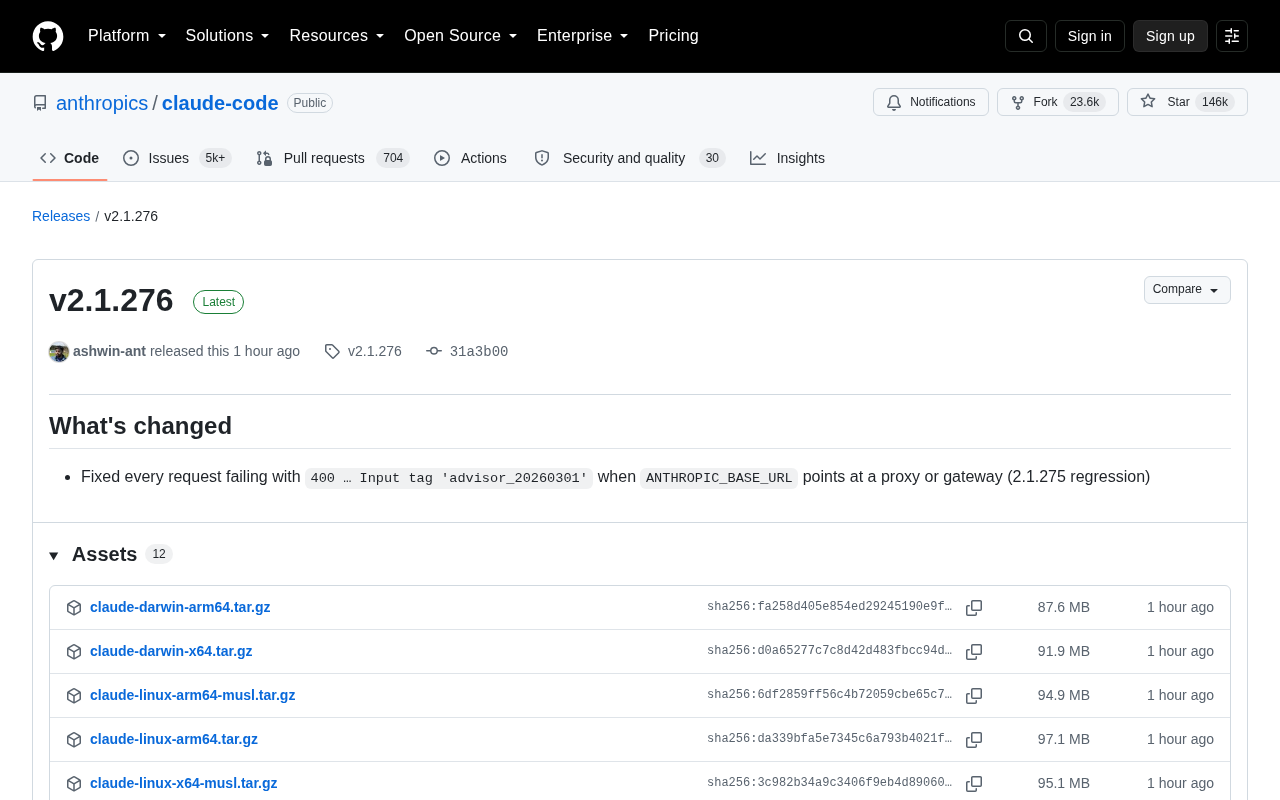
Claude Code v2.1.276 Released: Fixes Proxy/Gateway 400 Error Regression
Claude Code v2.1.276 fixes a critical regression from v2.1.275 where all requests via proxy or gateway failed with a 400 error (Input tag 'advisor_20260301'). Upgrade now.