Deep Dive into Contrario: How AI Agents + Expert Recruiters Are Reshaping Enterprise Hiring

Contrario is a hybrid recruiting platform combining AI agents with expert recruiters
Contrario combines AI agent automation with an expert recruiter network to handle 90% of the hiring process. The platform features Slack-based natural language interaction that challenges traditional ATS paradigms, along with adaptive learning that continuously improves recommendations. Using a pay-per-successful-hire model, AI-reduced marginal costs enable coverage of mid-to-low-level positions, offering SMEs lacking dedicated recruiting teams a solution that balances quality with efficiency.
Product Overview
Contrario is a new type of recruiting platform that combines AI agents with a network of professional recruiters. Its core philosophy is clear: recruiting tools alone can't make hires for you — what actually gets the job done is the right team. Contrario aims to solve the pain points of inefficiency and inconsistent candidate quality in enterprise hiring through the synergy of AI and human experts.
The product currently holds a perfect 5.0 rating on Product Hunt (based on 2 reviews) and has attracted 418 followers, indicating early market validation of this model.
Core Mechanics
The Hybrid Model: AI Agents + Expert Recruiters
Contrario's differentiation lies in the fact that it's not a purely AI-automated tool. Instead, it employs a hybrid architecture of "AI agents + expert recruiter network."
Notably, the "AI agents" here are not ordinary AI tools. AI Agents refer to intelligent systems capable of autonomously perceiving their environment, formulating plans, and executing multi-step tasks. The key difference from traditional AI tools lies in their "autonomy" and "goal-orientation." Traditional AI tools (like resume parsers) can only passively respond to single commands, while AI agents can decompose complex goals into subtasks, invoke multiple tools (search, send emails, database queries, etc.), and dynamically adjust strategies based on intermediate results. In a recruiting context, an AI agent can autonomously complete the entire chain of "searching LinkedIn for qualified candidates → sending personalized outreach emails → tracking replies → scheduling interviews" without requiring manual step-by-step intervention.
The platform claims its recruiters and AI agents can handle 90% of the work in the recruiting process, covering these key stages:
- Sourcing: AI agents perform initial screening and matching across massive candidate pools
- Screening: Multi-dimensional evaluation combining AI algorithms with recruiter expertise
- Coordination: Automating tedious tasks like interview scheduling and communication follow-ups
- Closing: Experienced recruiters lead offer negotiations and final-stage interactions
Natural Language Interaction via Slack
Contrario has chosen Slack as its primary interaction interface, allowing users to communicate with the system directly through natural language. This design embeds recruiting management into the collaboration tools teams already use daily, reducing the learning curve while making hiring decisions more transparent and traceable.
Behind this choice is a direct challenge to traditional ATS (Applicant Tracking System) platforms. ATS has been the core infrastructure of enterprise recruiting since the 1990s, originally designed to digitize paper resume management. Greenhouse, Lever, and Workday Recruiting are the current market leaders. However, traditional ATS platforms have long been criticized as "passive databases" — they record information but don't proactively optimize decisions, and their complex interfaces often require weeks of training for HR teams to master.
Enterprise HR managers or hiring managers no longer need to log into a separate ATS. They simply describe requirements and provide candidate feedback in everyday language within Slack, and the system understands and executes accordingly — this is the core design logic behind Contrario's attempt to disrupt the traditional ATS operational paradigm.
Adaptive Learning Capability
Recommendations That Improve Over Time
Contrario's most noteworthy technical highlight is its continuous learning mechanism. The platform claims that "every decision teaches the system your standards, recommending better candidates over time."
This means that when a hiring manager provides "pass" or "reject" feedback on a candidate, the system incorporates these signals into its model, gradually building a precise understanding of that company's hiring preferences. Technically, this relies on an implicit feedback learning mechanism — hiring decision behaviors are converted into training signals that continuously fine-tune the recommendation model. The underlying logic is similar to consumer-grade recommendation systems like Netflix and Spotify.
However, the challenges in recruiting are far more complex than consumer recommendations: extremely small sample sizes (a single position typically has only dozens of decision points), high label noise (reasons for rejecting candidates are diverse), and survivorship bias (the system can only observe candidates who were recommended, not the entire talent pool). How to achieve effective personalized learning under small-sample conditions is the core technical challenge for such systems, and the key to whether Contrario can deliver on its "improving over time" promise.
This personalized learning capability is something traditional recruiting tools lack — most ATS platforms passively store and display information rather than actively optimizing recommendation quality.
Market Positioning & Competitive Analysis
Contrario operates in a highly competitive space, facing both established ATS products like Lever and Greenhouse, as well as AI recruiting tools like HireVue and Eightfold AI. But Contrario's uniqueness lies in not attempting to fully replace human recruiters — instead, it organically combines AI's scalable processing power with human judgment and relationship-building capabilities.
From a business model perspective, the platform currently offers a "20% discount on your first hire" promotion, suggesting it uses a pay-per-successful-hire model. In the recruiting industry, this is known as the Contingency Fee model, which typically charges 15% to 25% of the candidate's annual salary as commission, settled only after successful onboarding. This contrasts with Retained Search (upfront fee model), which requires clients to prepay a portion of the fee and is more common in executive search.
The Contingency model carries minimal risk for companies, but for service providers, it means substantial upfront investment with the possibility of zero return. Traditional recruiting agencies therefore typically only accept positions with higher success probabilities. AI fundamentally changes this economic model: by reducing the marginal cost of servicing each position through automation, the platform can simultaneously handle large volumes of mid-to-low-level positions without losing money — this is Contrario's core cost advantage over traditional recruiting agencies.
Reflections & Outlook
AI applications in recruiting are evolving from "assistive tools" to "intelligent agents." Contrario represents a pragmatic middle ground: acknowledging AI's limitations in judgment and interpersonal communication while fully leveraging its strengths in data processing, pattern recognition, and process automation.
For small and medium-sized enterprises, this model may be particularly attractive — they often lack professional in-house recruiting teams yet cannot afford the high fees of traditional headhunters. Contrario offers a middle-ground option: expert-level quality assurance combined with AI-driven efficiency gains and cost control.
Key Takeaways
- Contrario employs a hybrid model of AI agents + expert recruiter network, handling 90% of the recruiting workflow
- Slack-based natural language interaction design embeds recruiting management into daily collaboration tools, directly challenging traditional ATS paradigms
- The system features adaptive learning capabilities that continuously optimize candidate recommendations through implicit feedback mechanisms, though small-sample learning remains a core technical challenge
- Using a Contingency Fee business model, AI reduces marginal costs enabling coverage of mid-to-low-level positions that traditional recruiters won't touch
- Positioned between traditional headhunters and pure AI tools, balancing quality assurance with efficiency gains, currently holding a perfect 5.0 rating on Product Hunt
Related articles
 Product Reviews
The Programmer's Desk Setup Guide: Building a Workspace That Feels Like Home
Discover how programmers build productive, comfortable workspaces. From multi-monitor setups to ergonomic design, explore the desk philosophy that drives focus and flow.
 Product Reviews
Qoder vs Cursor Real-World Comparison: Which $20/Month AI IDE Is Better?
Hands-on comparison of Qoder vs Cursor AI IDEs: Agent autonomy, human interaction count, and architecture decisions. Qoder needed only 2 interactions vs Cursor's 8.
 Product Reviews
Cursor Cloud Agent Demo: Eliminating Bottlenecks Across the Entire Software Development Lifecycle
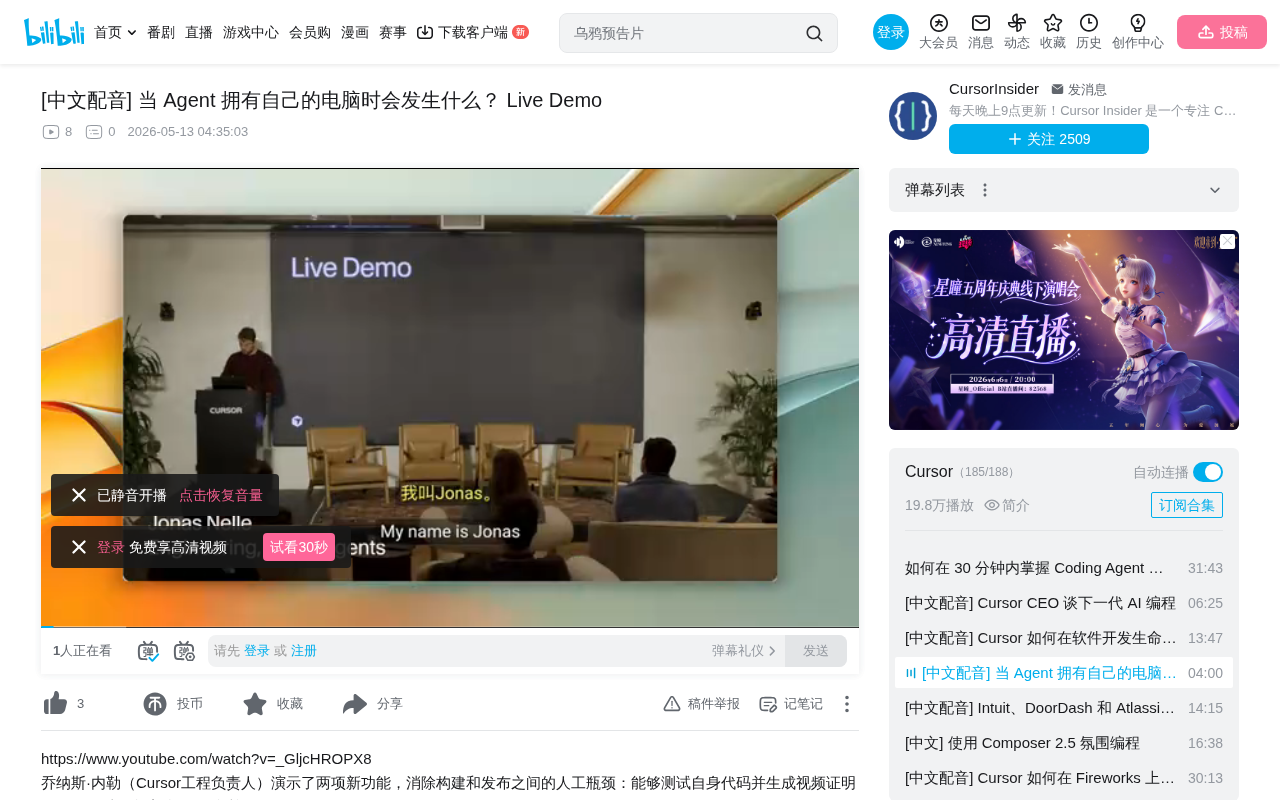
Deep analysis of Cursor's Cloud Agent demo showing how cloud VMs, automated test artifacts, and a full-chain control plane systematically eliminate human bottlenecks across the software development lifecycle.