Deep Dive into CowAgent: A Practical Guide to the Open-Source AI Agent Framework with 44K GitHub Stars

A comprehensive guide to CowAgent, the 44K-star open-source AI Agent framework for WeChat and beyond.
CowAgent (formerly chatgpt-on-wechat) is a leading open-source AI Agent framework with 44K+ GitHub stars. It goes beyond simple chatbots by offering proactive thinking, task planning, dynamic Skills creation, long-term memory, and RAG-based knowledge bases. Supporting WeChat, QQ, Feishu, DingTalk, and all major LLMs including GPT-4o, Claude, DeepSeek, and Qwen, it's ideal for building personal AI assistants and enterprise digital workers.
Project Overview: From Chatbot to Super AI Assistant
CowAgent (formerly chatgpt-on-wechat) is one of the hottest open-source AI Agent projects on GitHub, having accumulated 44,000+ Stars and 10,000+ Forks to date, ranking among the top open-source LLM application projects in China. Unlike ordinary chatbots, CowAgent positions itself as an intelligent agent system capable of proactive thinking, task planning, and continuous evolution.
AI Agents represent one of the most important technical directions in the LLM application space today. Unlike the traditional "user asks → model answers" single-turn interaction pattern, Agents can autonomously perceive their environment, formulate plans, invoke tools, and iteratively execute based on feedback. Since 2023—from Stanford's Generative Agents paper to the explosion of AutoGPT, and with OpenAI, Anthropic, and other companies making Agent capabilities a core product focus—the industry has reached a consensus: the next frontier for LLMs is Agents. CowAgent is a prime example of this trend within China's open-source community.
The project is built with Python, featuring a lightweight architecture and low deployment barrier. The team claims it's more lightweight than OpenClawAd. Whether you're an individual developer looking to quickly set up a WeChat AI bot or a technical team building enterprise-level digital workers, CowAgent can serve your needs well.
Core Capabilities: What Earned CowAgent 44K Stars?
Proactive Thinking and Task Planning
CowAgent's most distinctive feature is its genuine AI Agent capability—far beyond simple Q&A interactions. Specifically:
- Proactive thinking: Autonomously determines the next step based on context and user intent
- Task planning: Decomposes complex tasks into multiple sub-steps, executing them sequentially while reporting progress
- External resource invocation: Can operate system resources and call external APIs, breaking free from pure conversational limitations
From a technical implementation perspective, this capability is typically based on mainstream Agent architecture paradigms like ReAct (Reasoning + Acting) or Plan-and-Execute. The ReAct pattern has the LLM first reason (Thought) at each step, then decide what action to take (Action), and finally determine the next step based on the execution result (Observation)—forming a "think-act-observe" loop. The Plan-and-Execute pattern is better suited for complex tasks: a Planner module first decomposes the task into an ordered list of subtasks, then an Executor carries them out step by step, dynamically adjusting the plan based on actual conditions during execution. CowAgent's task planning capability is precisely this kind of architecture brought to engineering reality.
Here's a practical example: if you say "Help me organize last week's meeting notes and send them to my colleagues," it will automatically decompose this into steps—finding files, extracting key points, formatting content, and sending messages—completing them sequentially, rather than just giving you a block of advisory text.
Dynamic Skills Creation and Execution
CowAgent introduces a "Skills" concept, which is essentially an extensible capability module mechanism. The system can not only execute predefined Skills but also dynamically create new Skills based on actual needs.
The technical foundation of this mechanism is closely related to LLMs' Function Calling and Tool Use capabilities. OpenAI pioneered Function Calling in 2023, allowing LLMs to recognize user intent during conversations and invoke predefined external functions; Anthropic's Claude, Google's Gemini, and others soon followed suit. CowAgent's Skills mechanism takes this a step further: it can not only call existing tool functions but also leverage the LLM's code generation capability to automatically write and register new Skill modules at runtime. This means when a user raises a request the system hasn't yet covered, CowAgent can attempt to autonomously generate the corresponding processing logic, validate it, and then persist it as a reusable capability.
This design means the AI assistant's capability boundaries are no longer fixed—they expand continuously with usage scenarios. Simply put, it's like having an "assistant that teaches itself new skills"—the more you use it, the more it can do.
Long-Term Memory and Knowledge Base
Traditional chatbots have a persistent problem: "amnesia"—every conversation starts from scratch. CowAgent addresses this pain point through two mechanisms:
- Long-term memory: Remembers historical interactions with users, providing more personalized responses
- Knowledge base: Supports importing proprietary knowledge documents, making the AI more professional in specific domains
To understand the technical sophistication behind these capabilities, you need to know a key background: LLMs inherently have context window limitations. Even the latest GPT-4o can only process a limited length of text in a single conversation (typically 128K tokens) and cannot truly "remember" all historical information. CowAgent's long-term memory mechanism typically leverages vector databases (such as FAISS, Chroma, Milvus, etc.): historical conversations and key information are converted into high-dimensional vectors for storage, and when a new conversation begins, the most relevant historical memories are retrieved via semantic similarity and injected into the current context, achieving the "memory" effect.
The knowledge base feature is built on RAG (Retrieval-Augmented Generation) technology. RAG is currently the most mainstream knowledge integration solution for enterprise AI applications: enterprise documents are first split into small segments and stored as vectors; when a user asks a question, the most relevant document fragments are retrieved first, then sent to the LLM along with the user's question as reference material for generating answers. Compared to fine-tuning models, RAG's advantages include no need for retraining, real-time knowledge updates, and clear source attribution for answers—making it ideal for business scenarios requiring frequent knowledge updates.
The combined effect of these two capabilities is clear: CowAgent can continuously grow—the longer you use it, the better it understands you, and the better the experience becomes.
Multi-Platform Integration: One System Covering All Major Domestic Channels
CowAgent achieves comprehensive coverage of China's mainstream platforms:
| Platform Type | Supported Channels |
|---|---|
| Instant Messaging | WeChat, QQ |
| Enterprise Office | Feishu (Lark), DingTalk, WeCom |
| Public Platforms | WeChat Official Accounts, Web |
Developers only need to deploy one system to serve users across multiple platforms simultaneously, dramatically reducing operational costs.
It's worth noting that integrating AI bots with personal WeChat accounts has always been technically challenging. Unlike Feishu and DingTalk, which provide official open APIs, personal WeChat accounts don't offer an official bot interface. Developers typically need to rely on reverse engineering approaches (such as itchat, WechaTy, ComWeChatRobot, etc.) to send and receive messages, involving protocol adaptation, login state maintenance, message format parsing, and a series of engineering challenges—with the risk of account suspension. A major reason CowAgent has gained such high attention in China's developer community is precisely because it has invested heavily in engineering optimization and stability for WeChat ecosystem integration, filling the gap for mature open-source solutions in this space. WeCom and WeChat Official Accounts can be accessed compliantly through official Webhooks and Open Platform APIs, with relatively lower technical barriers.
For users looking to build AI bots on WeChat, CowAgent is currently one of the most ecosystem-complete open-source solutions available.
Multi-Model Support: Full Compatibility with Major LLMs
In terms of underlying model selection, CowAgent is compatible with virtually all mainstream LLMs on the market:
- International models: OpenAI (GPT-4o / GPT-4), Claude, Gemini
- Chinese models: DeepSeekAd, Qwen (Tongyi Qianwen), GLM (Zhipu AI), MiniMax
- Aggregation platforms: LinkAI
CowAgent's broad model compatibility is enabled by an important industry development: OpenAI's API specification has become the de facto standard in the LLM space. Since ChatGPT's release, the API format defined by OpenAI (such as /v1/chat/completions) has been adopted by virtually all LLM providers worldwide. Chinese models like DeepSeek, Qwen, and GLM all offer interfaces compatible with the OpenAI API format—developers only need to change the API endpoint and key to switch seamlessly. This "OpenAI-compatible" ecosystem significantly reduces the engineering cost of multi-model adaptation and is the technical foundation enabling CowAgent to easily support over a dozen models.
From a model positioning perspective, each provider has distinct advantages: DeepSeek is known for its exceptional cost-effectiveness, with DeepSeek-V3 approaching GPT-4 levels on multiple benchmarks at a fraction of the cost; Claude excels in long-text comprehension and safety; GPT-4o maintains its lead in multimodal and complex reasoning tasks. Understanding these differences helps users make more informed model choices within CowAgent.
In practice, you can flexibly switch based on budget and use case. For example, use DeepSeek for everyday casual conversations to control costs, then switch to GPT-4o for complex reasoning tasks to ensure quality—easily achieving the optimal balance between cost and performance.
Multimodal Processing: Far Beyond Text Chat
CowAgent supports processing inputs across four modalities: text, voice, images, and files. Practical use cases include:
- Sending voice messages that the AI automatically transcribes, understands, and responds to
- Sending images for AI content recognition and analysis
- Sending document files for AI parsing and key information extraction
Multimodal capabilities rely on the rapid evolution of LLM technology over the past two years. For image understanding, Vision-Language Models (VLMs) represented by GPT-4V (GPT-4 with Vision) can simultaneously process image and text inputs, converting images into model-comprehensible feature representations through visual encoders (such as ViT), then fusing them with text information for reasoning. Among Chinese models, Qwen-VL and GLM-4V offer similar capabilities. For voice processing, CowAgent typically integrates ASR (Automatic Speech Recognition) engines (such as OpenAI's Whisper model or domestic speech recognition services) to convert speech to text before passing it to the LLM, with some scenarios also supporting TTS (Text-to-Speech) for voice responses. File parsing involves a series of document processing technologies including PDF extraction, OCR recognition, and table structuring.
Multimodal capabilities make CowAgent far more practical in real work scenarios than pure text chatbots.
Typical Use Cases
Personal AI Assistant
Deploy a private AI assistant on WeChat or other platforms to handle daily information queries, content creation, schedule management, and other tasks. With long-term memory, it gradually learns your preferences and habits, with the service experience steadily improving over time.
Enterprise Digital Worker
Deploy CowAgent as a customer service bot, internal knowledge assistant, or business process automation tool. By importing enterprise-specific data through the knowledge base and customizing business workflows through the Skills mechanism, teams can significantly boost operational efficiency.
CowAgent's value is particularly pronounced in enterprise scenarios. Traditional enterprise customer service systems often rely on preset keyword matching and decision trees, which are costly to maintain and deliver a rigid user experience. An LLM-based Agent solution can understand complex natural language expressions, accurately answer business questions using RAG knowledge bases, and automatically execute operations like ticket creation and order inquiries through the Skills mechanism—truly making the leap from "can chat" to "can get work done."
Conclusion: Why CowAgent Deserves Your Attention
The brand upgrade from chatgpt-on-wechat to CowAgent marks the project's strategic transformation from a "chatbot tool" to an "AI Agent framework." The community scale of 44,000+ Stars also means an active developer ecosystem and continuous version iterations.
If you're looking for a lightweight, easy-to-deploy, ecosystem-rich open-source AI Agent framework—especially one that needs to land AI assistants on mainstream Chinese platforms like WeChat—CowAgent is one of the top choices worth considering today.
Related articles
 Product Reviews
The Programmer's Desk Setup Guide: Building a Workspace That Feels Like Home
Discover how programmers build productive, comfortable workspaces. From multi-monitor setups to ergonomic design, explore the desk philosophy that drives focus and flow.
 Product Reviews
Qoder vs Cursor Real-World Comparison: Which $20/Month AI IDE Is Better?
Hands-on comparison of Qoder vs Cursor AI IDEs: Agent autonomy, human interaction count, and architecture decisions. Qoder needed only 2 interactions vs Cursor's 8.
 Product Reviews
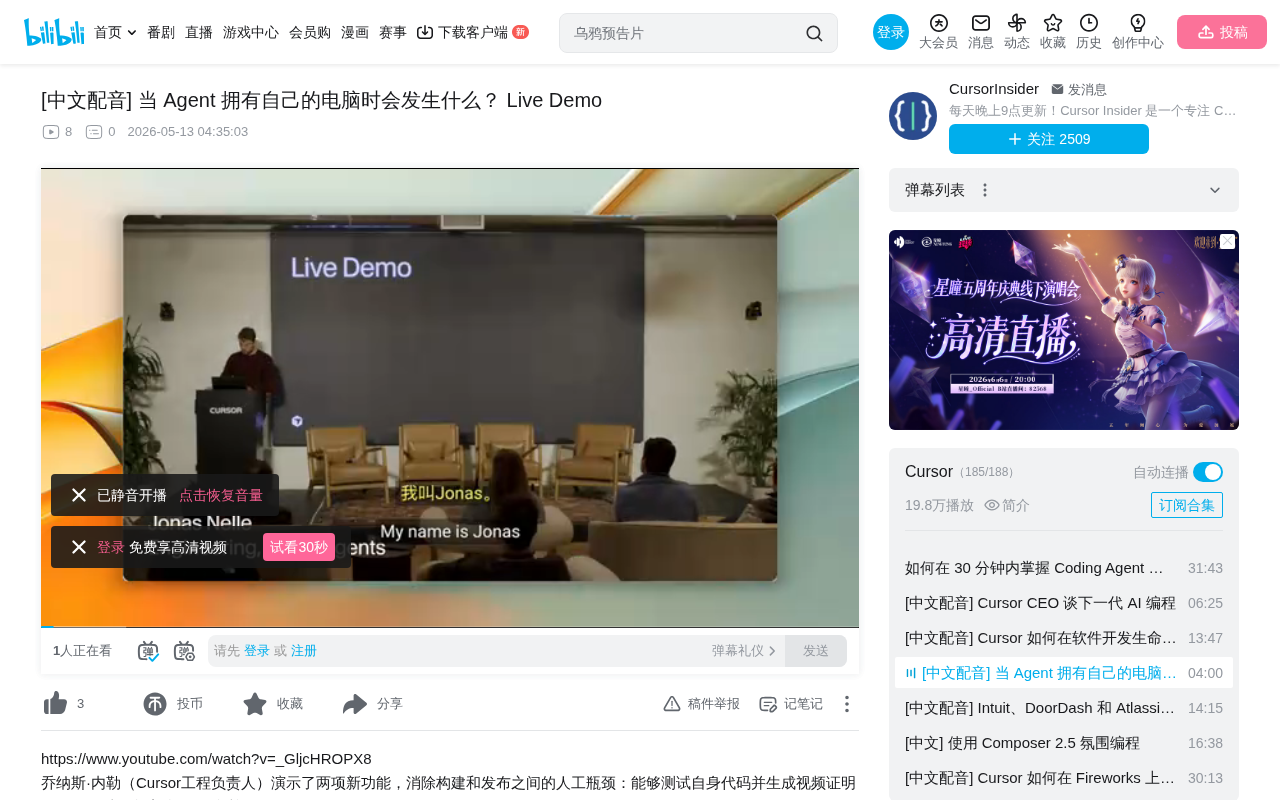
Cursor Cloud Agent Demo: Eliminating Bottlenecks Across the Entire Software Development Lifecycle
Deep analysis of Cursor's Cloud Agent demo showing how cloud VMs, automated test artifacts, and a full-chain control plane systematically eliminate human bottlenecks across the software development lifecycle.