Deep Dive into CowAgent: The Open-Source AI Assistant Framework with 44K GitHub Stars

CowAgent is a lightweight, practical open-source AI Agent framework supporting multi-platform and multi-model integration.
CowAgent (formerly chatgpt-on-wechat) is an open-source AI Agent project with 44K GitHub Stars, featuring proactive thinking, task planning, autonomous skill creation, and long-term memory capabilities. It supports integration with 7 major platforms including WeChat, Feishu, and DingTalk, and is compatible with mainstream LLMs like DeepSeek, GPT, and Claude, helping users quickly build personal AI assistants or enterprise digital employees through its lightweight architecture.
Project Overview
CowAgent (formerly chatgpt-on-wechat) is a highly popular open-source AI Agent project on GitHub, having earned over 44K Stars and 10K+ Forks, making it one of the most popular large language model application projects in China. Positioned as an LLM-powered "Super AI Assistant," it goes far beyond a simple chatbot—it's an intelligent agent system capable of proactive thinking, task planning, and skill creation.
An AI Agent refers to an AI system that can autonomously perceive its environment, formulate plans, and take actions to achieve goals. Unlike traditional chatbots that only engage in single or multi-turn conversations, Agents possess a complete closed-loop capability of "perception → planning → action → feedback." Since 2023, as reasoning capabilities of large language models like GPT-4 have made leapfrog improvements, AI Agents have become one of the most important technical paradigms for LLM application deployment. The explosion of projects like AutoGPT and BabyAGI marked the rise of this direction, while CowAgent represents a more engineering-practical approach within this wave.
The project is developed in Python with a lightweight and flexible architecture. Compared to similar AI Agent solutions like OpenClawAd, it's more accessible and easy to use—suitable for individual developers looking to quickly build AI assistants, as well as enterprises building digital employees.
Core Capabilities Analysis
Proactive Thinking and Task Planning
CowAgent's most notable highlight is that it doesn't passively wait for user commands—it possesses proactive thinking and task planning capabilities. When a user presents a complex request, the Agent autonomously decomposes the task into multiple sub-steps, executes them in logical order, and ultimately completes the entire task chain. This capability elevates it from a "chat tool" to a true "AI assistant."
Behind this task planning capability lies the large language model's Chain-of-Thought (CoT) reasoning and the ReAct (Reasoning + Acting) framework. CoT enables the model to reason step-by-step like a human, while the ReAct framework alternates between reasoning processes and actual tool calls—the model first thinks about what to do next, executes the corresponding action, then continues reasoning based on the execution results. Task Decomposition is a critical component: the system breaks down the user's high-level goal into executable atomic tasks, forming a Directed Acyclic Graph (DAG) structure task chain where each sub-task's output serves as input for the next, ultimately converging into a complete solution. This mechanism enables the Agent to handle complex tasks far beyond the scope of a single conversation.
Skill Creation and Execution (Skills)
The project introduces a Skills mechanism that allows the Agent to autonomously create and execute skills. This is a cutting-edge design philosophy—the AI can not only use predefined tools but also dynamically generate new capability modules as needed. This self-evolving characteristic greatly expands the system's application boundaries.
From a technical perspective, the core of the Skills mechanism is the combination of the large model's code generation capability with a dynamic execution environment. When the Agent encounters a problem that existing tools cannot solve, it uses the large model to generate an executable piece of code (typically a Python function), runs it in a sandbox environment after security verification, and returns the result to the reasoning chain. More critically, successfully created skills are persisted in storage, forming a reusable skill library that can be directly called next time a similar problem arises without regeneration. This concept shares similarities with NVIDIA's research team's Voyager project (enabling AI to autonomously learn and accumulate skills in Minecraft) and AutoGPT's plugin mechanism, but CowAgent has implemented it in a more practical instant messaging context.
System and External Resource Access
CowAgent can access the operating system and external resources, giving it real execution power. It can manipulate the file system, call external APIs, access network resources, and more—translating AI's intelligent decisions into actual operational results.
This capability is known as Tool Use / Function Calling in the Agent technology stack. OpenAI pioneered Function Calling in 2023, allowing large models to structurally invoke external functions during conversations, which became the critical bridge for Agents to connect with the real world. CowAgent further extends this foundation by supporting not only standard API calls but also direct interaction at the operating system level—such as reading/writing local files, executing system commands, and scraping web content. This deep system integration capability evolves the Agent from "can only talk" to "can talk and act," truly possessing the execution power of a digital employee.
Long-term Memory and Knowledge Base
Through long-term memory and knowledge base mechanisms, CowAgent can continuously accumulate and leverage historical interaction information. As usage time increases, it becomes increasingly "attuned to you," providing more personalized and precise services.
Large language models themselves are limited by Context Window length—even the most advanced models can only process a finite amount of text in a single conversation. The long-term memory mechanism breaks through this bottleneck using Vector Database and RAG (Retrieval-Augmented Generation) technology. Specifically, the system converts historical conversations, user preferences, knowledge documents, and other information into high-dimensional vectors through Embedding models, storing them in vector databases like FAISS or Chroma. When a user initiates a new conversation, the system retrieves the most relevant historical information based on semantic similarity and injects it into the current conversation's context, achieving the effect of "remembering" the user. The knowledge base feature allows users to upload private data such as enterprise documents and product manuals, enabling the Agent to provide precise Q&A based on this exclusive knowledge—particularly crucial in enterprise customer service and internal knowledge management scenarios.
Multi-Platform Integration and Multi-Model Support
Coverage of Major Instant Messaging Platforms
CowAgent excels in platform compatibility, with supported channels covering mainstream instant messaging and office platforms in China:
- Personal Social: WeChat, QQ
- Enterprise Office: Feishu (Lark), DingTalk, WeCom (Enterprise WeChat)
- Public Platforms: WeChat Official Accounts, Web
This omni-channel coverage ensures that both individual and enterprise users can seamlessly use the AI assistant on their familiar platforms. From a technical implementation perspective, this relies on the project's carefully designed Channel Abstraction Layer—the system encapsulates different platforms' message protocols into standardized interfaces, so the upper-layer Agent logic doesn't need to care about which platform a message originates from. This design pattern means adding support for a new platform only requires implementing the corresponding Channel adapter without modifying core business logic, greatly reducing the complexity of multi-platform maintenance.
Support for GPT, DeepSeek, and Other Major LLMs
In terms of large model support, CowAgent offers an extremely rich selection:
- International Models: OpenAI (GPT series), Claude, Gemini
- Chinese Models: DeepSeekAd, Qwen, GLM (Zhipu AI), MiniMax
- Aggregation Platforms: LinkAI
Users can flexibly switch between underlying models based on their needs, budget, and use cases—this "model-agnostic" architectural design is highly practical.
Model-Agnostic Architecture is an important design principle in current AI application development. The large model space is in a period of rapid iteration with new models emerging constantly—DeepSeek-V3 achieves near GPT-4 performance at extremely low cost, Claude 3.5 excels in code and long-text processing, and Gemini leads in multimodal understanding. If an application is deeply bound to a specific model, it faces the risk of Vendor Lock-in. CowAgent defines a unified model calling interface (similar to LangChain's LLM abstraction layer), turning model selection into a configuration item rather than a code change—users only need to modify a config file to freely switch between different models. This not only reduces migration costs but also allows users to select the most suitable model for different task types—for example, using DeepSeek for daily conversations to control costs while using GPT-4o for complex reasoning tasks to ensure quality.
Multimodal Processing Capabilities
The system supports text, voice, image, and file multimodal processing, no longer limited to pure text interaction, capable of handling more complex and diverse real-world scenarios.
Multimodal capabilities rely on underlying LLM multimodal support (such as GPT-4o and Gemini natively supporting image-text understanding) and system-level media processing pipelines. For example, voice messages are first transcribed to text through an ASR (Automatic Speech Recognition) engine, processed by the Agent, then synthesized into voice replies through a TTS (Text-to-Speech) engine; images are understood and analyzed through Vision Language Models (VLM). This multimodal capability is immensely valuable in practical scenarios—users can directly send a product image to ask questions, or interact with the Agent through voice messages, making the interaction experience more natural and fluid.
Typical Use Cases
Personal AI Assistant
For individual users, CowAgent can be quickly deployed as a personal AI assistant to handle daily information queries, content creation, file processing, and other tasks. With platform integration via WeChat and others, the barrier to entry is extremely low—configuration can be completed in minutes.
Enterprise Digital Employee
In enterprise scenarios, CowAgent can serve as a digital employee handling customer service, internal knowledge Q&A, process automation, and more. Through integration with office platforms like WeCom, Feishu, and DingTalk, it seamlessly fits into existing enterprise workflows, reducing labor costs.
"Digital Employee" is a hot concept in enterprise digital transformation in recent years, with the core idea of using AI Agents to replace or assist humans in completing repetitive, standardized work tasks. Compared to traditional RPA (Robotic Process Automation), LLM-based digital employees possess natural language understanding capabilities, able to handle unstructured communication scenarios (such as customer inquiries and internal Q&A), with broader applicability. According to Gartner's predictions, by 2026 more than 20% of enterprises will deploy some form of AI Agent to handle routine business processes. CowAgent's deep integration with enterprise office platforms lowers the technical barrier for building digital employees, enabling small and medium-sized businesses to enjoy AI-driven efficiency improvements at relatively low cost.
Technical Positioning and Competitive Advantages
The project explicitly positions itself as "lighter and more convenient" than OpenClaw, reflecting an important trend in the current AI Agent landscape: practicality takes priority over complexity. In many real-world scenarios, users don't need an overly complex system—they need a solution that can be quickly deployed, easily maintained, and reliably stable.
OpenClaw (a general reference to open-source AI Agent projects like OpenDevin / OpenHands) represents another route in the Agent space—pursuing the extreme of generality and autonomy, attempting to build all-capable Agents that can independently complete complex tasks like software development. These projects typically have complex architectures and high deployment barriers, making them more suitable for research exploration than production environments. CowAgent chose a fundamentally different path: focusing on instant messaging scenarios, achieving functional extension through a plugin-based architecture, and lowering the usage barrier through configuration-driven approaches. This "good enough" engineering philosophy precisely matches most users' real needs—they don't need a super AI that can autonomously write code; they need a practical assistant that can help answer questions, process files, and manage schedules within WeChat.
The community recognition of 44K Stars validates the success of this strategy. An active open-source community provides continuous iteration momentum and a rich plugin ecosystem. The power of the open-source community cannot be underestimated—community contributors continuously develop new plugins covering everything from Midjourney image generation and web searching to database queries, forming a thriving ecosystem. This "lean core + rich plugins" model mirrors the success path of VS Code.
Summary
CowAgent represents an important direction in current AI Agent applications: delivering the powerful capabilities of large models to end users through lightweight architecture with the lowest possible barrier to entry. It doesn't pursue extreme technical complexity but instead focuses on solving the core question of "how to make AI truly useful." For developers looking to quickly build a WeChat AI chatbot or enterprise intelligent assistant, CowAgent is one of the most noteworthy open-source AI Agent frameworks available today.
Key Takeaways
- CowAgent is a popular open-source AI Agent project with 44K GitHub Stars, featuring proactive thinking, task planning, and autonomous skill creation capabilities
- Supports integration with 7 major platforms including WeChat, Feishu, DingTalk, WeCom, and QQ, covering both personal social and enterprise office scenarios
- Compatible with 8 major LLMs including DeepSeek, OpenAI, Claude, and Gemini, supporting multimodal processing of text, voice, images, and files
- Achieves continuous growth through long-term memory and knowledge base mechanisms, positioned as lighter and more convenient than OpenClaw
- Enables rapid deployment of personal AI assistants and enterprise digital employees, lowering the barrier for LLM application deployment
Related articles
 Product Reviews
The Programmer's Desk Setup Guide: Building a Workspace That Feels Like Home
Discover how programmers build productive, comfortable workspaces. From multi-monitor setups to ergonomic design, explore the desk philosophy that drives focus and flow.
 Product Reviews
Qoder vs Cursor Real-World Comparison: Which $20/Month AI IDE Is Better?
Hands-on comparison of Qoder vs Cursor AI IDEs: Agent autonomy, human interaction count, and architecture decisions. Qoder needed only 2 interactions vs Cursor's 8.
 Product Reviews
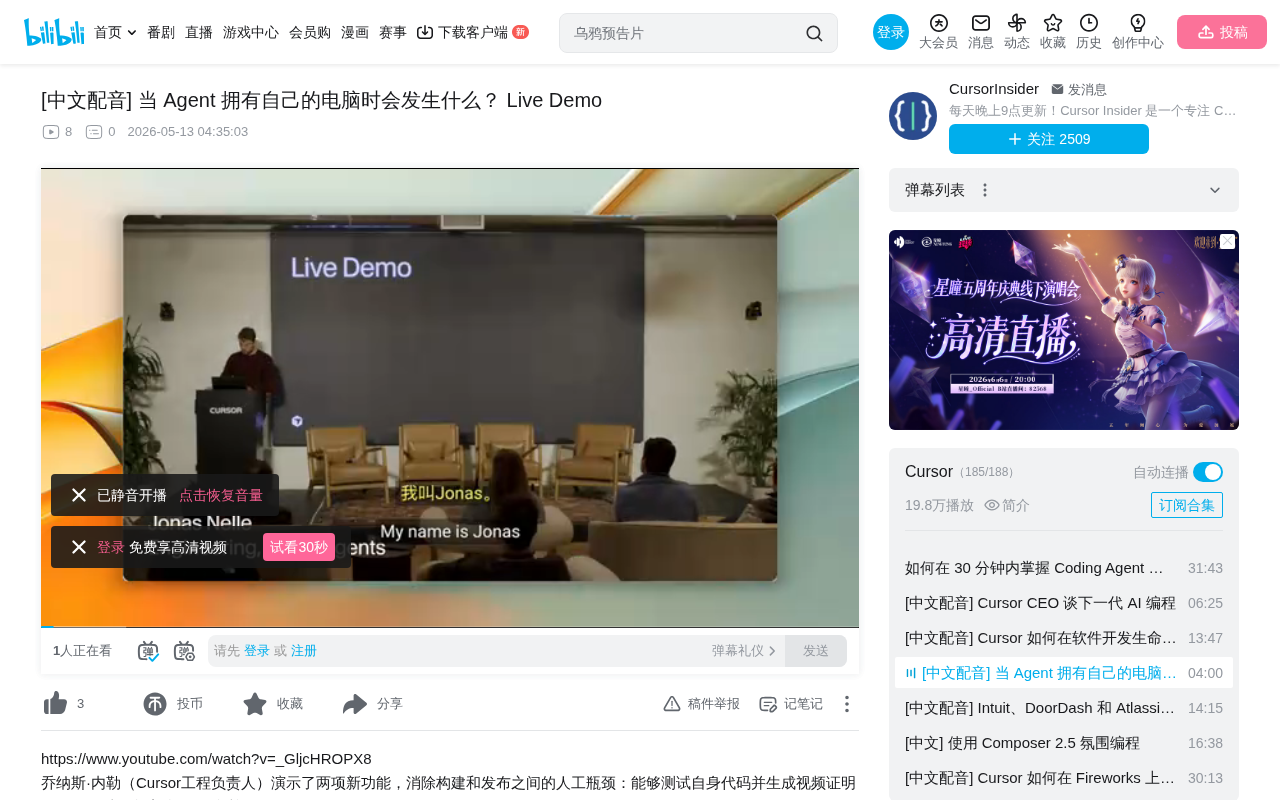
Cursor Cloud Agent Demo: Eliminating Bottlenecks Across the Entire Software Development Lifecycle
Deep analysis of Cursor's Cloud Agent demo showing how cloud VMs, automated test artifacts, and a full-chain control plane systematically eliminate human bottlenecks across the software development lifecycle.