Deep Dive into Lingo.dev v1: How an AI-Powered Localization Engineering Platform Is Changing Multilingual Development

Lingo.dev is a platform that treats localization as engineering, letting teams build configurable stateful translation engines.
Lingo.dev is a localization engineering platform for development teams, centered around a stateful translation API that maintains terminology consistency and continuously optimizes translation quality. It supports glossaries, brand voice rules, per-locale model chains, and AI quality scoring, with four integration methods — API, CLI, CI/CD, and MCP — that seamlessly embed localization into development workflows and DevOps practices, solving the speed, consistency, and integration pain points of traditional translation processes.
What Is Lingo.dev: Redefining Localization Engineering
Lingo.dev is a localization engineering platform built for development teams. It enables teams to create custom localization engines — stateful translation APIs configurable with glossaries, brand voice rules, per-locale model chains, and AI quality scoring systems.
Unlike traditional Translation Management Systems (TMS), Lingo.dev treats localization as an engineering problem rather than a purely linguistic one, giving developers much finer-grained control.
What Is a Translation Management System (TMS)? A Translation Management System is the core infrastructure of the traditional localization industry. Representative products include SDL Trados, memoQ, Phrase (formerly Memsource), and others. Key TMS capabilities include translation memory (storing previously translated segments for reuse), terminology management, and workflow orchestration. However, traditional TMS platforms were designed in the era of human translation. Their architecture centers around "projects" and "files," which creates a fundamental impedance mismatch with the continuous delivery model of modern software development — developers must manually export files, submit translation tasks, wait for delivery, and manually import results. This process introduces significant engineering friction with every product iteration. Next-generation platforms like Lingo.dev address precisely this pain point by rebuilding the localization workflow in an API-first, developer-friendly manner.
Lingo.dev Core Features Explained
Stateful Translation API: More Than Just Calling an LLM
At the heart of Lingo.dev is its stateful translation API. "Stateful" means the system can remember context, maintain terminology consistency, and continuously optimize output quality based on historical translation data. This is fundamentally different from simply calling a large language model for translation — it builds a translation engine that continuously learns and improves.
The Essential Difference Between Stateful and Stateless: Stateful vs. Stateless is a core concept in distributed systems design. A stateless service treats each request independently, retaining no historical information; a stateful service maintains context and memory across requests. In the translation domain, this distinction is especially critical — traditional LLM API calls are inherently stateless, starting each translation request from scratch with no awareness of accumulated brand terminology, historical translation decisions, or contextual nuances. A stateful translation engine, by persisting Translation Memory (TM), terminology databases, and quality feedback, enables the system to continuously "learn" a specific product's linguistic style over time, far surpassing one-off LLM calls in both consistency and quality.
Configurable Translation Pipelines
The platform supports multi-dimensional configuration capabilities:
- Glossaries: Ensure consistent translation of specialized terminology across all languages
- Brand Voice Rules: Make translated content match your brand's tone, rather than producing mechanical literal translations
- Per-locale Model Chains: Select the optimal AI model combination for each target language
- AI Quality Scoring: Automatically assess translation quality and flag content that needs human review
Multiple Integration Options Covering the Entire Development Workflow
Lingo.dev offers flexible integration options that cover every stage of the developer workflow:
- API: Direct REST API calls, suitable for custom integration scenarios
- CLI: Command-line tools for local development and scripted operations
- CI/CD: Integration into continuous integration/continuous deployment pipelines for translation automation
- MCP: Support for Model Context Protocol, enabling collaboration with AI assistants and IDE toolchains like Cursor and Claude
The Technical Significance of MCP: Model Context Protocol (MCP) is a standardized protocol proposed and open-sourced by Anthropic in late 2024, designed to solve the fragmented integration between AI assistants and external tools and data sources. Before MCP, every integration between an AI tool and an external service required custom development, resulting in massive amounts of redundant "glue code." MCP defines a unified client-server communication specification that enables AI development environments like Cursor and Claude Desktop to invoke any MCP-compatible external service in a standardized way. For localization scenarios, this means that while writing code, an AI assistant can directly call Lingo.dev's translation engine via MCP, achieving "code as you localize" — extracting, translating, and quality-checking internationalization strings right within the IDE, without switching tools or manually managing translation files.
Why Localization Needs an Engineering Approach
Traditional localization workflows typically rely on translation management platforms and human translators, with several obvious pain points:
- Speed Bottleneck: Product iterations move fast, but translations can't keep up with the release cadence
- Consistency Issues: Different translators may translate the same term differently
- Integration Difficulties: The translation process is disconnected from the development process, requiring extensive manual work
- Uncontrollable Quality: Lack of automated quality detection mechanisms
Lingo.dev solves these problems through engineering approaches — configuring translation as programmable, version-controllable, automatable engineering components, making localization a natural step in the CI/CD pipeline.
The Convergence of Localization Engineering and DevOps: Integrating localization into CI/CD pipelines is the core practice of the "Localization Engineering" trend. In mature internationalization engineering systems, translation files (in formats like .json, .po, .xliff) are treated as code assets managed under version control systems (Git). Translation tasks are automatically triggered when code is merged, and translation quality checks serve as a gate in the pipeline. This model borrows from the DevOps philosophy of "Everything as Code," embedding localization work — which previously existed outside the development process — as an organic component of the software delivery pipeline. The widespread adoption of modern deployment platforms like Netlify and Vercel, along with the maturity of CI tools like GitHub Actions, has provided fertile infrastructure for this kind of integration. Lingo.dev's CLI and CI/CD integration capabilities are designed precisely to plug seamlessly into this ecosystem.
Use Cases for Lingo.dev
Lingo.dev is particularly well-suited for the following teams:
- SaaS product teams that need to support multiple languages
- Enterprises with strict requirements for translation quality and terminology consistency
- Engineering teams looking to automate localization workflows and integrate them into their DevOps practices
- Mobile app developers who need to rapidly iterate on multilingual content
Market Positioning: The "Platform as Engine" Differentiation
In an era where AI translation tools are becoming increasingly common, Lingo.dev has chosen a differentiated position — it's not simply an "AI translation tool," but rather a platform that lets teams build and manage their own translation engines. This "platform as engine" approach gives users greater flexibility and control.
With MCP protocol support, Lingo.dev can also seamlessly collaborate with AI development tools like Cursor and Claude, allowing developers to handle internationalization issues directly during the coding process, further reducing the engineering friction of localization.
For technical teams looking for a modern localization solution, Lingo.dev v1 is well worth evaluating.
Key Takeaways
- Lingo.dev is a localization engineering platform that lets teams create configurable, stateful translation APIs
- It supports multi-dimensional configuration including glossaries, brand voice, per-locale model chains, and AI quality scoring
- It offers four integration methods — API, CLI, CI/CD, and MCP — covering the complete development workflow
- It treats localization as an engineering problem rather than a purely linguistic one, enabling automated and programmable translation workflows
- It supports the MCP protocol for seamless collaboration with modern AI development toolchains
Related articles
 Product Reviews
The Programmer's Desk Setup Guide: Building a Workspace That Feels Like Home
Discover how programmers build productive, comfortable workspaces. From multi-monitor setups to ergonomic design, explore the desk philosophy that drives focus and flow.
 Product Reviews
Qoder vs Cursor Real-World Comparison: Which $20/Month AI IDE Is Better?
Hands-on comparison of Qoder vs Cursor AI IDEs: Agent autonomy, human interaction count, and architecture decisions. Qoder needed only 2 interactions vs Cursor's 8.
 Product Reviews
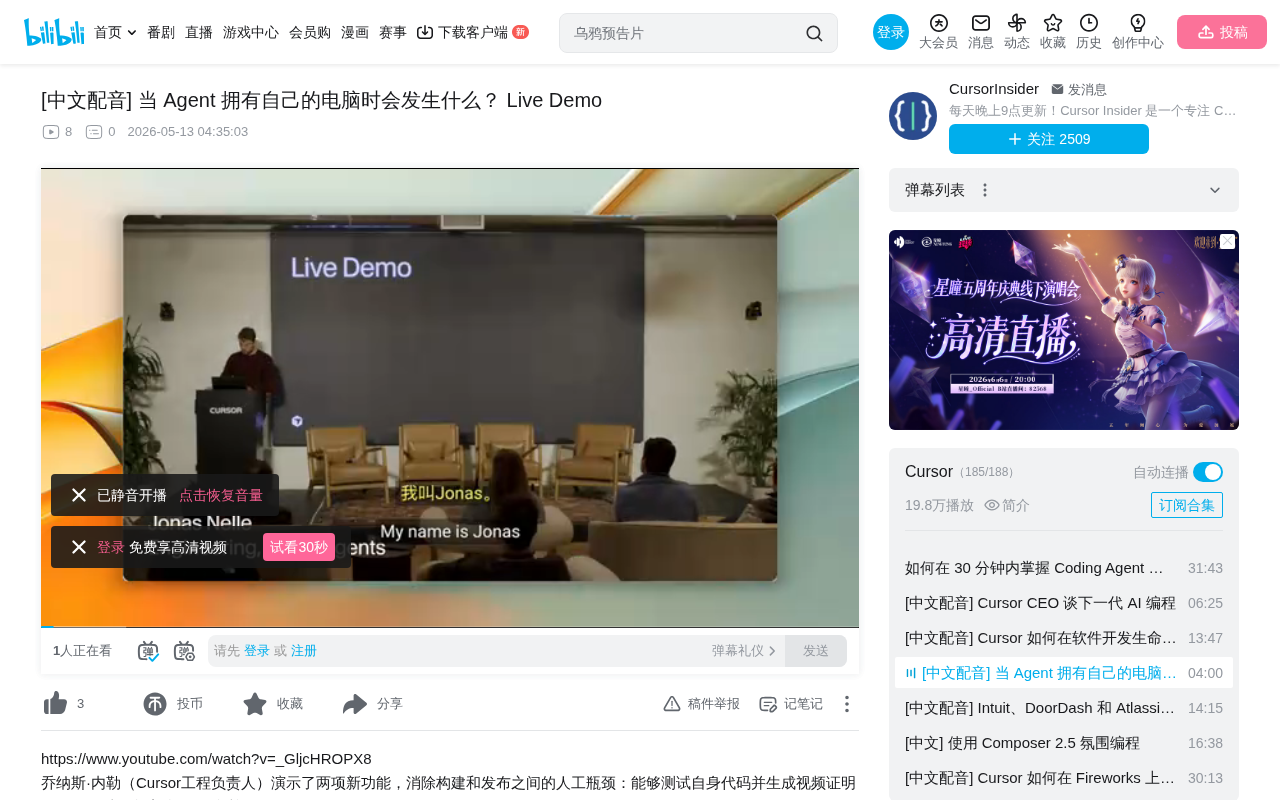
Cursor Cloud Agent Demo: Eliminating Bottlenecks Across the Entire Software Development Lifecycle
Deep analysis of Cursor's Cloud Agent demo showing how cloud VMs, automated test artifacts, and a full-chain control plane systematically eliminate human bottlenecks across the software development lifecycle.