Deep Dive into the Hermes-Agent Open-Source Framework: The AI Agent with 130K Stars on GitHub

NousResearch's Hermes-Agent framework earns 130K Stars with progressive architecture and model-framework co-design.
NousResearch open-sourced the Hermes-Agent AI framework, rapidly earning over 133K GitHub Stars through its "grows with you" progressive architecture and deep co-optimization with Hermes series models. Supporting modular capabilities including tool use, memory management, planning & reasoning, and multi-Agent collaboration, the project marks the team's strategic leap from model provider to complete Agent framework provider, reflecting the broader industry trend toward vertically optimized AI Agent development.
Hermes-Agent Project Overview: The Numbers Behind 130K Stars
NousResearch recently open-sourced the Hermes-Agent project on GitHub, with the tagline "The agent that grows with you." Built on Python, the project quickly amassed over 133,000 Stars and more than 20,000 Forks after launch, instantly becoming one of the most high-profile open-source projects in the AI Agent space.
This level of traction is extremely rare on GitHub — for reference, TensorFlow has around 187K Stars and React has about 230K. The fact that Hermes-Agent reached this tier in such a short timeframe speaks volumes about how urgently the developer community needs a scalable, growable AI Agent framework. It's worth noting that while GitHub Stars don't directly equate to actual usage, they remain one of the core metrics for gauging developer community attention and project influence. A project's Star growth rate often reflects how widespread and pressing the need it addresses truly is — 130K-level Stars means the project has broken through the AI vertical bubble and entered the broader software engineering community's radar.
NousResearch Team Background and Technical Expertise
NousResearch is a highly respected team in the open-source AI community. They're best known for the Hermes series of fine-tuned models, which excel at Function Calling, structured output, and instruction following. These models are widely used as the underlying reasoning engine for numerous AI Agent systems and have consistently ranked among the top on HuggingFace's open-source model leaderboards.
Function Calling is the critical capability that enables AI Agents to interact with the external world. Simply put, it allows large language models to identify user intent during conversations and automatically generate function call requests in specific formats — for example, querying weather, searching databases, or sending emails. This capability was first introduced by OpenAI in mid-2023 for the GPT series API and has since become infrastructure-level functionality for Agent systems. The Hermes series models are so popular in the open-source community precisely because they achieve near-closed-source-model levels of accuracy and format consistency in function calling.
HuggingFace is the world's largest open-source machine learning model hosting platform, similar to GitHub but for AI models. Developers can publish, download, and evaluate various AI models on it. HuggingFace's Open LLM Leaderboard is the authoritative reference for measuring open-source model capabilities, and Hermes series models have consistently ranked near the top across multiple dimensions, particularly excelling on Agent-related evaluation metrics.
A fine-tuned model refers to a pre-trained large model that undergoes secondary training using domain-specific or task-specific data to improve performance in target scenarios. NousResearch's core competitive advantage lies in their deep understanding of Agent scenarios and their accumulation of high-quality fine-tuning data — they don't train models from scratch but instead craft model variants specifically adapted for Agent workflows on top of open-source base models like LLaMA and Mistral through carefully designed fine-tuning strategies.
The release of Hermes-Agent marks NousResearch's strategic leap from "model provider" to "complete Agent framework provider" — no longer just providing the brain, but now building the entire body.
The Core Design Philosophy of "Growing With You"
Progressive Complexity: From Beginner to Production-Grade
Hermes-Agent's most fundamental design philosophy is its progressive architecture. Beginners can use it as a simple conversational assistant; as their needs evolve, they can gradually integrate advanced capabilities like tool calling, multi-step reasoning, memory systems, and multi-Agent collaboration. This "simple to complex" growth path lowers the entry barrier for AI Agent development to a remarkably accessible level.
This progressive design philosophy is uncommon in software engineering. Most Agent frameworks adopt a "full-feature exposure" design approach — presenting all capabilities to developers upfront, which overwhelms newcomers facing complex configuration options and abstraction layers. LangChain has been heavily criticized by the community for over-abstraction and excessive concepts, with many developers reporting that "writing a simple Agent requires understanding over a dozen classes and interfaces." Hermes-Agent's progressive path is essentially a layered abstraction strategy: the underlying layer maintains full capability exposure, while upper layers provide entry points at different complexity levels, allowing developers to choose an appropriate starting tier based on their skill level and project requirements. This design has successful precedents in game engine development (such as Unity's component system) and web framework development (such as Next.js's convention-based routing).
Modular Design: Compose Capabilities On Demand
As a Python-native framework, Hermes-Agent employs a highly modular architecture. Developers can freely combine the following capability modules based on their specific scenarios:
-
Tool Use: Connect to external APIs, databases, search engines, and other services. Tool calling is the core capability that distinguishes Agents from ordinary Chatbots — it enables AI to go beyond "generating text" and actually "execute actions." Technically, tool calling typically follows a standard flow: model receives user request → determines whether a tool call is needed → generates structured tool call parameters (usually in JSON format) → framework executes the actual API call → returns results to the model → model generates final response based on results. This loop can iterate multiple times, forming complex multi-step tool chains. OpenAI's Function Calling specification and Anthropic's Tool Use protocol are currently the two most mainstream tool calling standards in the industry, and Hermes models have been optimized for both formats.
-
Memory: Supports short-term conversational memory and long-term knowledge accumulation. Memory systems are the foundation for Agents to achieve "continuous learning" and "personalized service." Short-term memory typically refers to context window management for the current conversation — since large models have limited context length (even models supporting 128K tokens face attention dilution issues when processing long conversations), the framework needs to intelligently decide which information to retain in context and which can be compressed or discarded. Long-term memory involves a more complex tech stack, usually implemented through RAG (Retrieval-Augmented Generation) architecture: vectorizing historical conversations, user preferences, and learned knowledge, storing them in vector databases (such as Pinecone, Milvus, ChromaDB), and retrieving relevant memory fragments through semantic search when needed to inject into the current context. This enables Agents to "remember" information across sessions, achieving truly personalized interactions.
-
Planning & Reasoning: Enables multi-step task decomposition and automated execution. Planning capability allows Agents to handle complex tasks — when a user makes a request that requires multiple steps to complete (e.g., "Research competitors and generate an analysis report"), the Agent needs to automatically decompose it into a sequence of subtasks, execute them sequentially, and dynamically adjust the plan based on intermediate results. The technical foundation for this capability comes from the ReAct (Reasoning + Acting) paradigm and Chain-of-Thought reasoning — the former, proposed by Google's research team in 2022, interleaves reasoning processes with action execution; the latter improves complex reasoning accuracy by having models "think step by step."
-
Multi-Agent Collaboration: Supports task allocation and coordination among multiple intelligent agents. Multi-Agent systems represent one of the most cutting-edge research directions in the AI Agent field. The core idea is to assign complex tasks to multiple Agents with different "roles" or "specializations" working collaboratively — for example, one responsible for information retrieval, one for code writing, and one for quality review. This architecture draws from division-of-labor collaboration patterns in human organizations and can theoretically break through the capability ceiling of a single Agent. Technically, multi-Agent collaboration needs to address core challenges including task allocation, information sharing, conflict resolution, and result aggregation — the industry has yet to establish a unified standard protocol.
Native Deep Integration with Hermes Models
Compared to general-purpose frameworks like LangChain and CrewAI, Hermes-Agent's greatest differentiator is its native co-design with the Hermes series models. The Hermes models themselves are specifically optimized for Agent scenarios, including more precise function calling formats, more stable JSON output, and stronger multi-turn reasoning capabilities.
The importance of structured JSON output in Agent systems is often underestimated. Agent frameworks need to parse model outputs to determine next actions — if the model's JSON format is unstable (e.g., extra commas, missing quotes, inconsistent field naming), the entire workflow breaks down. This is one of the most common pain points developers encounter when building Agents with open-source models. The industry has developed multiple solutions: constrained decoding libraries like Outlines and Guidance can force models to output valid JSON during inference; OpenAI provides Structured Outputs functionality at the API level. The Hermes model's advantage is that it was trained with extensive structured output data during the fine-tuning phase, making the model "naturally" inclined to generate correctly formatted JSON without additional constrained decoding overhead.
Standardization of function calling formats is another critical technical point. Multiple function calling formats currently exist in the industry: OpenAI uses function_call and tool_calls fields, Anthropic uses tool_use content blocks, and the open-source community has various variants including ChatML and Hermes format. When a framework and model use different format conventions, extensive format conversion and error handling logic is needed in between. Hermes-Agent and Hermes models share the same format specification, fundamentally eliminating this layer of friction.
With both the framework and model coming from the same team, it theoretically delivers higher task completion rates and lower error probabilities. This approach mirrors Apple's "hardware-software integration" product philosophy — when hardware (model) and software (framework) are co-designed by the same team, the overall consistency and reliability of the experience significantly surpasses "patchwork" solutions. In the AI space, precedents for this kind of co-design include Google's TPU + JAX/TensorFlow combination and NVIDIA's GPU + CUDA + TensorRT tech stack.
Why the Community Response Has Been So Intense
The AI Agent Space Is in an Explosive Growth Phase
From 2024 to 2025, AI Agents have transitioned from proof-of-concept to real-world deployment. From OpenAI's GPT Actions to Anthropic's Computer Use, from AutoGPT to Devin, the entire industry is betting that Agents will become AI's next mainstream interaction paradigm. At this juncture, a high-quality open-source Agent framework perfectly addresses the community's most critical pain point.
Understanding the AI Agent explosion requires first understanding the fundamental difference between Agents and traditional Chatbots. Traditional Chatbots (including early ChatGPT usage patterns) are essentially "Q&A systems" — users ask questions, models answer, interaction ends. In contrast, an AI Agent is an intelligent system capable of autonomously perceiving its environment, formulating plans, executing actions, and adjusting strategies based on feedback. It doesn't just "talk" — it "does." The significance of this paradigm shift is comparable to the leap from static web pages to web applications.
OpenAI's GPT Actions (the evolved form of ChatGPT Plugins) allows GPT models to call external services via APIs, representing one of the earliest attempts to productize Agent capabilities. Anthropic's Computer Use is even more radical — it enables the Claude model to directly control a computer desktop, including moving the mouse, clicking buttons, and typing text, achieving physical-level interaction between Agents and the digital world. AutoGPT was the viral open-source project from early 2023 that first demonstrated to the public the possibility of "AI autonomously completing complex tasks," though actual performance was still quite rough at the time. Devin, launched by Cognition Labs in 2024, is an "AI software engineer" capable of independently completing the full development workflow from requirement understanding to code writing, testing, and deployment.
These milestone events collectively paint a clear evolutionary trajectory: AI is evolving from a "conversational tool" into an "acting agent." To support this evolution, developers need not just more powerful models, but mature, reliable Agent development frameworks — which is precisely the market gap Hermes-Agent fills.
NousResearch's Open-Source Credibility
NousResearch has built solid reputation in the open-source community. Developers have high expectations for their technical taste and engineering quality, and this brand trust directly translated into massive attention during the project's initial launch.
In the open-source AI community, building credibility is a long-term process. NousResearch's reputation rests on several key factors: first, every model they release comes with detailed technical reports and evaluation data, demonstrating rigorous engineering discipline; second, they actively participate in community discussions and respond to user feedback quickly; third, their models' real-world performance consistently matches their claims, with no instances of "benchmark gaming but poor actual performance." This long-term accumulated trust capital creates a powerful "launch effect" when new projects are released — community members are willing to give attention and support during a project's early stage, creating a positive word-of-mouth flywheel.
Industry Trends Reflected in 130K Stars
Over 130K Stars represents top-tier status across the entire GitHub ecosystem. This number reflects not just one project's technical buzz, but the entire AI Agent ecosystem's intense desire for standardized, high-quality development frameworks.
From a more macro perspective, this phenomenon reflects the core contradiction currently facing the AI Agent development space: explosive demand versus inadequate supply. A large number of developers and companies want to build Agent applications, but existing frameworks are either too complex (like LangChain's over-abstraction), too primitive (like many lightweight wrapper libraries), or deeply tied to specific closed-source models (like OpenAI's Assistants API). The market urgently needs an Agent framework that is open-source, high-quality, AND deeply synergistic with open-source models — Hermes-Agent fills exactly this ecological niche.
Hermes-Agent vs. LangChain, AutoGPT, and Other Competitors
| Dimension | Hermes-Agent | LangChain | AutoGPT | CrewAI |
|---|---|---|---|---|
| Core Positioning | Growable Agent Framework | General LLM Orchestration Framework | Autonomous Agent | Multi-Agent Collaboration Platform |
| Model Adaptation | Deep optimization for Hermes models | Model-agnostic | Model-agnostic | Model-agnostic |
| Learning Curve | Progressive, beginner-friendly | Medium | Higher | Medium |
| Community Buzz | Extremely high (130K+ Stars) | Extremely high | High | Medium-high |
| Core Advantage | Model-framework co-design | Rich ecosystem, extensive integrations | Fully autonomous execution | Role-based multi-Agent orchestration |
Hermes-Agent's unique value lies in "model-framework co-design" — when the underlying model and the upper-layer framework are refined by the same team, the overall system's stability and efficiency achieve significant improvements.
Some additional technical background on competitors helps contextualize this comparison: LangChain is currently the most ecosystem-rich LLM application development framework, with hundreds of integration components (covering various models, vector databases, tools, etc.), but its over-abstraction and frequent API changes have been consistently controversial, with the community even coining the quip "LangChain is all you DON'T need." AutoGPT pioneered the concept of "autonomous Agents" — given a goal, the Agent automatically decomposes tasks and loops execution until completion, but in practice often falls into infinite loops or incurs excessive API costs. CrewAI focuses on multi-Agent role-playing and collaboration orchestration, suitable for scenarios requiring multiple "expert roles" working together, but its depth of optimization for single-Agent capabilities is relatively limited.
It's worth noting that "model-agnostic" is both an advantage and a disadvantage. Being model-agnostic means the framework must handle format differences, capability differences, and behavioral differences between various models, introducing additional complexity and uncertainty. Hermes-Agent's strategy of deep binding with specific models sacrifices some generality but gains higher reliability and a better out-of-the-box experience.
Future Outlook for AI Agent Frameworks
Hermes-Agent represents an important direction in AI Agent development: from general-purpose frameworks toward vertical optimization. When models and frameworks iterate in coordination, the overall system's reliability and operational efficiency can improve dramatically.
There's deep technical logic behind this trend. The core challenge AI Agents face in production environments isn't "whether it can do it" but "whether it can do it reliably." An Agent system might perform impressively in demos but suffer dramatically reduced overall success rates in production due to occasional model output format anomalies, occasional tool call parameter errors, or occasional multi-step reasoning drift. If each step has a 95% success rate, a task requiring 10 steps has an overall success rate of only about 60%. To transform Agents from "toys" into "tools," each step's reliability must be elevated from 95% to 99% or higher — and model-framework co-optimization is one of the key paths to achieving this goal.
Additionally, the future development of Agent frameworks will face several important technical directions: Observability — how to trace and debug complex multi-step Agent workflows; Safety — how to prevent Agents from executing dangerous operations or being hijacked by malicious prompts; Cost Control — how to reduce token consumption and API call counts while maintaining effectiveness; Evaluation Standardization — how to objectively measure different Agent systems' actual capabilities. Solving these problems will determine whether AI Agents can truly move from laboratories to large-scale commercial deployment.
For developers, this project is worth continued attention. Whether you're a newcomer just getting into AI Agents or a senior engineer building complex multi-Agent systems, the "growing with you" design philosophy means it has the potential to become a long-term choice in your tech stack.
Of course, the project's long-term success will depend on documentation completeness, community governance quality, and sustained iteration cadence. GitHub Stars are just the starting point — the real test is whether it can run stably in production environments and withstand battle-tested validation. An open-source project's vitality ultimately depends on an active contributor community, a clear version roadmap, and rapid response to user feedback — these "soft powers" often determine a project's long-term fate more than its initial technical architecture.
Key Takeaways
- NousResearch open-sourced the Hermes-Agent project, earning over 133K GitHub Stars and becoming a phenomenon in the AI Agent space
- The core philosophy is "growing with you," featuring progressive architecture design that supports everything from simple assistants to complex multi-Agent systems
- Deep integration with Hermes series models enables model-framework co-optimization, differentiating it from general-purpose frameworks like LangChain
- Marks NousResearch's strategic upgrade from model provider to complete Agent framework provider
- Reflects the industry trend in the AI Agent space moving from general-purpose frameworks toward vertical optimization
Related articles
 Product Reviews
The Programmer's Desk Setup Guide: Building a Workspace That Feels Like Home
Discover how programmers build productive, comfortable workspaces. From multi-monitor setups to ergonomic design, explore the desk philosophy that drives focus and flow.
 Product Reviews
Qoder vs Cursor Real-World Comparison: Which $20/Month AI IDE Is Better?
Hands-on comparison of Qoder vs Cursor AI IDEs: Agent autonomy, human interaction count, and architecture decisions. Qoder needed only 2 interactions vs Cursor's 8.
 Product Reviews
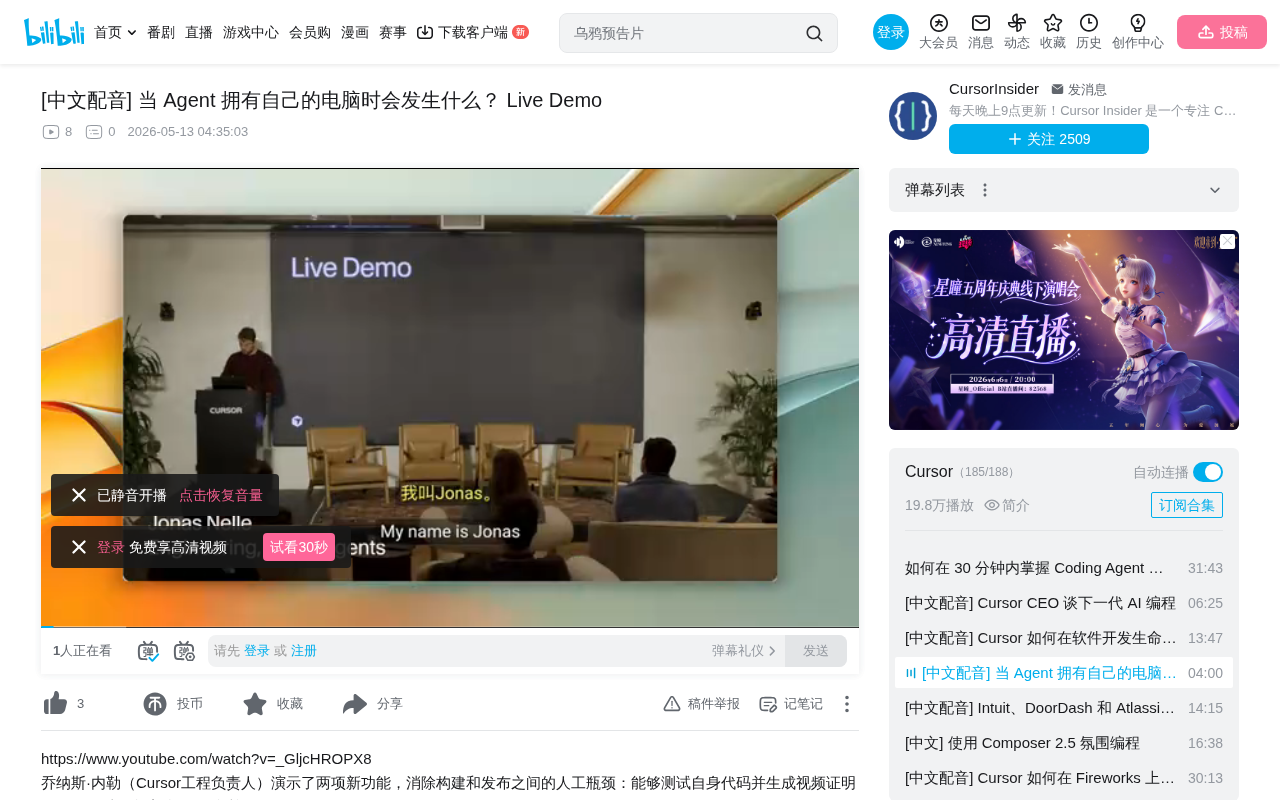
Cursor Cloud Agent Demo: Eliminating Bottlenecks Across the Entire Software Development Lifecycle
Deep analysis of Cursor's Cloud Agent demo showing how cloud VMs, automated test artifacts, and a full-chain control plane systematically eliminate human bottlenecks across the software development lifecycle.