Deep Dog 2: The Open-Source Research Agent Ranked #5 on DeepResearch Bench
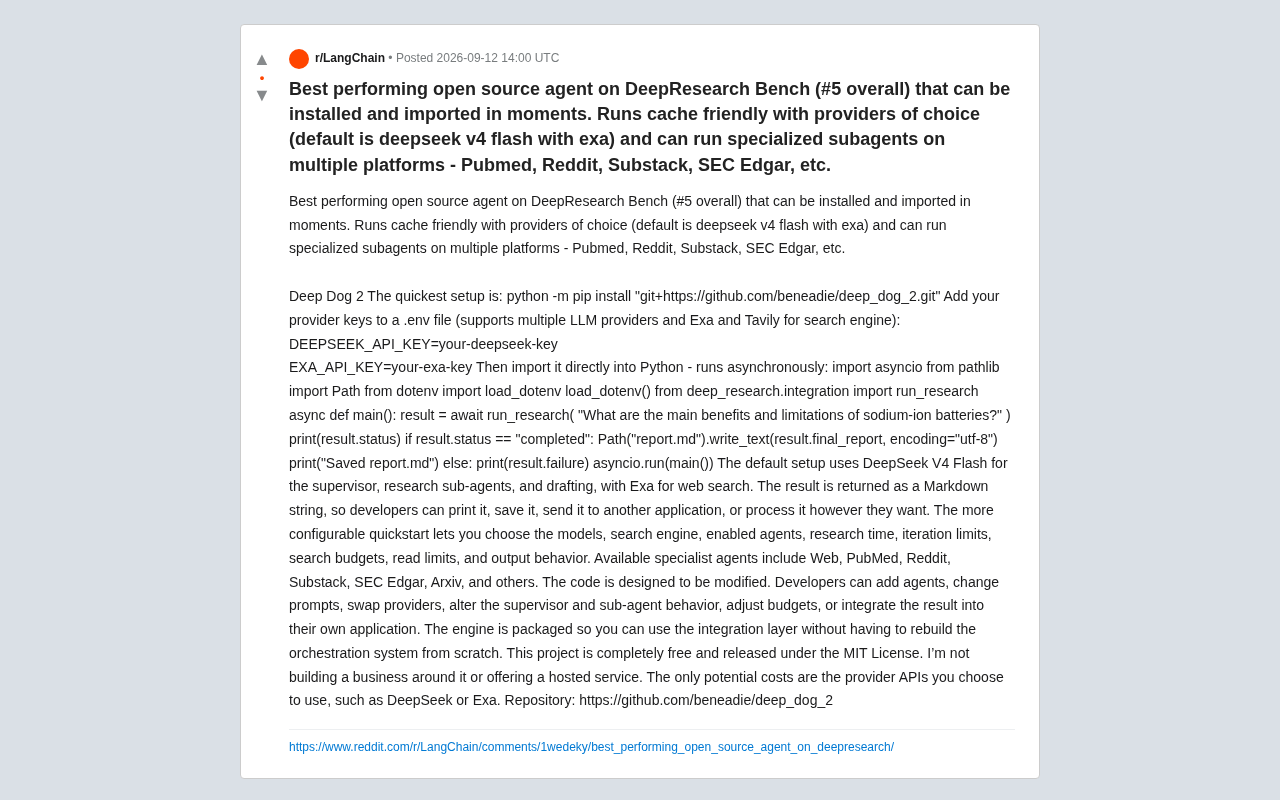
Deep Dog 2 is an open-source research agent ranked #5 on DeepResearch Bench, powered by domain-specific subagents.
Deep Dog 2 is a fully open-source (MIT licensed) deep research agent ranked #5 on DeepResearch Bench — the highest-ranked open-source solution in that evaluation. Its key strengths are a one-line pip install, built-in domain-specific subagents for PubMed, Arxiv, SEC Edgar, Reddit, and Substack, and a default stack of DeepSeek V4 Flash with Exa that balances cost and performance. The architecture is designed for customization, letting developers swap models, adjust prompts, and integrate results into their own apps with no vendor lock-in.
The open-source community has a new deep research agent worth paying attention to. A project called Deep Dog 2 has landed at #5 on the authoritative DeepResearch Bench leaderboard, making it the top-performing open-source solution in that ranking. Its core appeal lies in a frictionless installation process, cache-friendly execution, and the ability to dispatch specialized subagents across multiple professional platforms.
Up and Running in One Command
Deep Dog 2's most immediate advantage is its extremely low barrier to entry. According to the project author's post on Reddit, the fastest way to deploy it is a single pip command:
python -m pip install "git+https://github.com/beneadie/deep_dog_2.git"
From there, you just fill in your provider API keys in a .env file. The project supports multiple LLM providers and is compatible with both Exa and Tavily as search engines:
DEEPSEEK_API_KEY=your-deepseek-key
EXA_API_KEY=your-exa-key
Once configured, developers can trigger the research pipeline asynchronously straight from Python:
import asyncio
from pathlib import Path
from dotenv import load_dotenv
load_dotenv()
from deep_research.integration import run_research

async def main():
    result = await run_research(
        "What are the main benefits and limitations of sodium-ion batteries?"
    )
    print(result.status)
    if result.status == "completed":
        Path("report.md").write_text(result.final_report, encoding="utf-8")
        print("Saved report.md")
    else:
        print(result.failure)

asyncio.run(main())
Results are returned as a Markdown string, giving developers complete freedom to print, save, forward, or pipe them into their own applications — no rigid output format to work around.
Default Stack: DeepSeek V4 Flash + Exa
Deep Dog 2's default configuration strikes a deliberate balance between cost and performance. The supervisor agent, research subagents, and final drafting step all use DeepSeek V4 Flash, while web retrieval is handled by Exa. The positioning is clear — deliver usable research capability at a low API cost, while keeping execution cache-friendly to reduce overhead from repeated requests.
For users who want finer control, the project also offers a configurable quick-start interface. You can customize model selection, search engine, which agents are enabled, research duration, maximum iteration count, retrieval budget, read limits, and output behavior. This level of configurability makes it suitable for both lightweight prototyping and production scenarios with strict cost and depth requirements.
Exa is a semantic search engine service aimed at developers. Its core differentiator is using embedding vectors to index the web semantically rather than relying on traditional keyword-based inverted indexes. This makes Exa significantly more relevant for conceptual, exploratory research queries compared to the Google or Bing APIs — particularly useful for agent scenarios that require understanding intent rather than matching literal terms. Tavily, the other supported option, is another search API optimized specifically for AI agents, offering structured search results with built-in summarization. Both are available to developers on a pay-per-use basis, and Deep Dog 2 supports both, letting users switch based on cost preference or retrieval quality needs.
Platform-Specific Subagents
What sets Deep Dog 2 apart from generic search-based research tools is its suite of platform-specific expert agents. Available specialists include Web, PubMed (medical literature), Reddit (community discussions), Substack (long-form content), SEC Edgar (U.S. securities filings), Arxiv (academic preprints), and more.
This design means different types of research questions get routed to the most appropriate data source — medical questions go to PubMed, financial compliance research goes to SEC Edgar, and cutting-edge tech tracking goes to Arxiv. Compared to solutions that rely solely on general web search, domain-specific subagents deliver noticeably better relevance and authority, and this is one of the key reasons Deep Dog 2 ranks so highly on DeepResearch Bench.
DeepResearch Bench is a standardized evaluation benchmark maintained by the academic and developer community, designed specifically to measure AI research agents on complex information retrieval, multi-step reasoning, and report generation tasks. It typically includes open-ended research questions spanning medicine, finance, science, and current events, with scoring dimensions covering information coverage, factual accuracy, source credibility, and report structure. Because the benchmark is particularly sensitive to multi-source retrieval capability, architectures that can dispatch domain-specific subagents have a natural structural advantage — general web search often lags behind direct PubMed or Arxiv access in recall for specialized literature, which is precisely why Deep Dog 2 outperforms many general-purpose solutions on the leaderboard.
An Architecture Built for Customization
The author emphasizes that the entire codebase is designed to be modified. Developers can add new agents, adjust prompts, swap providers, change the behavior of the supervisor and subagents, tune budgets, or integrate results into their own applications. The engine is encapsulated so that users can call directly into the integration layer without rebuilding the entire orchestration system from scratch.
This "ready out of the box yet highly hackable" positioning is particularly appealing to teams looking to embed deep research capabilities into their own products — it eliminates the engineering cost of building an agent orchestration framework from scratch while still preserving full customization depth.
The orchestration system mentioned here refers to the scheduling framework that coordinates multiple agents working concurrently or in sequence — handling task decomposition, subtask distribution, result aggregation, and error handling. Building this from scratch typically takes weeks of engineering effort, with common open-source options including LangGraph, AutoGen, and CrewAI. Deep Dog 2 hides this complexity behind an encapsulated integration layer, so developers only need to call run_research() to trigger the full multi-agent research pipeline — while still being able to drill down and rewrite individual components when deep customization is needed. This layered encapsulation philosophy aligns with mainstream frameworks and significantly lowers the barrier to entry.
Fully Free Under MIT License
Notably, Deep Dog 2 is completely free and open-source under the MIT License. The author has explicitly stated there are no plans to commercialize it or offer a hosted service. The only potential cost comes from the API providers you choose to use (such as DeepSeek or Exa).
For developers, this means no vendor lock-in, no hidden fees, and the freedom to incorporate it into research, prototyping, or commercial products with confidence. The project repository is at github.com/beneadie/deep_dog_2.
Wrap-Up
Deep Dog 2 illustrates a mature direction for open-source deep research agents: minimal installation as the entry point, multi-platform domain-specific subagents as the core competitive advantage, cost control through high value-for-money models like DeepSeek V4 Flash, and a fully customizable architecture throughout. For developers focused on deploying AI agents in production who don't want to be tied to closed-source services, it's worth getting hands-on with. That said, as a personally maintained open-source project, its long-term maintenance and ecosystem maturity will take time to prove out.
Related articles
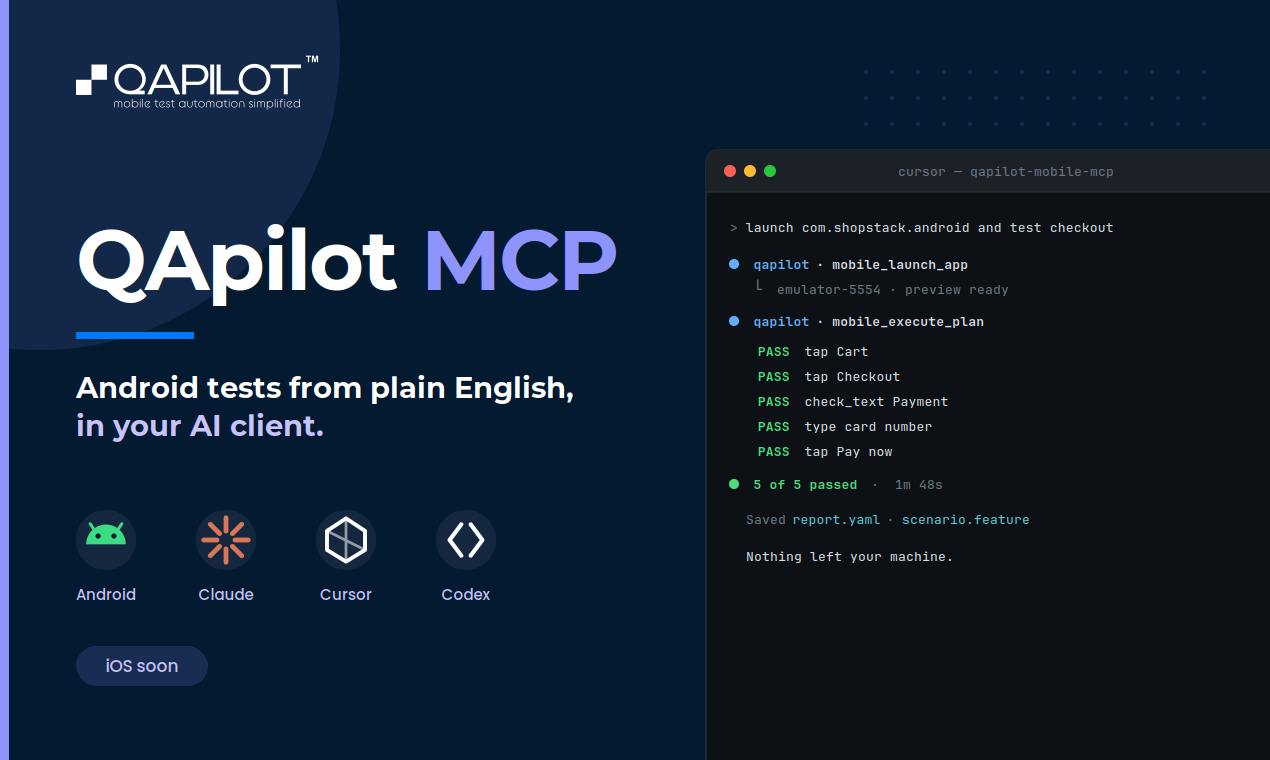
QApilot MCP: Test Android Apps in Natural Language Inside Your AI Coding Assistant
QApilot MCP lets developers test Android apps in natural language inside Claude, Cursor, and Codex — no Appium code needed. Auto-generates reusable Gherkin test cases.
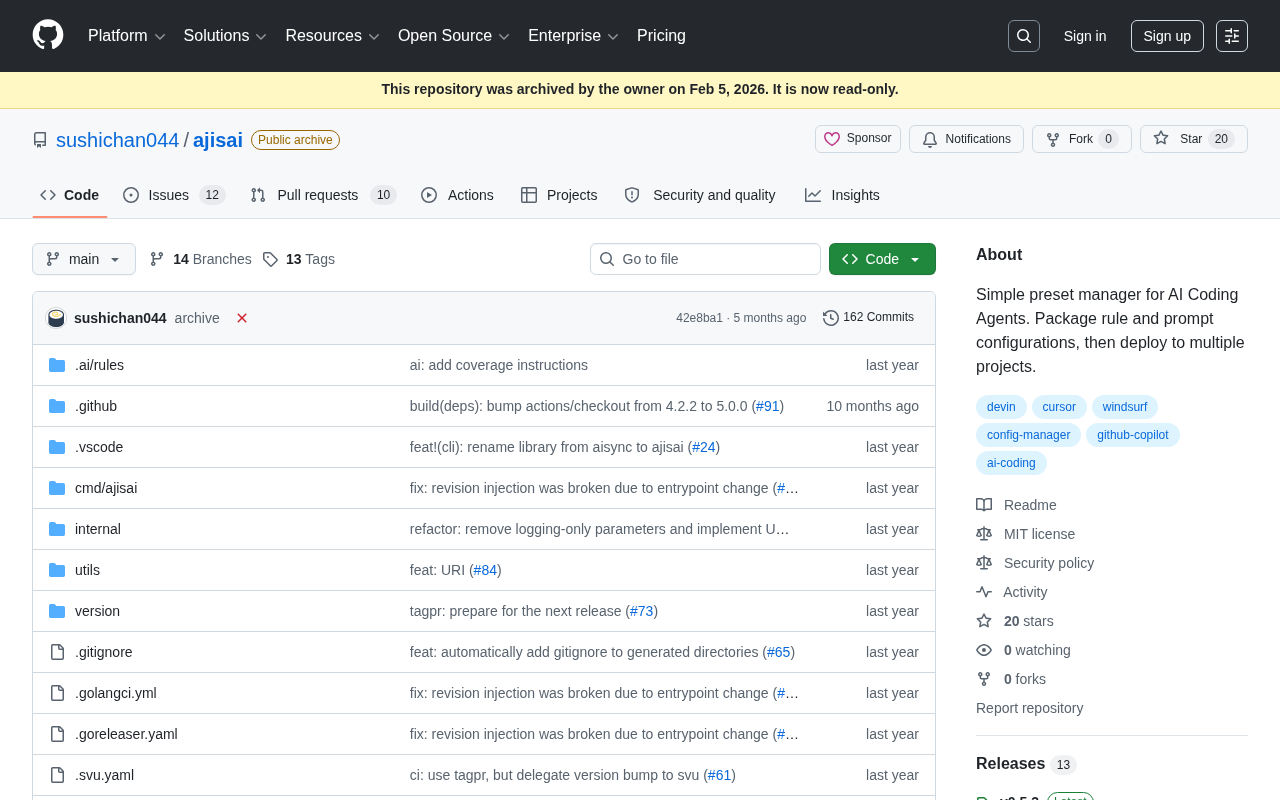
ajisai: A Preset Management Tool for Unifying Rules and Prompts Across AI Coding Assistants
ajisai is a Go-based preset manager for AI coding assistants like Cursor and Claude Code. Package rules and prompts once, deploy everywhere. Early-stage but promising.
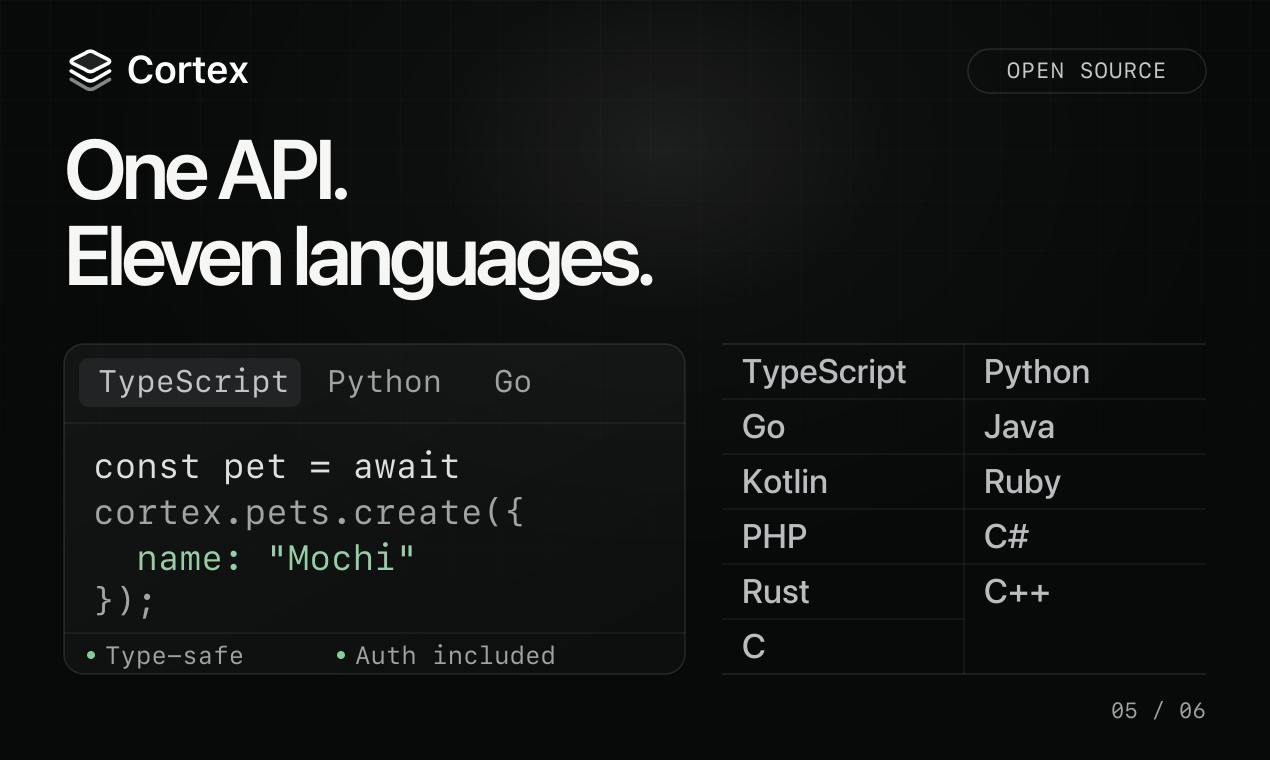
Cortex: Convert API Specs into Docs, SDKs, and MCP Servers in One Click
Cortex is an open-source tool that converts OpenAPI, GraphQL, gRPC and more into interactive docs, typed SDKs in 11 languages, and MCP servers for AI agents.