DeepMind CEO Hassabis Steps Down to Become Chair: What It Means for the AI Industry

DeepMind CEO Hassabis reportedly transitions to chair role, signaling strategic leadership restructuring.
Google DeepMind CEO Demis Hassabis is reportedly stepping down to become company chair. This article examines the significance of this transition for the Nobel Prize-winning AI pioneer, explores what it means for DeepMind's research direction and commercialization strategy amid the intensifying AGI race, and analyzes how the CEO-to-chair move reflects broader organizational priorities at Google.
Quick Overview
Recently, a major leadership change at Google DeepMind has sparked widespread discussion on Reddit and other communities: Google DeepMind CEO Demis Hassabis is reportedly stepping down from the CEO position to become the company's chair. This news quickly sent ripples through the AI world, as Hassabis is not only a co-founder of DeepMind but also one of the most influential scientist-entrepreneurs in the field of artificial intelligence today.
It's worth noting that this information is currently circulating primarily on social media platforms and should be verified against an official Google announcement. In the fast-paced AI industry, any changes in top lab leadership attract intense scrutiny and can easily be amplified or misinterpreted during circulation. Readers should therefore maintain a cautious attitude when interpreting such information.
Who Is Hassabis: From AlphaGo to the Nobel Prize
To understand the significance of this news, one must first appreciate Hassabis's standing in the AI field. As co-founder of DeepMind, he led the team that built AlphaGo — the first AI system to defeat a top human Go player. AlphaGo combined deep reinforcement learning with Monte Carlo Tree Search (MCTS), continuously optimizing its policy and value networks through self-play, ultimately defeating world Go champion Lee Sedol in 2016. With a board state space on the order of 10^170 — far exceeding that of chess — Go had long been considered a "holy grail" challenge for AI, making AlphaGo's victory a landmark moment in AI history.
Subsequently, DeepMind achieved a historic breakthrough in protein structure prediction. Their AlphaFold system essentially solved a problem that had plagued biology for decades. AlphaFold leverages attention mechanisms and multiple sequence alignment (MSA) information to predict the three-dimensional folding structure of proteins directly from amino acid sequences. The protein folding problem — since Nobel Chemistry laureate Christian Anfinsen proposed in 1972 that amino acid sequences determine protein structure — had stumped structural biology for nearly 50 years. AlphaFold2 achieved near-experimental accuracy in the CASP14 competition in 2020, and its database subsequently covered over 200 million protein structures, dramatically accelerating drug development and fundamental biological research.
In 2024, Hassabis and core team members were awarded the Nobel Prize in Chemistry for their contributions through AlphaFold, making him one of the rare figures who spans both computer science and the natural sciences at the highest level. Within Google, after DeepMind was integrated with the original Google Brain team, Hassabis became CEO of Google DeepMind, taking full charge of Google's most cutting-edge AI research, including the development of the Gemini series of large models.
It's worth noting that this organizational merger itself provides important context. DeepMind was founded in 2010 and acquired by Google for approximately $500 million in 2014, after which it operated as a relatively independent AI research lab under Alphabet. Google simultaneously had another powerful AI team — Google Brain — which produced landmark achievements including the TensorFlow framework and the Transformer architecture (the origin of the "Attention Is All You Need" paper). In April 2023, Google announced the formal merger of DeepMind and Google Brain into "Google DeepMind," with Hassabis as CEO. This integration aimed to eliminate redundant internal research competition and concentrate resources to counter external competitors like OpenAI. The merged Google DeepMind, with thousands of researchers, became one of the world's largest AI research organizations.
What Stepping Down as CEO to Become Chair Means
From Day-to-Day Executor to Strategic Helmsman
Transitioning from CEO to chair typically signals a shift from daily operational management to higher-level strategic oversight. In corporate governance, the CEO is responsible for day-to-day business decisions, team management, and execution, reporting to the board of directors. The Chair, on the other hand, leads the board, with primary responsibilities including setting long-term strategic direction, overseeing management performance, and representing the company to external stakeholders.
This transition is not necessarily a negative signal. Classic examples of founders moving from CEO to chair in the tech industry include: Google co-founders Larry Page and Sergey Brin handing daily management to Sundar Pichai; and Bill Gates stepping down as Microsoft CEO in 2000 to serve as chairman and chief software architect for many years. Such transitions are typically not marginalization, but rather a way to free founders from tedious operational duties so they can focus on what they consider the most valuable long-term work.
For someone like Hassabis, who embodies both scientist and manager, shedding the burden of daily operations could allow him to devote more energy to what he excels at and is most passionate about — frontier research and long-term strategic planning.
Possible Organizational Considerations
As Google fiercely competes in the AI race against rivals like OpenAI and Anthropic, the scale and complexity of its internal AI operations continue to grow. The iterative development of Gemini models, commercial deployment of AI products, and ongoing fundamental research all require increasingly refined organizational division of labor.
Gemini is Google DeepMind's multimodal large language model series, first released in December 2023, positioned as a direct competitor to OpenAI's GPT-4. Its distinguishing feature is a multimodal architecture designed from the ground up, capable of natively understanding and generating content across multiple formats including text, images, audio, video, and code. Gemini has been integrated into Google's core product ecosystem, including Search, Google Workspace, Android, and developer tools, serving as the central engine of Google's AI commercialization strategy. Managing such a vast and diverse product line clearly requires a leader focused on execution and business operations.
The leadership adjustment may reflect Google's desire for a clearer division of responsibilities between "research vision" and "commercial execution" — letting scientists focus on scientific direction while operators focus on product delivery.
Potential Impact on the AI Industry
Regardless of the final details of this news, it reflects the high degree of mobility and attention surrounding top talent and leadership in today's AI industry. As one of the world's most important AI research institutions, any leadership developments at DeepMind could affect:
- Research direction continuity: Hassabis has long championed a research path oriented toward scientific breakthroughs; his role change could influence DeepMind's future research priorities.
- Talent dynamics: Leadership changes at top labs often trigger cascading talent movements.
- Commercialization pace: Against the backdrop of an intensifying AGI (Artificial General Intelligence) race, management adjustments may be linked to productization and commercialization strategies.
Regarding the AGI race landscape: AGI refers to AI systems with human-level or superhuman general cognitive abilities, capable of matching or exceeding human performance on virtually any intellectual task. Current major AGI contenders include: OpenAI (GPT series, valued at over $300 billion), Google DeepMind (Gemini series), Anthropic (Claude series, founded by former core OpenAI members), Meta AI (LLaMA open-source series), and multiple Chinese institutions. The core resources in this race include top talent, massive compute (typically requiring clusters of tens or even hundreds of thousands of GPUs/TPUs), and high-quality training data. These organizations differ significantly in their safety philosophies, business models, and degrees of openness — disagreements that profoundly shape the industry's trajectory. In this competitive landscape, any leadership change at a top lab can trigger speculation about strategic direction shifts.
Stay Rational, Await Official Confirmation
In the AI field, the accuracy and completeness of information are particularly important. While discussions on Reddit and similar communities reflect real-time industry attention, for personnel changes of this magnitude, Google DeepMind's official statement should be considered the definitive source.
One detail worth noting: even if the news is true, "stepping down as CEO to become chair" does not necessarily equate to "stepping into the background." In tech companies, it's not uncommon for founders who transition to chair to remain deeply involved in company strategy — or even wield greater influence. For a scientist like Hassabis, who holds a strong sense of mission toward AGI, his influence on DeepMind and the broader AI endeavor is unlikely to diminish simply because of a change in title.
We will continue to follow this story as it develops and provide deeper analysis once official information becomes clear.
Related articles
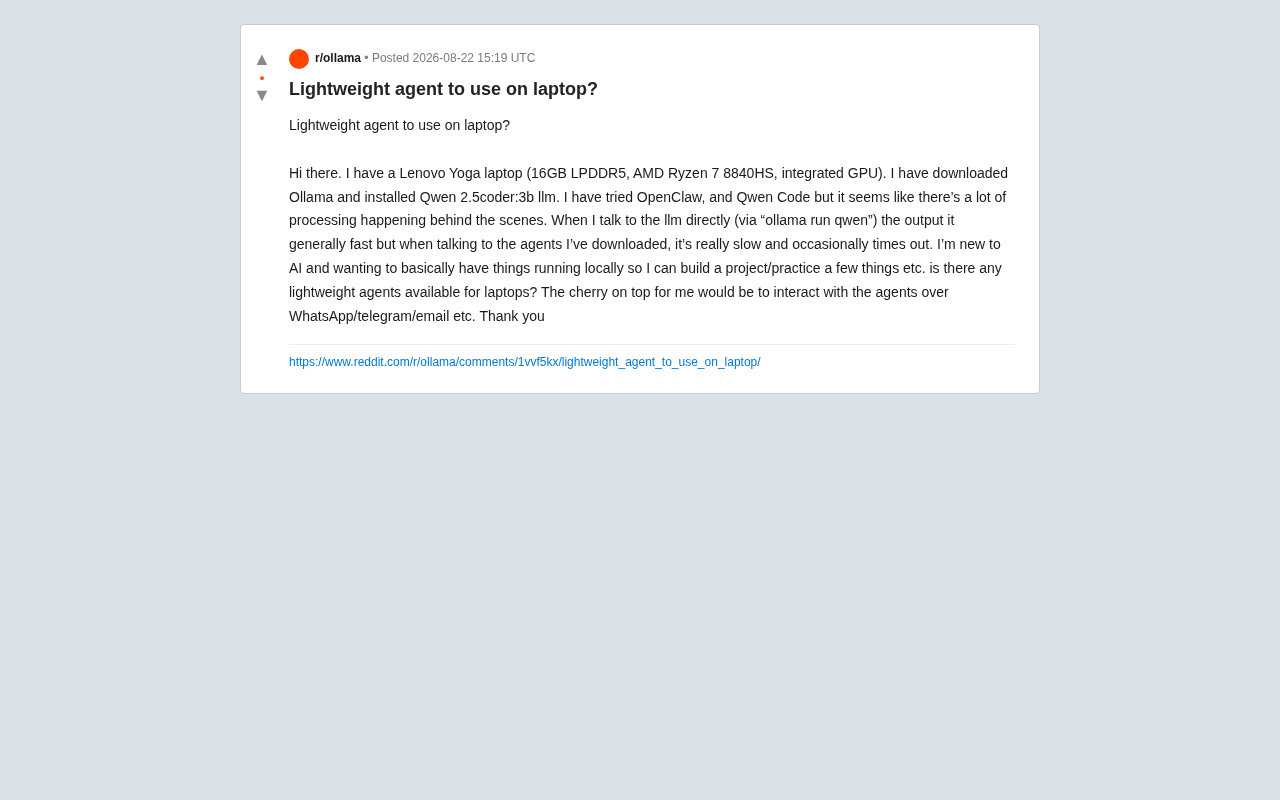
Local AI Agent Deployment Too Slow? A Lightweight Optimization Practical Guide
Local AI Agent deployment slow and timing out? This guide covers Agent framework overhead, hardware bottlenecks, and practical optimizations including context trimming, quantization, and Telegram Bot integration.

Choosing a Laptop for AI Studies: MacBook vs NVIDIA Laptop — An In-Depth Comparison Guide
In-depth analysis for AI students choosing laptops: MacBook Air M5 with remote GPU vs NVIDIA laptop, comparing CUDA support, portability, battery life, and value.

Self-Hosted LLM Tech Stack: A Complete Guide to Managing Your Local AI Cluster from the Terminal
A deep dive into self-hosting LLM tech stacks: inference engines, model management, vector databases, and how to manage your local AI cluster from the terminal.