DeepSeek API Integration Ecosystem: Deep Dive into a 37,000+ Star Open Source Project

DeepSeek's official integration guide hits 37,000+ Stars, becoming the central hub for its API ecosystem.
The awesome-deepseek-integration project on GitHub, officially maintained by DeepSeek, has become the most important integration resource in the DeepSeek ecosystem with 37,000+ Stars and 4,000+ Forks. It systematically curates solutions for integrating the DeepSeek API into IDEs, chat clients, automation workflows, RAG knowledge management, and more. DeepSeek's strategy of maintaining OpenAI API compatibility minimizes migration costs, and combined with its high-performance, cost-effective models, is driving rapid developer adoption.
Project Overview: The DeepSeek Integration Ecosystem Behind 37,000+ Stars
As a leading AI large language model company in China, DeepSeek's open-source spirit extends beyond its models to the entire developer ecosystem. The awesome-deepseek-integration project on GitHub, with over 37,000 Stars and 4,000+ Forks, has become the most popular API integration guide repository in the DeepSeek ecosystem.
Officially maintained by DeepSeek, this open-source project systematically curates methods, tutorials, and resources for integrating the DeepSeek API into various mainstream software and frameworks, covering use cases ranging from individual developers to enterprise-level applications. Notably, the project adopts the classic "Awesome List" curation model on GitHub—a community collaboration format pioneered by Sindre Sorhus in 2014 that combats information overload through collective verification and filtering. There are now thousands of similar projects covering every corner of the tech landscape, and DeepSeek's repository ranks among the highest-starred in this category.
Why This Project Matters So Much to Developers
Dramatically Lowering the API Integration Barrier
After choosing an AI model, the first practical question developers face is: how do I integrate it into my existing workflow?
Although the DeepSeek API is compatible with the OpenAI interface format, the actual integration process still involves nuanced issues like parameter differences, model selection, and rate limiting. This awesome list consolidates community-verified integration solutions in one place, allowing developers to reference existing approaches and complete integration quickly without starting from scratch.
Reflecting the True Momentum of the DeepSeek Developer Ecosystem
The 37,000+ Star count isn't inflated—it directly reflects the strong demand from the developer community for DeepSeek API integration. This repository is more than documentation; it's a real-time barometer of DeepSeek's ecosystem vitality. Every new integration solution added means DeepSeek has gained actual adoption in yet another application scenario.
Detailed Breakdown of Typical DeepSeek API Integration Scenarios
IDE and Programming Assistant Integration
The highest-frequency use case for developers is integrating DeepSeek into their everyday code editors:
- VS Code: Configure the DeepSeek API through the Continue plugin for code completion and chat capabilities
- Cursor Editor: Directly supports DeepSeek as a backend model
- JetBrains IDEs: Connect through plugins compatible with the OpenAI format
DeepSeek's code generation capabilities deliver a programming assistance experience approaching GPT-4 level, while API costs are a fraction of the latter—one of the core reasons developers are flocking to it. This competitiveness stems from DeepSeek's purpose-trained DeepSeek-Coder series models, which are pre-trained on 2 trillion tokens of code corpora, support 338 programming languages, and offer context windows up to 128K. On mainstream code evaluation benchmarks like HumanEval and MBPP, DeepSeek-Coder V2's performance approaches or even surpasses GPT-4 Turbo, while its API pricing is only 1/10 to 1/50 of OpenAI's equivalent models. This extreme cost-effectiveness is driving rapid migration among developer communities.
Chat Clients and Conversational UIs
Various open-source chat interfaces can connect to DeepSeek through simple API endpoint and key configuration:
- ChatBox: Cross-platform desktop client with straightforward setup
- Open WebUI: Self-hosted web-based conversational interface
- LobeChat: Feature-rich open-source chat framework
This enables both individual users and enterprises to quickly build private AI conversational interfaces, enjoying DeepSeek's inference capabilities while keeping data within their own domain. "Data sovereignty" (keeping data within organizational boundaries) is a core security requirement in enterprise AI applications, particularly a hard compliance mandate in industries like finance, healthcare, and government. By combining self-hosted chat interfaces with DeepSeek API calls, enterprises can achieve a compromise: the chat interface is deployed on the intranet, with only desensitized queries sent to DeepSeek's cloud. For even stricter scenarios, DeepSeek's open-source models (such as DeepSeek-V3 and DeepSeek-R1) support fully local deployment, achieving true zero data exfiltration and meeting the highest levels of data security requirements.
Automation and Workflow Orchestration
In the business automation space, the DeepSeek API can be integrated into mainstream workflow orchestration tools:
- n8n: Open-source automation platform that supports calling DeepSeek via HTTP nodes
- Dify: LLM application development platform with native DeepSeek model support
- LangChain: LLM application development framework, connected via OpenAI-compatible interfaces
Typical application scenarios include automated document processing, data analysis report generation, and intelligent customer service.
It's worth noting that tools like Dify, LangChain, and LlamaIndex represent different abstraction layers in LLM application development. LangChain and LlamaIndex are developer-facing programming frameworks that provide programming primitives like chain calls, Agents, and tool usage. Dify and FastGPT, on the other hand, are higher-level visual platforms that allow non-technical users to build AI applications through drag-and-drop interfaces. The rapid maturation of this ecosystem means DeepSeek API integration is no longer limited to writing code and calling interfaces—it can be quickly deployed to business scenarios through low-code approaches, dramatically expanding the potential user base.
Knowledge Management and RAG Applications
Combined with vector databases and Retrieval-Augmented Generation (RAG) frameworks, DeepSeek can be integrated into enterprise knowledge base systems for precise Q&A based on private data. Common technology stack combinations include:
- DeepSeek API + Milvus/Weaviate (vector databases)
- DeepSeek API + LlamaIndex (data indexing framework)
- DeepSeek API + FastGPT/MaxKB (out-of-the-box knowledge base solutions)
RAG (Retrieval-Augmented Generation) has been the most mainstream architecture pattern in enterprise AI applications since 2023. It works as follows: enterprise private documents are first split into text chunks, converted into high-dimensional vectors via embedding models, and stored in a vector database. When a user asks a question, the system first retrieves the most relevant document fragments through semantic similarity search, then injects these fragments as context into the LLM's prompt, enabling the model to generate answers based on real data. RAG effectively addresses two core pain points of large models—knowledge cutoff date limitations and hallucination issues—while avoiding the high costs and complex processes of fine-tuning. This makes it the preferred approach for enterprises looking to combine DeepSeek's capabilities with their own data assets.
Community Contribution and Collaboration Model
awesome-deepseek-integration follows the classic awesome-list open-source collaboration model: any developer can contribute new integration solutions or update existing content through Pull Requests.
The 4,000+ Fork count shows that a large number of developers are not only using these integration solutions but actively participating in maintaining and expanding the project. This community-driven model ensures the project's timeliness—integration solutions for new tools and new versions can be quickly incorporated.
Insights from DeepSeek's Ecosystem Strategy for the Industry
An Open Ecosystem as Core Competitiveness
By officially maintaining an integration guide, DeepSeek demonstrates a pragmatic approach to ecosystem building. Rather than building a closed all-in-one suite, they actively embrace the community and lower the barrier for third-party tools, thereby expanding their user base and scenario coverage more rapidly.
The Strategic Advantage of API Compatibility
The DeepSeek API's compatibility with the OpenAI interface format—this design decision's strategic value is demonstrated vividly in this project. Many integration solutions in the list essentially only require changing the API endpoint from api.openai.com to api.deepseek.com to complete migration. This near-zero-cost switching experience has dramatically accelerated DeepSeek's user growth.
From a technical perspective, OpenAI's Chat Completions API has become the de facto standard interface in the LLM industry. Its core specifications include: using the /v1/chat/completions endpoint, passing conversation history via a messages array, specifying models through a model parameter, and a standardized streaming response (Server-Sent Events) format. DeepSeek's compatibility with this format means that the hundreds of client libraries, IDE plugins, and application platforms already adapted for the OpenAI API can switch seamlessly by modifying just two configuration items: base_url and api_key. This "API compatibility strategy" has been widely adopted in the open-source LLM space, but DeepSeek has maximized its commercial value through superior model performance and pricing advantages.
Conclusion: The Best Starting Point for Developers Connecting to DeepSeek
awesome-deepseek-integration is more than a technical resource list—it's the tangible embodiment of DeepSeek's open ecosystem strategy.
- For developers: This repository is the best starting point for integrating the DeepSeek API, helping you find the right integration solution for your tech stack in minutes
- For enterprise technology decision-makers: It showcases the possibilities of DeepSeek deployment across various business scenarios
- For industry observers: The project's Star growth curve is an intuitive metric for measuring the speed of DeepSeek's ecosystem development
If you're considering bringing the DeepSeek API into your project or workflow, this repository is an excellent place to start exploring.
Related articles
 Product Reviews
The Programmer's Desk Setup Guide: Building a Workspace That Feels Like Home
Discover how programmers build productive, comfortable workspaces. From multi-monitor setups to ergonomic design, explore the desk philosophy that drives focus and flow.
 Product Reviews
Qoder vs Cursor Real-World Comparison: Which $20/Month AI IDE Is Better?
Hands-on comparison of Qoder vs Cursor AI IDEs: Agent autonomy, human interaction count, and architecture decisions. Qoder needed only 2 interactions vs Cursor's 8.
 Product Reviews
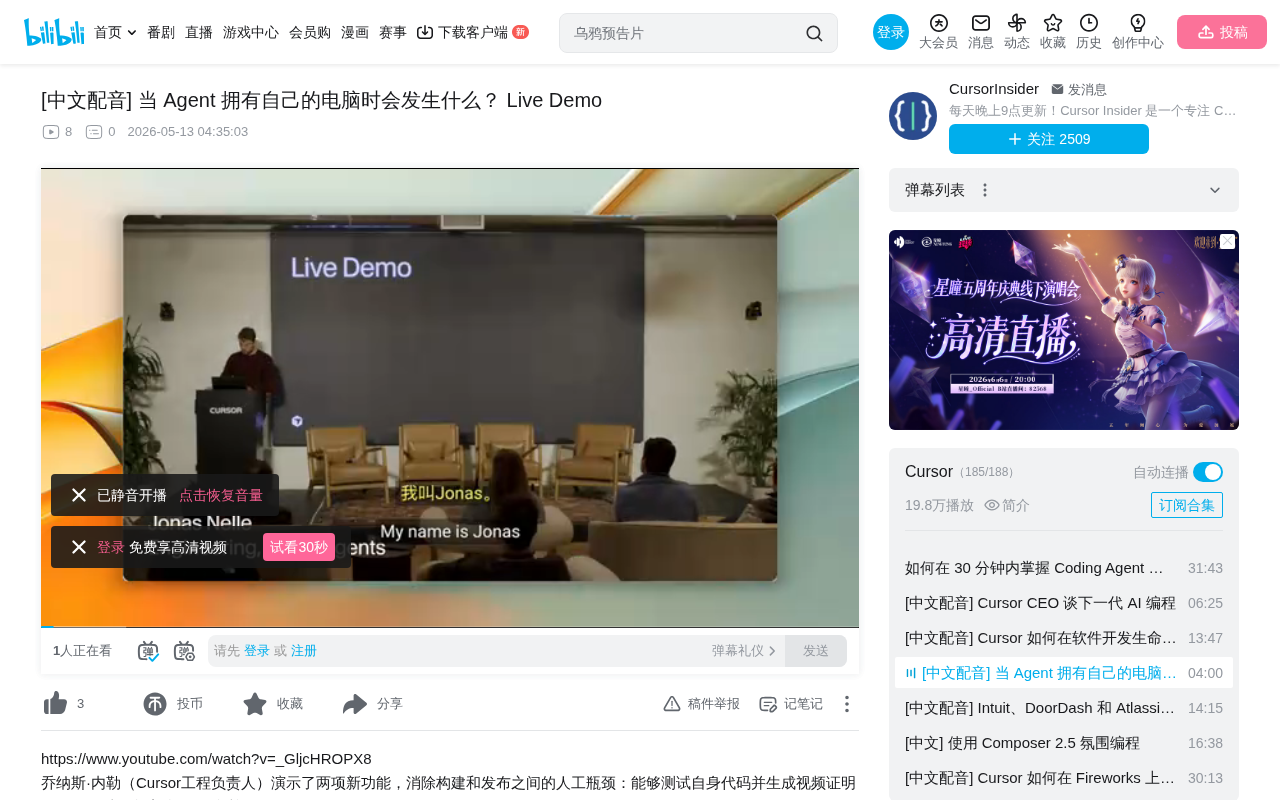
Cursor Cloud Agent Demo: Eliminating Bottlenecks Across the Entire Software Development Lifecycle
Deep analysis of Cursor's Cloud Agent demo showing how cloud VMs, automated test artifacts, and a full-chain control plane systematically eliminate human bottlenecks across the software development lifecycle.