DeepSeek Harness: An Agent Framework That Makes AI Actually Do Real Work
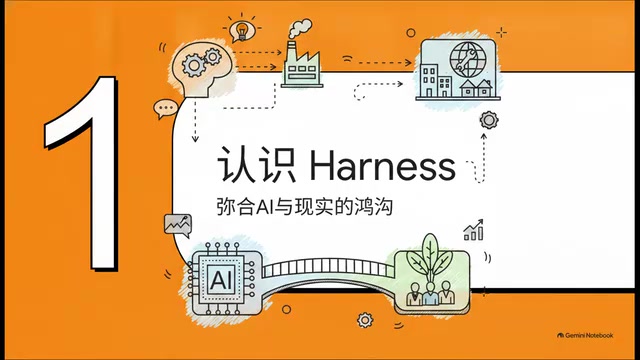
DeepSeek Harness is a plugin-based framework that turns AI models into reliable, real-world agents.
DeepSeek Harness is an open-source agent framework that bridges the gap between AI models and real-world execution. Built on a fully plugin-based architecture powered by the Codis kernel, it offers modular tool management, 100% traceable session logs, time-travel debugging, and four operating modes for different development needs. Developers can get started with a single command.
Introduction: AI Evolves from a "Brilliant Mind" to a "Capable Agent"
DeepSeekAd has just released the Harness Developer Preview, and it's tackling the most critical pain point in AI deployment today: how to transform a model locked away in a lab into an agent that can continuously get things done in the real world.
This problem sounds simple but is surprisingly thorny. A model might be incredibly smart — a walking encyclopedia — but the moment you ask it to interact with a real operating system, click through a webpage, or call an API, it tends to freeze up. The reason is straightforward: the model lacks hands, lacks eyes, and lacks a mechanism for interacting with the real world.
This predicament is far from unique. AI agents are one of the hottest research directions in artificial intelligence today. Unlike traditional chatbots, agents can not only answer questions but also autonomously plan tasks, invoke tools, interact with external environments, and accomplish complex goals. Between 2024 and 2025, leading companies like OpenAI, Google, and Anthropic have all shifted their strategic focus toward agent development. However, a massive chasm exists between lab demos and production-grade applications — no matter how strong a model's reasoning capabilities are, without a stable execution environment, tool-calling chains, and error recovery mechanisms, it simply can't run reliably in real-world scenarios. This is precisely the core problem that agent frameworks like Harness aim to solve.
Here's a helpful analogy: the model is the agent's "soul," responsible for thinking, reasoning, and making decisions. Harness is the "mech suit" that soul wears — it provides the environment, interfaces, and various tools, serving as a bridge between the soul and the real world. Without that bridge, even the smartest model is just a commander without an army.
How DeepSeek Harness Bridges the Gap Between AI and the Real World
Harness has a crystal-clear mission: enable agents to understand their surroundings, skillfully use tools, and run stably and continuously in the complex real world.
Without a foundation like this, agents easily lose their bearings during multi-step operations, or crash outright after encountering a single error. DeepSeek Harness plays the role of the "tool behind the tools" — it's the infrastructure quietly working in the background, keeping everything running smoothly.
For agent developers, this kind of underlying stability is an often-underestimated value. What truly separates products isn't how smart the model is, but whether the system can hold together across long task chains. In real production environments, an agent that needs to execute 20 consecutive steps — even with a 95% success rate per step — only has an overall completion rate of about 36%. This means that fault tolerance, state recovery, and exception handling at the framework level often matter more to the product experience than the model's raw intelligence.
Plugin Architecture: Complete Modularity Without Touching Source Code
Harness's most disruptive design philosophy can be summed up in one sentence: Every capability is a plugin that can be replaced or recombined.
This means that when developers want to add or modify functionality, they no longer need to dig through massive, complex underlying source code. In Harness, capabilities are built entirely through configuration — like building with LEGO bricks. If you don't like a red piece, just pull it out and swap in a blue one. The entire chassis stays untouched.
Plugin architecture isn't an original concept from the AI field — it has deep roots in software engineering history. From the Eclipse IDE's plugin system and WordPress's theme/plugin ecosystem to the Sidecar pattern in modern microservices architecture, modular design has always been a key strategy for keeping large software systems flexible. In the agent framework space, projects like LangChain and AutoGPT have also adopted varying degrees of component-based design. But Harness pushes modularity to the extreme — even the UI layer and scheduling logic are abstracted as replaceable plugins, which is relatively uncommon among similar frameworks. The core advantage of this design is reducing coupling between components, allowing developers to customize individual parts without needing to understand the system's overall complexity.
What's even more impressive is the scope of this modularity:
- The model itself
- Various tools and specific skills
- Session management
- Sandboxes and storage
- Internal loop logic and scheduling mechanisms
- Even the user interface (UI) itself
All of the above are plugins. This design opens up virtually every component of the system for developer customization, with theoretically unlimited customization potential. This "fully pluggable" architectural approach aligns closely with the recent trend toward composable design in agent frameworks.
The Codis Kernel: The Agent's Nervous System
With so many disparate plugins, how do they all work together? The secret lies entirely in the Codis kernel.
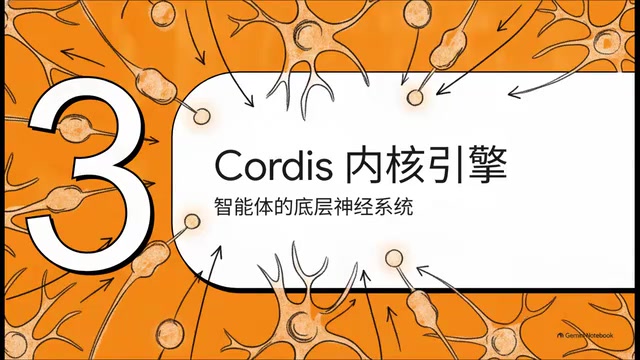
Codis is the underlying system of the entire Harness framework, specifically managing plugin mounting, unmounting, and the complex dependency relationships between them. Think of it as the conductor of a symphony orchestra: all of the agent's capabilities are distributed across individual plugins, and Codis uses underlying services and event mechanisms to keep these plugins communicating smoothly, ensuring the entire system doesn't crash regardless of which plugins are added or removed.
The event-driven mechanism adopted by Codis is a classic pattern in modern distributed system design. Under this architecture, components don't call each other directly; instead, they achieve loosely coupled communication by publishing and subscribing to events. This shares the same philosophy as Node.js's EventEmitter, Apache Kafka's message queues, and state management in frontend frameworks (like Redux). Dependency management ensures plugins are loaded and unloaded in the correct order — for example, a tool plugin that requires web search capabilities can only be mounted after the network sandbox plugin has loaded. This mechanism is similar to how an operating system kernel manages device drivers, and it's the foundational guarantee of system stability.
100% Traceable Session Logs
The most outstanding aspect of this architecture is its transparency. DeepSeek Harness achieves 100% traceability for every run through an "append-only, tamper-proof" session logging mechanism.
Observability in agent systems is one of the core challenges in AI engineering today. Traditional software debugging can rely on breakpoints and stack traces, but agent behavior involves a complex interweaving of probabilistic reasoning, multi-step decisions, and external tool calls — traditional debugging approaches often fall short. The "append-only, tamper-proof" logging mechanism used by Harness borrows design concepts from blockchain and Event Sourcing, ensuring the integrity and non-repudiation of audit trails. This design is especially important in industries like finance and healthcare where there are compliance requirements for AI decision processes, as regulators typically require the ability to fully trace every step of an AI system's decision-making rationale.
This is essentially like equipping developers with "X-ray vision," giving them a clear view into the agent's "brain" — knowing exactly what it was thinking and seeing at every microsecond. The log records are extremely detailed:
- System prompts
- Every step of the model's reasoning
- What tools were used and what results were returned
- Where and how sub-agents were dispatched
- How context was injected each time
Trajectory View: Debug Agents Like Watching a Video Tape
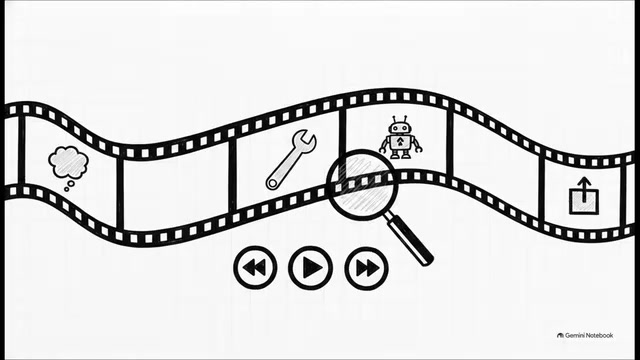
Even more powerful is the "Trajectory View" feature. Developers can work directly with the same event stream to restore, branch, search, and even replay it like watching a video tape. For debugging complex AI behavior, this is a near-revolutionary capability — it transforms the agent from an elusive "black box" into an observable, reproducible, and analyzable white-box system.
It's worth noting that the "branch" feature is especially powerful: when developers discover that the agent made a wrong decision at step N, they can create a branch directly from step N-1, modify the context or tool return values, and re-run — without having to restart the entire task from scratch. This concept of "time-travel debugging" originates from frontend debugging tools like Redux DevTools, but applying it to AI agents tackles a problem that's orders of magnitude more complex.
Four Operating Modes: Adapting to Different Agent Development Needs
DeepSeek Harness offers four out-of-the-box modes:
Standard Mode
The all-rounder, providing a complete toolset (file editing, web search, etc.), suitable for use as a direct coding assistant. This is the first mode most developers will encounter in Harness. It comes preloaded with the most commonly used tool chains for everyday development and can handle code writing, document retrieval, file management, and other tasks right out of the box.
Code Mode
Exposes various tools through a TypeScript SDK, allowing the model to orchestrate tasks using code — ideal for complex automation scenarios.
The choice of TypeScript as the SDK language in Code Mode is no accident. With its strong type system and seamless compatibility with the JavaScript ecosystem, TypeScript has become one of the preferred languages in modern development toolchains. In agent orchestration scenarios, type safety means developers can catch type errors in tool call parameters at compile time rather than discovering them at runtime. This paradigm of "orchestrating AI tasks with code" shares the same lineage as Anthropic's Tool Use and OpenAI's Function Calling, but goes a step further — it lets the model itself write and execute orchestration logic, achieving a higher level of autonomy.
Minimal Mode
Retains only the most basic shell and file editing capabilities, suitable for pure benchmarking and testing a model's fundamental abilities. This mode is particularly useful for AI researchers conducting benchmarks, as it strips away all advanced tool interference, allowing test results to genuinely reflect the model's own reasoning and code generation capabilities.
Creator Mode
Designed for hardcore power users, it allows testing in-memory Codis plugins, viewing state, and even crafting unique preset configurations.
From "ready to use" to "deep customization," these four modes essentially cover the full spectrum of needs from beginners to seasoned developers. This layered design also reflects a mature Developer Experience (DX) philosophy: lowering the barrier to entry while not sacrificing advanced users' need for low-level control.
Quick Start: Launch Agent Development with a Single Command
For developers eager to try it out immediately, the onboarding experience can only be described as "silky smooth."
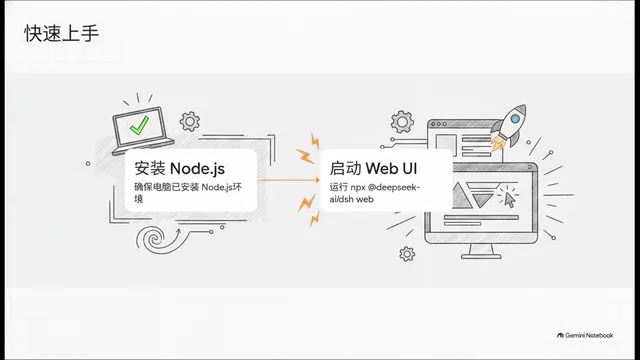
Quick start steps:
- Make sure Node.js is installed on your machine
- Open a terminal and type
npx add-deepseek-ai dsh web
With a single command, you can instantly spin up a browser-based user interface and start training your agent right away. This kind of "instant launch" experience is the standard that top-tier open-source projects should deliver.
Harness's choice to distribute via Node.js and npx reflects the trend of agent frameworks aligning with the web developer ecosystem. Node.js boasts the world's largest package management ecosystem (with over 2 million packages on the npm registry), which means Harness can easily integrate a massive number of existing tools and libraries. npx, as npm's built-in package execution tool, allows users to run commands directly without global installation, dramatically lowering the barrier to trying it out. This distribution strategy aligns with the philosophy of modern frontend tools like Vite and Create React App: let developers see their first running result within 30 seconds, trading minimal friction for maximum adoption.
If you're a code-diving enthusiast who prefers working with source code, the team also provides a GitHub-based installation method: git clone the entire repository to your local machine, follow the documentation to build from scratch, and customize the underlying architecture to your heart's content.
Conclusion: An Open Infrastructure Standard for Agents
The DeepSeek Harness team's vision is clear: use "reusable, composable" open-source infrastructure to explore the limits of intelligence alongside developers worldwide.
This isn't just another casual tool release — it's an attempt to establish an open, self-evolving infrastructure standard for agents. As core plugins and APIs continue to mature, the developer community will become the driving force behind this ecosystem.
Looking at the history of AI infrastructure development, from the TensorFlow vs. PyTorch rivalry to the rise of the Hugging Face ecosystem, every standardization at the infrastructure layer has catalyzed explosive growth in applications above it. The direction Harness is betting on — standardizing every capability layer of an agent into composable plugins — if broadly adopted by the community, could bring a similar paradigm shift to the agent development space. Of course, as a developer preview, it still needs to withstand the test of time in terms of stability, documentation completeness, and community governance.
When every capability becomes a freely assembled plugin, what kind of future will you build with them? A fully automated code pipeline? A super-brain capable of deep research? The tools are now in the developers' hands — the answer is one that everyone should build for themselves.
Related articles

Chain of Thought Isn't Just for AI: How Humans Can Use CoT to Improve Thinking Quality
Chain of Thought isn't just a prompt trick for large models. Starting from a Hacker News discussion, this article analyzes why CoT works for human thinking too, breaks down actionable ways to transfer it, and highlights the key differences between human CoT and machine CoT.
Cloudflare Teams Up with OpenAI: Closi…
Cloudflare Teams Up with OpenAI: Closing the Loop from Vulnerability Discovery to Defense with AI
Cloudflare uses OpenAI Daybreak to investigate security vulnerabilities and generate reviewable remediation plans, while developers use Codex to boost coding efficiency and quality.

Orca Multi-Agent Orchestration in Practice: A Guide to Parallel Collaboration with Claude and Codex
Orca is Stable AI's free open-source agent workbench supporting 34 agents like Claude Code and Codex in parallel. Learn its Git worktree isolation, multi-model orchestration, and mobile management.