DeepSeek Open-Sources Agent Prototype: Two-Tier Architecture Ends Multi-Window Chaos

DeepSeek's open-source Agent prototype uses a Router-Walker two-tier architecture to let AI manage AI and free up user attention.
The article discusses a Bilibili creator's analysis of the multi-AI conversation dilemma: opening multiple AI windows leads to context pasting and window switching, making the user the busiest person. DeepSeek open-sourced an Agent prototype with a "foreman leading workers" two-tier architecture: the upper Router handles user dialogue and dispatches tasks, while lower Walkers execute tasks in parallel and in isolation. The layered design balances the messiness of a single conversation against the lack of coordination across multiple ones, achieving "remember fast and work fast." Its philosophy is to minimize user attention occupancy, requesting decisions only at key points. Currently targeting programmer coding scenarios, it's a research prototype rather than a formal product, but it points toward a future where users talk to one AI that manages a team of AIs.
The Plight of Multiple AI Conversations: Why You've Become the Busiest Person
Juggling multiple AI conversation windows to handle tasks is a daily routine for many AI users. But a Bilibili creator hit the nail on the head in a video: "When you have three AI conversations working at once, aren't you the one who ends up busiest?"
Pasting context back and forth and switching windows constantly—tools meant to boost efficiency instead become a burden.
To solve this pain point, DeepSeekAd has open-sourced an Agent prototype. According to the creator, its core idea resembles a "foreman leading workers"—through layered collaboration, the AI actively manages the task flow rather than passively waiting for user scheduling.
Two-Tier Architecture Breakdown: How Router and Walker Divide the Work
DeepSeek's design splits the Agent system into two layers, each with its own responsibilities.
Upper Layer Router: Conversation Entry Point and Task Scheduling
The upper layer is called the Router, playing the role of "foreman." It interacts directly with the user, understands intent, and dispatches tasks to the lower layer. The creator describes it as "responsible for talking with you, hearing what you want, then handing out the work—it doesn't do the work itself."
Lower Layer Walker: Independent Units for Parallel Execution
The lower layer is called the Walker. Each Walker takes on a specific task and starts working simultaneously. They are isolated from one another and operate independently, avoiding mutual interference.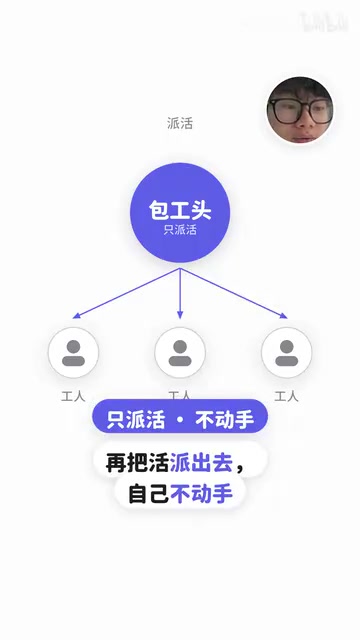
This "functional isolation" design allows each Walker to focus on its own task while the Router maintains control over the overall flow.
Agent is a core concept in the current AI field, referring to an AI system that can autonomously perceive its environment, formulate plans, invoke tools, and execute multi-step tasks to achieve goals—rather than a chatbot that only responds to single-turn questions. Unlike the traditional "question-and-answer" mode, Agents typically possess capabilities such as task decomposition, tool invocation, memory management, and self-reflection. In multi-agent systems, multiple Agents can divide and collaborate, each taking on different subtasks. DeepSeek's prototype falls squarely within the category of multi-agent orchestration: the Router acts as a scheduling Agent, and the Walkers act as execution Agents, with the two collaborating through layered coordination to accomplish complex tasks that a single conversation struggles with. Understanding this background helps grasp the prototype's position in the Agent technology landscape.
Parallel execution means multiple Walkers process their respective tasks simultaneously without blocking each other, which in engineering relies on the mechanism of "context isolation." Each Walker has its own independent conversation context and runtime state, and does not read or pollute other Walkers' memory, so concurrent work can proceed safely. The benefit of this isolation is that tasks won't fail due to context cross-talk, and the Router doesn't need to maintain a complete record of every detail—it only needs a global view of task dispatch and result aggregation. The trade-off is that Walkers do not share intermediate information by default; cross-task information transfer must go through the Router. This trade-off is precisely the engineering foundation of the layered architecture's ability to "remember fast and work fast."
Why Layer It: Balancing Speed and Memory
Why not have a single AI do everything? The creator explains: "One conversation doing everything gets messy and slow." A single conversation carrying too many tasks leads to context confusion and slow responses.
But if you open a new conversation for every task, the conversations know nothing about each other, lacking coordination.
The layered architecture is designed to balance both: the Router maintains global memory and scheduling logic, while Walkers execute in parallel without blocking each other. In the creator's words, "splitting into two layers is all about remembering fast and working fast."
Design Philosophy: Minimizing Attention Occupancy
DeepSeek explicitly states in its description that the prototype's design direction is to "occupy as little of your attention as possible, only bothering you when a decision is needed." This means the Agent system should handle routine tasks autonomously and seek user input only at key decision points.
This philosophy strikes at the heart of the multi-window model—users should not become messengers between AIs, but should return to the role of decision-maker.
Attention occupancy borrows the concept of "cognitive load" from human-computer interaction: when users handle multiple tasks, switching windows and copying/pasting context all consume limited attention resources. If an Agent system frequently requires users to confirm, supplement, or relay information, it essentially shifts the scheduling cost onto the human. "Minimizing attention occupancy" means letting the system autonomously complete routine decomposition, execution, and integration, and only requesting user decisions at key junctures involving directional judgment, risky operations, or goal conflicts. This aligns with the division-of-labor principle in "human-AI collaboration" where humans make decisions and machines execute—and it's also an important criterion for evaluating whether an Agent system is well-designed.
Research Prototype Positioning: A Coding Assistant for Programmers
It's important to note that this prototype currently targets programmers writing code. The creator mentions "the purpose of this prototype is for programmers to write code."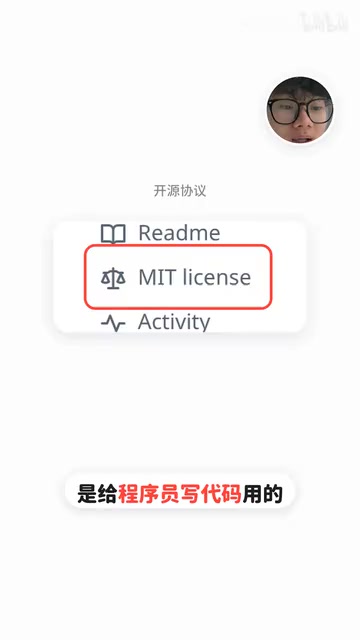
DeepSeek officially states that this is a research prototype, not a formal product. But the direction it points to is clear: in the future, users may only need to talk to one AI, which manages a group of AIs working together.
Research prototype refers to an experimental implementation used to validate a technical concept or architectural approach, typically not guaranteeing stability, complete documentation, or long-term maintenance, nor being responsible for reliability in production environments. By explicitly labeling it as a research prototype rather than a formal product, DeepSeek means that outsiders should focus on the reference value of its architectural approach rather than treating it as a tool to rely on directly. Choosing programmer coding as the validation scenario is because code tasks naturally possess characteristics such as decomposability, verifiability, and clear tool invocation requirements, making it easy to observe the Router-Walker layering's scheduling effectiveness and bottlenecks in real tasks.
Future Outlook: From Single AI Conversations to AI Team Management
At the end of the video, the creator poses a thought: "In the future, you might only need to talk to one AI, and it can manage a group of AIs for you. If a group of AIs works for you simultaneously, what would you want them to do?"
This reveals the evolution path of Agent technology: from single-point conversation capability to multi-agent orchestration capability. DeepSeek's prototype, though immature, provides a reference architecture example for "AI managing AI." For developers, the Router-Walker model is a viable approach for building complex Agent systems.
As the open-source ecosystem advances, such prototypes are expected to accelerate the implementation of multi-agent collaboration, freeing users from tedious scheduling.
Related articles

GPT-Image 2.6 Dual Release: A Double Upgrade in Speed and Precision
OpenAI releases GPT-Image 2.6 with Flare for faster generation and Sunburst for complex prompts and dense infographics. API adds markup editing, SVG, and GIF support.

Robert Caro: How to Get Insiders to Talk and Uncover the Hidden Logic of Johnson's Money Politics
Pulitzer winner Robert Caro shares how he interviewed John Connally, revealing how pressing on Johnson's funding annotations got insiders to explain political money logic.

Showing This Video to Someone in 2014: The Stunning Evolution of AI Video
From the viral Reddit post "Show this AI video to someone from 2014," we look back at a decade of AI video generation's leap from academic research to indistinguishable reality, analyzing the cognitive impact and trust challenges amid the flood of synthetic content.