DeepSeek Open-Sources DeepInfer Inference Framework; Overseas Users Call It 'the Real OpenAI'

DeepSeek open-sources the production-grade DeepInfer inference framework, steering competition toward deployment economics.
Just three days after releasing V4.1 Flash (the 1017 version), DeepSeek open-sourced its companion inference framework DeepInfer on October 20, aiming to drive down inference compute costs and energy consumption. Unlike the usual open-sourcing of model weights, what was released this time is a production-proven inference stack, which overseas developers believe directly determines cost and latency and is more valuable than the weights themselves. Comments present two narratives: one sees it as an industry accelerator and looks forward to low-cost local deployment; the other carries China-U.S. AI competition sentiment, such as "China will win the AI race" and "the real OpenAI." The article points out that community sentiment must be distinguished from business reality—closed-source vendors' moats also include product integration and enterprise services—but the open-source inference stack does shift part of the competitive dimension toward deployment economics.
DeepSeek has taken another step on its open-source path. Just three days after the release of DeepSeek V4.1 Flash (the 1017 version), the team open-sourced its companion inference framework, DeepInfer, on October 20. The framework's goal is straightforward: drive down the compute cost of model inference while also reducing energy consumption. The news spread quickly through overseas developer communities, and in a compilation of comments put together by a Bilibili creator, many overseas netizens offered high praise—some directly called it "the real OpenAI."
What DeepInfer Open-Sources: A Production-Grade Inference Stack, Not Model Weights
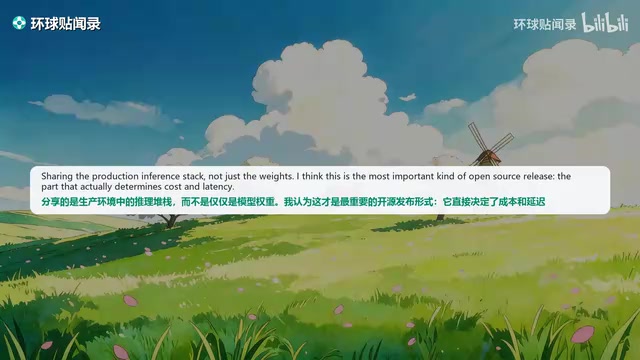
What makes this open-source release special is that DeepSeekAd didn't release model weights, but rather an inference stack used in production. According to the overseas comments compiled by the Bilibili creator, one netizen emphasized: "You can release model weights, and you can release shortcuts that let the model run at low cost, but what's being shared is the inference stack from a production environment, not just model weights—I think that's the most important thing."
That remark points to a structural gap in the current open-source AI ecosystem. Most teams are happy to open-source model weights, because the weights themselves don't directly expose their engineering moat; but the inference stack involves cost, latency, and deployment efficiency, and it is the part that truly determines whether a model can be deployed. By opening up this layer as well, DeepSeek means developers don't just get the model—they also get a production-proven, low-cost way to run it.

Overseas Reactions: From GPU Bills to the Competitive Landscape
The most immediate type of feedback in the comment compilation comes from cost pressure. One netizen said "my GPU bill can breathe a sigh of relief first," while another bluntly said they "can't wait for local hardware prices to drop so I can build my own local stack." These voices reflect a reality that small and mid-sized developers and independent researchers have long faced: inference cost is a key constraint on whether they can keep experimenting.
Deeper discussion points to industry competition. One netizen's comment was captured in a screenshot: "This is why I think China will win the AI race." Another analyzed it from a talent perspective: "There are far more experts and geniuses out there than any single company's dev team could ever have." Such views may not be comprehensive, but they reveal a leverage effect of the open-source strategy—by opening up core engineering capabilities, it attracts outside talent to build innovation on top of the ecosystem.
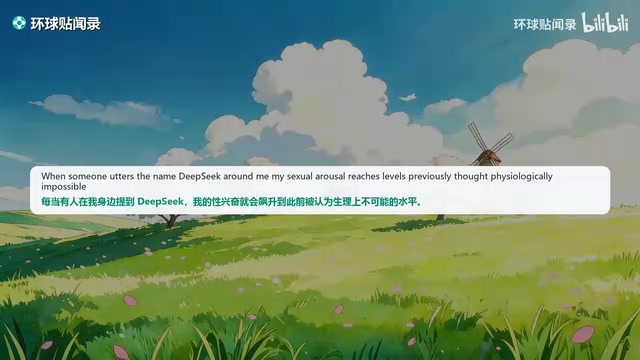
The "GPU bill" pressure that appears repeatedly in overseas comments is directly related to the composition of inference cost. The expense of large-model inference mainly comes from GPU memory usage and compute consumption: memory determines how many concurrent requests can be served at once (batch size), and compute determines the generation speed per token; together they translate into the dollar cost per token. Common optimization methods in the industry include weight quantization (INT8/FP8/INT4), KV Cache reuse and paging, continuous batching, speculative decoding, and more. These techniques can multiply the throughput of the same model on the same hardware. Therefore, the engineering optimization level of the inference stack often determines the actual bill for small and mid-sized teams more than the model's parameter count does.
Why Open-Sourcing the Inference Stack Matters More Than Open-Sourcing Weights
To understand the weight of this open-source release, it's necessary to distinguish two layers. Model weights determine what a model can do; the inference stack determines how much it costs and how long you wait to do the same thing. In real business, the latter is often the bottleneck. A capable model cannot enter production if inference costs are too high or latency is unacceptable.
According to overseas netizen comments, what DeepSeek released "directly determines cost and latency." This also explains why some describe this move as "the real open AI"—not referring to the company name, but to the degree of openness reaching the core of AI deployment. One judgment repeatedly mentioned in the comments was: "Frontier AI labs should learn from the DeepSeek team."
Inference Stack refers to the entire set of software and engineering components needed to serve users after a model has been trained. It typically includes the inference engine (such as vLLM, TensorRT-LLM, SGLang), operator and kernel optimization, quantization and KV Cache management, batching and scheduling strategies, multi-GPU parallelism and memory management, and service deployment interfaces. It determines how fast, with how much memory, and at what electricity cost a trained model can complete a forward pass on given hardware.
In contrast, model weights are merely the parameter files saved after a neural network has converged in training, and they contain no runtime logic themselves. Open-sourcing weights means others can reproduce the model's capabilities, but to run it efficiently on their own hardware, they still need to solve a large number of engineering problems themselves, such as inference engine adaptation, operator fusion, and batching scheduling. This is exactly the value of open-sourcing an inference stack like DeepInfer: it hands over the engineering experience of "running cheaply and running fast" as well.
Comparison and Divergence: Two Narratives of Open-Source Strategy
Overseas comments are not monolithic. One type of voice sees DeepSeek's open source as an industry accelerator, arguing that "for-profit companies are doomed" and "you really want to accelerate the entire industry's development"; another carries a competition narrative, with jabs at Dario and Altman appearing in the comments, even skits mimicking political rhetoric: "How long this war will last, I think we shouldn't decide... fight until complete victory."

It should be noted that these are expressions of community sentiment and cannot be taken as rigorous predictions of the business landscape. Open-source inference stacks will indeed lower the industry's cost curve, but closed-source vendors' moats are not just inference efficiency; they also include product integration, enterprise services, and ecosystem lock-in. A more accurate reading of DeepSeek's move is this: it has shifted part of the competitive dimension from "model capability" to "deployment economics," and that is precisely the battlefield where the open-source community excels.
The "Dario and Altman" mentioned in the comments refer to Anthropic CEO Dario Amodei and OpenAI CEO Sam Altman, respectively. They are representative figures of current closed-source frontier labs and central voices in the debate over "whether open source is safe and whether it should be accelerated." Open-weight models (such as the Llama, Qwen, and DeepSeek series) allow anyone to download and run them locally, contrasting with the closed-source model that only provides an API. Debates around open source usually focus on two points: first, security risk—once weights are released, they cannot be taken back; second, commercial impact—whether low-cost open-source models will squeeze closed-source vendors' pricing space. Understanding this background is necessary to see the real disagreements behind community sentiment.
Practical Significance for Developers
For frontline developers, the value of DeepInfer lies not in slogans but in whether it can truly lower the barrier to building self-hosted inference services. Judging from the comment feedback, expectations mainly center on localization and low-cost deployment. If this inference stack can run stably on common hardware, the time and economic cost for small and mid-sized teams to evaluate models will both decline.
Releasing both a model and an inference framework within three days—the pace itself sends a signal: DeepSeek is competing with engineering efficiency as its core advantage. The overseas netizens' "the real OpenAI" assessment may carry an emotional filter, but it points to a fact—when it comes to open-source inference infrastructure, DeepSeek is indeed ahead.
One-line Summary
DeepSeek open-sources the production-grade DeepInfer inference framework, steering competition toward deployment economics.
Paragraph Summary
Just three days after releasing V4.1 Flash (the 1017 version), DeepSeek open-sourced its companion inference framework DeepInfer on October 20, aiming to drive down inference compute costs and energy consumption. Unlike the usual open-sourcing of model weights, what was released this time is a production-proven inference stack, which overseas developers believe directly determines cost and latency and is more valuable than the weights themselves. Comments present two narratives: one sees it as an industry accelerator and looks forward to low-cost local deployment; the other carries China-U.S. AI competition sentiment, such as "China will win the AI race" and "the real OpenAI." The article points out that community sentiment must be distinguished from business reality—closed-source vendors' moats also include product integration and enterprise services—but the open-source inference stack does shift part of the competitive dimension toward deployment economics.
Related articles

Chain of Thought Isn't Just for AI: How Humans Can Use CoT to Improve Thinking Quality
Chain of Thought isn't just a prompt trick for large models. Starting from a Hacker News discussion, this article analyzes why CoT works for human thinking too, breaks down actionable ways to transfer it, and highlights the key differences between human CoT and machine CoT.
Cloudflare Teams Up with OpenAI: Closi…
Cloudflare Teams Up with OpenAI: Closing the Loop from Vulnerability Discovery to Defense with AI
Cloudflare uses OpenAI Daybreak to investigate security vulnerabilities and generate reviewable remediation plans, while developers use Codex to boost coding efficiency and quality.

Orca Multi-Agent Orchestration in Practice: A Guide to Parallel Collaboration with Claude and Codex
Orca is Stable AI's free open-source agent workbench supporting 34 agents like Claude Code and Codex in parallel. Learn its Git worktree isolation, multi-model orchestration, and mobile management.