DeepSeek V4.1 Flash Hands-On: The Open-Source Dark Horse for Visual Reasoning and Extreme Efficiency
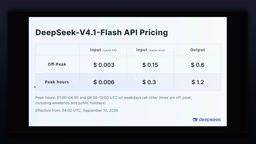
DeepSeek V4.1 Flash offers 337× KV cache efficiency and native vision, making it a strong pick for sub-agents and visual analysis.
DeepSeek V4.1 Flash is a full architectural redesign that nearly doubles model size while delivering ~337× KV cache efficiency over V1, dramatically cutting costs for long-running agentic tasks. Its new native visual input capability, paired with DeepSeek's official harness plan–implement–verify loop, lets the model literally see its own rendered output and iterate. The biggest surprise is its AutoML performance: it autonomously designs experiments, selects features, and even detects data leakage without prompting — earning the title of the first open-weight model truly good at training ML models. While it can't match top-tier models like Opus 5 in overall capability and has some bounding box precision limitations, its low API price makes it extremely competitive for visual analysis and sub-agent scenarios.
DeepSeek's recently released Flash model has generated a wave of excitement. According to hands-on evaluations by a YouTube tech creator, the model — dubbed V4.1 Flash — far exceeded expectations. It delivers a massive leap in efficiency while introducing highly practical native visual capabilities. This article summarizes the key findings from that evaluation to help you decide whether it fits your use case.
Architectural Overhaul and Efficiency Breakthrough
This release is not a simple iterative upgrade — it's a complete architectural redesign. Compared to the previous Flash model, the new version is nearly double the size, yet achieves significantly greater efficiency.
The most striking figure comes from KV cache optimization: according to the reviewer, the new model delivers roughly a 337× improvement in KV cache efficiency over the V1 model. This improvement matters enormously for long-running agentic tasks. In one real-world test, the cache hit rate reached 99.7% — out of approximately 40 million tokens generated, nearly 39 million hit the cache. That means users are billed at cached token rates rather than the more expensive non-cached input rates.
The reviewer was clear about its positioning: this is one of the best value-for-money models available right now, ideal for use as a sub-agent or for local deployment — though he wouldn't use it for orchestration tasks. The API version runs at around 300 tokens per second.
KV Cache (Key-Value Cache) is a core optimization mechanism in LLM inference. In the Transformer architecture, generating each new token requires recomputing the attention key-value pairs for all previous tokens. KV caching stores these computed pairs so that subsequent requests sharing the same context prefix can reuse them, avoiding redundant computation. For API providers, cached tokens are typically billed at a fraction of uncached input token prices — sometimes 5–10× cheaper. In long-running agentic tasks, system prompts and conversation history accumulate across turns; without caching, full recomputation would cause costs to spiral. A 337× improvement in cache efficiency is therefore not just a speed metric — it translates directly into a cost advantage at scale.
Harness Choice Determines the Performance Ceiling
A point the reviewer repeatedly emphasized: the harness (execution framework) used to run the model dramatically affects final performance.
The reviewer demonstrated a side-by-side comparison of the same model running Terminal Bench under different harnesses, and the results were striking — scores ranged from 69.8% all the way to 74.2%. This gap is large enough to show that choosing the wrong framework leads to suboptimal results. This applies to all models, but it's especially pronounced here.
The reviewer recommends using DeepSeek's official harness, which features excellent caching behavior and follows a plan–implement–verify loop workflow.
Harness (execution/test framework) in the context of LLM evaluation refers to the complete execution environment built around a model — including how prompts are constructed, how multi-turn conversation history is managed, tool-call orchestration logic, and error retry and result parsing strategies. Terminal Bench is a benchmark designed to test AI models on command-line tasks, requiring the model to perform file operations, code debugging, system administration, and similar tasks in a real terminal environment. A difference of more than 4 percentage points on the same model across different harnesses illustrates that "model capability" and "model performance under a specific framework" are not the same thing — which is one key reason why leaderboard scores can be hard to translate directly into engineering decisions.
Visual Verification and 3D Rendering
One of the biggest highlights of the new model is its native visual input capability, which directly changes how agents operate.

In a test that rendered the International Space Station's real-time position projected onto a 3D Earth, the model accurately reproduced the day/night distribution — nighttime over North America, daytime over Asia — with impressive rendering quality. The DeepSeek harness works by completing the implementation first, then performing visual verification. Because the model can read visual input and access a browser, it can literally see its own output and iterate accordingly.
The reviewer also showcased several Three.js visual examples: a dynamic weather scene with cloud layers, a scene with a time-of-day toggle, and a sea turtle swimming underwater. Compared to earlier DeepSeek models' weaknesses in visual design, the output quality with this model under its harness is a clear step forward — even described as having "taste," capable of producing beautiful 1-bit style visuals.
A Surprise: Automatically Training Machine Learning Models
The reviewer specifically highlighted this as the first open-weight model that is genuinely good at training machine learning models.

In an AutoML test, the reviewer provided only a dataset and a brief description, instructing the model to "use its own judgment and not ask any questions." The model then independently formulated a plan, performed feature selection, and ran multiple experiments with different models and hyperparameters — closely mirroring the workflow of a human ML engineer.
What made this more remarkable is that the problem was intentionally left ambiguous, and a data leakage trap was embedded without any hint to the model. The model discovered the issue on its own and proactively removed the problematic feature. The reviewer mentioned he plans to produce a dedicated deep-dive video on LLM-driven AutoML.
Data Leakage is a classic pitfall in machine learning where training data contains information from the test set, or features include "future information" that wouldn't be available at prediction time — causing inflated evaluation scores that collapse in real-world deployment. For example, using a "final diagnosis" as a feature to predict "whether a patient is sick" would yield near-perfect accuracy, but that feature simply doesn't exist at prediction time. Automatically identifying and removing a leakage feature without any prompting requires the model to not only understand data structure but also have a deep understanding of ML methodology — which is precisely why the reviewer called this "the first open-weight model that's genuinely good at training ML models."
Native Object Detection and Visual Reasoning
The new model can natively detect objects in images, reason about them, and count them accurately — all without requiring an external computer vision pipeline. For the reviewer, this is highly practical: no more need for a separate CV pipeline.
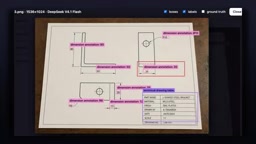
The reviewer is building a dedicated benchmark for testing vision-language models, making direct API calls (bypassing any harness) for single-shot predictions. Tests included automatically extracting dimensions from technical engineering drawings, identifying different parts of a car, and classifying and counting objects.
On reasoning ability, a typical example: the reviewer uploaded a photo of boats and asked "How many boats are not sailboats? Answer with a single integer" — the model correctly identified 4 non-sailboats. That said, the reviewer was honest about limitations: the data extraction itself is accurate, but the generated bounding boxes are sometimes imprecise, falling short of the best-case demonstrations shown in the video. Prompt wording also significantly affects extraction results.
Bounding Box is the standard representation in computer vision for describing object locations — typically four coordinate values (x, y coordinates of the top-left and bottom-right corners) marking a rectangular region around a target in an image. Traditional object detection pipelines (such as YOLO, Faster R-CNN, and other dedicated CV models) are specifically optimized for bounding box precision and can achieve pixel-level localization accuracy. Vision-language models (VLMs) generate bounding boxes by outputting coordinates as text tokens, which inherently limits their precision compared to dedicated detection models. The "imprecise bounding boxes" the reviewer noted is a general limitation of current multimodal LLMs, not a flaw unique to this model — and it suggests that high-precision spatial localization tasks still call for dedicated CV models.
Should You Use It?
The reviewer candidly admitted that this video doesn't discuss traditional benchmark scores at all — because in his view, the model doesn't match the all-around capability of top-tier models like Opus 5. But his core point is: not every application needs SOTA capability.
For visual analysis use cases, this is an extremely affordable and reasonably accurate option that can be used directly via API. For long-running agentic workflows, it performs well as a sub-agent under the right harness. Weighing price against capability, it is a highly competitive option in the right scenarios.
One caveat: the evaluation covered in this article is based on a single YouTube creator's hands-on experience, and some conclusions (such as the 337× KV cache efficiency and bounding box accuracy issues) await broader independent verification. But based on the real-world examples demonstrated, this model has delivered an impressive showing in both efficiency and visual reasoning.
Related articles
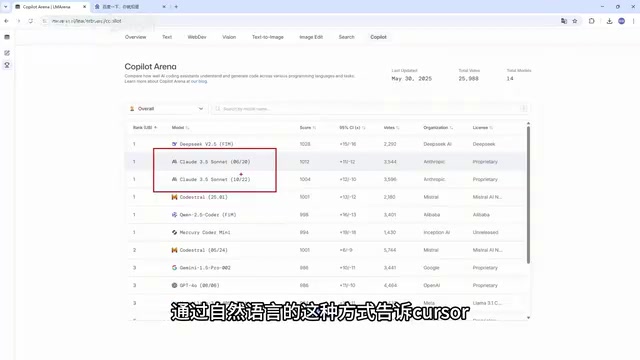
What Is Cursor? Core Differences Between This AI Coding Tool and Traditional IDEs
What is Cursor? This guide explains the AI-native code editor built on VS Code, how it compares to traditional IDEs, and its integration with Claude, DeepSeek, and Gemini.
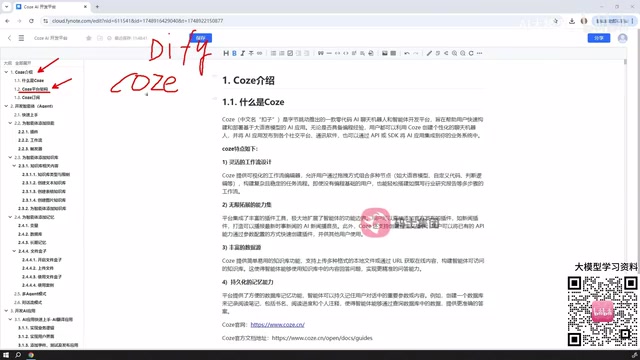
Coze 3.0 Beginner's Guide: A Complete Overview of Agents and AI Applications
A beginner's guide to Coze 3.0: covering agents, AI applications, workflows, and plugins on ByteDance's AI platform, plus a comparison with Dify.
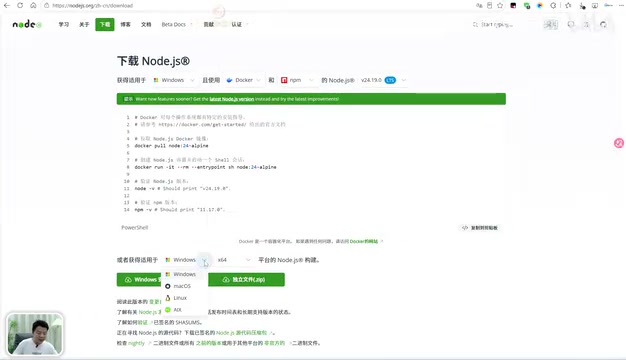
Setting Up the DeepSeek Harness Environment: A Complete Guide to Node.js Installation and Configuration
A beginner-friendly guide to setting up the DeepSeek Harness environment: Node.js installation, Add to PATH, redirecting npm global and cache directories, and configuring system environment variables.