Democrats' 2027 Anti-Corruption Strategy: Balancing Investigations and Legislation

Democrats in 2027 should treat investigation as a prologue, focus on ethics and lobbying reform, and design legislation opponents find hard to oppose.
The article records a conversation between two commentators on Democrats' 2027 strategy. The core disagreement is how to allocate energy between investigation and legislation: one side sees investigation as a prerequisite for change, not the endpoint, and advocates ethics and lobbying reform; the other fears investigation inflames conflict and drains fleeting political momentum. The commentators suggest Democrats use their election victory's political capital to focus on issues like minimum wage and lobbying ethics that unite their side and divide the opposition, and cleverly design legislation—such as banning federal employees from prediction markets—to force the president into a dilemma. The ultimate consensus: investigation and legislation are not either-or; real change requires legislative wisdom and strategy.
In a recent conversation, two commentators engaged in a deep discussion about how Democrats should handle corruption scandals in 2027. The core question: how should Democrats allocate their energy between legislation and investigation? One side argued that investigations are a necessary prelude, but real change lies in pushing ethics and lobbying reform; the other worried that excessive investigation could inflame partisan conflict and hinder the legislative process. This discussion reveals the dilemma Democrats face in reclaiming the narrative.
Investigation Is a Prologue, Not the Finale
At the outset, the commentators highlighted an internal tension within the party: some voters want to see legislative results, while others crave "justice," demanding a thorough investigation of corruption and even the removal of specific officials (such as Hegseth). To this, one commentator stated bluntly: "Investigation is necessary, but investigation is not change itself—it's the prerequisite for change." He proposed a series of specific investigative targets: the whereabouts of Venezuelan oil money, Jared Kushner's secret accounts tied to Qatari and Saudi funds, and the purpose behind these financial dealings.
These investigative points are not baseless—they point to long-standing public suspicions. However, the commentator emphasized that investigation alone is insufficient; one must "write the chapters that follow"—that is, push ethics and lobbying reform. He explicitly opposed impeachment, arguing that impeachment targets a single individual and is difficult to succeed, whereas reform can solidify the political coalition and clean up corruption across all three branches.
Ethics and Lobbying Reform: Unite the Majority, Isolate the Opposition
The other commentator (Sean) offered a different perspective from a political strategy angle. He cautioned that momentum from investigations may be short-lived—once Democrats start investigating Republicans, Republicans may no longer support common-sense legislation. But the first commentator countered that the recently concluded election was a "landslide victory" comparable in scale to Watergate, providing Democrats with rare political capital.

He argued that the Democratic legislative agenda should focus on issues that unite their own side and divide the opposition—such as minimum wage and lobbying ethics reform. Properly designed, these issues would be hard for Republicans to oppose. For example, he suggested banning all federal employees from participating in prediction markets, since the president's children are investors in prediction markets. If the president vetoes such a bill, it would instead become a political victory for Democrats.
Lobbying reform in the U.S. political context typically refers to institutional design that limits lobbyists' influence over legislators, including extending the "cooling-off period" for former officials (i.e., a certain period after leaving office during which they cannot engage in lobbying), requiring public disclosure of lobbying activities, and restricting the connection between political contributions and lobbying expenditures. Historically, after Watergate, Congress passed the 1978 Ethics in Government Act, establishing an independent counsel mechanism and requiring financial disclosure; after the 2006 "Jack Abramoff lobbying scandal," Congress passed the Honest Leadership and Open Government Act, strengthening constraints on interactions between lawmakers and lobbyists. Such reforms often have a political characteristic of "making it hard for opponents to publicly oppose": opposing ethics reform carries a high cost in public opinion, so it is often used as a means to divide the opposition and consolidate a majority.
Balancing Investigation and Legislation: Avoiding Single-Point Breakthroughs
In the conversation, both sides agreed that investigation and legislation are not an "either-or" relationship, but they differed in emphasis. One side viewed investigation as a necessary means of rallying supporters, while the other worried that investigation would consume political capital. The commentator noted that momentum could be fleeting.

Therefore, Democrats need to craft legislation cleverly so that it has an "unvotable-against" quality. For example, a minimum wage bill could garner Republican support. This strategy can both advance substantive policy and expose the opposition's positions.
Prediction markets are trading platforms where participants bet real money on the outcomes of future events, with prices reflecting the market's collective judgment of event probabilities. In recent years, such platforms have expanded rapidly in the U.S. and sparked regulatory controversy: whether they constitute gambling, whether they should be regulated by the Commodity Futures Trading Commission (CFTC), and so on. The political potency of the "ban on federal employees participating in prediction markets" mentioned in the article lies in the fact that it directly touches on conflicts of interest—if the president's children happen to be prediction market investors, such a ban would put the president in a dilemma: signing it would offend family, vetoing it would lose public support. This issue thus becomes a typical example of "designing legislation to force the opposition to take a stand."
Strategic Design: Put Opponents in a Dilemma
The commentator emphasized that legislation must be designed to "put the president in a bind." He gave an example: if a bill bans federal employees from participating in prediction markets and the president's children are investors, then the president must either sign the bill (offending his own family) or veto it (losing public support). This design applies not only to prediction markets but can be extended to other areas of ethics reform.

In this way, Democrats can both advance reform and force opponents to take positions on key issues. The core of this strategy is: not simply investigating or legislating, but achieving the effect of investigation through carefully designed legislation while consolidating one's own political coalition.
This discussion reveals the key choice Democrats face in 2027: how to effectively combat corruption and advance reform without inflaming conflict. Investigation is a necessary prologue, but real change requires legislative wisdom and strategy.
One-line Summary
Democrats in 2027 should treat investigation as a prologue, focus on ethics and lobbying reform, and design legislation that opponents find hard to oppose.
Paragraph Summary
The article records a conversation between two commentators about Democrats' 2027 strategy. The core disagreement concerns the allocation of energy between investigation and legislation: one side argues that investigation is the prerequisite for change, not the endpoint, and that ethics and lobbying reform should be pushed; the other worries that investigation will inflame conflict and consume fleeting political momentum. The commentators propose that Democrats should use the political capital from their election victory to focus on issues like minimum wage and lobbying ethics that unite their own side and divide the opposition, and cleverly design legislation—such as banning federal employees from participating in prediction markets—to force the president into a dilemma on key issues. The ultimate consensus: investigation and legislation are not either-or; real change requires legislative wisdom and strategy.
Related articles
 Tech Frontiers
MuJoCo: An Analysis of DeepMind's Open-Source General-Purpose Physics Simulator
An in-depth analysis of Google DeepMind's open-source physics simulator MuJoCo: high-performance C++ kernel, MJCF modeling format, contact solving principles, MJX GPU acceleration, and robot reinforcement learning use cases.
 Tech Frontiers
Claude API Quick Start: The Official Quickstarts Project Collection
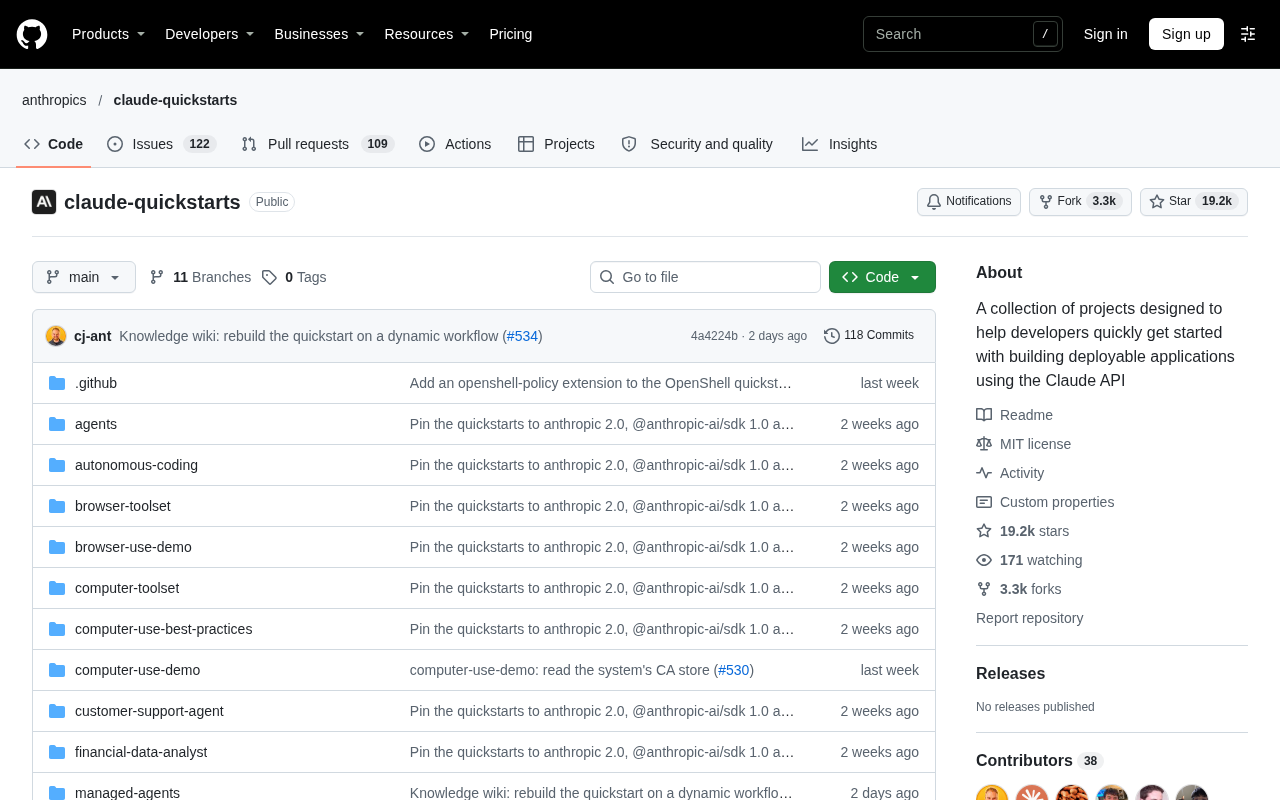
Anthropic's official claude-quickstarts project collection helps developers quickly build deployable apps with the Claude API. Nearly 20k stars, Python-based, great for beginners and prototyping.
 Tech Frontiers
AI Agents Connecting Directly to APIs: Which Calls Can Be Safely Allowed?
AI agents can call any API, but the real challenge is deciding which calls can be safely allowed. This article analyzes allowance decisions from three dimensions—intent matching, least privilege, and controllable impact—and argues that the control layer should sit outside the agent, combined with audit traceability to build a trustworthy API call governance mechanism.