Democrats Launch Congressional Investigation into SpaceXAI, Meta, and Apple
Democrats Launch Congressional Investi…
Democrats launch a congressional investigation into SpaceXAI, Meta, and Apple, signaling tighter tech regulation.
Based on a Hacker News discussion, the article reports that US Democrats have launched a congressional investigation into SpaceXAI, Meta, and Apple. Given limited original information, the article draws on the three companies' business attributes—AI and aerospace, social platforms, and the mobile app ecosystem—to infer that the investigation may involve intersecting issues such as AI transparency and accountability, data governance and content recommendation, and app store access rules. It notes that the investigation is a continuation of rising congressional scrutiny of large tech companies, with direct impacts including higher compliance costs and regulatory signals, though it may not translate into legislation. The author emphasizes distinguishing facts from inferences and recommends following official statements, hearing schedules, and whether the investigation scope expands.
Event Overview
According to a discussion on Hacker News (39 points, 6 comments), US Democrats are launching a congressional investigation into SpaceXAI, Meta, and Apple. Information on this is currently limited, but the three entities involved—a tech company focused on space and AI, one of the world's largest social platforms, and the world's leading consumer electronics giant by market cap—are all at the center of the current tech-policy tug-of-war.
A congressional investigation is itself a routine exercise of the US legislature's oversight authority, but when the targets span AI, social platforms, and the hardware ecosystem simultaneously, the underlying issues often point to intersecting topics such as data privacy, algorithmic transparency, market competition, and national security.
Congressional Investigation: One of the primary ways the US Congress exercises oversight, typically initiated by standing committees of the Senate or House (such as the Judiciary Committee or Commerce Committee), which can require companies to submit documents and appear at hearings to testify. An investigation itself does not constitute a finding of wrongdoing, but it may accumulate material for subsequent legislation, regulatory rulemaking, or referral to executive agencies for enforcement. The investigation process typically includes issuing inquiry letters, subpoenaing witnesses, public hearings, and publishing reports, and can last months or even years. In recent years, congressional investigations into large tech companies have increased significantly, covering issues such as privacy, competition, and content governance.
Why These Three Companies
SpaceXAI, Meta, and Apple each represent different layers of the tech industry: SpaceXAI sits at the intersection of aerospace and artificial intelligence, Meta controls a vast social graph and advertising system, and Apple controls the key gateway to mobile operating systems and app distribution. The fact that all three are simultaneously in the investigation's purview suggests the topics are likely not a single issue but rather revolve around the main theme of "how large tech companies affect public life."
From a policy trajectory perspective, US congressional attention to tech giants has been steadily rising in recent years, covering platform content governance, user data usage, the legality of AI model training data, and competition rules for app stores. This investigation can be seen as a continuation of that trend rather than an isolated event.
Algorithmic Transparency: Refers to the degree to which platforms or AI systems disclose their recommendation, ranking, and content moderation algorithm logic to regulators, users, or researchers. Policy discussions around this concept focus on: whether users have the right to know the algorithmic mechanisms affecting their information exposure, whether companies must submit algorithm audit reports to regulators, and whether the sources and use of training data are legal. The US currently has no unified federal algorithmic transparency legislation, but multiple committees have proposed drafts on the matter; the EU's Digital Services Act requires very large platforms to conduct systemic risk assessments and undergo external audits.
Topics the Investigation May Cover
Although the original information does not specify the exact terms and scope of the investigation, based on the business attributes of the three companies, several directions can be reasonably inferred: first, the transparency and accountability mechanisms of AI systems, especially for companies like SpaceXAI that are involved in both frontier technology and government contracts; second, social platform data processing and content recommendation mechanisms, consistent with the regulatory pressure Meta has long faced; third, app ecosystem access rules and developer rights, an issue for which Apple has been repeatedly questioned in multiple jurisdictions worldwide.
It should be noted that the above is analysis based on business attributes, not investigation content confirmed by the original report. Readers should distinguish between facts and inferences when citing.
App Store Gatekeeping: Refers to the rules set by mobile operating system operators regarding third-party developer listing, payments, data access, and other aspects. Apple's App Store policies have long faced scrutiny, with core disputes including: whether in-app payments are mandatory with commission fees, whether developers are restricted from directing users to external payment channels, and whether rule enforcement is consistent and transparent. Multiple jurisdictions worldwide have launched antitrust investigations or legislation on this matter (such as the EU's Digital Markets Act requiring "gatekeeper" platforms to open up sideloading and interoperability), and the US Congress has also held hearings on app store competition issues.
Impact on the Industry
The direct impact of a congressional investigation is typically reflected in two aspects: first, companies need to invest compliance and legal resources to respond to inquiries; second, the investigation process itself sends regulatory signals that affect market expectations. For AI and platform companies, the investigation may also accelerate the formation of industry self-regulatory standards or legislative drafts.
Based on historical experience, congressional investigations do not necessarily translate into legislation, but they shape the public agenda and accumulate material for subsequent regulatory action. For those following tech policy, the subsequent developments of this event are worth tracking, especially whether the investigation scope expands, whether hearings are scheduled, and the posture of the companies' responses.
Information Limitations and Follow-up Observation
The currently available information is only the event title and a small amount of discussion data, lacking key details such as the investigation's initiators, specific committees, and grounds for investigation. Therefore, this article does not make any predictions about the investigation's conclusions. It is recommended to follow subsequent official statements and mainstream media reports to obtain a more complete framework.
For tech practitioners, the more practical takeaway is that compliance costs for AI and platform businesses are structurally rising, and establishing data governance and transparency mechanisms early may be more economical than responding to investigations after the fact.
Related articles
 Tech Frontiers
MuJoCo: An Analysis of DeepMind's Open-Source General-Purpose Physics Simulator
An in-depth analysis of Google DeepMind's open-source physics simulator MuJoCo: high-performance C++ kernel, MJCF modeling format, contact solving principles, MJX GPU acceleration, and robot reinforcement learning use cases.
 Tech Frontiers
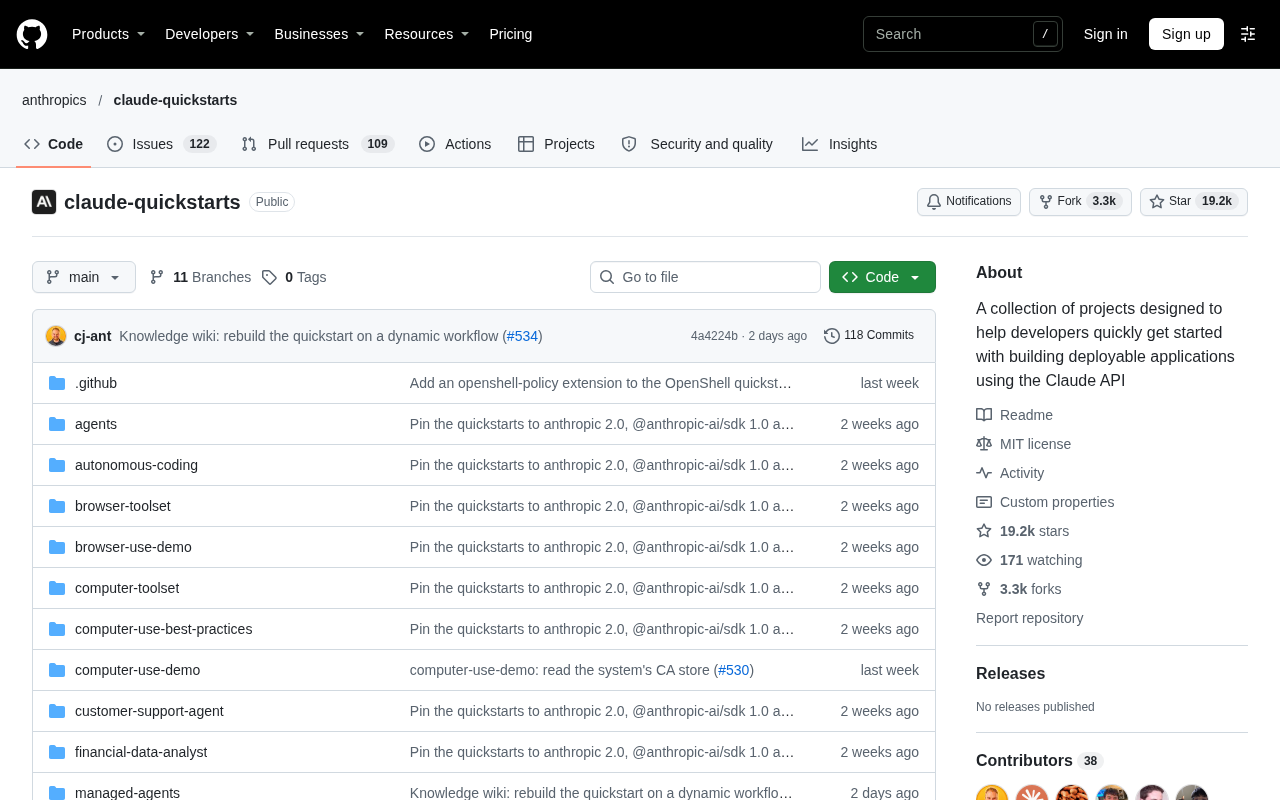
Claude API Quick Start: The Official Quickstarts Project Collection
Anthropic's official claude-quickstarts project collection helps developers quickly build deployable apps with the Claude API. Nearly 20k stars, Python-based, great for beginners and prototyping.
 Tech Frontiers
AI Agents Connecting Directly to APIs: Which Calls Can Be Safely Allowed?
AI agents can call any API, but the real challenge is deciding which calls can be safely allowed. This article analyzes allowance decisions from three dimensions—intent matching, least privilege, and controllable impact—and argues that the control layer should sit outside the agent, combined with audit traceability to build a trustworthy API call governance mechanism.