Developer Benchmark: DeepSeek Open-Source Model Now Rivals Claude Opus 4.8
Veteran developer says DeepSeek V4 Pro matches Claude Opus 4.8 at a fraction of the cost.
A developer blogger who built a $10K/month SaaS using Claude Code now says DeepSeek V4 Pro matches or exceeds Anthropic's Opus 4.8 at a tiny fraction of the cost. His core argument: the intelligence needed to ship real products already exists — developers don't need to wait for the next model. DeepSeek's open-source harness offers extensibility and cost transparency, and pairing it with BrightData web scraping addresses its web-reading limitations. His verdict: paid Claude Code is no longer the only viable path for serious AI-assisted development.
A Veteran Developer's Change of Heart
A developer blogger who has long championed Claude Code recently made a striking claim in his latest video: DeepSeek is good enough that its Pro version can match — and in some scenarios even outperform — Anthropic's Opus 4.8. This verdict carries weight precisely because the blogger is no DeepSeek fanboy. For the past two years, he had consistently regarded Claude Code as the gold standard for AI coding tools (harness), yet he now publicly states: "If I were on a tight budget, I wouldn't pay for Claude Code anymore."
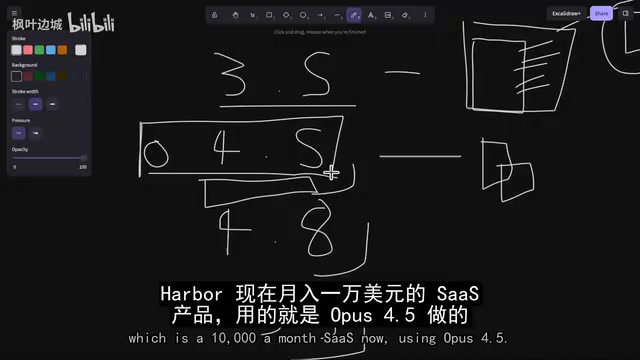
His assessment is grounded in real development experience. He runs a content generation SaaS product called Harbor, which currently generates $10,000 per month in revenue. The product was originally prototyped with Sonnet 3.5, later turned into a proper SaaS by his development team, and then fully rebuilt by the blogger himself on Next.js and Convex using Opus 4.5. This hands-on journey across multiple model generations has given him a clear frame of reference for evaluating real-world model capability.
Stop Waiting for "The Next, More Powerful Model"
One of the blogger's core arguments is that developers shouldn't keep waiting for the next model generation before they start building. He uses his own experience as proof — Harbor, a SaaS generating $10K/month, was built entirely with Opus 4.5. In other words, the level of intelligence needed to ship a mature product was already available several model iterations ago.
This logic becomes particularly compelling when applied to DeepSeek: if DeepSeek's capabilities are even close to Opus 4.5 or 4.8, it's already well worth using. "It doesn't need to be better than those models," he emphasizes. "As long as it's close, we should use it." The real bottleneck has never been a model's absolute intelligence ceiling — it's whether you can ship a product with good-enough capabilities.
For DeepSeek V4 Pro (which he notes was released just within the past two weeks at the time of recording), he goes even further, suggesting it "might actually be better than Opus 4.8." He openly admits he hasn't scrutinized benchmark data carefully and that this is an intuitive judgment based on actual use — but for a developer who has spent years deeply working with commercial models, that kind of first-hand feel often reflects real-world productivity more accurately than any benchmark score.
Open-Source Harness: Control and Cost Advantage
The blogger uses DeepSeek's open-source harness in his terminal. His workflow is remarkably simple: type the DeepSeek command, let the system check for updates and spin up a web server, then enter an API key obtained from platform.deepseek.com — and you're ready to go.
The biggest benefit of going open source is a sense of ownership and modularity. The blogger clearly values this: "Because it's open source, I feel like I have a lot more control over what I'm doing." Want to add new skills or features? You can just write the code and integrate it directly — extensibility is effortless.
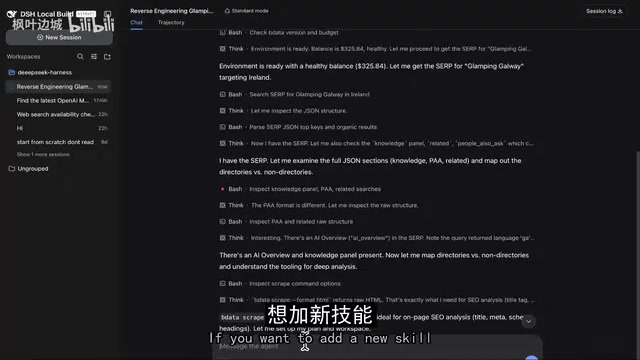
Cost is the other decisive factor. Compared to Claude Code's $200/month subscription, the blogger describes DeepSeek's API call costs as "cents on the dollar." He says bluntly that for the vast majority of developers, DeepSeek offers far better value than paid alternatives. He does acknowledge one minor drawback: DeepSeek can be a bit verbose and tends to do "slightly too much research" — but as long as the final output is good, a lengthy process is ultimately inconsequential.
A note on "harness": In the context of AI tools, a harness refers to a toolchain framework that wraps around an underlying model — typically including prompt templates, context management, tool-calling interfaces, and workflow orchestration. Claude Code is Anthropic's proprietary closed-source harness; users can only access it via subscription and cannot modify its internal logic. DeepSeek's open-source harness, by contrast, lets developers inspect and modify the code directly — for example, adding custom "skill" modules that allow the model to call specific external APIs or scripts during task execution. This architecture means that even if the underlying model has certain limitations, developers can compensate by extending the toolset, such as integrating the BrightData scraping capability described in this article. Another practical advantage of an open-source harness is cost transparency: users call DeepSeek's API directly and pay per token, rather than a fixed monthly subscription fee — making it more economical for indie developers with lower or uneven usage patterns.
Giving the Model "Eyes" with BrightData
A capability the blogger repeatedly emphasizes as a critical complement is web scraping. He found that DeepSeek falls short when it comes to properly fetching and reading web page content, so he integrated BrightData's Scraper Studio skill — enabling the model to "actually read the internet" instead of receiving low-quality plain text dumps.
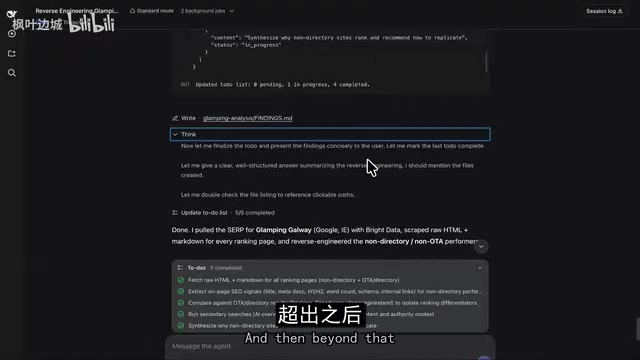
He demonstrated this with a practical example: he had the model scrape Google SERP results for "glamping Galway" (luxury camping in Galway, Ireland), then reverse-engineer how top-ranking non-directory websites (excluding OTA platforms like Airbnb and Booking.com) were achieving their rankings. The model's analysis was genuinely insightful — identifying that ranking success hinged on Google Business Profile, EEAT trust signals, real addresses and phone numbers, geographic entity alignment, topical authority built through local content, and keyword-rich internal linking. It concluded that "on-page optimization is not the deciding factor — trust tends to matter more than page signals," a conclusion that seasoned SEO practitioners would readily endorse.
The blogger mentions that BrightData offers new users a $25 free credit (with discount code ISS25 shown in the video) — roughly enough for tens of thousands of page scrapes. For most people, he notes, usage rarely exceeds 10,000 pages. Beyond that, pricing is approximately $1 per 1,000 scrapes. This combination of "high-capability model + low cost + web scraping" is, in his view, the key reason the DeepSeek setup truly works.
Quick explainer — SERP and EEAT: SERP (Search Engine Results Page) refers to the results page returned by Google or another search engine after a user enters a query. Scraping and analyzing competitor SERP rankings is a foundational move in SEO research. EEAT is a framework from Google's Search Quality Evaluator Guidelines, standing for Experience, Expertise, Authoritativeness, and Trustworthiness — four dimensions Google uses to assess page quality, with particular weight given to health, finance, legal, and other "Your Money or Your Life" (YMYL) content categories. In the glamping demo, the model was able to identify specific EEAT trust signals such as "real address and phone number" and "Google Business Profile" — demonstrating that DeepSeek's grasp of SEO domain knowledge reaches a practical, actionable level rather than offering only surface-level generalities.
Conclusion: Claude Code Is No Longer the Only Option
The blogger's final position is refreshingly pragmatic. He says he'll continue using Claude Code for his own production coding work — "I have the budget, and $200/month for the best model is worth it to me." But his core message is clear: a paid Claude Code subscription is no longer a 100% necessary choice.
"Two weeks ago I wouldn't have said this," he admits. "Before, I always told people to pay for Claude Code — that it was the best. But if I were on a tight budget right now, I probably wouldn't pay for it anymore." Behind this shift is the open-source ecosystem finally delivering a reliable alternative — one that's comparable in capability and dramatically lower in cost. He even expresses strong confidence that DeepSeek is fully capable of independently building a complete SaaS product, and plans to run another live test to prove it.
For indie developers and small teams working with limited budgets, this may signal the beginning of a new phase: the barrier to accessing top-tier AI coding capability is dropping from hundreds of dollars per month in subscriptions to something measured in cents.
Related articles
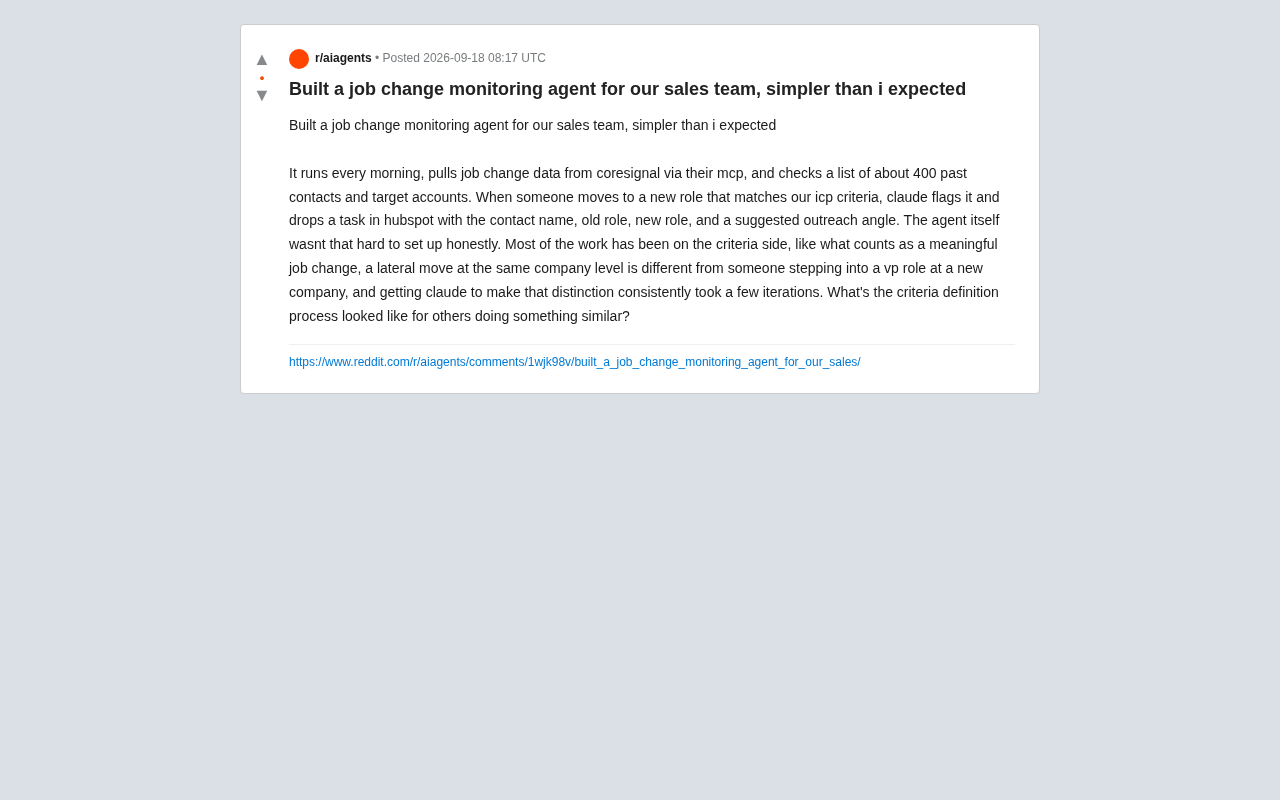
Using an AI Agent to Monitor Customer Job Changes: A Sales Team Automation Case Study
A Reddit user shares how he built a job change monitoring agent using Claude, MCP, and HubSpot to track 400 contacts daily and surface high-value sales signals.
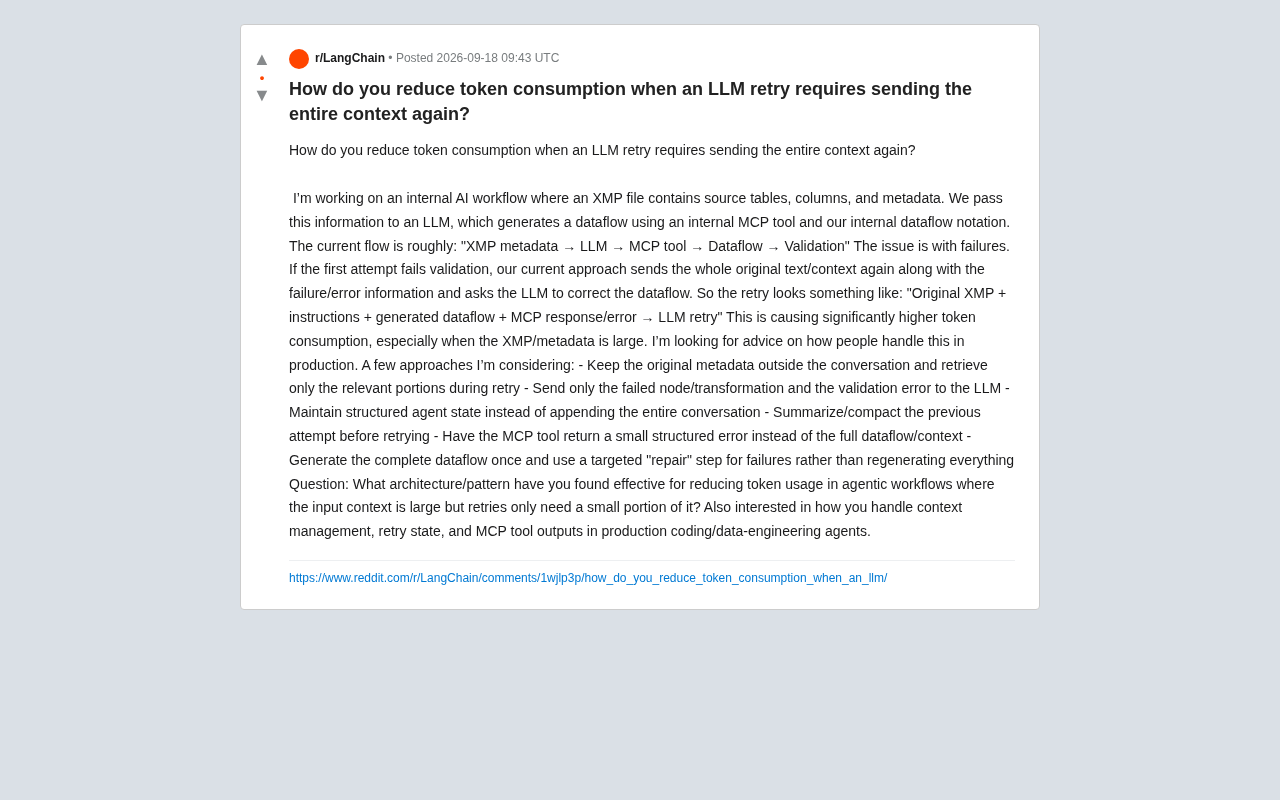
How to Save Tokens on LLM Retries? Optimization Strategies for Large-Context Agent Workflows
Resending full context on LLM retries causes token costs to explode. This article covers six optimization strategies for large-context Agent workflows, including decoupling generation from repair, external context retrieval, structured state management, and lean MCP tool output.
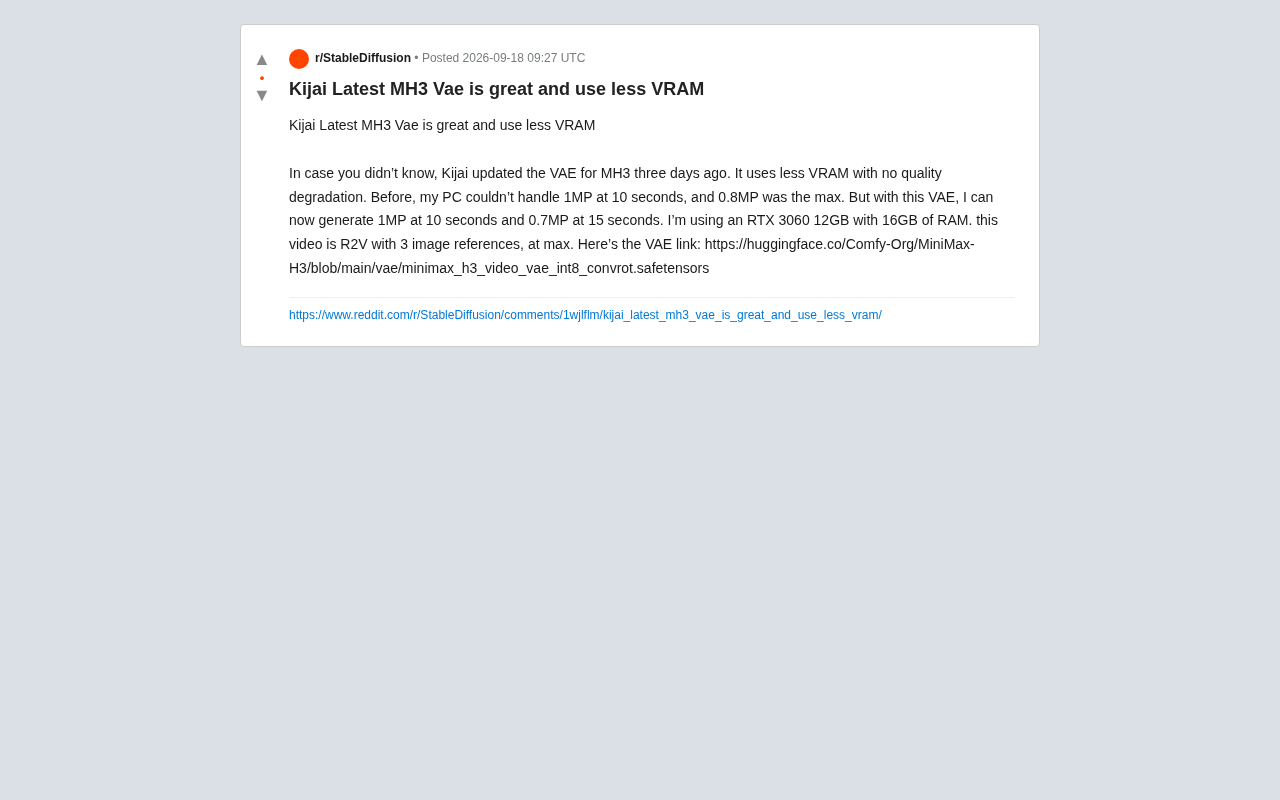
Kijai Updates MiniMax-H3 VAE: Lower VRAM Usage Without Quality Loss
Kijai updated the MiniMax-H3 int8 quantized VAE, enabling RTX 3060 12GB users to generate 1MP/10s and 0.7MP/15s videos with no reported quality loss.