Did AI Really Prove the Riemann Hypothesis? Mathematician Claims Cloud AI Model Cracked a 167-Year-Old Mystery
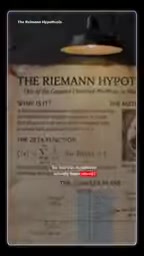
A mathematician claims cloud AI found a Riemann Hypothesis proof, but without peer review it warrants caution.
The article examines the claim that AI proved the Riemann Hypothesis. It first explains what the hypothesis really says: not how primes are distributed directly, but the upper bound on the error between the prime counting function and its approximation — equivalent to all non-trivial zeros of the ζ function lying on the critical line. It then reviews how prime distribution looks random yet has a macro trend. On the AI claim, the author stresses that a proof's validity depends on line-by-line peer verification, not AI power; large models can produce plausible but hallucinated math. The conclusion: stay attentive, await expert verification, and note that verifying AI-generated proofs is itself a new challenge.
Introduction: When AI Meets the Holy Grail of Mathematics
Recently, a mathematician's claim set off a bombshell in both academic and tech circles: he says he used a cloud-based AI model to discover a proof of the Riemann Hypothesis. Has this mathematical problem, born 167 years ago, really been cracked by AI? To answer that question, we first need to understand what the Riemann Hypothesis is actually asking.
The Riemann Hypothesis is one of the most famous unsolved problems in mathematics. At its core, it concerns the distribution of prime numbers. Understanding prime distribution is the first step toward understanding the hypothesis — and the key to understanding what AI can actually contribute here.
Primes: Seemingly Random, Yet Hiding Deep Patterns
The "Irregular" Appearance of Primes
When you look at even or odd numbers, the pattern is obvious: every two consecutive integers contains one even number, and odd numbers line up just as neatly. Primes are completely different — there is no such regular spacing between them.
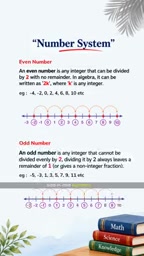
The gaps between primes vary: sometimes 2, sometimes 4, 6, or even larger. And as numbers grow, the average gap between consecutive primes widens. Intuitively, primes look like points scattered randomly along the number line, with no simple rule for generating them.
The Staircase-Shaped Prime Counting Curve
But if you look from a different angle — plotting "how many primes are less than or equal to some number x" — you see a staircase-like shape. Each time a prime appears, the count jumps by one, producing a rough upward trend overall.

This staircase curve shows that while prime distribution is locally messy, it has a clear macro-level trend. Mathematicians have long had an approximation formula that estimates the rough number of primes within a given range.
The prime counting function is usually denoted π(x), representing the number of primes not exceeding x. Its staircase shape comes from the fact that primes are integers and the count only jumps when a prime is encountered. Mathematicians care not about the exact value of π(x) (which would require testing each number for primality one by one) but about its macro-level growth trend. At the end of the 19th century, Hadamard and de la Vallée Poussin independently proved the Prime Number Theorem, showing that the ratio of π(x) to x/ln x approaches 1. This provided a rigorous foundation for the "approximation formula" and focused discussion of the Riemann Hypothesis on the order of the approximation error.
The Real Proposition of the Riemann Hypothesis: Bounding the "Error"
Starting from the Approximation Formula
Mathematicians have a well-established formula that can approximately predict how many primes exist below a given number x. For example, when x reaches one million, this formula gives a fairly close estimate.
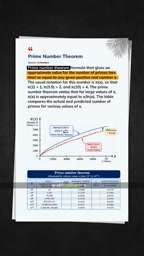
But the problem is that this formula produces a smooth curve, while the true prime count is a staircase. There must be a deviation between the two — that is, an "error." As x grows, how does this error change? Does it have a definite upper bound? This is precisely the core question the Riemann Hypothesis aims to answer.
What the Hypothesis Says and Why It Matters
The Riemann Hypothesis proposes a precise way to describe the maximum extent of this error. If it holds, mathematicians could grasp the fluctuation range of prime distribution with unprecedented precision. That is why it is regarded as one of the most important problems in number theory and in all of mathematics, having remained unsolved for 167 years.
The standard formulation of the Riemann Hypothesis is: all non-trivial zeros of the Riemann ζ function lie on the critical line in the complex plane where the real part equals 1/2. The ζ function is defined by an infinite series and extended to the entire complex plane through analytic continuation; the distribution of its zeros is closely tied to the error in prime counting. If the hypothesis holds, the error between π(x) and the logarithmic integral Li(x) is roughly no larger than on the order of √x ln x. Conversely, if a zero off the critical line exists, prime distribution would exhibit larger fluctuations than expected. It is precisely because of this equivalence that the Riemann Hypothesis is seen as the "master switch" controlling the error in prime distribution.
The AI's Alleged "Proof": A Need for Calm Scrutiny
What the Claim Actually Says
According to the video, a mathematician recently claimed to have discovered a proof of the Riemann Hypothesis with the help of a cloud AI model. The claim draws attention because it ties together two hot topics — AI capability and a major mathematical problem.
But for now, it is only a claim. Whether a mathematical proof stands does not depend on how powerful the AI model is, but on whether the proof itself can withstand rigorous peer review. History is full of cases claiming to have solved major conjectures, most of which were ultimately found to contain logical gaps.
Why AI Has Both Potential and Limits Here
AI is indeed showing increasingly strong assistive capabilities in mathematical research — for example, helping discover patterns, verify conjectures, and search for counterexamples. But proving the Riemann Hypothesis requires a rigorous deductive chain, not pattern matching. Cloud-based large models can generate plausible-looking mathematical text, but they can also hallucinate at critical steps.
So the most reasonable attitude toward this claim is: stay attentive and wait for peer review from the professional mathematics community. Until formal verification is complete, saying "the Riemann Hypothesis has been solved" is premature.
"Hallucinations" of large language models in mathematical text typically manifest as: introducing unproven lemmas, confusing the order of quantifiers, skipping steps in discussions of limits or convergence, or mistaking numerical verification for a general proof. The verification of mathematical proofs relies on formal chains of reasoning, not on textual fluency. In recent years, interactive proof assistants such as Lean and Coq have provided infrastructure for machine-checkable proofs, but fully formalizing a natural-language proof still requires substantial manual work. Therefore, even if AI generates a seemingly complete proof draft, it must undergo peer review or formal verification before its validity can be judged.
Conclusion: The Real Answer Lies in Verification
The Riemann Hypothesis connects to prime distribution, one of the most fundamental questions in mathematics, and has challenged the finest minds for 167 years. AI's involvement adds new imaginative possibilities to the topic, but mathematics' standard of judgment remains unchanged — a proof must withstand line-by-line scrutiny. The value of this claim may not lie in whether it has truly cracked the puzzle, but in reminding us once again: AI is entering the most core areas of mathematics, and how to verify mathematical proofs produced by AI is itself a new problem in urgent need of established norms.
Related articles
AI Proved the Riemann Hypothesis, Yet No One Understands It: The Gap Between Machine Verification and Human Understanding
An AI and a mathematician produced a 17-million-line Riemann Hypothesis proof that passes computer verification yet no one understands. This article explores the gap between machine verification and human understanding, and the division of knowledge work in the AI era.

Can AI Crack the Riemann Hypothesis? New Hope for the Million-Dollar Math Puzzle
The Riemann Hypothesis carries a million-dollar bounty. Can AI help crack this math puzzle? This article examines the conjecture's origins, the difference between verification and proof, and AI's real role and limits in mathematical research.

AI Cracks the Riemann Hypothesis? 17 Million Lines of Code Send Shockwaves Through Mathematics
In November 2026, Anthropic mathematicians and Claude complete a machine-verified proof of the Riemann Hypothesis — 17 million lines of code pass five independent theorem checks. Yet the mathematics community falls silent: does a proof no human can read through count as a solution?