Dify-Plus Deep Dive: An Open-Source Enterprise-Grade AI Application Platform Enhancement

Dify-Plus is an enterprise-grade enhancement of Dify, adding management, operations, and security capabilities.
Dify-Plus is a community-driven secondary development project based on the open-source LLM application platform Dify. Its core architecture combines a Management Center + Dify Customization. Built on gin-vue-admin, the management center provides RBAC permission control, user management, Token consumption monitoring, operation log auditing, and other enterprise-grade capabilities, addressing Dify's pain points in multi-user management, production operations, and data compliance. The project strictly follows Dify's copyright agreement without touching commercial features like multi-tenancy, making it ideal for SMEs to build internal AI platforms at lower cost.
What Is Dify-Plus? Explained in One Sentence
Dify is one of the most popular open-source LLM application development platforms today, winning over a large developer following with its intuitive visual orchestration capabilities and rich model integration support. An LLM application development platform provides developers with an all-in-one environment for building applications powered by large language models. Dify's core capabilities include visual Prompt orchestration, RAG (Retrieval-Augmented Generation) pipeline construction, Agent development, and workflow automation. Unlike coding-heavy frameworks like LangChain, Dify offers a graphical interface that enables team members without deep technical backgrounds to participate in building AI applications. In the current LLM application development tool ecosystem, Dify competes with products like Flowise, Langflow, and Coze, but its open-source strategy, self-hosting capability, and active community ecosystem give it a unique advantage in enterprise private deployment scenarios.
However, when enterprises actually deploy Dify into production environments, they often encounter real-world pain points such as insufficient management capabilities, coarse-grained permission controls, and lack of operations monitoring. These issues aren't obvious during the trial phase for individual developers or small teams, but once the user base expands and application count grows, management shortcomings are quickly exposed.
Dify-Plus is a community-driven secondary development project created specifically to solve these problems. Building on Dify's existing capabilities, it integrates a management center based on gin-vue-admin with multi-dimensional feature optimizations tailored for enterprise scenarios. The project has earned over 2,150 Stars and 438 Forks on GitHub, clearly demonstrating the community's strong demand for enterprise-grade Dify enhancement solutions.
Dify-Plus Core Architecture: Management Center + Dify Customization
Management Center Built on gin-vue-admin
Dify-Plus's core formula is crystal clear: Dify-Plus = Management Center + Dify Customization.
The management center is built on gin-vue-admin, a mature full-stack backend management framework written in Go, with Vue on the frontend and Gin on the backend. Gin is one of the highest-performance web frameworks in the Go ecosystem, renowned for its extremely low memory footprint and exceptional concurrent processing capability. Its routing performance is built on httprouter, far outperforming most comparable frameworks in benchmarks. gin-vue-admin wraps a complete set of common enterprise backend management system capabilities on top of Gin, with the most critical being its permission management system based on the RBAC (Role-Based Access Control) model. The fundamental idea behind RBAC is to assign permissions to roles, then assign roles to users—this way administrators don't need to configure permissions individually for each user, only managing a limited number of roles. gin-vue-admin also includes a built-in policy engine based on Casbin, supporting multiple permission models including ACL, RBAC, and ABAC, capable of meeting complex enterprise permission management requirements.
Choosing this tech stack offers several clear advantages:
- Mature and stable: gin-vue-admin is a production-proven framework with over 22k GitHub Stars, featuring built-in enterprise-grade capabilities including user management, role permissions, menu management, and operation logging
- Unified tech stack: The Go + Vue combination has high acceptance among domestic enterprises, lowering the barrier for secondary development and maintenance. Go's compiled nature and excellent concurrency model make it particularly suited for building high-performance backend services
- Strong extensibility: New management feature modules can be quickly developed using the code generator. gin-vue-admin's code generator can automatically generate frontend and backend CRUD code based on database table structures, including API interfaces, service layer logic, frontend forms, and list pages, significantly reducing repetitive development work
Technical Approach to Dify Customization
The project uses TypeScript as its primary development language, maintaining consistency with Dify's frontend tech stack. The customization isn't a large-scale refactoring of Dify but rather incremental feature enhancements targeting enterprise scenarios while maintaining upstream compatibility.
This "incremental customization" strategy is a proven best practice in the open-source ecosystem. The alternative is a "Fork and refactor" strategy—extensively modifying code structure and core logic based on a specific version. While fork-and-refactor offers more freedom, it causes code divergence from the upstream project to grow continuously, eventually making it impossible to merge new features and security fixes from upstream. Incremental customization keeps modifications confined to independent modules or well-defined extension points, allowing upstream changes to be merged into the customized branch via Git rebase or merge when Dify officially releases new versions. Of course, this strategy isn't without challenges—when upstream modifies interfaces or data structures that the customized project depends on, manual intervention is still needed to resolve conflicts. But overall, the long-term maintenance cost of the incremental strategy is far lower than a complete fork approach.
Three Core Pain Points of Enterprise Dify Deployment and Their Solutions
Pain Point 1: Multi-User Management and Permission Control
The original Dify's user management is relatively simple, and enterprise environments often require more fine-grained permission control. Typical requirements include:
- Employees from different departments can only access specific applications and knowledge bases
- Administrators need to audit and monitor user behavior
- API key distribution and revocation requires centralized management
In actual enterprise operations, the granularity of permission control directly determines the platform's security and manageability. For example, the marketing department might only need access to copywriting generation applications, while the R&D department needs access to code assistance and technical documentation knowledge bases. Without fine-grained permission isolation, there's not only a data leakage risk but also a cluttered user interface—employees seeing numerous applications and resources irrelevant to them. API key management is equally critical; in enterprises, API keys are often tied to real model invocation costs, and if keys are leaked or abused, it could lead to severe cost overruns.
Dify-Plus fills these capability gaps through its management center, enabling IT administrators to manage the AI platform just like any other enterprise application.
Pain Point 2: Production Environment Operations and Monitoring
AI application platforms in production environments require comprehensive operations support, including but not limited to:
- Token consumption statistics and alerts
- Model invocation success rate monitoring
- User activity analysis
- System resource usage visualization
Among these, Token consumption management is the most critical cost control aspect when enterprises use large language models. LLM billing is typically based on Token count—Tokens are the basic units models use to process text, roughly equivalent to one Chinese character or 0.75 English words. Taking GPT-4o as an example, input Tokens and output Tokens have different prices, and a single complex Agent call may involve multiple rounds of model interaction, with actual Token consumption far exceeding users' intuitive expectations. If hundreds of employees within an enterprise are simultaneously using AI applications, monthly Token costs could reach tens or even hundreds of thousands of yuan. Therefore, enterprises typically need Token usage statistics broken down by department, application, and user, with usage caps and alert thresholds, and call pattern analysis to optimize Prompt design and reduce unnecessary Token consumption.
These features may not matter much in personal use scenarios, but for enterprises they're essential daily operational requirements. Model invocation success rate monitoring is equally important—when underlying model services experience rate limiting, timeouts, or errors, operations teams need to detect issues immediately and switch to backup models or adjust invocation strategies, otherwise business continuity is directly impacted.
Pain Point 3: Data Security and Compliance Requirements
Enterprise AI platform deployment also requires consideration of data security and compliance requirements. In the current regulatory environment, especially when dealing with data protection laws, personal information protection regulations, and industry-specific rules (such as data classification requirements in the financial industry or patient privacy protection regulations in healthcare), enterprises must ensure that the AI platform's data processing is traceable and auditable. Dify-Plus's centralized management center can provide security capabilities such as operation log auditing, sensitive data masking, and access control policies, helping enterprises meet both internal security standards and external regulatory requirements. Operation log auditing means every user login, application creation, knowledge base modification, and API call is fully recorded, enabling rapid tracing when security incidents occur.
Dify-Plus Open-Source Compliance and Community Positioning
You might not have noticed that Dify-Plus makes explicit compliance declarations: it strictly follows the original Dify project's copyright license agreement and does not involve multi-tenant functionality or logo-related copyright elements covered by the original project's license. This means if enterprises need official multi-tenant support, they still need to contact Dify's official team for commercial licensing.
It's worth explaining the concept of "Multi-Tenancy" here. A multi-tenant architecture means that within the same software system, multiple tenants (typically different enterprise customers or independent business units) share the underlying infrastructure while their data and configurations remain completely isolated. There are typically three technical approaches to implementing multi-tenancy: independent databases (one database per tenant), shared database with independent schemas (one database schema per tenant), and shared database with shared schema (differentiating data through tenant ID fields). Multi-tenancy isn't just a technical implementation issue—it also involves billing isolation, resource quotas, SLA guarantees, and other business-level capabilities, which is why Dify treats it as a core differentiating feature of its commercial version.
Notably, Dify's license includes commercial restrictions on specific features, which has become increasingly common in open-source projects in recent years. Cases like MongoDB's SSPL, Elastic's ELv2, and HashiCorp's transition from MPL to BSL all reflect the trend of open-source companies seeking balance between community openness and commercial sustainability. Dify-Plus's choice not to touch these restricted features is a prudent strategy that respects the original project's business model while protecting its own compliance.
This positioning is actually quite pragmatic—Dify-Plus as a community customization project focuses on management and operations enhancements without touching Dify commercial version's core differentiating features. This both respects the original project's business model and provides community users with a viable enterprise-grade deployment solution.
Dify-Plus Use Cases and Selection Recommendations
Recommended Scenarios for Dify-Plus
- Small and medium-sized enterprises wanting to quickly build internal AI application platforms with limited budgets
- Technical teams with Go, Vue, or TypeScript development capabilities who can perform custom development
- Need to centrally manage multiple AI applications and users but don't require strict multi-tenant isolation
- Want to gradually build enterprise-grade capabilities on top of an open-source solution
Scenarios Where Dify's Official Commercial Version Is Recommended
- Large enterprises requiring complete multi-tenant isolation and SLA guarantees
- Need official technical support and version upgrade assurance
- Extremely high compliance requirements needing commercial license backing
In the actual selection process, enterprises also need to consider a critical factor: the team's long-term maintenance capability. Choosing Dify-Plus means the enterprise takes on responsibility for version upgrades, bug fixes, and security patches. While the community continuously contributes code, compared to the professional support services provided by the official commercial version, community projects differ in response speed and problem resolution certainty. Therefore, it's recommended that enterprises evaluate not only current feature requirements but also whether their team has the technical capability to continuously follow and maintain an open-source project.
Conclusion: Dify-Plus Deserves Serious Enterprise Evaluation
Dify-Plus represents a typical pattern of the open-source community building enterprise-grade enhancements around popular AI infrastructure projects. It doesn't try to reinvent the wheel but rather fills in the management, operations, and security capabilities needed for enterprise deployment on top of Dify's powerful AI application orchestration abilities.
For teams hoping to deploy an AI application platform within their enterprise at lower cost, Dify-Plus is a solution worth serious evaluation. As the project continues to iterate and the community grows stronger, Dify-Plus has the potential to become one of the most important enterprise-grade enhancement solutions in the Dify ecosystem.
Key Takeaways
- Dify-Plus is an enterprise-grade enhancement of Dify, with the core formula "Management Center + Dify Customization," earning 2,150+ Stars
- The management center is built on gin-vue-admin, providing enterprise-grade capabilities including user management, permission control, and operations monitoring
- The project strictly follows Dify's original copyright agreement, does not involve commercial features like multi-tenancy, and has clear positioning
- Suitable for SMEs to build internal AI application platforms at lower cost, though large enterprises should still evaluate the official commercial version
- Adopts an incremental customization strategy, maintaining compatibility with Dify's upstream versions and reducing long-term maintenance costs
Related articles
 Product Reviews
The Programmer's Desk Setup Guide: Building a Workspace That Feels Like Home
Discover how programmers build productive, comfortable workspaces. From multi-monitor setups to ergonomic design, explore the desk philosophy that drives focus and flow.
 Product Reviews
Qoder vs Cursor Real-World Comparison: Which $20/Month AI IDE Is Better?
Hands-on comparison of Qoder vs Cursor AI IDEs: Agent autonomy, human interaction count, and architecture decisions. Qoder needed only 2 interactions vs Cursor's 8.
 Product Reviews
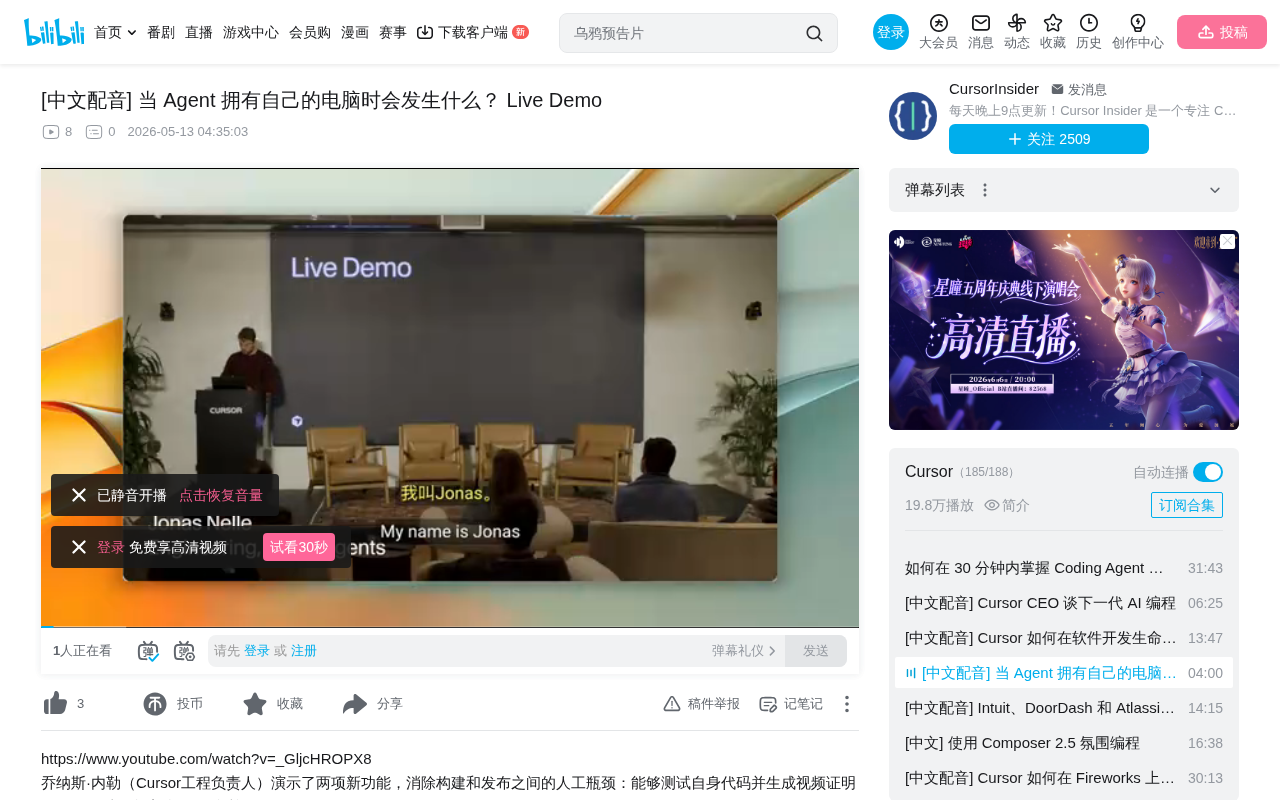
Cursor Cloud Agent Demo: Eliminating Bottlenecks Across the Entire Software Development Lifecycle
Deep analysis of Cursor's Cloud Agent demo showing how cloud VMs, automated test artifacts, and a full-chain control plane systematically eliminate human bottlenecks across the software development lifecycle.