Dina Review: An All-in-One AI Video Production Tool for macOS — From Screen Recording to Finished Video in Minutes

Dina is a macOS all-in-one video workflow app integrating recording, editing, AI audio, and subtitles.
Dina is a macOS video creation tool that consolidates screen recording, video editing, AI noise reduction, automatic subtitle generation, transcript-driven editing, and text-to-speech into a single application, aiming to replace the four or five separate tools creators typically need. It primarily targets content creators, product managers, educators, and indie developers, positioning itself between professional editing software and basic screen recording tools.
Product Overview: One App to Replace Four or Five Tools
Dina is an all-in-one video workflow application built exclusively for macOS, integrating screen recording, video editing, audio processing, subtitle generation, and more into a single tool. Its core value proposition is clear: go from screen recording to finished video in just a few minutes, without switching between multiple applications.
Anyone who has produced screen recording videos knows that creating a polished final product typically requires at least four or five different apps — a screen recorder, an audio editor, a video editing suite, a subtitle tool, and so on. Dina aims to solve all of these problems in one application, a positioning that holds genuine appeal in today's creator tool market.
Core Features in Detail
Integrated Screen Recording and Editing
Dina comes with built-in screen recording capabilities, supporting exports up to 8K resolution and compatible with imported screen recordings from iOS devices. Once recording is complete, you can jump straight into editing within the same app, eliminating the tedious steps of importing and exporting files. This "record and edit" experience saves a lot of time for users who frequently produce tutorial videos.
AI-Powered Smart Editing Features
Dina integrates several AI capabilities, which is what sets it apart from traditional screen recording tools:
-
Automatic Audio Noise Reduction: Modern AI-based audio denoising is fundamentally different from traditional Spectral Subtraction methods. Traditional approaches analyze noise characteristics from silent segments and subtract them from the entire audio track, often producing a "metallic" processing artifact. In contrast, deep learning-based denoising solutions (such as RNNoise, or the WaveNet-variant architecture used by NVIDIA RTX Voice) train neural networks on massive datasets of clean/noisy audio pairs, enabling real-time separation of voice from background noise while preserving the natural quality of speech. These systems can also automatically identify and remove filler words like "um" and "uh." For creators without professional recording environments, AI denoising essentially compensates for hardware limitations at the software level.
-
AI-Powered Automatic Subtitle Generation: Automatically generates subtitles based on speech recognition, eliminating the need to manually add them sentence by sentence.
-
Transcript-Driven Editing: This is a particularly interesting feature — video editing is driven by text transcription, allowing users to edit video as if they were editing a document. Deleting a section of text effectively deletes the corresponding video segment. This paradigm was popularized by Descript around 2019. The core principle involves precisely aligning text transcriptions generated by Automatic Speech Recognition (ASR) with the video timeline, where each text segment corresponds to a specific range of video frames. Under the hood, it relies on millisecond-level timestamp alignment algorithms and a Non-destructive Editing architecture, ensuring that original footage is never modified and all operations are recorded as metadata. For talking-head and tutorial video creators, this approach can multiply editing efficiency several times over, since humans process text far faster than dragging through a timeline frame by frame.
-
Text-to-Speech Voiceover: Supports TTS (Text-to-Speech) functionality, enabling AI-generated narration for videos — ideal for creators who prefer not to use their own voice. It's worth noting that the latest generation of neural network speech synthesis systems — represented by ElevenLabs, OpenAI TTS, and Microsoft Azure Neural TTS — are built on Transformer architectures and trained on massive speech datasets, producing speech that approaches human-level naturalness. For creators, the core advantage of TTS is that after modifying a script, you don't need to re-record the entire audio track — you can simply regenerate the relevant segments, dramatically reducing iteration costs. That said, TTS still has limitations when handling specific tones and emotional nuances, making it currently better suited for information-dense tutorial content.
Professional Annotation and Markup Tools
Dina provides a rich set of annotation features, which are especially useful for creating tutorials and product demo videos. Creators can add arrows, highlighted regions, text callouts, and other elements to their videos, making it easier for viewers to follow along with each step.
Keyboard Shortcuts and Efficiency-Focused Design
The app supports keyboard shortcuts — an important detail for users who edit videos every day. Combined with the built-in voiceover recording feature, users can add narration directly during the editing process without having to record audio separately and manually align it to the timeline.
Who Is It For?
Dina primarily targets the following user groups:
- Content Creators: YouTubers and video bloggers who publish tutorials and product review videos on platforms like YouTube
- Product Managers and Marketers: Professionals who need to quickly produce product demos and feature walkthrough videos
- Educators: Those recording online courses and instructional videos — the subtitle feature is particularly valuable for educational use cases
- Indie Developers: Developers creating promotional videos and usage tutorials for their own apps or products
Competitive Landscape and Market Positioning
The macOS video creation tool market has developed a clear tiered structure in recent years. At the professional tier, Apple's own Final Cut Pro (approximately $300 one-time purchase) offers complete multi-track editing and color grading capabilities, but comes with a steep learning curve. The middle tier has seen a surge of specialized vertical tools: Screen Studio focuses on automatically beautifying screen recordings (auto-zoom, mouse highlighting, rounded window corners, etc.), emphasizing "one-click" visual polish; Loom abandons local editing entirely in favor of cloud-based recording with instant sharing, targeting asynchronous communication scenarios; Descript centers on transcript-driven editing but carries a higher price tag and greater complexity. This market landscape emerged against the backdrop of the explosive growth in remote work and content creation after 2020, which generated massive demand from "non-professional users with high-frequency video production needs."
Related articles
 Product Reviews
The Programmer's Desk Setup Guide: Building a Workspace That Feels Like Home
Discover how programmers build productive, comfortable workspaces. From multi-monitor setups to ergonomic design, explore the desk philosophy that drives focus and flow.
 Product Reviews
Qoder vs Cursor Real-World Comparison: Which $20/Month AI IDE Is Better?
Hands-on comparison of Qoder vs Cursor AI IDEs: Agent autonomy, human interaction count, and architecture decisions. Qoder needed only 2 interactions vs Cursor's 8.
 Product Reviews
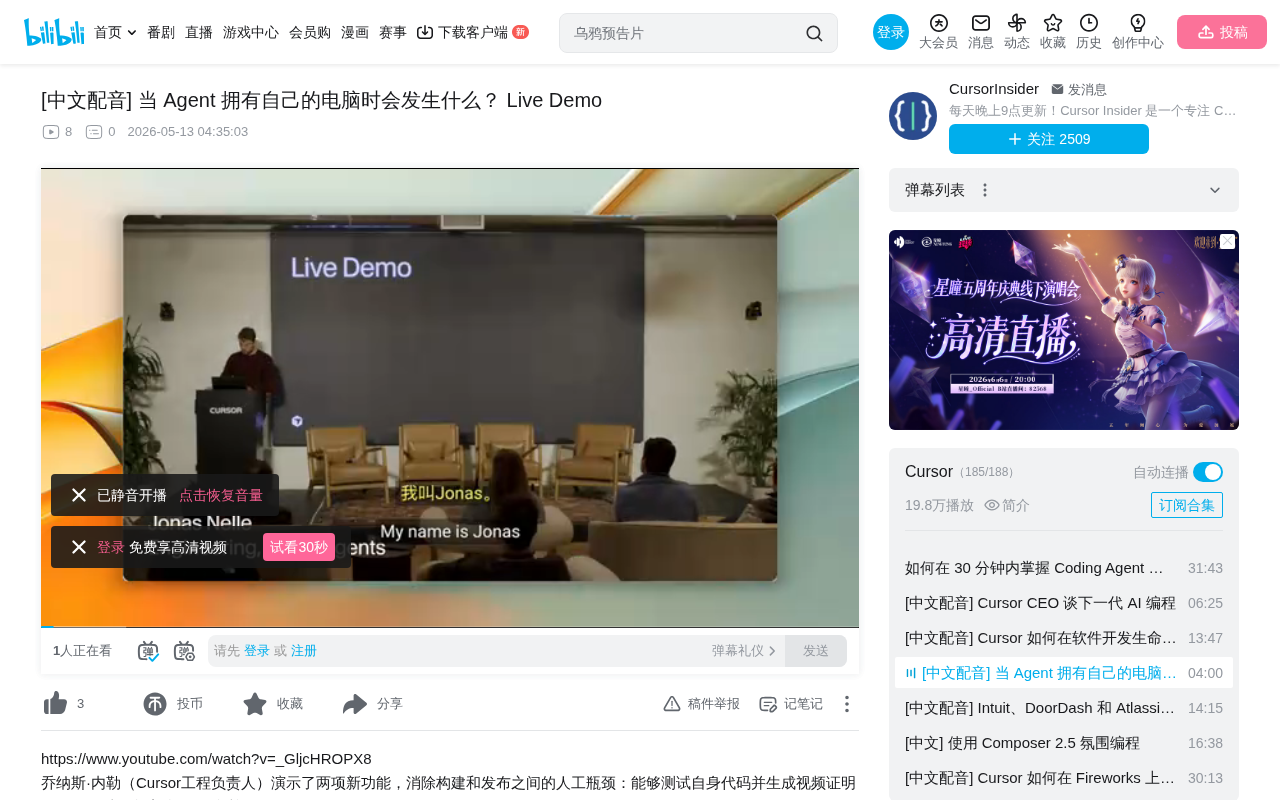
Cursor Cloud Agent Demo: Eliminating Bottlenecks Across the Entire Software Development Lifecycle
Deep analysis of Cursor's Cloud Agent demo showing how cloud VMs, automated test artifacts, and a full-chain control plane systematically eliminate human bottlenecks across the software development lifecycle.