Discord Ditches Electron: Memory Usage Drops Sharply After Rust Migration

Discord's desktop client ditches Electron for Rust to cut memory usage and boost performance.
Discord is fully migrating its desktop app from the long-used Electron framework to Rust. Electron is known for convenient cross-platform development with web technologies, but bundling Chromium keeps memory and CPU usage high, especially for communication apps running in the background. Rust's ownership model ensures compile-time memory safety while delivering near-native performance. The new app claims to use less memory, though no specific figures are disclosed. Users can expect a lighter client, while developers face a steep learning curve and extensive rewrites. Discord's choice may also influence other teams evaluating desktop frameworks.
According to RSS feed reports, Discord is abandoning the long-used Electron framework and fully migrating its desktop app to the Rust language. Electron is known for its heavy resource consumption, while Rust focuses on speed and memory safety. This shift means Discord's desktop client could see significant performance improvements.
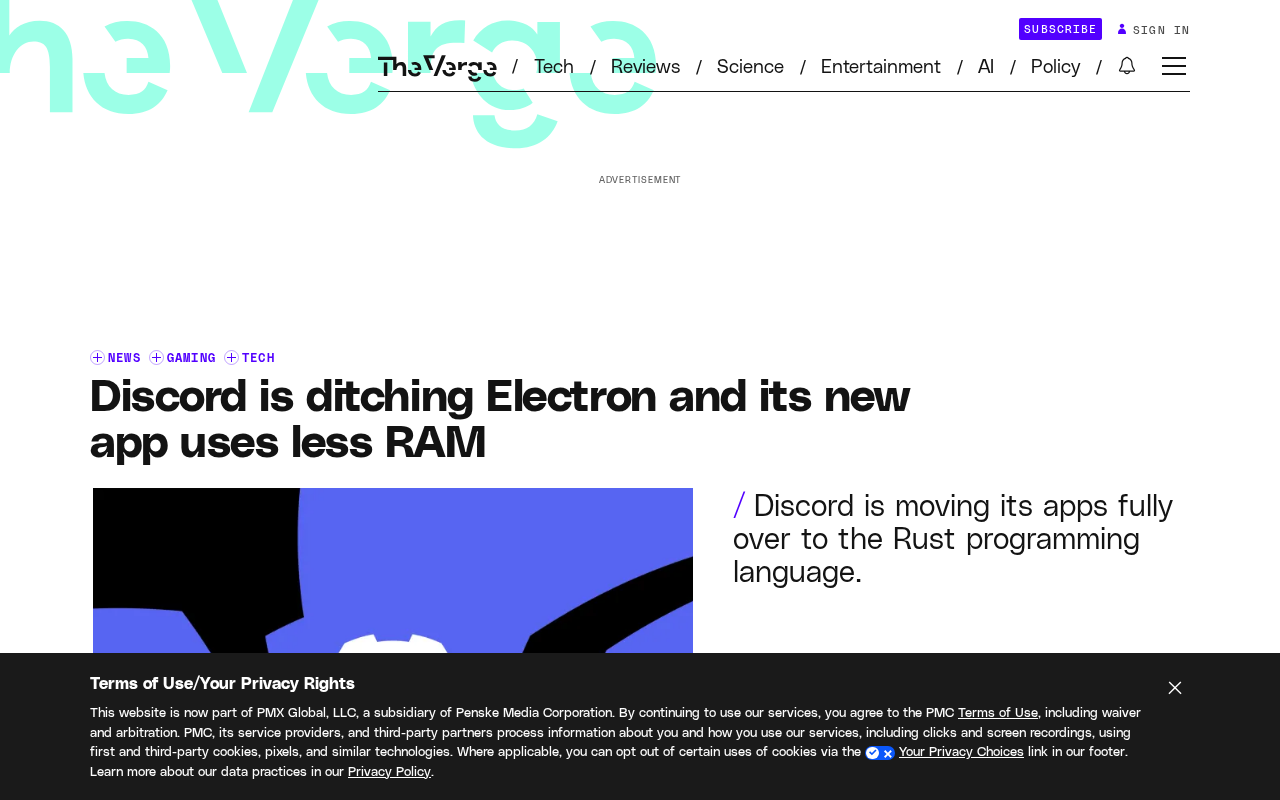
Electron's Burden: Cross-Platform Convenience at a Resource Cost
Electron allows developers to build cross-platform desktop apps using web technologies (HTML, CSS, JavaScript), greatly lowering the development barrier. Discord was one of the early adopters of this framework. But Electron apps have long been criticized for their resource usage—each Electron app is essentially bundling a Chromium browser instance, resulting in persistently high memory and CPU consumption.
For communication apps that need to stay resident in the background for long periods, this overhead is especially noticeable. Users frequently complain that the Discord desktop client consumes large amounts of memory, particularly when multiple servers and channels are open.
Electron's core architecture consists of three parts: the Main Process, which handles window management and system interaction; the Renderer Process, which runs web pages; and a bridge layer connecting the two via IPC (inter-process communication). Every Electron app ships with a complete Chromium runtime and Node.js environment at startup, which is why installation packages often run into the hundreds of MB. Even when the app window is closed, the resident main process remains active in the background, so the memory baseline of communication apps is typically much higher than that of native apps. In addition, Electron's renderer processes enable multi-process isolation by default, and each new window or complex page load can spawn additional renderer processes, further driving up memory. These characteristics explain why Discord's resource usage climbs noticeably when multiple servers are open.
Moving to Rust: A Dual Consideration of Performance and Safety
Discord's choice of Rust is no accident. Rust is designed to guarantee memory safety without sacrificing performance, and its ownership model eliminates common issues such as data races and null pointers at compile time. Migrating the desktop app to Rust means Discord can shed the heavy burden of Chromium and directly leverage native system resources.
The original report mentions that the new app after migration "uses less RAM," but does not disclose specific figures. From a technical standpoint, however, abandoning Electron typically brings an order-of-magnitude reduction in memory usage, along with faster startup and smoother responsiveness.
Rust's Ownership system is the cornerstone of its memory safety promise: each value can have only one owner at a time, and Borrowing rules enforce reference lifetimes at compile time, eliminating dangling pointers and data races without relying on garbage collection. Compared with C/C++, Rust exposes many runtime errors at the compilation stage; compared with GC-based languages like Go, Rust has no garbage collection pause overhead, making it better suited to latency-sensitive desktop interaction scenarios. However, Rust's async ecosystem and GUI frameworks are still evolving rapidly, and cross-platform UI solutions—such as Tauri based on system WebView or pure native rendering with egui and iced—each involve trade-offs in maturity and consistency. This is an engineering decision that large applications cannot avoid when migrating.
What It Means for Developers and Users
For users, the most direct benefit is a lighter client experience. Lower memory pressure when running in the background is especially friendly to low-spec devices. For developers, Rust has a steeper learning curve, but it delivers more controllable performance and fewer memory leak risks.
This migration also follows a trend in desktop app development: more and more teams are examining Electron's long-term costs and exploring alternatives such as Rust and Tauri. As a product with a massive user base, Discord's choice may influence other developers' technical decisions.
Tauri is one of the more widely discussed Electron alternatives. Its approach is similar to but not identical with Discord's migration direction: Tauri uses Rust for the backend core while the frontend still reuses web technologies, but the rendering layer calls each operating system's built-in WebView (such as WebView2 on Windows and WKWebView on macOS), avoiding the need to bundle a complete Chromium. This architecture can significantly reduce installation package size and memory usage, but the trade-off is that WebView compatibility differences across platforms require extra handling. If Discord adopts a pure Rust approach to rewrite the UI, it can achieve more thoroughly native performance, but development costs and cross-platform consistency challenges are also greater. Understanding the difference between these two paths helps in judging the actual meaning and expected benefits of Discord's migration.
Challenges and Outlook
Migrating from Electron to Rust is not something that happens overnight. Discord needs to rewrite a large amount of UI and business logic while ensuring cross-platform consistency. The original report does not mention a specific timeline or details of the migration, but confirms the direction of a "full migration."
It is foreseeable that Discord's desktop client under the new architecture will place greater emphasis on resource efficiency. As for the actual magnitude of performance gains, we will have to wait for real-world benchmark data after the official release.
One-line Summary
Discord's desktop client abandons Electron for Rust to reduce memory usage and improve performance.
Paragraph Summary
Discord is fully migrating its desktop app from the long-used Electron framework to the Rust language. Although Electron is known for convenient cross-platform development with web technologies, bundling Chromium leads to persistently high memory and CPU usage, which is especially noticeable for communication apps that need to stay resident in the background. Rust's ownership model guarantees memory safety at compile time while delivering near-native performance. The new app after migration claims to use less memory, but no specific figures have been published. This move means users can expect a lighter client experience, while developers face a steep learning curve and extensive code rewrites. Discord's choice may also influence other teams' evaluation of desktop frameworks.
Related articles
 Tech Frontiers
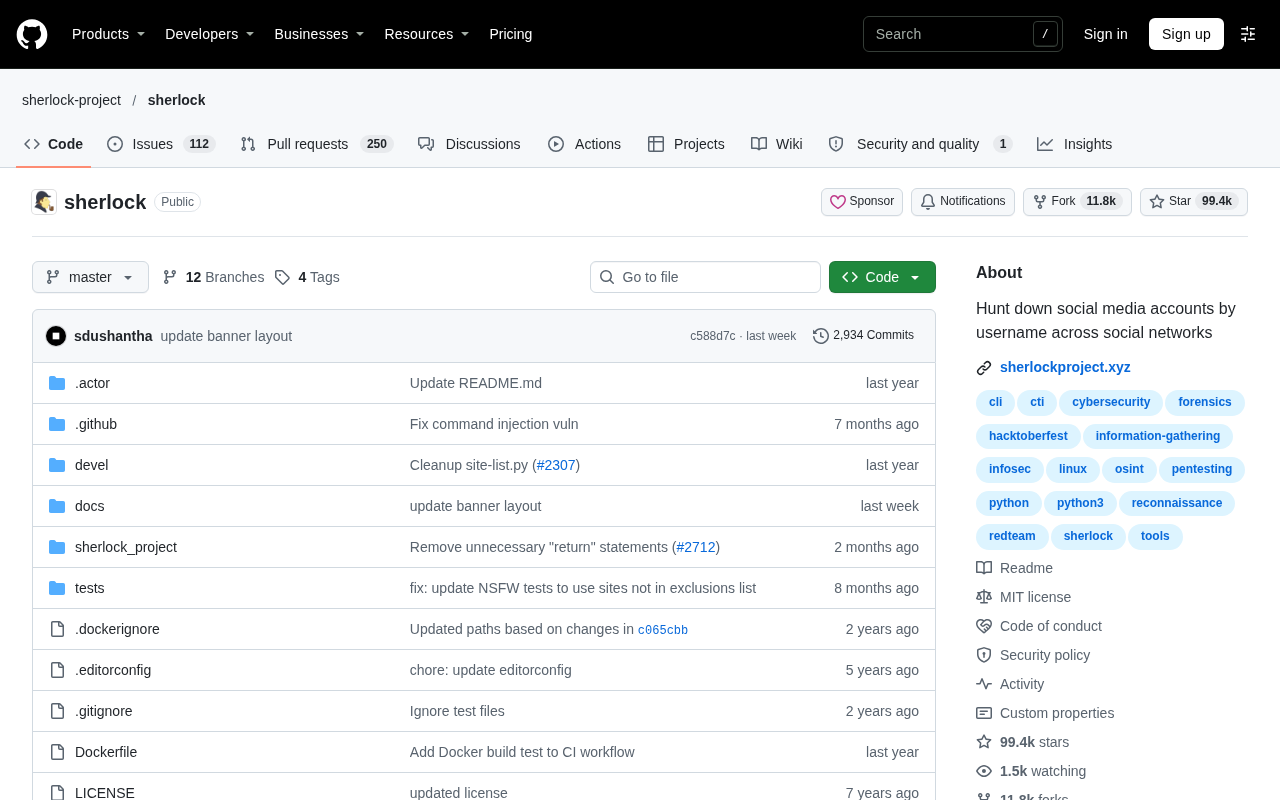
Sherlock: An Open-Source Tool for Tracking Usernames Across Social Networks
Sherlock is an open-source Python tool that tracks social accounts across networks by username. This article covers its core features, why developers love it, typical use cases, and privacy compliance considerations.
 Tech Frontiers
GitHub Daily·Nov 07: Agent-Ready and Context Compression
GitHub Trending Nov 07: meta's agent-ready design system astryx, billion-context's 5x context compression, sherlock nearing 100k stars, plus local-first localthings and bare-metal GPU orchestration nvke.
 Tech Frontiers
Buoyant Open-Sources Kinference: An Inference Control Plane for vLLM on K8s
Buoyant open-sources Kinference, an inference control plane for vLLM on Kubernetes, with declarative routing, KV-cache-aware load balancing, and per-tenant metrics—claiming 95% lower median TTFT in official benchmarks.